Authentic Chimichurri Sauce Recipe with Hand-Chopped Herbs
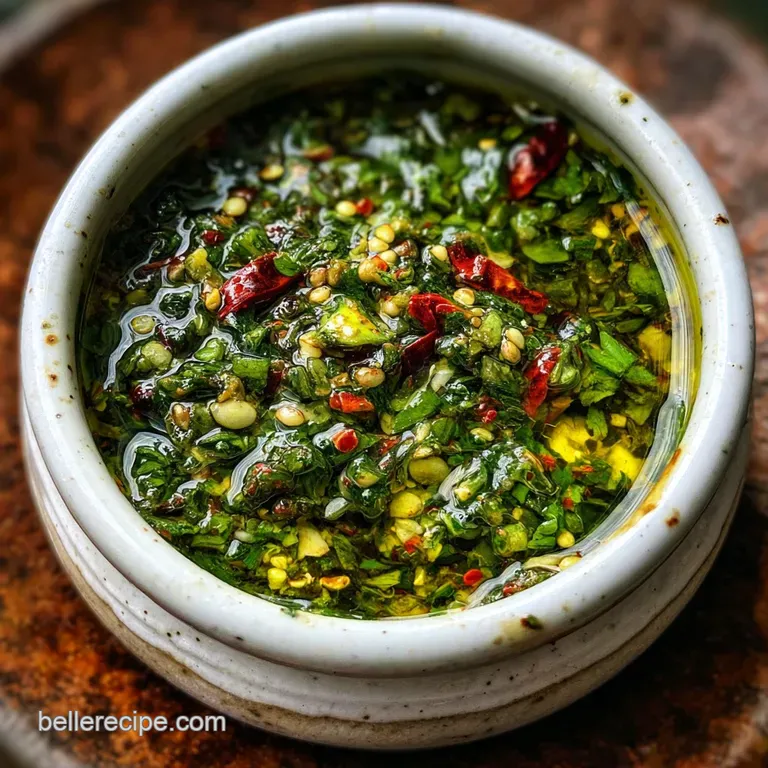
- Time: Active 15 minutes, Passive 30 minutes, Total 45 minutes
- Flavor/Texture Hook: Pungent garlic with a zesty, herbaceous finish
- Perfect for: Grilled meats, roasted poultry, or as a bold marinade
- Vibrant and Zesty Chimichurri Sauce Recipe
- Herbaceous Specs for Kitchen Success
- Deep Component Analysis and Roles
- Essential Tools for Green Gold
- Steps for an Aromatic Masterpiece
- Solving Common Kitchen Sauce Flaws
- Flavor Swaps and Ingredient Twists
- Longer Life and Waste Tips
- Food Pairings for Bright Herbs
- Kitchen Myths Debunked
- Recipe FAQs
- 📝 Recipe Card
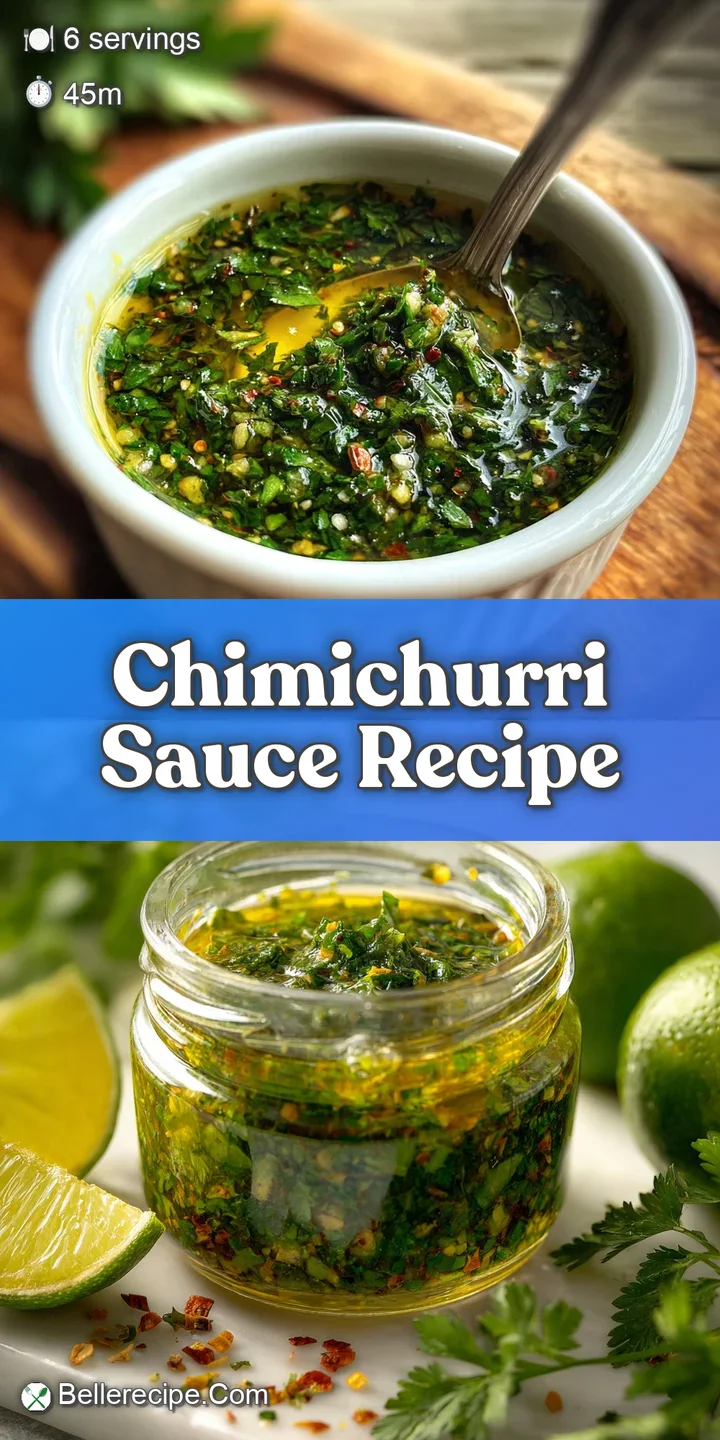
Vibrant and Zesty Chimichurri Sauce Recipe
Close your eyes and imagine the sharp, electric scent of freshly cut parsley hitting a cloud of red wine vinegar. It's a smell that cuts right through the smoky, heavy aroma of a searing ribeye on a cast iron griddle.
I remember the first time I tried to make this at home; I was in a rush and tossed everything into a blender. What came out was a swampy, oxidized foam that looked more like a bad smoothie than an authentic sauce. It was a lesson learned the hard way: texture is everything.
We are talking about a sauce that shouldn't just sit on the meat but dance with it. When you hand chop these herbs, you're not just cutting them; you're releasing oils without bruising the delicate leaves. This ensures every spoonful remains bright green and visually stunning on the plate.
It's the difference between a garnish and the star of the show.
This specific chimichurri sauce recipe focuses on the aromatic marriage of Italian parsley and fresh cilantro, grounded by the earthy hum of dried oregano. We're going for a rustic, chunky consistency that offers a little pop of salt and a slow heat from red pepper flakes in every bite.
Trust me, once you smell the garlic macerating in that vinegar, you'll know exactly why we don't take shortcuts.
Herbaceous Specs for Kitchen Success
The Osmotic Herb Infusion: Salt and vinegar draw moisture out of the aromatics, creating a concentrated flavor base before the oil is added. This prevents the oil from coating the herbs too early, which would otherwise block the absorption of the tangy vinegar.
- Oxidation Control: Keeping the herbs submerged in oil prevents oxygen from turning the vibrant chlorophyll brown.
- Maceration Magic: Soaking shallots and garlic in vinegar mellows their raw "bite" while seasoning the liquid.
- Emulsion Stability: While not a thick emulsion, the ratio of 1:1 vinegar to oil creates a temporary suspension that clings to meat.
- Dried vs Fresh: Dried oregano is used because its oils are more concentrated, providing a woody backbone that fresh oregano lacks.
| Preparation Style | Time Investment | Final Texture | Best For |
|---|---|---|---|
| Hand Chopped (Classic) | 15 minutes | Rustic, distinct herb pieces | Steak, Crusty Bread |
| Mortar and Pestle | 20 minutes | Paste like, very pungent | Rubs, Marinades |
| Pulse Blended (Fast) | 2 minutes | Uniform, slightly aerated | Quick Chicken, Dips |
Hand chopping remains the gold standard for this chimichurri sauce recipe because it preserves the cellular structure of the parsley. If you've ever enjoyed the contrast of a Tonkatsu Sauce Recipe on fried pork, you know how important the interaction between a punchy sauce and a rich protein can be.
Deep Component Analysis and Roles
| Ingredient | Science Role | Pro Secret |
|---|---|---|
| Red Wine Vinegar | Acid Catalyst | Let the garlic sit in it for 10 mins to remove the "stings". |
| Flat Leaf Parsley | Primary Flavor | Avoid curly parsley; it has a "grassy" texture that feels like hay. |
| Extra Virgin Olive Oil | Flavor Carrier | Use a peppery oil to complement the fresh cilantro notes. |
| Kosher Salt | Moisture Extractor | Coarse grains help break down herb fibers during the chopping process. |
Essential Tools for Green Gold
You don't need a pantry full of gadgets, but a heavy, sharp chef's knife is non negotiable here. A dull blade will crush the parsley, leading to a dark, muddy color rather than the vibrant emerald we're after. I prefer a large wooden cutting board because it absorbs less of the essential oils than plastic does.
A small glass bowl is your best friend for the maceration step. Avoid metal bowls if you can, as the high acidity of the 0.5 cup red wine vinegar can sometimes react with lower quality stainless steel, leaving a faint metallic aftertaste. A simple whisk or even a fork works perfectly to combine the oil at the end.
Steps for an Aromatic Masterpiece
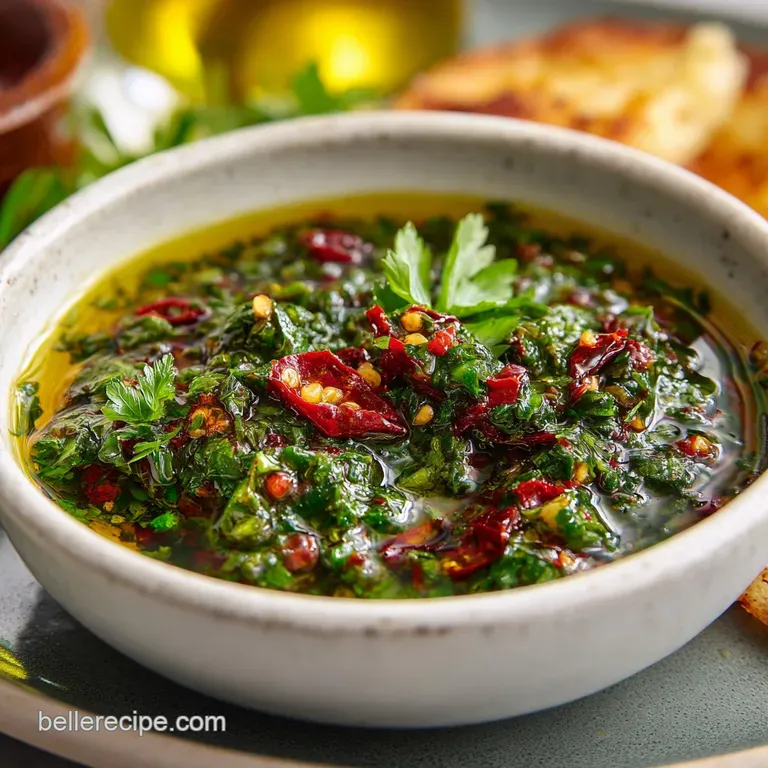
- Mince the garlic. Take your 4 cloves garlic and mince them into a fine paste. Note: Using the side of your knife to "smear" the garlic with a pinch of salt helps create a smooth texture.
- Dice the shallot. Finely dice 1 small shallot until the pieces are about the size of a peppercorn.
- Start the maceration. Combine the garlic, shallot, 0.5 cup red wine vinegar, and 1 tsp kosher salt in a small bowl. Let it sit for 10 minutes until the sharp aroma of raw onion mellows into something sweet and tangy.
- Prepare the parsley. Take 1 cup packed flat leaf Italian parsley (stems removed) and bunch it tightly. Slice through it with a very sharp knife. Wait for the peppery, clean scent to fill the air before moving to the next bunch.
- Chop the cilantro. Finely chop 0.5 bunch fresh cilantro. You want these bits to be small but still visible as individual leaves.
- Add dry aromatics. Stir in 1 tbsp dried oregano and 0.5 tsp crushed red pepper flakes into the vinegar mixture.
- Whisk in the oil. Slowly pour in 0.5 cup high-quality extra virgin olive oil while stirring gently. The sauce should look like a shimmering green confetti in a golden pool.
- Season and rest. Add 0.5 tsp freshly cracked black pepper. Cover the bowl and let the sauce rest at room temperature for at least 30 minutes. This allows the flavors to move from the herbs into the oil.
Solving Common Kitchen Sauce Flaws
Why the Herbs Turn Brown
If your sauce looks dull or brown, it's usually due to oxidation or a dull knife. When you "bruise" herbs with a blunt blade, the enzymes react with air faster. To keep it bright, ensure your herbs are completely dry before chopping and use a high-quality oil to seal them from the air.
Why the Vinegar Overpowers Everything
Sometimes the 0.5 cup red wine vinegar can feel too sharp, especially if your brand is particularly high in acetic acid. This often happens if the sauce hasn't rested long enough for the oil to mellow the acidity.
| Problem | Root Cause | Solution |
|---|---|---|
| Sauce is bitter | Burned garlic or low grade oil | Use a milder olive oil or ensure garlic is fresh, not sprouted. |
| Texture is "slimy" | Frozen/wet herbs | Pat herbs dry with a paper towel before chopping. |
| Flavor is flat | Not enough salt | Add another pinch of salt to "pop" the acid. |
Common Mistakes Checklist:
- ✓ Never use a food processor on high speed (it aerates and oxidizes the oil).
- ✓ Don't skip the 30 minute rest period; the flavors need time to marry.
- ✓ Always remove the thick parsley stems as they carry a bitter, woody taste.
- ✓ Avoid using bottled garlic; the preservatives clash with the fresh herbs.
- ✓ Ensure the oil is room temperature; cold oil won't absorb the herb essences.
Flavor Swaps and Ingredient Twists
If you are out of red wine vinegar, lemon juice is a fantastic alternative, though it changes the profile to something more Mediterranean. For those who find cilantro tastes like soap, doubling the parsley is a perfectly acceptable move. It won't be "authentic" to some, but it will be silky and vibrant regardless.
| Original Ingredient | Substitute | Why It Works |
|---|---|---|
| Red Wine Vinegar | Lemon Juice | High acidity. Note: Adds a citrusy, bright note instead of fermented tang. |
| Shallot | Red Onion | Similar sulfur compounds. Finely mince to avoid harsh chunks. |
| Dried Oregano | Fresh Oregano | Use 3x the amount. Note: Flavor is more floral, less earthy. |
If you're looking for a different protein preparation to go with this, consider how the acidity of this sauce would cut through the richness of The Homemade Chicken recipe. The contrast between a creamy bake and a fresh herb sauce is a professional level pairing.
Longer Life and Waste Tips
Store your chimichurri in an airtight glass jar in the fridge for up to 7 days. The oil will likely solidify when cold, so bring it to room temperature for 20 minutes before serving to let it melt back into its silky state. If you find yourself with extra, don't throw it away!
You can freeze chimichurri in ice cube trays. Once frozen, pop the cubes into a freezer bag for up to 3 months. These cubes are "flavor bombs" you can drop into a hot pan when sautéing shrimp or finishing a soup.
To minimize waste, save your parsley and cilantro stems. While too woody for the sauce itself, they are packed with flavor. Toss them into your next batch of chicken stock or bundle them into a bouquet garni for a slow cooked stew.
Even the leftover oil in the jar after the herbs are gone is liquid gold use it to fry eggs the next morning for a breakfast that smells like a five star bistro.
Food Pairings for Bright Herbs
- Steak
- The classic pairing. The acid cuts the fat of a ribeye or skirt steak perfectly.
- Roasted Chicken
- Spoon it over a crispy skinned bird to add moisture and a peppery kick.
- Grilled Vegetables
- Brush it on eggplant or thick slices of cauliflower for a charred, zesty finish.
- Seafood
- It works wonders as a cold topping for grilled shrimp or seared scallops.
Decision Shortcut: If you want a spicier kick, double the red pepper flakes to 1 tsp. If you want a smoother finish, whisk the oil more vigorously to create a light emulsion.
If you want a deeper umami, add a teaspoon of finely minced capers to the maceration step.
Kitchen Myths Debunked
One common myth is that chimichurri must contain cilantro to be "real." In reality, many traditional Argentine versions focus solely on parsley and oregano. Cilantro is a regional variation that has become popular globally because it adds a wonderful citrusy top note.
Another myth is that you can't over mix the sauce. In truth, if you whisk too hard for too long, you can create a thick, mayonnaise like emulsion if there are enough solids. Chimichurri is meant to be an "oil and vinegar" style dressing where the components remain somewhat distinct.
Finally, don't believe that "fresh is always better" for the oregano. Dried oregano provides a specific concentrated herbal warmth that fresh leaves can't match in this oily environment.
Recipe FAQs
What is chimichurri made of?
The core ingredients are fresh flat leaf parsley, garlic, dried oregano, red wine vinegar, olive oil, salt, and pepper. Cilantro is often included for brightness, but the key is balancing the sharp acid with the fresh, pungent herbs.
What is the secret to a great chimichurri?
Hand chopping the herbs finely, never using a food processor. Mechanical blades bruise the leaves and cause oxidation, turning the vibrant green sauce dull and bitter. If you enjoyed mastering the precise knife work here, apply the same care to texture when making Beurre Blanc Recipe My Foolproof French Butter Sauce.
How do you make Gordon Ramsay's chimichurri sauce?
Mince the garlic and let it macerate in red wine vinegar for 10 minutes before adding the oil. Most high end chefs, including Ramsay, focus on infusing the vinegar base first, which mellows the harshness of the raw aromatics before the slow incorporation of oil.
What are common chimichurri mistakes?
The two biggest mistakes are using a blender and rushing the resting time. Blending oxidizes the herbs, causing browning, and skipping the 30-minute rest prevents the flavors from fully marrying into the oil base.
Can I substitute dried parsley for fresh parsley?
No, stick with fresh. Dried parsley lacks the necessary volatile oils and fresh structure required for the sauce's signature texture and flavor punch.
How long can I keep chimichurri in the refrigerator?
It keeps well for up to 7 days if stored in an airtight container submerged under oil. The oil acts as a protective layer against air, preserving the bright green color longer.
Is it true I must use only olive oil, or can I add a neutral oil?
No, this is a common misconception regarding flavor depth. While you can use a neutral oil like canola to lighten the heaviness, high-quality extra virgin olive oil provides a necessary peppery fruitiness that complements the vinegar.
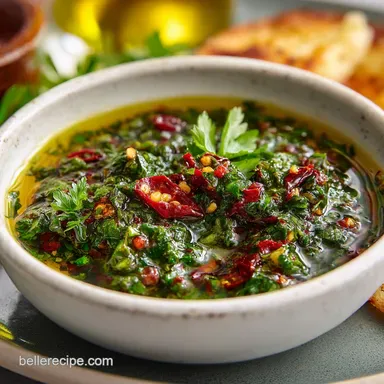
Authentic Chimichurri Sauce Recipe
Ingredients:
Instructions:
Nutrition Facts:
| Calories | 88 kcal |
|---|---|
| Protein | 0.3 g |
| Fat | 9.1 g |
| Carbs | 1.2 g |
| Fiber | 0.3 g |
| Sugar | 0.2 g |
| Sodium | 198 mg |
