Authentic Lebanese Tabbouleh Recipe
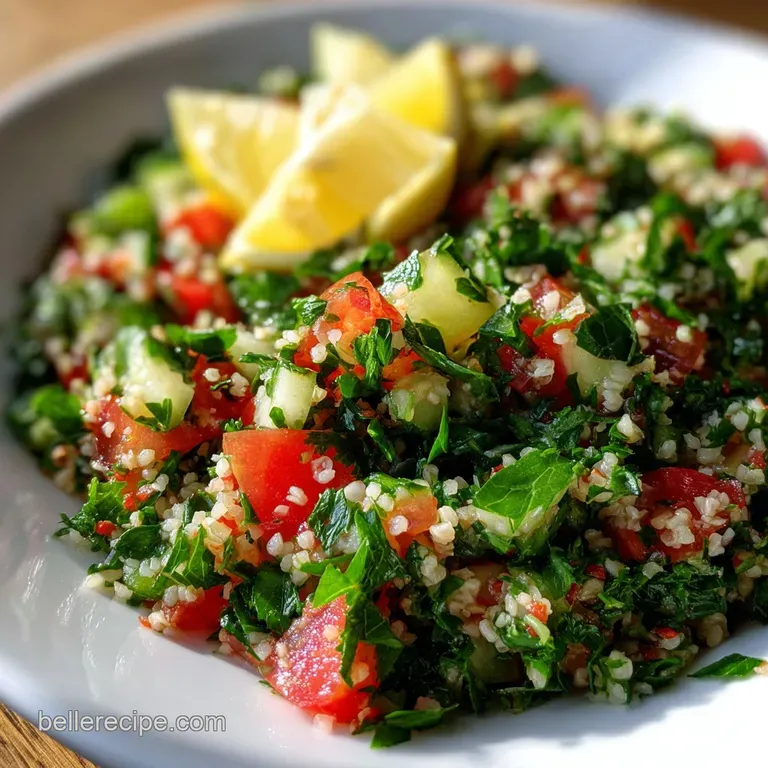
- Time: Active 15 minutes, Passive 10 minutes, Total 25 minutes
- Flavor/Texture Hook: Zesty, herbal, and bracingly fresh
- Perfect for: Mezze platters and healthy meal prep
- The Aromatics Behind an Authentic Tabbouleh Recipe
- Essential Recipe Specifications and Vital Numbers
- Mastering the Harmony of Tabbouleh Ingredients
- Tools for Maintaining Delicate Herb Integrity
- Bringing the Vibrant Mediterranean Textures Together
- Solving Common Texture and Moisture Issues
- Scaling and Customizing Your Herbal Salad
- Managing Prep and Preserving Leftover Freshness
- Perfect Pairings and Traditional Serving Style
- Recipe FAQs
- 📝 Recipe Card
The Aromatics Behind an Authentic Tabbouleh Recipe
Walking into my friend's kitchen in Beirut, the first thing that hits isn't the heat of the stove it's the bracing, clean scent of three bunches of flat leaf parsley being finely minced.
It is a rhythmic sound, a steady shink shink shink of a sharp knife against wood, releasing those essential oils until the whole room smells like a rain washed garden. I used to think of this as a "grain salad," but I was quickly corrected; in a true Lebanese kitchen, this is a parsley salad that happens to have a bit of grain in it.
The secret to a truly vibrant result lies in the lack of water. Most people make the mistake of drowning their bulgur in boiling water, which leads to a soggy, heavy mess. We're going to use the juice of three Roma tomatoes and 1/3 cup of lemon juice to do the heavy lifting instead.
This ensures every single grain is infused with acidity rather than just plain tap water. It’s a complete shift in how you view salad construction.
We are aiming for a texture that is light, fluffy, and almost ethereal. You want the parsley to be so finely cut that it feels soft on the tongue, not prickly. When you take that first bite, it should feel like a cold, citrusy shock to the system that clears the palate.
Let's get into the mechanics of why this specific method works so well for your next gathering.
The Hydro Herb Equilibrium
Osmotic Infusion: By mixing the dry bulgur directly with lemon juice and tomato juices, the grain absorbs flavor packed liquid rather than plain water. This keeps the grain firm yet tender while preventing the salad from becoming a watery puddle at the bottom of the bowl.
| Method | Prep Time | Grain Texture | Herb Profile |
|---|---|---|---|
| Classic Hand Cut | 25 minutes | Firm, distinct grains | Fluffy, vibrant green |
| Quick Pulse (Food Processor) | 10 minutes | Smashed, pasty grains | Bruised, wet, and dark |
| No Soak Method | 25 minutes | Perfectly tender | Maximum flavor absorption |
Essential Recipe Specifications and Vital Numbers
When you are aiming for that restaurant quality finish, precision matters. I remember the first time I tried to eyeball the parsley to bulgur ratio; I ended up with something that looked more like a tabbouleh flavored porridge. You need that 3 tbsp of fine bulgur to stay humble and let the greens shine.
It might look like a tiny amount of grain for 5 servings, but trust me, it expands just enough to provide a nutty contrast.
We are working with 3 bunches of parsley here, and that might seem like a mountain. But once you strip the stems and start that fine chop, it reduces significantly. This dish is all about the ratios the 1/3 cup of lemon juice provides the necessary high notes to cut through the 1/4 cup of rich olive oil.
It is a balancing act of Mediterranean proportions.
Component Analysis
| Ingredient | Science Role | Pro Secret |
|---|---|---|
| Fine Bulgur (#1) | Moisture Absorber | Do not pre cook; let it "cook" in the lemon juice for a nutty bite. |
| Flat leaf Parsley | Structural Base | Dry it until it's bone dry to prevent the leaves from clumping. |
| Roma Tomatoes | Liquid Source | Use the "juice" from the cutting board to hydrate the grain. |
The way these ingredients interact is fascinating. The salt draws moisture out of the tomatoes, which the bulgur then drinks up. This creates a self contained ecosystem within your mixing bowl. If you've enjoyed the herbal complexity of my Chimichurri Sauce Recipe, you'll recognize that same bright, oil and herb magic happening here.
Mastering the Harmony of Tabbouleh Ingredients
The quality of your produce is the only thing standing between a mediocre salad and a masterpiece. Since we aren't cooking the life out of these ingredients, every flaw will be magnified. Look for parsley that looks like it could stand up on its own stiff, dark green, and smelling intensely of the earth.
- 3 tbsp Fine Bulgur (#1 grade): Why this? The smallest grade hydrates quickly without needing a stovetop or boiling water.
- Substitute: Quinoa (cooked and cooled) for a gluten-free version.
- 1/4 cup Extra virgin olive oil: Why this? Provides a velvety mouthfeel and carries the scent of the mint.
- Substitute: Avocado oil for a more neutral flavor profile.
- 1/3 cup Freshly squeezed lemon juice: Why this? The acid tenderizes the grain and keeps the herbs bright green.
- Substitute: Lime juice (though it shifts the flavor toward a more tropical note).
- 3 bunches Flat leaf Italian parsley: Why this? It has a much softer texture and more refined flavor than curly parsley.
- Substitute: None curly parsley is too prickly for this specific dish.
- 1/2 cup Fresh mint leaves: Why this? Adds a cooling background note that makes the salad feel refreshing.
- Substitute: Dried mint (use 1 tbsp) if fresh isn't available.
- 4 Green onions: Why this? Provides a sharp, snappy bite without the overpowering heat of white onions.
- Substitute: Finely minced red onion (soaked in cold water for 10 minutes first).
- 3 Medium Roma tomatoes: Why this? They have a lower water content and firmer flesh, which holds up to chopping.
- Substitute: Cherry tomatoes (quartered), though they are much juicier.
- 1/2 English cucumber: Why this? Thin skin and tiny seeds mean you don't have to peel it.
- Substitute: Persian cucumbers for an even crunchier texture.
- 1/2 tsp Sea salt: Why this? Enhances all the natural sugars in the tomatoes.
- Substitute: Himalayan pink salt.
- 1/4 tsp Lebanese 7 spice: Why this? Adds a warm, aromatic depth that makes it taste authentic.
- Substitute: Allspice or a tiny pinch of cinnamon and cloves.
Tools for Maintaining Delicate Herb Integrity
You don't need a pantry full of gadgets, but a dull knife is the enemy of a good tabbouleh. If you bruise the parsley rather than slicing it, the leaves will turn black and the salad will taste bitter. I always give my chef's knife a quick run on the honing steel before I start this process.
Chef's Tip: Freeze your parsley for just 5 minutes before chopping. It firms up the cell walls just enough to keep the leaves from sliding around, allowing for a much finer, cleaner cut.
A salad spinner is also non negotiable here. Even a hint of residual wash water on your herbs will dilute the dressing and make the final result soggy. We want the olive oil to coat the leaves, not slide off them.
If you don't have a spinner, wash the herbs an hour ahead of time and lay them out on a clean kitchen towel to air dry completely.
Bringing the Vibrant Mediterranean Textures Together
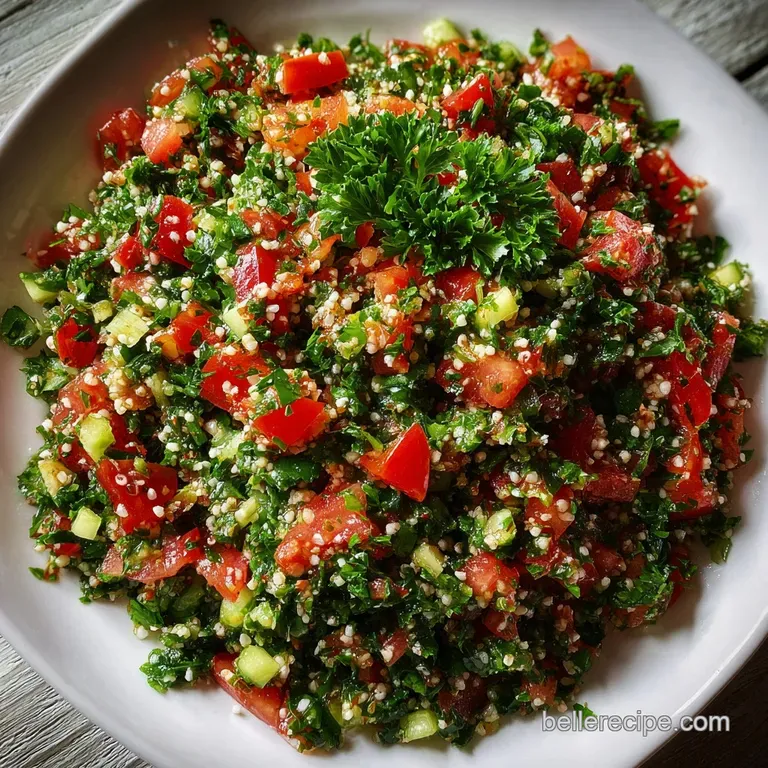
- Prep the bulgur. Place the 3 tbsp fine bulgur in a small bowl and pour the 1/3 cup lemon juice over it. Note: This starts the softening process immediately without water.
- Dice the tomatoes. Finely dice the 3 Roma tomatoes, making sure to keep all the juices on the cutting board.
- Hydrate the grain. Add the diced tomatoes and their liquid to the bulgur bowl. Let this sit for 10 minutes until the grains feel tender to the tooth.
- Process the herbs. Stem the 3 bunches of parsley and 1/2 cup mint. Gather them into a tight ball on your board.
- Mince the greens. Use a sharp knife to finely chop the herbs. Wait until the aroma of fresh mint fills the kitchen before moving to the next bunch.
- Slice the aromatics. Thinly slice the 4 green onions (white and light green parts only) and finely dice the 1/2 English cucumber.
- Combine the base. In a large wooden bowl, toss the chopped parsley, mint, onions, and cucumber together.
- Add the dressing. Pour the 1/4 cup extra virgin olive oil over the greens and toss to coat every leaf. Note: Fat protects the herbs from being wilted too quickly by the salt.
- Merge the components. Fold the bulgur and tomato mixture into the large bowl.
- Final seasoning. Sprinkle the 1/2 tsp sea salt and 1/4 tsp Lebanese 7 spice over the salad. Toss gently until the colors look glossy and vibrant.
Solving Common Texture and Moisture Issues
The most frequent heartbreak with a tabbouleh recipe is the "soggy bottom" syndrome. You finish the salad, it looks gorgeous, and twenty minutes later it’s sitting in a pool of green liquid.
This usually happens because the tomatoes were too watery or the salt was added too early to the vegetables without the protection of the oil.
The "Soggy Bottom" Syndrome
If you find your salad is leaking liquid, it’s usually an issue of vegetable prep. I always recommend de seeding the cucumber if it feels particularly juicy. The seeds are mostly water and contribute very little to the actual flavor.
Also, make sure you are using Roma tomatoes; their meatier walls provide structure that beefsteak tomatoes simply can't match.
| Problem | Root Cause | Solution |
|---|---|---|
| Bitter aftertaste | Dull knife bruised the parsley | Sharpen your blade or use a serrated knife for better slicing. |
| Hard bulgur grains | Not enough soaking time | Let the bulgur sit in the lemon juice for at least 15 minutes. |
| Muted flavors | Cold temperature | Serve at room temperature to let the olive oil and spices bloom. |
Common Mistakes Checklist
- ✓ Pat the parsley completely dry with paper towels after spinning (moisture is the enemy).
- ✓ Do not use a food processor; it turns the parsley into a puree instead of a fluff.
- ✓ Use only the leaves of the parsley; the stems are too fibrous for this delicate salad.
- ✓ Ensure you are using #1 Fine Bulgur; #2 or #3 will stay crunchy and ruin the texture.
- ✓ Let the salad rest for 5 minutes after mixing to allow the 7 spice to permeate.
Scaling and Customizing Your Herbal Salad
If you are hosting a large party, this recipe scales up beautifully. However, you have to be careful with the liquid. When doubling the recipe, only increase the lemon juice and olive oil to 1.5 times the original amount first.
You can always add more, but it is impossible to dry out a salad that is already swimming in dressing.
For smaller portions, I recommend making the full batch of herb mix but only adding the bulgur and dressing to what you plan to eat immediately. The "dry" chopped herbs and veggies will stay fresh in the fridge much longer than the dressed version.
1. gluten-free Tabbouleh Recipe (Quinoa Version)
If you're looking for a gluten-free tabbouleh recipe, simply swap the bulgur for an equal amount of cooked quinoa. The trick is to ensure the quinoa is very dry before adding it. I like to spread the cooked quinoa on a baking sheet and pop it in the fridge for 20 minutes to firm up.
It provides a similar nutty pop without the wheat.
2. The Pomegranate Jewel Variation
For a festive twist, add 1/2 cup of pomegranate seeds. They provide a "shatter" of sweetness that works incredibly well with the acidity of the lemon. I often use this version when I'm serving the salad alongside heavier meats, like a slow roasted lamb. It acts as a bright, jeweled centerpiece for the table.
Managing Prep and Preserving Leftover Freshness
Tabbouleh is best enjoyed within a few hours of making it, but that doesn't mean you can't prep ahead. I often chop the parsley and mint the night before. The trick is to store them in a bowl topped with a damp (not wet) paper towel and plastic wrap.
This keeps the herbs from wilting while maintaining that "just cut" fragrance.
Storage: Store leftovers in an airtight container in the fridge for up to 2 days. Be aware that the parsley will lose its vibrant green hue and turn a bit darker as it sits in the acidic dressing. It will still taste fantastic, but the "wow" factor of the color will fade.
Zero Waste: Don't throw away those parsley stems! While they are too tough for the salad, they are packed with flavor. Toss them into a freezer bag to use for your next batch of vegetable or chicken stock.
You can also blend them with a bit of oil and garlic to make a quick herb paste for marinating chicken.
Perfect Pairings and Traditional Serving Style
In a traditional setting, you wouldn't use a fork. You would use heart of Romaine lettuce leaves or fresh cabbage leaves as little edible scoops. There is something so satisfying about the crunch of the cold lettuce followed by the zesty, herbal explosion of the tabbouleh.
It turns a simple salad into an interactive experience.
This dish pairs exceptionally well with warm, fluffy breads. If you're feeling ambitious, try serving it alongside a fresh Dinner Rolls Recipe or even some toasted pita points. The contrast between the warm bread and the cold, bracing salad is exactly what Mediterranean dining is all about.
Debunking Kitchen Myths
One common myth is that you must cook bulgur. In reality, #1 grade bulgur is "parboiled" during processing. It only needs rehydration, not heat. Another misconception is that more grain makes the salad "better." Actually, adding too much grain is often used by restaurants to save money on expensive fresh herbs.
Stick to the small amount in the recipe to keep it authentic.
Whether you're serving this as part of a massive mezze spread or just as a light lunch, the key is the love you put into that hand chopped parsley. It might take a few extra minutes, but the texture is incomparable. Enjoy the process, breathe in that aromatic mint, and get ready for the freshest bite of your life.
Recipe FAQs
What are the ingredients in tabouli?
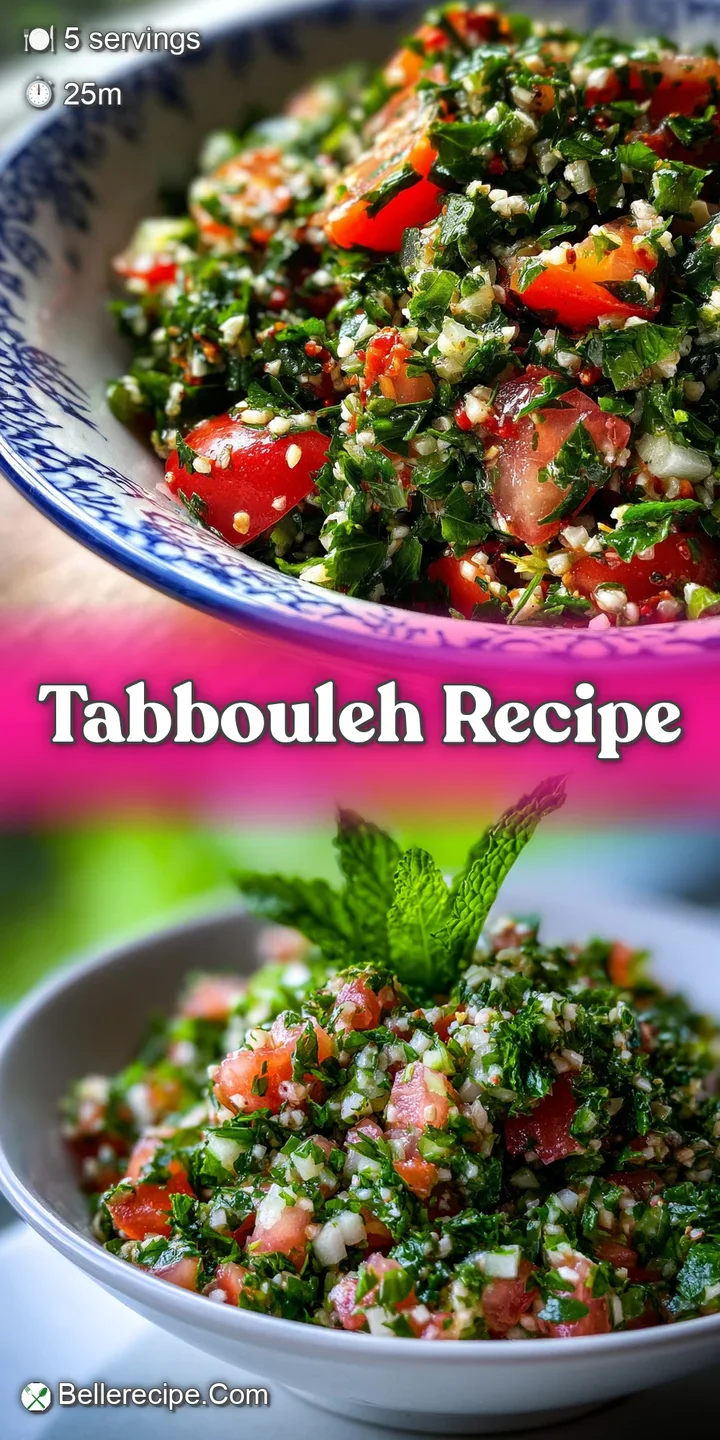
The core ingredients are finely minced flat leaf parsley, fresh mint, fine bulgur wheat, diced tomatoes, green onions, lemon juice, and olive oil. The high ratio of herbs to grain defines authentic tabbouleh, creating a vibrant, zesty salad structure.
What are common mistakes making tabbouleh?
The most common mistake is using boiling water or too much water to hydrate the bulgur, resulting in a soggy salad. Also, bruising the herbs with a dull knife or a food processor causes bitterness and color loss; focus on a very fine, clean chop.
How to make the perfect tabbouleh?
Soak the fine bulgur (#1 grade) directly in the fresh lemon juice for at least 10 minutes until tender, rather than boiling it. Mince the parsley and mint as finely as possible, ensure they are perfectly dry before chopping, and fold the dressing in last.
Is tabouleh unhealthy?
No, tabbouleh is exceptionally healthy, primarily composed of nutrient dense parsley and mint. It is low in calories, high in fresh vitamins, and the healthy fats come from olive oil; it's essentially an herb forward dish.
Can I substitute curly parsley for flat leaf parsley in tabbouleh?
No, it is highly recommended to use flat leaf Italian parsley for the best texture. Curly parsley has a much stiffer, prickly texture that becomes unpleasant when minced finely for this specific salad.
How long can tabbouleh be made ahead of time?
Chop the herbs and vegetables up to 4 hours ahead, but do not dress or mix with the bulgur until just before serving. Once dressed, the acidity starts to break down the herbs, causing the salad to lose its vibrant green color and optimal texture within a few hours.
Is it true that bulgur must be cooked before adding it to the salad?
No, this is a common misconception when using fine grade bulgur (#1). The fine grain is meant to absorb the moisture and acidity from the lemon juice and tomatoes on the cutting board, which both tenderizes and flavors the grain perfectly.
Authentic Tabbouleh Recipe
Ingredients:
Instructions:
Nutrition Facts:
| Calories | 151 kcal |
|---|---|
| Protein | 2.4 g |
| Fat | 11.2 g |
| Carbs | 12.4 g |
| Fiber | 3.8 g |
| Sugar | 2.1 g |
| Sodium | 258 mg |
