Champagne Vinaigrette: the Bright, Balanced, and Beautifully Simple Recipe
- The Art of the Perfect Vinaigrette Emulsion
- The Secret to a Stable and Elegant Dressing
- Essential Ingredients for the Best Champagne Vinaigrette
- Mastering the Method: Step-by-Step Vinaigrette Creation
- Pro Tips: Elevating Your Homemade Champagne Vinaigrette
- Storage and Shelf Life: Keeping Your Dressing Fresh
- Recipe FAQs
- 📝 Recipe Card
The Art of the Perfect Vinaigrette Emulsion
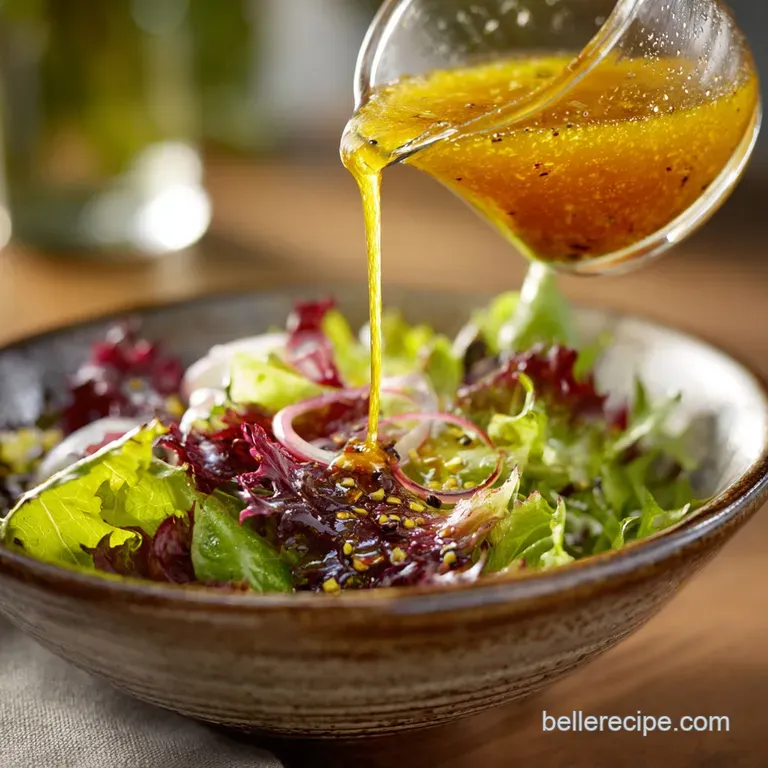
Seriously, just smell this. The aroma of a fresh champagne vinaigrette is so bright, so crisp, almost effervescent. It’s light, delicate, and totally transforms sad salad greens. This dressing is built to coat, not drown, everything it touches.
You absolutely do not need to buy bottled dressing ever again, trust me. Homemade is faster, cheaper, and tastes 1,000% better than that weirdly thick stuff that’s been sitting on a shelf for six months. This elegant dressing is ready in ten minutes flat and makes you look like a total culinary genius.
I know, emulsifying can sound intimidating, but it’s actually incredibly straightforward once you know the little secrets. We're going to use real world tips the ones I learned by making (and breaking) hundreds of batches to get you a perfectly stable, beautifully balanced champagne vinaigrette recipe .
Let's crack on.
The Secret to a Stable and Elegant Dressing
The Role of Champagne Vinegar in Elevating Flavor
Champagne vinegar is the star here, providing a flavor profile that regular white wine vinegar just can’t touch. It’s softer, more subtle, and carries a delicate fruitiness that balances beautifully against fat and sugar.
We're chasing elegance, not harsh sharpness, which is why we spring for the good stuff. If you use a cheap, harsh vinegar, the final dressing will taste aggressive and disjointed.
Why Homemade Always Wins Over store-bought Dressings
Commercial dressings rely on thickeners and stabilizers to keep them shelf stable for months, often leading to a texture that is strangely slimy or overly gloopy. When you make your own champagne vinaigrette dressing , you control the quality of the oil and the freshness of the aromatics.
Plus, there are zero mystery ingredients, which is always a bonus for my peace of mind.
Understanding the Emulsion: Shaking vs. Whisking
A true emulsion where oil and acid are suspended together needs energy and a stabilizing force. Shaking works quickly, but it often leads to a quick break. Whisking slowly introduces the oil in tiny droplets, allowing the emulsifier (hello, Dijon!) to coat those droplets and hold the suspension far longer.
Whisking yields a creamier, more stable product.
Balancing Acidity and Oil (The Essential 3:1 Ratio)
I’ve seen recipes that swear by a strict 3 parts oil to 1 part vinegar, and that’s a decent starting point. However, I find that classic 3:1 often leaves the dressing feeling too oily and heavy, especially with delicate greens.
My version shifts that slightly toward the acid side, maybe a 2.5:1 ratio, which is why we call for 1/4 cup vinegar to 3/4 cup oil total. This gives you a much brighter, fresher finish, essential for a proper champagne vinaigrette salad dressing .
Essential Ingredients for the Best Champagne Vinaigrette
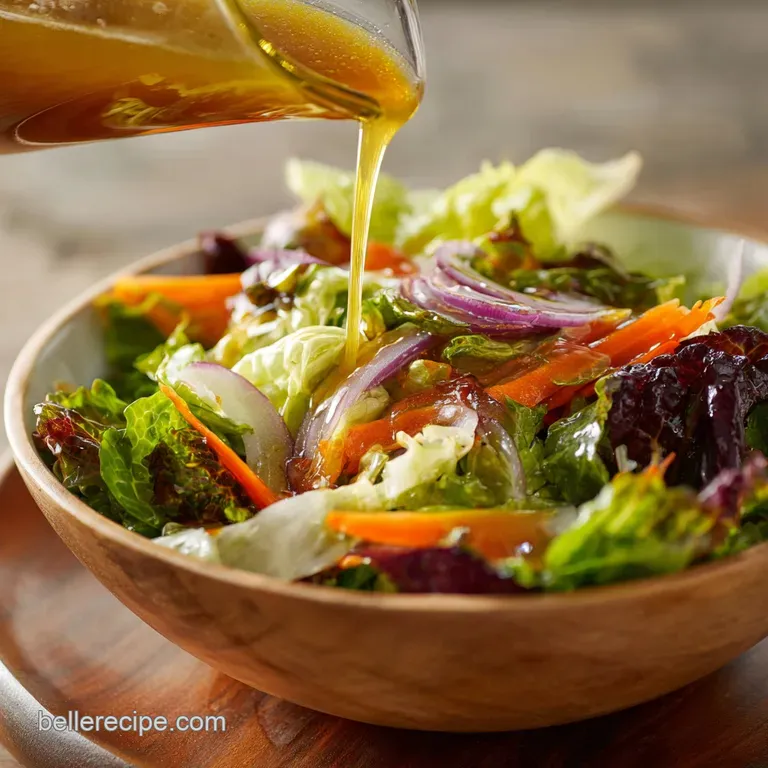
This ingredient list is short because we want the Champagne vinegar to truly shine. Less is definitely more when dealing with such a delicate flavor. The biggest tip I have is to use room temperature ingredients. Cold oil and cold vinegar do not want to become friends.
Deep Dive: Sourcing Quality Champagne Vinegar
Don't panic if you can't find a dedicated bottle; sometimes, it’s labeled "sparkling wine vinegar." It tends to be pricier than standard vinegars, but a bottle lasts ages because you use so little. When buying, look for a light, clear color, indicating purity.
Choosing the Right Neutral Oil (Canola vs. Grapeseed)
I mix oils here: 2 parts neutral, 1 part EVOO. I prefer grapeseed or sunflower oil for the bulk because they truly have no flavor and allow the vinegar to pop. Canola works, but I think it can sometimes feel heavy. A touch of good, mild EVOO adds a necessary roundness and complexity without overpowering the dish.
The Importance of Dijon Mustard (The Hidden Emulsifier)
Dijon mustard is our secret weapon and the essential piece of kitchen magic that holds everything together. It contains proteins that wrap around the tiny oil droplets, stabilizing the mix and preventing it from separating instantly. Plus, its sharp flavor adds depth without being spicy.
Do not skip the Dijon.
Smart Swaps for Sweetness (Honey, Sugar, or Maple Syrup)
You need a touch of sweetness to cut through the sharp acidity of the vinegar. I love honey because it also helps the emulsion slightly and dissolves easily. Maple syrup is a brilliant vegan alternative and offers a richer flavor.
Granulated sugar is fine, but you must make sure it fully dissolves in the vinegar before adding the oil, otherwise, you'll have a gritty dressing.
Ingredient Substitutions for Dietary Restrictions
| Ingredient | Substitute (Same Ratio) | Key Flavor Change |
|---|---|---|
| Champagne Vinegar | high-quality White Wine Vinegar or Sherry Vinegar | Slightly sharper, less floral notes. |
| Grapeseed/Sunflower Oil | Light Olive Oil or Avocado Oil | Avocado oil is a great neutral option. |
| Dijon Mustard | 1/2 tsp Dried Mustard Powder + 1/2 tsp water | Less creamy, but maintains emulsifying properties. |
| Honey/Maple Syrup | 1 tsp Agave Nectar or 1/2 tsp fine Granulated Sugar | Granulated sugar requires full dissolving. |
| Shallot | 1 tsp very finely minced red onion (must be rinsed first) | Red onion is stronger; rinsing removes harshness. |
Mastering the Method: step-by-step Vinaigrette Creation
Prepping Your Aromatics: Fine Mincing for Smoothness
The shallot needs to be almost a paste; no one wants to bite into a big chunk of raw shallot in a delicate dressing. Use your sharpest knife and mince it down as finely as possible. If you’re truly texture averse, you can skip the shallot, but you’ll lose a lot of depth.
The Initial Mix: Acid and Seasoning First
In your bowl, combine the Champagne vinegar, Dijon, salt, pepper, and sweetener. Whisk aggressively for about 30 seconds until the salt and sugar are mostly dissolved. Now, let it rest for five minutes.
This resting period I call it macerating softens the shallot and infuses the vinegar with its flavor.
Slowly Incorporating the Oil for Maximum Body
This is the most critical step, so don't rush! Place a damp towel under your bowl to anchor it; this is a pro move that changes everything. Start whisking continuously with one hand. With the other, stream the oil (the combined neutral oil and EVOO) in the thinnest, slowest trickle possible .
I mean drips, initially.
Achieving the Perfect Viscosity: Know When to Stop Whisking
As you stream the oil, the mixture will change from clear and watery to cloudy and pale yellow. Once about a quarter of the oil is in and it looks stable, you can speed up the flow slightly to a steady, thin drizzle. Continue until all oil is incorporated and the dressing lightly coats the back of a spoon.
If you stop whisking, you stop the emulsion.
Chef's Note: If your arm is tired, switch hands, but whatever you do, keep that whisk moving! Achieving the perfect champagne vinaigrette salad dressing recipe is 90% whisking dedication.
Pro Tips: Elevating Your Homemade Champagne Vinaigrette
What to Do If Your Vinaigrette Breaks (The Recovery Method)
If your dressing looks separated like oil floating on top of vinegar it means you added the oil too quickly. Don't throw it out! Grab a clean bowl and add one teaspoon of hot tap water or a fresh teaspoon of Dijon mustard.
Whisk this new mixture vigorously, then slowly start pouring the broken dressing into the new bowl, whisking the entire time. The small amount of water or the fresh Dijon helps re-establish the emulsion.
Seasoning Correctly: Tasting and Adjusting the Finish
The flavor will change once the acid and oil marry. Always taste the finished dressing. Does it taste a little flat? Needs salt. Is it too sharp? Add a tiny touch more honey. Is it perfect but maybe needs a kick? Grind in a tiny bit more black pepper.
Infusing Flavor: Adding Fresh Herbs to the Mix
I love adding finely snipped chives at the end for color and a delicate oniony punch, but you could easily use fresh tarragon or dill if you're pairing this with seafood. Add the herbs just before serving; acid tends to dull their vibrant green color over time.
Storage and Shelf Life: Keeping Your Dressing Fresh
Refrigeration Guidelines: How Long Will It Last?
Because this recipe contains fresh shallots, it has a shorter shelf life than processed bottled dressings. Stored in an airtight jar in the fridge, your beautiful champagne vinaigrette will keep perfectly for about 5 to 7 days. I rarely make a double batch for this reason.
Ideal Pairings for the Bright Acidity
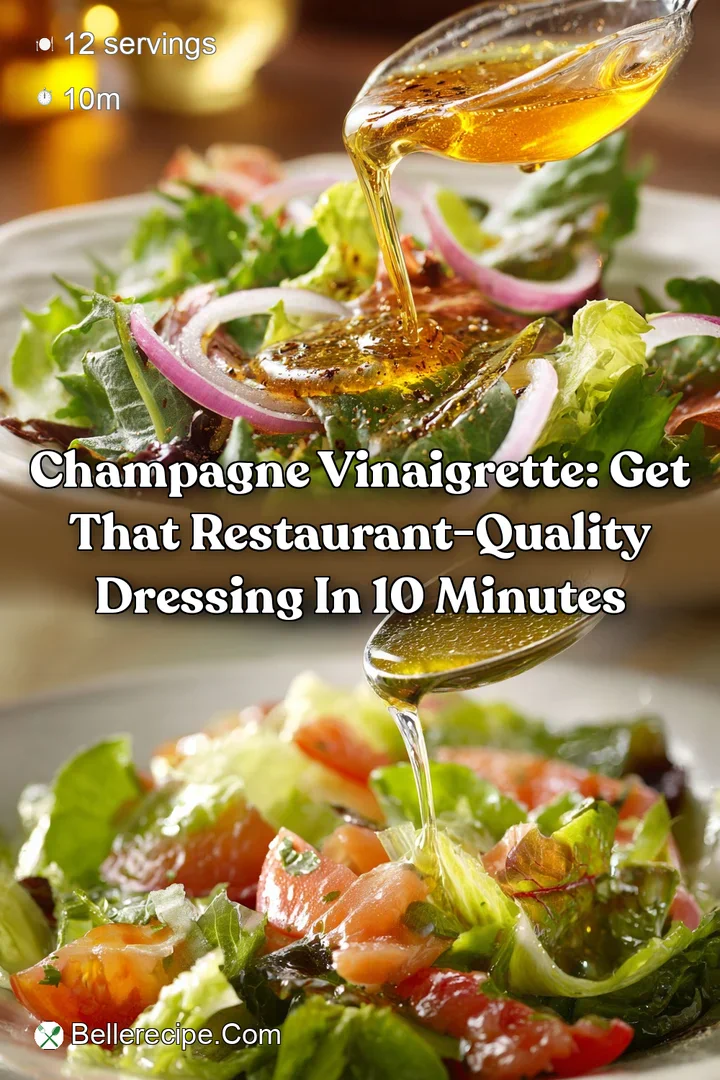
This dressing is magic over light spring greens like butter lettuce, fresh asparagus spears, or delicate frisée. It also works beautifully to cut the richness of creamy goat cheese or mozzarella on a salad. Its brightness is key, making it excellent for a summer side.
Drizzling Over Roasted Vegetables and Starches
Don't just limit this to salads! It's fantastic drizzled over warm, roasted potatoes right when they come out of the oven. I also use it as a finishing sauce for steamed green beans or blanched snap peas. The heat of the vegetable mellows the sharp acid just enough and gives you a wonderful, zippy flavor.
Recipe FAQs
How long does the Champagne Vinaigrette last, and how should I store it?
This vinaigrette should be stored in an airtight container in the refrigerator for up to 5 to 7 days. Since the oil will likely solidify when chilled, allow the vinaigrette to sit on the counter for 10 minutes to warm up slightly. Always give it a vigorous shake before serving to ensure the emulsion is restored.
Why did my vinaigrette separate or refuse to emulsify properly?
Separation usually happens if the oil is added too quickly or if the temperature difference between ingredients is too great. To fix a broken dressing, add half a teaspoon of Dijon mustard (a powerful emulsifier) to the mixture.
Whisk constantly while slowly streaming in one more tablespoon of oil until the mixture thickens and stabilizes.
Can I use White Wine Vinegar instead of Champagne Vinegar?
Yes, white wine vinegar is the closest substitute and provides a similar light, sharp acidity necessary for the recipe’s brightness. However, avoid strong alternatives like balsamic or red wine vinegar, as their flavor profiles will completely overwhelm the delicate notes required for this classic vinaigrette.
If you must substitute, use high-quality white wine or sherry vinegar.
Is it acceptable to use extra virgin olive oil instead of a neutral oil?
While technically possible, using extra virgin olive oil (EVOO) can significantly change the flavor profile. Champagne vinaigrette is designed to be elegant and bright, using a neutral oil like grapeseed or sunflower ensures the vinegar is the star.
EVOO often adds a strong grassy or peppery note that masks the intended delicacy of the dressing.
How can I make this vinaigrette creamy without adding dairy?
The simplest way to achieve creaminess is to increase the amount of Dijon mustard or add a small amount of honey or maple syrup. These ingredients help the oil and vinegar bind more strongly, giving the vinaigrette a richer mouthfeel.
For a thicker consistency, whisk in 1/4 teaspoon of finely minced shallot or garlic paste.
What types of salads or dishes pair best with this light vinaigrette?
This delicate vinaigrette is best suited for subtle flavors and tender greens, like Bibb lettuce, endive, or mixed spring greens. It is also excellent drizzled over cold, poached seafood, steamed asparagus, or fresh cucumber and avocado slices.
Avoid pairing it with heavily roasted vegetables or ingredients that have powerful flavor profiles.
I added too much sugar, and now the dressing is overly sweet. How can I balance the flavor?
If the dressing is too sweet, you need to increase the acidity and sharpness to achieve balance. Slowly whisk in an additional half teaspoon of Champagne vinegar until the sweetness is cut. You can also add a small pinch of sea salt or black pepper to enhance the savory notes and further distract from the sugar.
Classic Champagne Vinaigrette Dressing Recipe
Ingredients:
Instructions:
Nutrition Facts:
| Calories | 374 kcal |
|---|---|
| Protein | 0.2 g |
| Fat | 39.8 g |
| Carbs | 2.1 g |
