Dandelion Wine: Sunshine in a Bottle Recipe

Bottling Liquid Sunshine: The Magic of Traditional Dandelion Wine
There is nothing quite like the delicate, almost citrusy aroma that fills your kitchen when you first steep those bright yellow petals for Dandelion Wine . It smells instantly like high summer a complex blend of honeyed sweetness and sharp, fresh lemon.
This is bottled liquid sunshine, friends, and it is far more sophisticated than a beverage made from a common garden "weed."
Honestly, making your own Dandelion Wine is the perfect response to the gardening season, turning an endless chore (pulling dandelions) into a rewarding project. It’s incredibly cheap to produce, though it does require a vast amount of patience.
Trust me, the waiting game is absolutely worth it for that final, clear, golden glass.
This isn't a quick cocktail or a weekend project; this is a dedication to slow, deliberate brewing. If you follow my real world tips especially the ones about the green bits you’ll end up with the best homemade batch you have ever tasted.
Let's crack on and learn how to make Dandelion Wine properly.
The Science of Successful Home Brewing
This isn't just about throwing things into a bucket and hoping for the best. To create truly clean, delicious Dandelion Wine , we need to understand the simple chemistry behind the process.
A Literary and Folkloric History
People have been fermenting plants for millennia, but Dandelion Wine holds a particularly special place in the English countryside and American literary tradition. Think of Ray Bradbury; he elevated this humble drink to an almost mythic status a distillation of memory and youth.
This longevity proves that when properly executed, this floral tipple is complex and enduring, holding flavor for years if aged correctly.
What Makes Dandelion Flowers Ideal for Fermentation?
Dandelions possess natural sugars, of course, but their petals also carry unique volatile oils that give the wine its signature floral, slightly bitter note. Fermentation relies on converting these sugars into alcohol and CO2, and the dandelions provide the perfect light base for the yeast to work its magic without overpowering the delicate citrus additions.
The Expected Flavor Profile: Notes of Citrus and Honey
When you finish the long process of making homemade dandelion wine , you should be aiming for a profile that is dry, bright, and highly floral. It should not taste like dirt or grass.
The flavor should hit you with immediate notes of lemon and orange, followed by a light, lingering honey or meadow sweetness on the finish.
Balancing Acidity: Using Lemons and Oranges for Structure
Yeast needs an acidic environment to thrive and to prevent spoilage bacteria from taking hold. The combination of fresh lemon and orange juice serves two purposes: providing necessary acid structure and enhancing the overall flavor complexity.
Without the citrus, the Dandelion Wine would taste flat and one-dimensional, lacking that essential zing .
Why Removing Green Bits is Non-Negotiable
This is the most critical step and where most amateur brewers fail. The green base (sepals) and any stem fragments contain bitter chlorophyll and latex. If these leach into your must, your wine will taste intensely bitter, green, and completely undrinkable.
You must spend the time meticulously separating the yellow petals only. I know it's tedious, but there are no shortcuts here.
Yeast Selection: Choosing the Right Strain for a Floral Finish
We are using a robust wine yeast, specifically one tolerant of higher alcohol levels, like Lalvin EC-1118. Why not bread yeast? Bread yeast stalls easily, produces odd flavors, and cannot handle the high sugar content needed for strong wine.
This specialized strain ensures a clean fermentation that lets the delicate floral notes shine through instead of masking them with bready funk.
Essential Components for Your Batch
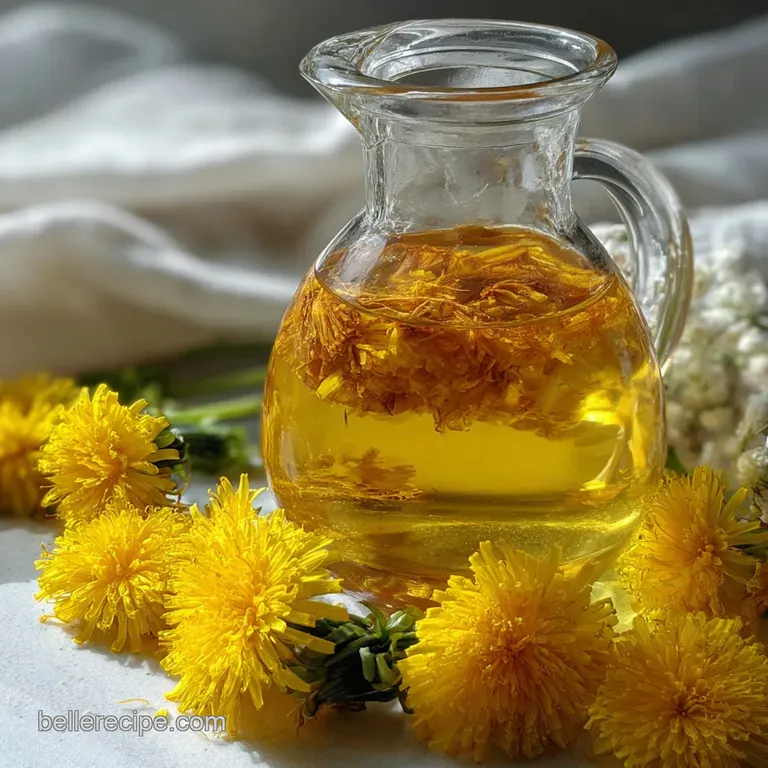
Before we start boiling water, let's talk about sourcing and handling the key dandelion wine ingredients .
Harvesting and Preparing the Dandelion Petals
The best time to pick is mid-morning on a sunny day, after the dew has dried but before the sun gets too intense and makes the flowers droopy. Only collect dandelions from an area you know is pesticide free this is mandatory!
You need 4 cups, tightly packed, but you might need to pick 6 or 7 cups initially to account for waste once you remove the green bits.
Sugar Selection: Granulated vs. Specialty Options
We use standard granulated sugar because it is highly refined and dissolves cleanly, ensuring a clear, bright wine.
| Ingredient | Substitute | Impact on Wine |
|---|---|---|
| Granulated Sugar | high-quality Honey (2 lbs) | Creates a richer, Mead like flavor; slower to ferment. |
| Dandelion Petals | Elderflowers (Equal volume) | Changes flavor profile completely to more perfumed/lychee notes. |
Citrus Alternatives for Brightness
The zest provides the essential aromatic oils, and the juice provides the acid. If you can’t get fresh citrus, you can swap it out, but you lose the aromatics. For a better Dandelion Wine with Oranges and lemons, stick to fresh fruit.
Chef's Note: If you truly cannot use fresh citrus, substitute the juice with 2 teaspoons of Citric Acid crystals and, ideally, add a tiny splash of white grape concentrate for flavor depth.
Equipment Check: Must Have Fermentation Tools
I made the mistake of trying to brew in a food grade bucket once without a hydrometer, and it stalled entirely. You need specific equipment to avoid failure. Sanitation is not optional; it is the foundation of winemaking.
You must have a proper airlock system and sanitizer, and yes, you absolutely need a hydrometer to measure the specific gravity (SG). Without tracking the SG, you are just guessing when the fermentation is actually done, which leads to exploding bottles later.
The Complete Dandelion Wine Making Process
Follow these steps precisely. Sanitation is always Step Zero!
Stage 1: Creating the Primary Mash and Infusion
- Sanitize Everything! Seriously, clean your pots, spoons, and primary fermenter with a dedicated sanitizing solution.
- Prepare the Flowers: Sit down, put on some music, and meticulously strip the yellow petals away from every last trace of green. This is crucial for the best dandelion wine recipe .
- Boil the Must: Bring your filtered gallon of water to a boil. Remove it from the heat immediately. Stir in the 3 lbs of granulated sugar until the liquid is perfectly clear. This hot liquid is now your must.
- Infuse: Stir in the petals, the lemon and orange zest, and the black tea (or tea bag). Cover the pot and let it steep at room temperature for 24 to 48 hours. I usually give mine 36 hours; you want the liquid to smell deeply floral and slightly tannic.
- Strain: Use your fine mesh strainer and muslin cloth to strain the liquid into your primary fermentation vessel. Gently squeeze the solids don't aggressively wring, or you might introduce some bitterness from any residual green matter. Discard the solids.
Stage 2: Introducing the Yeast and Air Lock Setup
- Cool It Down: This is where you kill the yeast if you mess up. The must must be below 75°F (24°C). If it's too hot, wait.
- Adjust and Additives: Stir in the lemon and orange juices, the pectic enzyme (which helps clarity later), and the yeast nutrient.
- Check SG: Take your initial hydrometer reading and record it (Target: 1.090 1.100).
- Pitch the Yeast: Rehydrate your wine yeast according to the packet (usually 15 minutes in a small amount of warm water). Add the active, bubbly yeast culture to the cool must and stir gently.
- Seal and Wait: Fit the bung and airlock onto the vessel and place it in a stable, dark, temperate location (65 70°F is perfect). You should hear that satisfying "plop plop" of the airlock within a day or two as fermentation begins.
Racking and Clarification Procedures
Once the initial vigorous bubbling slows down significantly (usually around 7 days), it’s time to perform your first racking. Racking means siphoning the clear wine into a clean vessel, leaving the thick, sludge like sediment (the lees) behind.
This is vital for achieving clarity and preventing yeasty, sour flavors from developing in your Dandelion Wine . Repeat this process every 4 6 weeks during secondary fermentation.
Patience Required: Secondary Fermentation and Ageing Timelines
Secondary fermentation can take 3 to 6 months. Do not rush this. The wine is slowly dropping sediment and converting trace sugars. Once the wine is crystal clear and completely stable (SG doesn't change for two weeks), you can bottle. But the real magic happens in the bottle.
Age your finished homemade dandelion wine for a minimum of 6 months, but 12 18 months will yield the best, smoothest results.
Troubleshooting and Refining Your Vintage
We all make mistakes. Here’s what trips people up when they are trying to figure out how to make dandelion wine .
Preventing Off-Flavors: Why Bitterness Occurs
If your wine tastes too bitter, you almost certainly included too much green plant matter during the initial prep. Unfortunately, there is no magic fix mid-fermentation. You can try blending the finished wine with a less bitter fruit wine (like a clean apple cider wine) to mask it, or you can sweeten it aggressively to balance the bitterness out.
Adjusting Specific Gravity for Optimal Alcohol Content
If your initial SG was too low (below 1.080), your final alcohol content will be too low. If it was too high (above 1.110), your yeast might struggle and stall. If you discover your initial gravity is too low, gently stir in up to 1/2 lb more dissolved sugar before pitching the yeast.
Handling a Stalled Fermentation
If your airlock stops bubbling unexpectedly and your SG is still high (above 1.010), your fermentation has likely stalled. This happens due to temperature shock or lack of nutrients.
- Check Temperature: Ensure it’s warm enough (68°F minimum).
- Add Nutrients: Gently mix in a small amount of extra yeast nutrient.
- Repitch: Rehydrate a fresh packet of the same wine yeast and pitch it into the must. Give it a few days.
Enjoying and Preserving Your Homemade Brew
You’ve waited a year for this. Let’s talk about the final reward!
Best Practices for Long Term Storage and Cellaring
Once bottled and corked, store your Dandelion Wine on its side in a cool (50 60°F), dark location, just like commercial wine. Keeping it horizontal prevents the cork from drying out and letting oxygen spoil your hard work.
Shelf Life: Does Dandelion Wine Improve With Age?
Yes! It absolutely does. When young, it can be sharp, yeasty, or acidic. During the first year of bottle aging, the flavors integrate, the acidity mellows, and the floral notes become more refined. This is why aging 12 18 months is truly the ideal for this type of delicate, light wine.
Properly cellared, this can last for 3 5 years easily.
Perfect Pairings: What to Serve Alongside Dandelion Wine
Because dandelion flower wine is dry, light bodied, and highly aromatic, it shines brightest alongside equally delicate dishes. Avoid heavy red meats or strong spices.
It works beautifully as an aperitif, served lightly chilled, or paired with a light, simple goat cheese salad dressed with citrus vinaigrette. You could also serve it alongside a fresh fruit and cheese platter the subtle honeyed notes complement mild, creamy cheeses perfectly.
This is a celebration of spring, bottled!
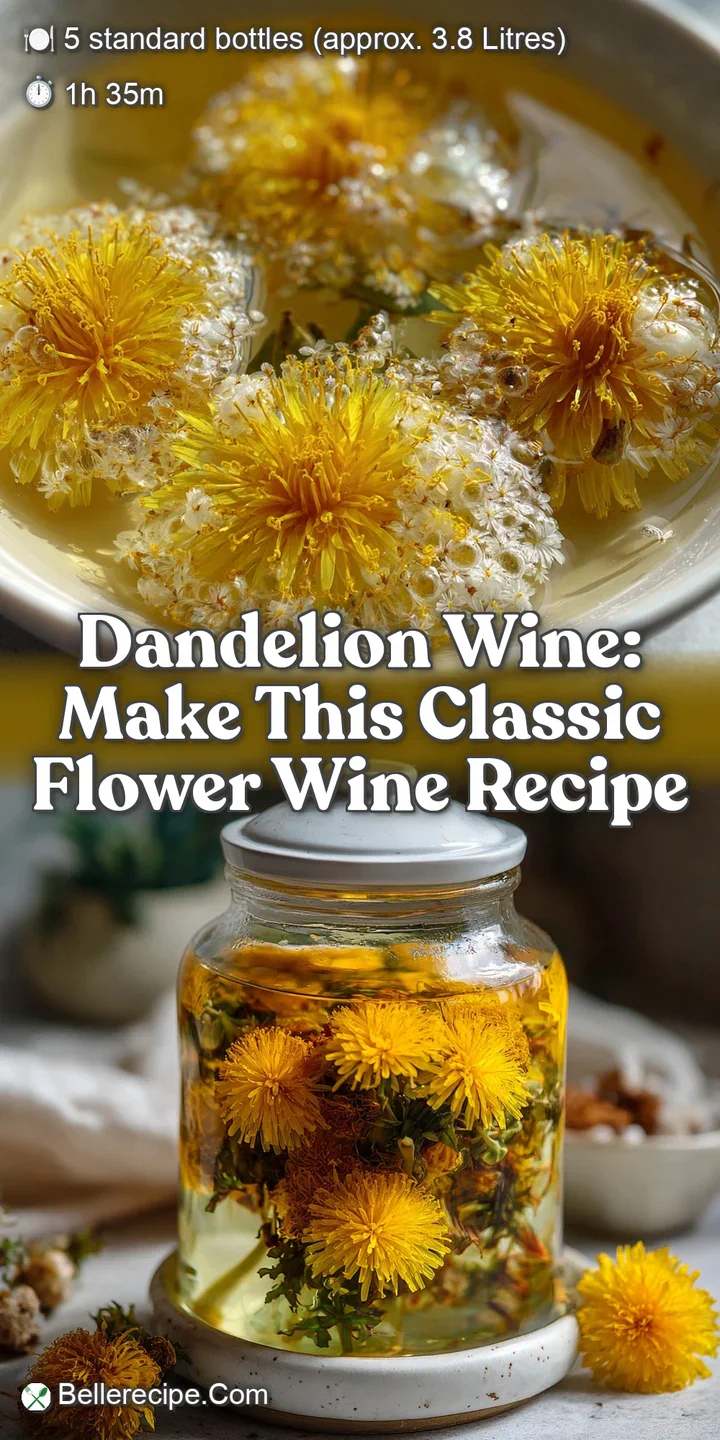
Recipe FAQs
Do I need to remove the green parts (sepals) from the dandelion heads?
Yes, removing the green sepals is critical and non-negotiable for producing delicate wine. The green parts contain bitter compounds that, when steeped and fermented, will ruin the floral delicacy of the finished product. This step prevents an unpleasant, grassy aftertaste.
How long does Dandelion Wine need to age before it is ready to drink?
Dandelion wine benefits immensely from aging and should typically mature for at least 6 months to a year before consumption. This duration allows the sharp fermentation flavors to mellow significantly and lets the subtle floral notes integrate properly. If drunk too young, it can taste overly yeasty or unbalanced.
My finished wine is very cloudy or hazy. How can I clarify it?
Haze is often caused by suspended yeast sediment, proteins, or pectin after fermentation ceases. Ensure you rack the wine several times, allowing gravity to pull the particulates down with each transfer.
For quicker results, specialized fining agents like Bentonite clay or Kieselsol can dramatically improve clarity within a few weeks.
Why is my wine tasting too dry or slightly sour? Can I fix the flavor?
A dry flavor means the yeast consumed all the fermentable sugars, resulting in low residual sweetness. To remedy this, you must first stabilize the wine using sulfites and potassium sorbate to halt all yeast activity.
After stabilization, you can back sweeten with a simple sugar syrup or honey until the desired flavor balance is achieved.
Can I use dandelions found on any typical residential lawn?
Absolutely not; you must be extremely selective about your foraging location. Only harvest dandelions from areas you know are entirely free of herbicides, pesticides, or pet waste. Contamination from these chemicals can seriously impact both the safety and the final flavor profile of your wine.
What is the minimum volume of flowers required for a standard gallon batch?
For a standard 1-gallon batch, you should aim for at least 8 to 10 cups, or roughly 2 quarts, of tightly packed, desepaled flower heads. Harvesting on a warm, sunny day is also recommended because the flowers will be fully open, maximizing their pollen and natural sugar content.
Can I substitute other citrus fruits for the lemons and oranges?
While substitutions are possible, proceed with caution as citrus type heavily influences the final flavor balance. Limes can be used but will introduce a sharper, more tart profile, which may overpower the delicate dandelion notes. Avoid highly bitter fruits like grapefruit entirely.
Classic Dandelion Wine Recipe
Ingredients:
Instructions:
Nutrition Facts:
| Calories | 264 kcal |
|---|---|
| Protein | 0.1 g |
| Fat | 0.2 g |
| Carbs | 68.0 g |
