Savory Crab Brulee Recipe
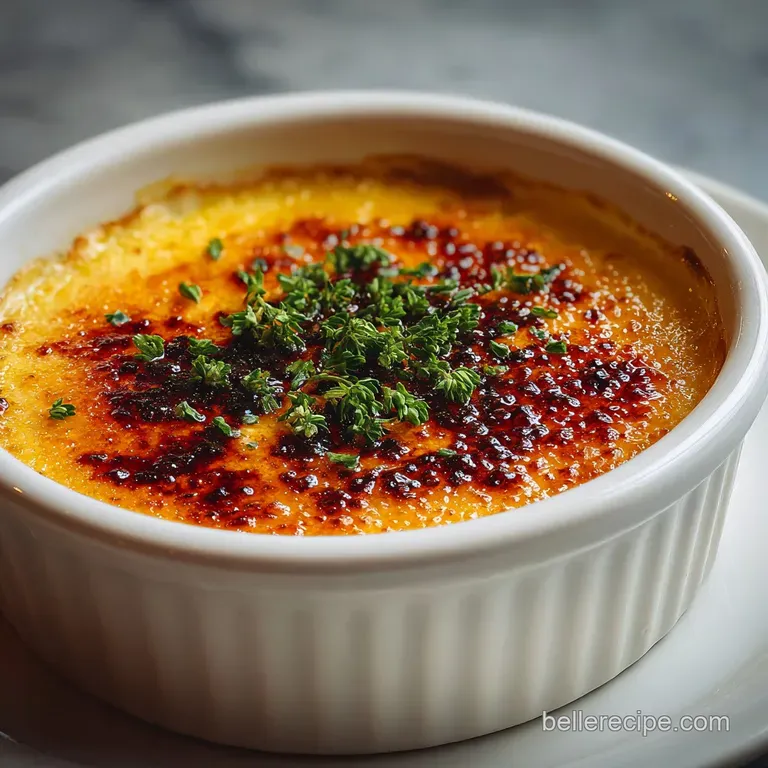
- Time: Active 15 minutes, Passive 35 minutes, Total 50 minutes
- Flavor/Texture Hook: Silky, sea salted custard with a shatter crisp umami lid
- Perfect for: Upscale dinner parties or a mindful holiday appetizer
- Make-ahead: Prepare the custard base up to 24 hours before baking
- Mastering a Savory Crab Brulee Recipe
- Why This Custard Texture Works
- Recipe Specs for Success
- Selecting Your High Quality Ingredients
- Essential Tools for Silky Custard
- Preparing the Savory Custard Base
- Avoiding Common Kitchen Disasters
- Simple Substitutions and Dietary Swaps
- Storing and Repurposing Your Leftovers
- Best Pairings for Savory Appetizers
- Savory Brulee Myths
- Recipe FAQs
- 📝 Recipe Card
The first time I smelled a crab brulee recipe baking in my oven, I knew my dinner party game had changed forever. It wasn't the sweet, vanilla heavy scent of a traditional dessert, but rather the warm, coastal aroma of Old Bay and gentle alliums swirling through heavy cream.
There is something deeply comforting about a warm custard, and when you fold in fresh jumbo lump crab, it transforms into something truly special that your friends will talk about for weeks.
I used to think savory custards were strictly the territory of high end French bistros, but honestly, if you can whisk an egg, you can make this. We’ve all been there, staring at a gorgeous piece of seafood and wondering how to treat it with the respect it deserves without overcomplicating things.
This dish is my favorite answer to that dilemma because it relies on simple, high-quality ingredients and a few mindful techniques to achieve a professional result.
In this guide, I’m sharing everything I’ve learned from my own kitchen mishaps, like that one time I scrambled the eggs by rushing the heat. We are going to walk through the process together, focusing on the sensory cues the scent of the garlic, the sight of the custard’s "jiggle," and the sound of the sugar shattering under a spoon.
Let's get into what makes this particular crab brulee recipe work so well.
Mastering a Savory Crab Brulee Recipe
The magic of a savory brulee lies in the balance between the rich, fatty custard and the light, sweet and salty notes of the crab. When you take that first bite, you should experience a distinct "shatter" from the caramelized topping followed by a velvety, melt on-the tongue interior.
Achieving this requires a basic understanding of how proteins and fats interact under gentle heat.
- Protein Coagulation
- Egg yolks thicken the heavy cream into a delicate gel by forming a network that traps liquid when heated to exactly 150°F.
- Aromatic Infusion
- Steeping the garlic and shallot in the cream allows fat soluble flavor compounds to distribute evenly throughout the entire dish.
- Maillard Reaction
- The combination of granulated sugar and Parmesan cheese creates a complex, savory sweet crust that provides essential bitterness to cut through the richness.
Chef's Note: I highly recommend using a kitchen torch for the crust rather than the broiler. The broiler tends to heat the custard too much, causing it to lose that silky texture, whereas a torch gives you surgical precision over the caramelization.
Why This Custard Texture Works
When we talk about a successful crab brulee recipe, texture is everything. If the custard is too firm, it feels like a quiche; if it's too soft, it feels like a sauce. We are looking for that "middle ground" where it holds its shape on a spoon but dissolves instantly.
- Lipid Emulsification: The high fat content in the 2 cups of heavy whipping cream coats the egg proteins, preventing them from bonding too tightly and becoming rubbery.
- Controlled Hydration: Using 5 large egg yolks instead of whole eggs ensures a denser, creamier finish because we aren't introducing the high water content found in egg whites.
- Gentle Conduction: A water bath (bain marie) acts as a thermal buffer, keeping the edges of the ramekins from overcooking before the center sets.
| Component | Science Role | Pro Secret |
|---|---|---|
| Heavy Cream | Fat Carrier | Infuse with aromatics for 15 minutes to maximize depth. |
| Egg Yolks | Emulsifier | Use room temperature yolks to prevent the cream from curdling. |
| Lump Crab | Structural Protein | Drain thoroughly to avoid watering down the custard base. |
| Parmesan | Mineral Crunch | Grate it micro fine so it integrates with the sugar for a better "snap." |
Recipe Specs for Success
Before you reach for your whisk, let's look at the numbers. Success in the kitchen often comes down to these tiny details that ensure your crab brulee recipe turns out exactly as intended. I've found that skipping the room temperature step for eggs is the most common reason for a "broken" custard.
- Precision Checkpoint 1: Ensure egg yolks are at room temperature (about 68-70°F) before tempering.
- Precision Checkpoint 2: Bake until the internal temperature of the custard reaches 150°F-155°F.
- Precision Checkpoint 3: Allow the baked custards to chill for at least 2 hours before adding the topping.
Decision Shortcut
- If you want a smokier profile, increase the smoked paprika to 0.75 tsp and use a smoked sea salt.
- If you want a cleaner, brighter taste, swap the Old Bay for lemon zest and a pinch of cayenne.
- If you want a richer finish, use a high fat European style heavy cream (40% fat).
Selecting Your high-quality Ingredients
The ingredients for this crab brulee recipe are few, so each one needs to shine. I always tell my friends that the quality of your seafood will make or break this dish. While you can use canned crab in a pinch, fresh jumbo lump crab from the seafood counter offers a sweetness that can't be replicated. If you are feeling adventurous, you could even use the liquid from my seafood stock recipe to poach the aromatics for an even deeper ocean flavor.
- 8 oz fresh jumbo lump crab meat: This is the star. Pick through it carefully to remove any stray shells. Why this? Lump crab provides the best textural contrast against the smooth custard.
- 2 cups heavy whipping cream: Look for a brand without stabilizers like carrageenan for the cleanest mouthfeel. Why this? High fat content is necessary for the signature brulee silkiness.
- 5 large egg yolks: Use organic or pasture raised eggs for a vibrant yellow color. Why this? Yolks provide the rich, fatty backbone for the emulsion.
- 1 tsp Old Bay Seasoning: The classic coastal blend that pairs perfectly with crab.
- 1 tbsp fresh chives: Mince them as finely as possible.
- 1 small shallot & 1 clove garlic: These provide the aromatic base.
- 2 tbsp granulated sugar & 2 tbsp grated Parmesan: The dual purpose topping.
| Original Ingredient | Substitute | Why It Works |
|---|---|---|
| Jumbo Lump Crab | Chopped Shrimp | Similar sweetness; provides a firmer bite than canned crab meat. |
| Old Bay Seasoning | Cajun Seasoning | Adds more heat and garlic notes; less celery salt flavor. |
| Heavy Cream | Coconut Cream | Same fat content. Note: Adds a distinct tropical flavor to the dish. |
Essential Tools for Silky Custard
You don't need a professional kitchen, but a few specific tools will make this crab brulee recipe much easier. I personally love using my Le Creuset stoneware ramekins because they distribute heat so evenly.
- Fine mesh Sieve: Absolutely essential for straining the cream to ensure no bits of garlic or shallot end up in the final custard.
- Kitchen Torch: A Bernzomatic or similar butane torch is much more effective than a broiler for that "glass like" sugar lid.
- KitchenAid Whisk: For gently combining the yolks and cream without incorporating too much air (we don't want bubbles!).
- Deep Baking Pan: A Lodge 9x13 roasting pan works great for the water bath.
Preparing the Savory Custard Base
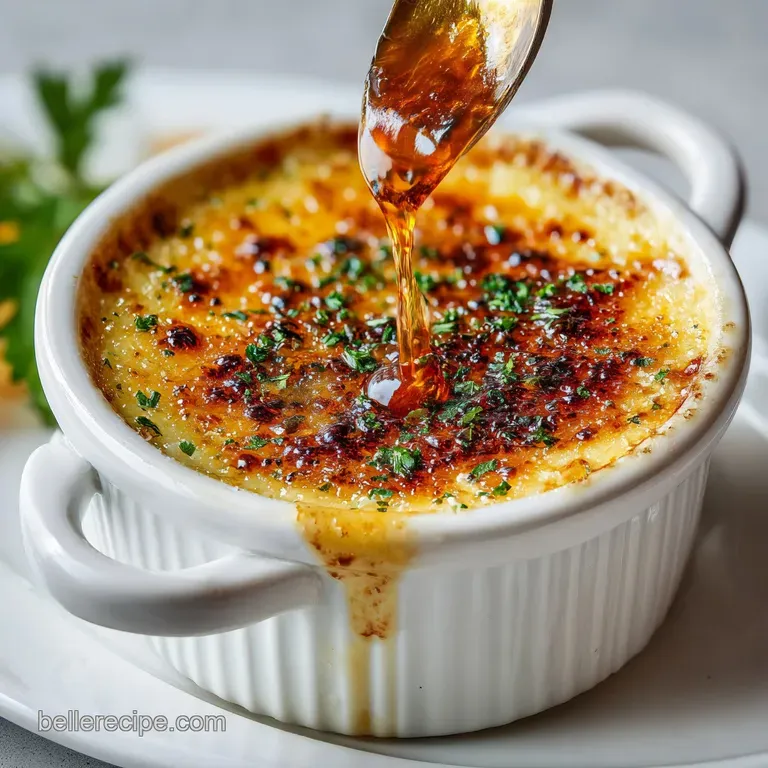
This is where the magic happens. As the cream heats with the garlic and shallot, you’ll notice a fragrant, savory aroma filling the kitchen. This is a mindful process don't rush it. This technique is actually very similar to how I start my Creamy Seafood Risotto recipe, where building layers of flavor in the liquid is key.
1. Infuse the Aromatics
Combine the 2 cups of heavy cream, minced shallot, and smashed garlic in a small saucepan over medium heat. Cook until bubbles just start to form at the edges, then remove from heat. Let it steep for 15 minutes.
Note: This allows the volatile oils in the alliums to permeate the fat in the cream.
2. Prepare the Seafood
In a small bowl, gently toss the 8 oz crab meat with 1 tsp Old Bay and 1 tbsp minced chives. Handle carefully so you don't break those beautiful jumbo lumps. Divide the mixture evenly among 6 ramekins.
3. Temper the Custard
Whisk the 5 egg yolks with 0.5 tsp kosher salt and 0.25 tsp white pepper. Slowly drizzle the warm cream into the yolks, whisking constantly. Note: Adding the cream too fast will scramble the eggs. Strain the mixture through a fine mesh sieve.
4. Assemble and Bake
Place the ramekins in a large baking dish. Pour the custard mixture over the crab in each ramekin. Add boiling water to the baking dish until it reaches halfway up the sides of the ramekins.
5. The Oven Phase
Bake at 325°F for 30-35 minutes until the edges are set but the center still jiggles slightly. It should look like soft gelatin when you move the pan.
6. Chill Time
Remove the ramekins from the water bath and let them cool to room temperature. Refrigerate for at least 2 hours, or overnight, to allow the custard to fully set.
7. The Brûlée Coating
In a small dish, mix 2 tbsp granulated sugar, 2 tbsp grated Parmesan, and 0.5 tsp smoked paprika. Sprinkle a thin, even layer over each chilled custard.
8. The Torch Technique
Hold your torch about 3 inches away and move it in small circles. Heat until the sugar melts and bubbles, turning a deep amber color. Let it stand for 2 minutes to harden before serving.
Avoiding Common Kitchen Disasters
Even with the best crab brulee recipe, things can go sideways. I remember my first attempt resulted in a watery mess because I didn't drain the crab well enough. It was a heartbreaking waste of expensive seafood! If you've ever made a Bun Rieu recipe, you know that managing the moisture of crab is the secret to a perfect texture.
Why Your Custard Is Weeping
If you see liquid pooling at the bottom of the ramekin, it’s usually because the crab was too wet. Fresh crab is often packed in brine; always pat it dry with a paper towel before seasoned it with Old Bay.
Preventing a Scrambled Mess
This happens during the tempering phase. If your cream is boiling hot when it hits the yolks, the proteins will seize up instantly. Let the cream cool for 10 minutes after steeping, and always use a slow, steady stream while whisking like your life depends on it.
| Problem | Cause | Fix | Pro Tip |
|---|---|---|---|
| Grainy Custard | Overcooked eggs | Remove from oven at 150°F | Use a digital thermometer for accuracy. |
| Soft Crust | Humidity/Moisture | Torch right before serving | Wipe any condensation off the custard surface first. |
| Bland Flavor | Under seasoning | Salt the yolks, not just the crab | White pepper provides heat without black specks. |
Simple Substitutions and Dietary Swaps
I want everyone to be able to enjoy this crab brulee recipe, regardless of their dietary needs. While the traditional version is quite decadent, there are ways to tweak it without losing that comforting, savory essence.
Keto Friendly Swap
This recipe is naturally very low in carbs, but you can make it strictly keto by replacing the 2 tbsp of granulated sugar in the topping with an erythritol based sweetener. The Parmesan will still help with the browning, though the "crack" might be slightly less pronounced.
dairy-free Variation
I've had success using full fat coconut cream (the thick part at the top of the can) in place of heavy whipping cream. It creates a very rich, slightly sweet custard that pairs surprisingly well with the Old Bay and crab. Just be sure to use a high-quality brand to avoid a "soapy" aftertaste.
Storing and Repurposing Your Leftovers
The best part about this crab brulee recipe is that the custard base actually benefits from a bit of time in the fridge. It allows the flavors of the shallot and garlic to mellow and integrate.
- Storage: Keep baked, un torched custards in the fridge for up to 3 days. Cover them tightly with plastic wrap directly touching the surface to prevent a skin from forming.
- Zero Waste: If you have leftover crab meat that didn't fit in the ramekins, don't toss it! It makes an incredible addition to a morning omelet or can be stirred into a quick seafood pasta the next day.
- Freezing: I don't recommend freezing the finished custard. The emulsion tends to break upon thawing, resulting in a grainy, watery texture that loses all its charm.
Best Pairings for Savory Appetizers
When serving this crab brulee recipe, think about balance. The dish is incredibly rich and "velvety," so you want something with high acidity or a sharp crunch to serve alongside it.
I love serving these ramekins with thin slices of toasted baguette or sourdough crisps. The crunch of the bread mirrors the crunch of the brulee topping. A simple arugula salad with a lemon shallot vinaigrette is another mindful choice the peppery greens cut right through the heavy cream.
If you're looking for a drink pairing, a crisp, dry sparkling wine like a Brut Champagne or a mineral forward Sauvignon Blanc transforms the meal into a true celebration.
Savory Brulee Myths
There are a few misconceptions floating around about this crab brulee recipe that I want to clear up. First, many people think you can't use sugar in a savory dish. The truth is, that small amount of sugar is necessary to get the characteristic caramelization.
Without it, the Parmesan just melts and becomes greasy rather than forming a brittle crust.
Another myth is that you must use a broiler if you don't have a torch. While you can use a broiler, it's very difficult to get the topping right without overcooking the delicate crab custard underneath.
If you're serious about your appetizers, a $20 kitchen torch is one of the best investments you can make for your culinary toolkit. Trust me, once you start "brulée ing" everything from grapefruit to corn pudding, you'll never look back!

Recipe FAQs
How to make crab brulee?
Gently bake a savory custard. Whisk egg yolks with hot, herb infused heavy cream, fold in lump crab meat, and pour into ramekins set in a water bath. Bake until just set, chill completely, then top with sugar/Parmesan mix and caramelize with a torch.
How to make creme brulee?
Use high fat dairy and low heat. For this savory version, steep cream with aromatics, temper the yolks, strain well, and bake in a bain marie until the center jiggles slightly.
How to make creme brulee at home?
Yes, control your temperature precisely. The key is gentle heat, ideally using a water bath to prevent the eggs from scrambling. If you mastered controlling the texture here, apply that same temperature precision to dishes like our Chicken Bryan recipe for perfect results.
How to make creme brulee without a torch?
Use the oven broiler, but watch closely. Place the chilled, sugared custards under a preheated broiler, monitoring them every 15 seconds. This method is risky because the intense top heat often overcooks the custard below the crust.
How to make creme brulee topping?
Combine sugar and a savory element. For this crab version, mix granulated sugar with finely grated Parmesan cheese and a touch of paprika. Sprinkle a thin, even layer over the fully chilled custard base just before torching.
Can I skip chilling the custard before torching?
No, chilling is non-negotiable for a good crack. The custard must be completely cold (at least two hours) to act as a heat sink against the direct flame. A warm custard will melt before the sugar crystallizes correctly.
What kind of crab meat should I use?
Use fresh jumbo lump crab for the best texture. Fresh crab provides superior sweetness and bite. Ensure it is very well drained; excess moisture will compromise the custard set, similar to how watery ingredients affect batter stability in recipes like our Creamy Lobster Bisque.
Crab Brulee Recipe Savory Starter
Ingredients:
Instructions:
Nutrition Facts:
| Calories | 387 kcal |
|---|---|
| Protein | 12.2 g |
| Fat | 34.8 g |
| Carbs | 6.8 g |
| Fiber | 0.2 g |
| Sugar | 4.5 g |
| Sodium | 315 mg |
