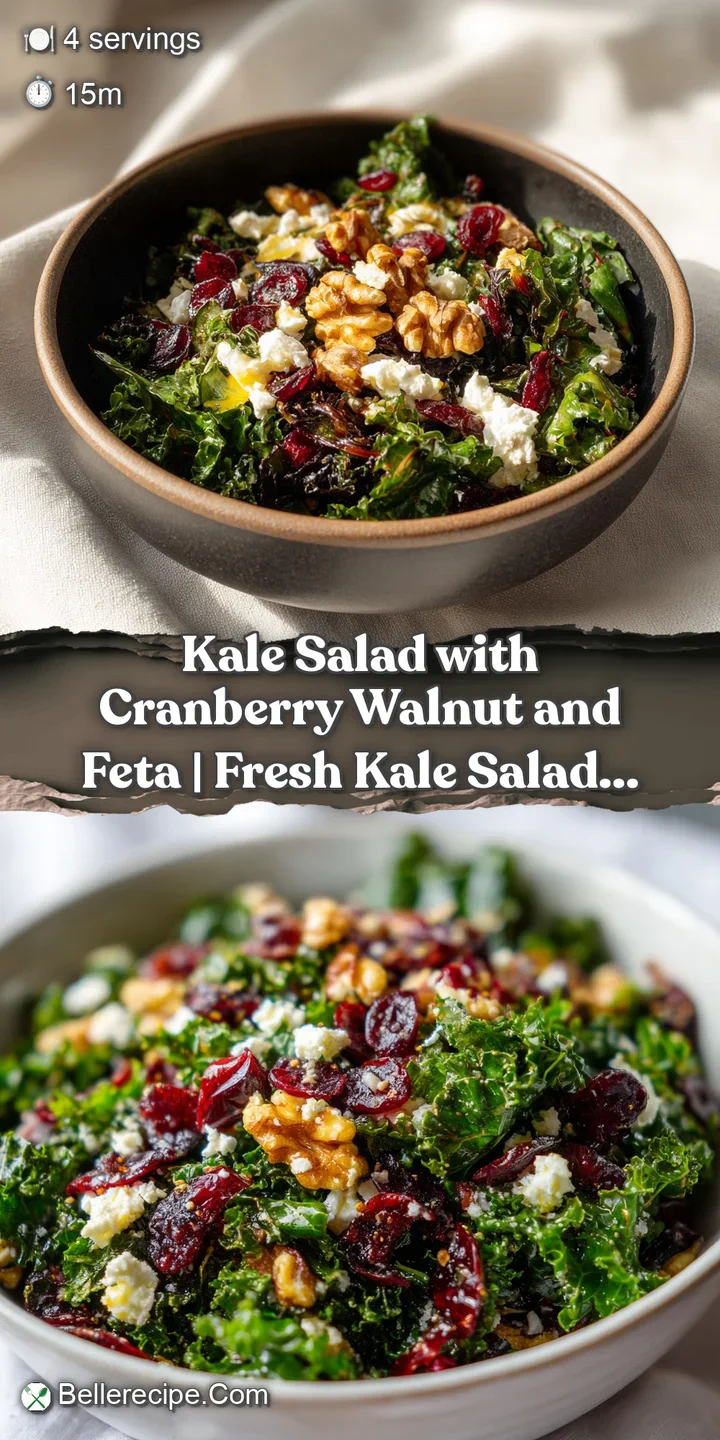
Kale Salad with Cranberry Walnut and Feta
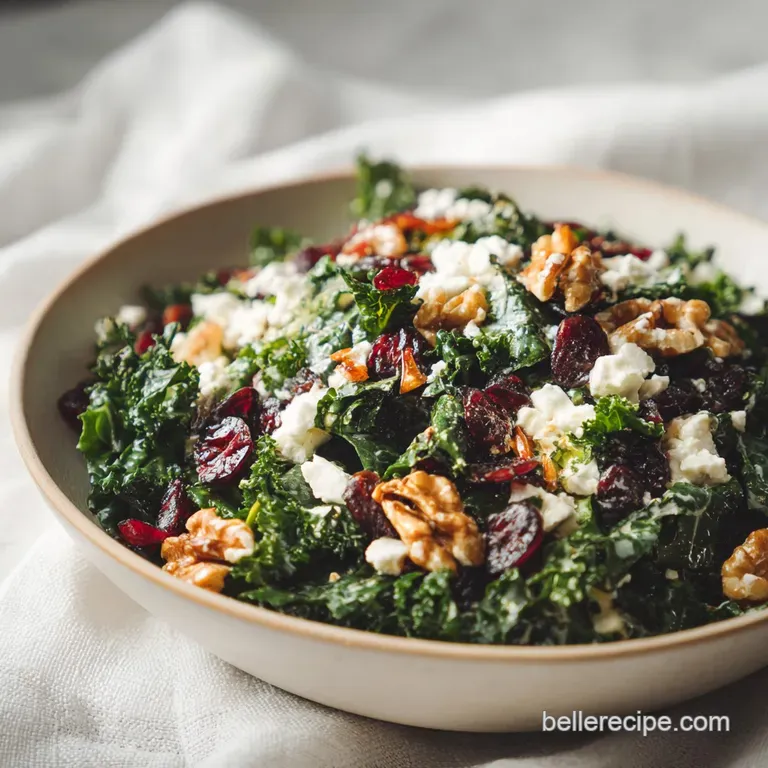
- Time: Active 15 minutes, Passive 0 minutes, Total 15 minutes
- Flavor/Texture Hook: Silky massaged leaves with a crunchy walnut shatter and tangy feta finish
- Perfect for: Weeknight meal prep, holiday side dishes, or a light lunch that won't wilt
- Refreshing Kale Salad with Cranberry Walnut and Feta and Lemon Dressing
- Key Techniques for Softening Tough Kale Greens
- Recipe Specs for Busy Weeknight Meal Preparation
- The Building Blocks of a Balanced Salad
- Minimal Equipment for Maximum Flavor Extraction
- Step-by-Step Instructions for the Best Salad Result
- Common Mistakes and Troubleshooting for Better Greens
- Dietary Adaptations for Every Table and Guest
- Storage and Reheating Tips for Meal Prep
- Serving Suggestions to Complete Your Family Meal
- Common Kitchen Myths Debunked
- Recipe FAQs
- 📝 Recipe Card
Refreshing Kale Salad with Cranberry Walnut and Feta and Lemon Dressing
You know that feeling when you try to be healthy, grab a bunch of kale, and end up feeling like you are chewing on a wool sweater? I have been there more times than I care to admit. For years, I avoided raw kale salads because they felt like a chore for my jaw.
But then, a neighbor showed me the "massage" trick, and it was like a lightbulb went off in my kitchen. Suddenly, those stiff, dusty leaves turned into something velvety and bright, and I realized I had just been treating the greens with too much distance.
This article features our absolute favorite recipe for Kale Salad with Cranberry Walnut and Feta and Lemon Dressing. It is the kind of dish that makes you feel good about what you are eating without sacrificing the joy of a truly satisfying meal.
We are skipping the complicated techniques and sticking to what works for a busy home cook who wants big results with minimal fuss. This salad is hearty enough to stand alone but plays well with almost anything on the dinner table.
What I love most about this specific combination is how it hits every single taste bud. You get the punchy zip from the fresh lemon, the salty creaminess of the feta cheese, and that little pop of sweetness from the dried cranberries. It is a balanced bite every single time.
Plus, unlike a delicate spinach or arugula salad, this one actually gets better if it sits in the fridge for a little while. No more soggy, sad leftovers to deal with on Tuesday afternoon.
Key Techniques for Softening Tough Kale Greens
- Cellulose Breakdown: Massaging the leaves with a bit of salt and oil physically ruptures the tough plant fibers, turning the texture from coarse to silky. You will see the volume of the greens shrink by almost half as the structure softens and becomes more palatable.
- Emulsification Stability: Using Dijon mustard in the dressing isn't just for flavor; it acts as a binder that keeps the oil and lemon juice from separating. This ensures every leaf gets a consistent, velvety coating rather than a puddle of oil at the bottom of your bowl.
- Acid Interaction: The lemon juice doesn't just add brightness; it chemically "cooks" the greens slightly, further tenderizing the kale as it sits. This is why a kale salad can handle being dressed much earlier than a standard garden salad.
- Frictional Heat: As you rub the leaves together with your hands, the slight warmth generated helps the olive oil penetrate the surface of the kale. This creates a much more integrated flavor profile than simply tossing it with a spoon.
| Servings | Kale Amount | Cranberry/Walnut/Feta | Prep Time |
|---|---|---|---|
| 2 People | 5 oz (half bunch) | 0.25 cup each | 10 minutes |
| 4 People | 10 oz (1 large bunch) | 0.5 cup each | 15 minutes |
| 8 People | 20 oz (2 bunches) | 1 cup each | 20 minutes |
When you are planning your meal, keep in mind that kale shrinks significantly. What looks like an overflowing mountain of greens in your mixing bowl will quickly reduce into a much more manageable portion once you start the massage process.
If you are serving this as a main dish for a hungry crowd, I always suggest leaning toward the larger bunch to ensure everyone gets their fill.
Recipe Specs for Busy Weeknight Meal Preparation
This salad is a champion of efficiency because it requires zero cook time. You can go from a bunch of raw greens to a finished, beautiful side dish in exactly 15 minutes. Because the ingredients are sturdy, you don't have to worry about the precision of a souffle or the timing of a steak.
It is a very forgiving process that relies more on your senses than a kitchen timer.
| Component | Science Role | Pro Secret |
|---|---|---|
| Fresh Lemon Juice | Breaks down tough fibers | Use room temp lemons for more juice |
| Extra Virgin Olive Oil | Carries fat soluble flavors | Use a fruity, mild oil to avoid bitterness |
| Dijon Mustard | Natural emulsifier | Whisk until the dressing looks creamy and opaque |
| Sea Salt | Draws out moisture | Sprinkle directly on kale before massaging |
The interaction between the salt and the kale is the most important part of the spec. If you skip the salt during the massage, the leaves won't break down nearly as well. It's a small detail, but it's the difference between a salad that feels like a salad and a salad that feels like a pile of leaves.
I usually reach for a high-quality sea salt or kosher salt for that specific abrasive texture.
The Building Blocks of a Balanced Salad
Finding the right ingredients is about balance, but it's also about being smart with your budget. You don't need the most expensive artisanal cheese to make this work, but a few specific choices will make a world of difference in the final result. If you find yourself missing an item, don't panic; this recipe is incredibly adaptable. Much like a Classic Potato Salad recipe, the success lies in the creamy to tangy ratio rather than one single "magic" ingredient.
- 1 large bunch kale (approx. 10 oz): Look for Lacinato (dino) or curly kale. Why this? Curly kale has more nooks and crannies to hold onto the dressing.
- 0.5 cup dried cranberries: These provide the necessary sweetness. Why this? They stay plump and chewy even after sitting in the dressing.
- 0.5 cup toasted walnuts: Rough chops are best for texture. Why this? Toasting brings out the oils and prevents a "dusty" raw nut flavor.
- 0.5 cup crumbled feta cheese: Use the kind in brine if possible. Why this? Brined feta is creamier and won't dry out the salad.
- 3 tbsp fresh lemon juice: Avoid the bottled stuff here. Why this? Fresh acidity is essential for cutting through the kale's natural earthiness.
- 0.25 cup extra virgin olive oil: The backbone of the dressing. Why this? It provides a luxurious mouthfeel and healthy fats.
- 1 tsp honey: Just enough to take the edge off the lemon. Why this? Honey emulsifies better than granulated sugar in cold dressings.
- 1 tsp Dijon mustard: For tang and stability. Why this? It acts as the "glue" for the vinaigrette.
- 0.25 tsp sea salt & black pepper: Essential seasonings. Why this? Enhances the natural flavors of the walnuts and feta.
| Original Ingredient | Substitute | Why It Works |
|---|---|---|
| Feta Cheese | Goat Cheese | Similar tang, but much creamier texture |
| Walnuts | Toasted Pecans | Same crunch with a slightly sweeter, richer finish |
| Dried Cranberries | Dried Cherries | Larger bite and more tartness than cranberries |
| Honey | Maple Syrup | Vegan friendly and adds a deeper, woody sweetness |
Choosing the right kale is really a matter of personal preference. Curly kale is what you'll usually find at the grocery store, and it's fantastic because those little ruffles act like tiny bowls for the lemon dressing.
If you want something a bit more refined, Lacinato (or Dinosaur) kale is darker, flatter, and has a slightly more "blue" tint. It tends to be a bit more tender to begin with, so it might need a slightly shorter massage time.
Minimal Equipment for Maximum Flavor Extraction
One of the reasons I make this so often is that the cleanup is almost non existent. You don't need a food processor, a blender, or even a stovetop. If you have a decent knife and a bowl, you are ready to go.
I actually find the process quite mindful; there is something very grounding about working the greens with your hands rather than relying on a machine.
1. Two Mixing Bowls
You will need one large bowl for the kale and a smaller one for the dressing. If you're feeling extra efficient, you can even mix the dressing in a glass jar with a tight lid. This is a great trick because you can just shake it vigorously to emulsify the oil and lemon juice, and any leftovers are already in a storage container.
2. A Sharp Chef's Knife
Kale stems are tough, so a sharp blade is your best friend. You want to be able to "ribbon" the kale cutting it into very thin strips. This increases the surface area, which means more leaves come into contact with the dressing, making the salad much more enjoyable to eat.
A dull knife will just bruise the leaves and make the prep feel like a chore.
step-by-step Instructions for the Best Salad Result
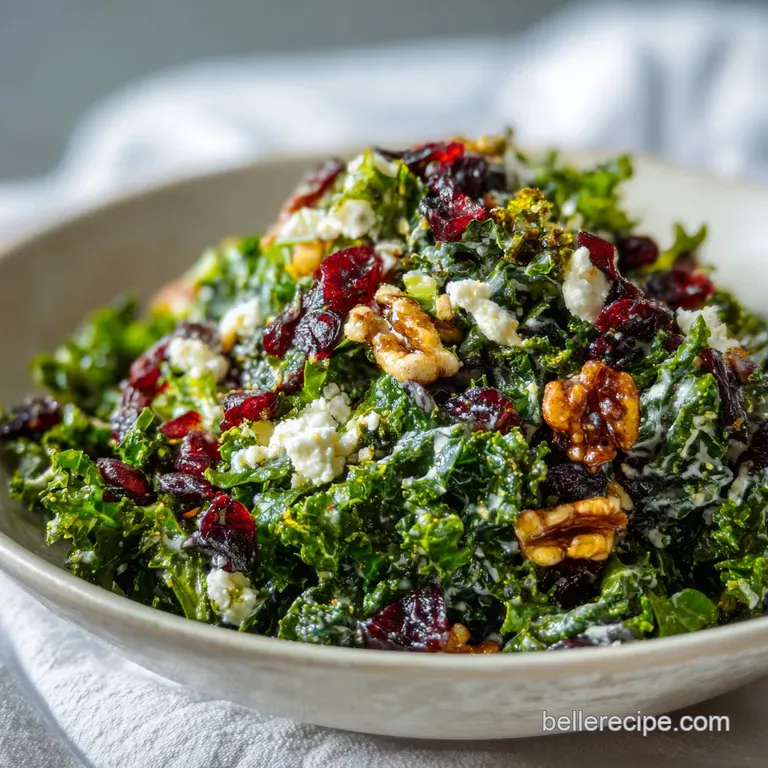
- Stem the kale. Pull the leaves away from the thick center ribs and discard the stems. Note: Stems are too woody for this salad but great for smoothies.
- Ribbon the leaves. Stack the leaves, roll them up like a cigar, and slice them into thin strips.
- Massage the greens. Place the kale in a large bowl with a pinch of salt and a teaspoon of olive oil.
- Work the kale. Squeeze the leaves firmly for 2-3 minutes until they turn dark green and feel silky.
- Prepare the vinaigrette. In a small jar, whisk lemon juice, remaining oil, honey, and Dijon until the liquid is thick and creamy.
- Add the texture. Toss in the dried cranberries, chopped walnuts, and the crumbled feta.
- Dress the salad. Pour the lemon vinaigrette over the top and use your hands or tongs to coat every leaf.
- Meld the flavors. Let the salad rest for at least 15 minutes until the kale has fully absorbed the dressing.
- Final seasoning check. Give it a taste and add an extra crack of black pepper if needed.
Chef's Tip: If your kale still feels a bit stiff after two minutes of massaging, don't be afraid to keep going. You can't really "over massage" it, but you can certainly under massage it. Look for that color change; that's your visual cue that it's ready.
When you're doing the massage step, you'll actually hear the kale changing. It starts off with a dry, paper like rustle, and as the fibers break down, it becomes much quieter and more supple.
It’s a bit like breaking in a new pair of leather boots you're just making it more comfortable for everyone involved. Don't worry about being too rough; kale is incredibly resilient.
Common Mistakes and Troubleshooting for Better Greens
Why Your Kale Stays Tough
The most common issue is simply not being aggressive enough during the massage. If you just toss the kale with the oil, it won't soften. You really need to grab handfuls and squeeze them firmly. Think of it like kneading bread dough.
Another culprit could be the size of your ribbons; if the pieces are too large, the "chew factor" stays high. Aim for strips about a quarter inch wide for the best experience.
Bitter Aftertaste
Kale has a natural bitterness that can sometimes be overwhelming. This usually happens if the kale is older or if it hasn't been balanced correctly with salt and acid. The lemon juice and honey are specifically there to counteract this.
If you take a bite and it's still too bitter, try adding a tiny bit more honey or a pinch more salt. Salt is actually a scientific "bitterness blocker" for our tongues.
| Problem | Root Cause | Solution |
|---|---|---|
| Greasy mouthfeel | Too much oil, not enough acid | Add an extra squeeze of fresh lemon juice |
| Soggy texture | Left for more than 48 hours | Eat within 24 hours for the "sweet spot" of texture |
| Bland flavor | Not enough salt during massage | Add salt early to draw out the kale's flavor |
While we want the kale to be tender, we don't want it to become mush. This is why the 15 minute prep is so great it gives it just enough time to soften without losing its integrity. If you're comparing this to a Greek Salad recipe, you'll notice that while cucumbers and tomatoes release a lot of water and get soggy, kale just gets more flavorful.
Common Mistakes Checklist
- ✓ Always remove the center rib; it never softens, no matter how much you massage it.
- ✓ Toast your walnuts for exactly 5 minutes at 350°F to avoid a bitter, raw taste.
- ✓ Use room temperature lemons to ensure you get the full 3 tablespoons of juice.
- ✓ Don't add the feta until after the massage, or you will crush the cheese into a paste.
- ✓ Taste a leaf before adding the dressing to ensure it is already tender.
Dietary Adaptations for Every Table and Guest
Cooking for friends often means navigating different needs, and this salad is a dream for that. Because the base is so sturdy, it doesn't mind a few swaps here and there. If you're looking for a budget friendly way to feed a crowd, you can always bulk this up with some roasted chickpeas or even some leftover quinoa.
It's a very "inclusive" bowl of food that most people can enjoy regardless of their restrictions.
1. The Vegan Transformation
To make this completely plant based, simply swap the honey for maple syrup or agave nectar. For the feta, there are some great almond based or coconut oil-based "feta" blocks available now, or you can use some brined olives to get that salty, Mediterranean punch without the dairy.
The creamy texture of the massaged kale means you won't even miss the cheese that much.
2. The Nut Free Version
If walnuts are off the table, toasted sunflower seeds or pumpkin seeds (pepitas) are a fantastic alternative. They still provide that essential "shatter" and crunch that makes the salad interesting.
Just be sure to toast them briefly in a dry pan until they are fragrant; it makes a massive difference in how they stand up to the lemon dressing.
| Lifestyle | Adjustment | Impact on Flavor |
|---|---|---|
| Vegan | Use Maple Syrup & Vegan Feta | Slightly sweeter, still very tangy |
| Nut Free | Use Toasted Pepitas | Adds an earthy, seedy crunch |
| Lower Fat | Reduce oil to 2 tbsp, add 1 tbsp water | Lighter mouthfeel, more "lemon forward" |
If you are looking for a "Decision Shortcut," here is a quick guide: If you want it crunchier, add the walnuts and feta right before serving. If you want it softer, let the dressed salad sit in the fridge for 2 hours.
If you want it heartier, toss in a cup of cooked, cooled farro or brown rice.
Storage and Reheating Tips for Meal Prep
One of the absolute best things about a massaged kale salad is its "fridge life." While a lettuce salad is basically a ticking time bomb of sogginess, this recipe holds up beautifully. I often make a double batch on Sunday night and eat it for lunch through Tuesday.
The kale is so hearty that it actually benefits from a bit of "marination" time in the fridge.
- Fridge
- Store in an airtight container for up to 3 days. The flavors will deepen, though the walnuts may lose a bit of their crispness by day three.
- Freezer
- Do not freeze. The cellular structure of the kale will collapse when thawed, leaving you with a watery mess.
- Zero Waste
- Don't toss those kale stems! Slice them very thinly and sauté them with garlic and olive oil for a quick side dish, or throw them into your next batch of vegetable broth. They are packed with nutrients even if they are too tough for the salad itself.
For reheating, you obviously don't want to put this in the microwave. If it has been in the fridge and feels a little stiff, just let it sit on the counter for 10 minutes to take the chill off.
The olive oil can sometimes solidify slightly in a very cold fridge, so a quick toss at room temperature will bring that silky texture right back to life.
Serving Suggestions to Complete Your Family Meal
This salad is a versatile player. During the summer, it's the perfect companion to grilled chicken or a nice piece of salmon. The acidity of the lemon dressing cuts through the richness of grilled meats perfectly. In the winter, I love serving this alongside a heavy pasta dish or a roast.
It provides a much needed "bright" note when the rest of the meal feels quite dense and comforting.
1. The Better Than Dining Out Lunch
If you want to turn this into a full meal, top it with a soft boiled egg or some sliced avocado. The creaminess of the avocado paired with the sharp feta and tangy lemon is a world class combination.
It feels like something you would pay $18 for at a trendy cafe, but you can make it in your kitchen for a fraction of the cost.
2. The Holiday Showstopper
Because this salad doesn't wilt, it is my go to for potlucks and holiday dinners. You can set it on a buffet table, and it will look just as vibrant three hours later as it did when you first put it out.
To make it look extra special, save a few cranberries and walnuts to sprinkle on the very top right before people start digging in. It gives it that "finished" look that makes everyone ask for the recipe.
Common Kitchen Myths Debunked
One big myth is that kale is "healthier" the rawer it is. While raw veggies are great, the mechanical massaging we do here actually makes the nutrients more accessible to your body by breaking down those tough cell walls. You aren't "cooking out" the vitamins; you're just doing some of the digestive work ahead of time.
Plus, if it tastes better, you're more likely to eat the whole bowl!
Another misconception is that you need a lot of expensive equipment like a salad spinner to make a good kale salad. Honestly, a clean kitchen towel works just as well. After washing your kale, just roll it up in the towel and give it a good shake.
A little bit of moisture left on the leaves isn't a disaster anyway, as it can actually help the salt dissolve and start the tenderizing process during your massage.
Finally, people often think you can't use the "stale" kale at the bottom of the crisper drawer. As long as it isn't yellow or slimy, "tired" kale is actually a prime candidate for massaging. The process of adding oil, salt, and acid rehydrates the leaves and brings them back to life.
It's a great way to save a bunch of greens that you might have otherwise thrown away.
The beauty of this recipe lies in its simplicity. We aren't trying to hide the kale; we're just helping it be its best self. By taking those 15 minutes to treat the greens with a little care, you end up with a dish that is vibrant, nourishing, and most importantly genuinely enjoyable to eat.
So, the next time you see a bunch of kale and feel a little intimidated, just remember: a little massage goes a long way. Happy tossing!
Recipe FAQs
Is it necessary to massage the kale for the full 3 minutes?
Yes, it is essential for the best texture. Massaging the leaves for 2-3 minutes breaks down the tough cellulose walls, transforming the kale from fibrous to silky and dark green.
How to keep the salad from becoming soggy in the fridge?
Store the dressing separately if you plan to eat the salad over multiple days. While this kale holds up better than lettuce, keeping the components apart prevents the acidity from softening the ingredients too much over time.
Is it true that the stem is the most nutritious part of the kale?
No, this is a common misconception. While stems contain nutrients, they are significantly too woody and fibrous to be pleasant in this salad, so it is best to discard them and focus on the tender leaves.
How to ensure the dressing does not separate after whisking?
Whisk the lemon juice, honey, and mustard vigorously before slowly drizzling in the olive oil. This creates a stable emulsion; if you enjoyed mastering this technique, you can apply the same principle to our classic champagne vinaigrette to keep it perfectly creamy.
Can I use pre-chopped kale from the store?
Yes, but verify that it is de-stemmed. Even with pre-cut bags, you often need to manually remove the thicker stems to ensure the final salad remains delicate and easy to chew.
How to serve this if I am preparing it ahead of time?
Let the assembled salad sit for 30 minutes before serving. This brief resting period allows the flavors of the lemon, honey, and Dijon to meld with the kale and cheese, resulting in a much more cohesive dish.
Is it true I must toast the walnuts for the salad to taste good?
Yes, it is highly recommended. Toasted walnuts provide a deeper, nuttier flavor and a crunch that contrasts perfectly with the softened kale, which raw walnuts simply cannot replicate.
Cranberry Walnut Kale Salad
Ingredients:
Instructions:
Nutrition Facts:
| Calories | 356 kcal |
|---|---|
| Protein | 8.1 g |
| Fat | 28.1 g |
| Carbs | 27.3 g |
| Fiber | 4.7 g |
| Sugar | 16.2 g |
| Sodium | 374 mg |
