Authentic Elephant Ear Recipe: Fair Taste at Home
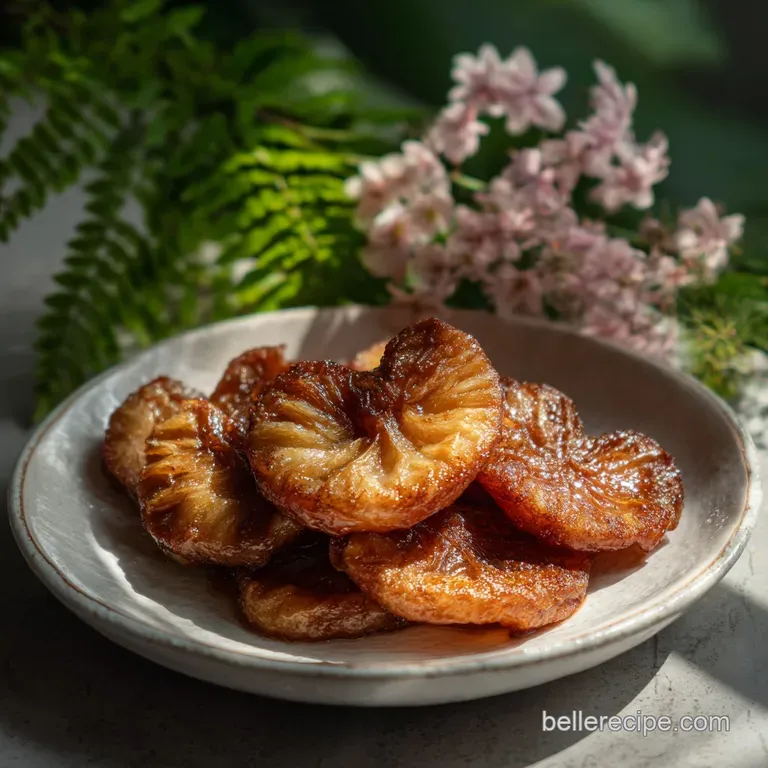
- Effort/Time: Moderate (1 hour 35 mins total)
- Flavor Hook: Deeply caramelized cinnamon-sugar over buttery, yeasted pastry.
- Perfect for: Weekend-fairs-at-home, crowd-pleasing snacks, and nostalgia-trips.
- Master the Ultimate Shatteringly Crisp elephant ear recipe
- Thermal Conductance and Yeast Dynamics: The Success Blueprint
- Essential Chronology and Production Metrics
- The Chemistry of Dough: Selecting Your Core Elements
- Precision Tools for Temperature-Regulated Frying Excellence
- The Sequential Assembly Protocol: From Bloom to Fry
- Resolving Pastry Collapse and Density Issues
- Diversifying Flavor Architecture and Creative Adaptations
- ⚗️ The Scaling Lab: The Physics of Quantity
- Common Myths
- Preserving Structural Integrity and Thermal Recovery Strategies
- Aesthetic Presentation and Complementary Flavor Pairings
- Recipe FAQs
- 📝 Recipe Card
Master the Ultimate Shatteringly Crisp elephant ear recipe
There is nothing more heartbreaking than biting into a $12 carnival treat only to find a doughy, oil-soaked center that coats your mouth in a film of lukewarm grease. You spent your hard earned money and calories on a promise of "crispy" but received "heavy." That textural failure usually stems from a breakdown in the thermal mass of the frying oil or an under developed gluten network that can’t hold the steam.
I’ve personally destroyed at least five batches of this dough trying to rush the first rise. I thought I could "hack" the fermentation by using boiling milk, which promptly murdered my yeast and left me with flat, dense hockey pucks.
It was a humbling lesson in cellular biology: yeast is a living organism, not a chemical powder, and it demands respect for its thermal limits.
The breakthrough for this elephant ear recipe came when I stopped treating it like bread and started treating it like a high hydration pastry. The secret lies in the sudden steam expansion thermal shock that occurs when the cold fermented dough hits the 375°F vegetable oil.
This creates a "shattering" crust that stays light.
Thermal Conductance and Yeast Dynamics: The Success Blueprint
- Steam Expansion: over High heat frying causes rapid evaporation of moisture, inflating CO2 pockets for an airy crumb.
- Maillard Reaction: Reducing sugars in the milk interact with proteins at 300°F+, creating complex, nutty flavor compounds.
- Gluten Relaxation: Resting the dough allows proteins to slacken, ensuring the dough stretches thin without snapping back.
- Osmotic Pressure: Precise salt levels regulate yeast activity, preventing over fermentation which leads to sourness.
Essential Chronology and Production Metrics
Creating a consistent elephant ear recipe requires strict adherence to the clock and the scale. These metrics ensure your last batch is just as crispy as your first.
| Metric | Value |
|---|---|
| Preparation Window | 1 hour 20 mins |
| Active Cooking Time | 15 minutes |
| Service Temperature | 140°F (Optimal for sugar adhesion) |
| Yield | 8 individual servings |
The Chemistry of Dough: Selecting Your Core Elements
The success of this elephant ear recipe depends on the protein-to-moisture ratio. Every gram matters for the final snap.
- King Arthur All-Purpose Flour (375 g): Why this? 11.7% protein provides enough structure for bubbles without being chewy.
- Red Star Active Dry Yeast (7 g): Why this? Predictable fermentation rate creates uniform CO2 distribution.
- Horizon Organic Whole Milk (240 ml): Why this? 3.25% milk fat softens the crumb and facilitates browning.
- Kerrygold Unsalted Butter (30 g): Why this? High butterfat content inhibits long gluten strands for tenderness.
- Maldon Fine Sea Salt (3 g): Enhances sweetness perception and strengthens the gluten network.
- Granulated Sugar (25 g + 100 g for topping): Fuels yeast and creates the signature crystalline crust.
- McCormick Ground Cinnamon (10 g): Provides the aromatic, woody notes that define the profile.
- Mazola Vegetable Oil (950 ml): High smoke point (450°F) allows for safe 375°F frying.
Ingredient Chemistry Breakdown
| Ingredient | Chemical/Physical Role (Science) | The Pro Secret (Why This Matters) |
|---|---|---|
| Whole Milk | Lactose caramelization & hydration | Lactose doesn't ferment; it stays behind to brown the crust. |
| Active Yeast | CO2 production via fermentation | Creates the internal pressure needed for the "puff" effect. |
| Melted Butter | Lipid interference in gluten bonding | Shortens protein strands, ensuring the ear is "tender" not "tough." |
| Vegetable Oil | Convective heat transfer medium | Uniformly dehydrates the surface to create a "shatter" texture. |
Precision Tools for Temperature Regulated Frying Excellence
For this elephant ear recipe, precision is your best friend. Don't eyeball the heat; use a Lodge Cast Iron Dutch Oven to maintain thermal mass. The heavy walls prevent the oil temperature from crashing when the dough enters.
You'll also need a ThermoPro Digital Instant Read Thermometer to verify the milk is exactly 110°F. If it's 120°F, you risk killing the yeast; if it's 90°F, the yeast will stay dormant too long.
A KitchenAid Stand Mixer with a dough hook is preferred, but a sturdy wooden spoon and elbow grease work for a quick elephant ear recipe prep.
The Sequential Assembly Protocol: From Bloom to Fry
1. Bloom the Yeast and Mix
Whisk 7 g yeast and 25 g sugar into 240 ml milk warmed to 110°F until small bubbles appear on the surface. Note: This proves the yeast is alive and active.
2. Incorporate the Lipids
Pour in 30 g melted butter and whisk vigorously until the fat is emulsified into the milk. Note: Proper distribution prevents "fat pockets" in the dough.
3. Build the Gluten Structure
Add 375 g flour and 3 g salt. Use the dough hook for 5 minutes until the dough pulls away from the sides and looks smooth. Note: This develops the protein network to trap gas.
4. The First Fermentation
Place dough in a greased bowl, cover, and rest for 1 hour until the volume has doubled and the surface looks taut. Note: This allows for flavor development and CO2 buildup.
5. Portion and Degas
Punch the dough down and divide into 8 equal balls until each piece is roughly the size of a large lemon. Note: Degassing ensures uniform bubble size during frying.
6. Shape the "Ear"
On a floured surface, roll each ball into a 7 inch disc until the dough is translucent when held to light. Note: This is the "windowpane" effect for thinness.
7. Thermal Shock Induction
Heat 950 ml oil to 375°F in your Lodge Dutch Oven. Carefully slide one disc into the oil until the edges immediately curl and sizzle. Note: The high heat causes instant steam expansion.
8. Gold Standard Frying
Fry for 1 minute per side until the pastry turns a deep mahogany gold and feels firm. Note: This ensures the exterior is fully dehydrated and crisp.
9. Drainage and Adhesion
Remove with tongs and drain on paper towels for 10 seconds until the excess surface oil is absorbed but the pastry is still steaming. Note: The steam helps the sugar stick.
10. The Cinnamon Shield
Dredge the hot pastry in the mix of 100 g sugar and 10 g cinnamon until a thick, even crust forms on both sides. Note: Residual heat melts the sugar slightly for a permanent bond.
Resolving Pastry Collapse and Density Issues
Why Your Dough Stays Flat
This usually happens because the yeast was expired or the milk was too hot, leading to a lack of CO2. If the dough doesn't puff in the oil, your hydration might be too low, preventing the steam from expanding the gluten walls. Just like with a Garbage Bread recipe, the elasticity of your dough dictates the final volume.
Troubleshooting Table
| Problem | Root Cause | The Fix | Pro Protocol |
|---|---|---|---|
| Greasy Texture | Oil temp < 350°F | Increase heat to 375°F | Fry in smaller batches to keep temp stable. |
| Tough/Chewy Ear | Over kneading | Knead only until smooth | Let dough rest 15 mins before rolling. |
| Sugar Won't Stick | Pastry cooled too much | Apply sugar within 20 seconds | Use a deep bowl for dredging to maximize contact. |
Diversifying Flavor Architecture and Creative Adaptations
This elephant ear recipe with yeast is a masterclass in versatility. While the fair style cinnamon sugar is the gold standard, you can pivot the flavor profile easily. For a savory twist, skip the sugar topping and brush with garlic butter and parsley immediately after frying.
If you are looking for an elephant ear recipe baked version, you'll sacrifice the "shatter" for a more biscuit like texture. Brush the discs with butter and bake at 400°F for 12 minutes.
For the elephant ear recipe air fryer enthusiasts, spray the dough heavily with oil and air fry at 380°F for 6 minutes, flipping halfway. The result is surprisingly close to the elephant ear recipe from the fair without the vat of oil.
Substitution Table
| Original Ingredient | Substitute | Why It Works |
|---|---|---|
| Whole Milk | Coconut Milk (full fat) | Similar fat content. Note: Adds a distinct tropical nutty flavor. |
| AP Flour | Bread Flour | Higher protein (13%+). Note: Result will be much chewier, like a thin bagel. |
| Butter | Ghee | 100% fat, no water. Note: Creates an even crispier, shorter crust. |
⚗️ The Scaling Lab: The Physics of Quantity
When doubling this elephant ear recipe, you cannot simply double everything. Physics intervenes.
- The Evaporation Paradox: If you use the same Dutch oven for a double batch, your oil temp will drop faster. You must increase your recovery time between ears by 30 seconds.
- Flavor Saturation: Scale the cinnamon sugar topping to 1.5x. You'll find that 2x the sugar is excessive and wasteful as the surface area of the dough doesn't double at the same rate as the volume.
- Fermentation Heat: A double batch of dough generates its own internal heat (exothermic reaction). Check your rise at 45 minutes instead of 60 to avoid over proofing.
- Carry Over Cooking: The larger mass of a double batch of "ears" stacked together will trap heat. Spread them out on a wire rack; otherwise, the steam from the bottom ones will turn the top ones soggy.
Common Myths
- Myth: You must use specialized "fair dough" mixes.
- Truth: Standard AP flour with proper hydration and a 1 hour rise creates the exact same gluten structure used by professionals.
- Myth: Frying in lard is the only way to get them crispy.
- Truth: Modern vegetable oils have better thermal stability and a cleaner flavor profile, allowing the cinnamon to shine.
Preserving Structural Integrity and Thermal Recovery Strategies
Storage: Store leftovers in a paper bag at room temperature for up to 24 hours. Avoid plastic containers, which trap residual moisture and turn the pastry into a rubbery mess.
Freezing: You can freeze the fried (but unsugared) ears for up to 2 months. Wrap them individually in parchment paper and store in a freezer bag.
Reheating: To recover the "shatter," place the ear in a 350°F oven or air fryer for 3 minutes. Never use a microwave; it will cause the starch to retrogradate and turn the ear into leather.
💡 ZERO WASTE TIP: Don't discard the leftover cinnamon sugar! Transform: Use it as a base for a Sloe Gin Fizz recipe rim or sprinkle it over morning oats. Science: The sugar has absorbed microscopic amounts of flour and oil, which helps it caramelize faster when toasted.
Aesthetic Presentation and Complementary Flavor Pairings
To serve this elephant ear recipe like a master, pair it with high acid accompaniments to cut through the lipid heavy profile. A side of tart Granny Smith apple slices or a sharp lemon curd provides the perfect contrast.
If you’re serving these at a party, stack them vertically in a wire rack to maintain airflow and prevent "sweating."
For a decadent dessert, top the warm elephant ear recipe easy version with a scoop of vanilla bean gelato. The thermal contrast between the 140°F pastry and the 10°F ice cream creates a sensory delight.
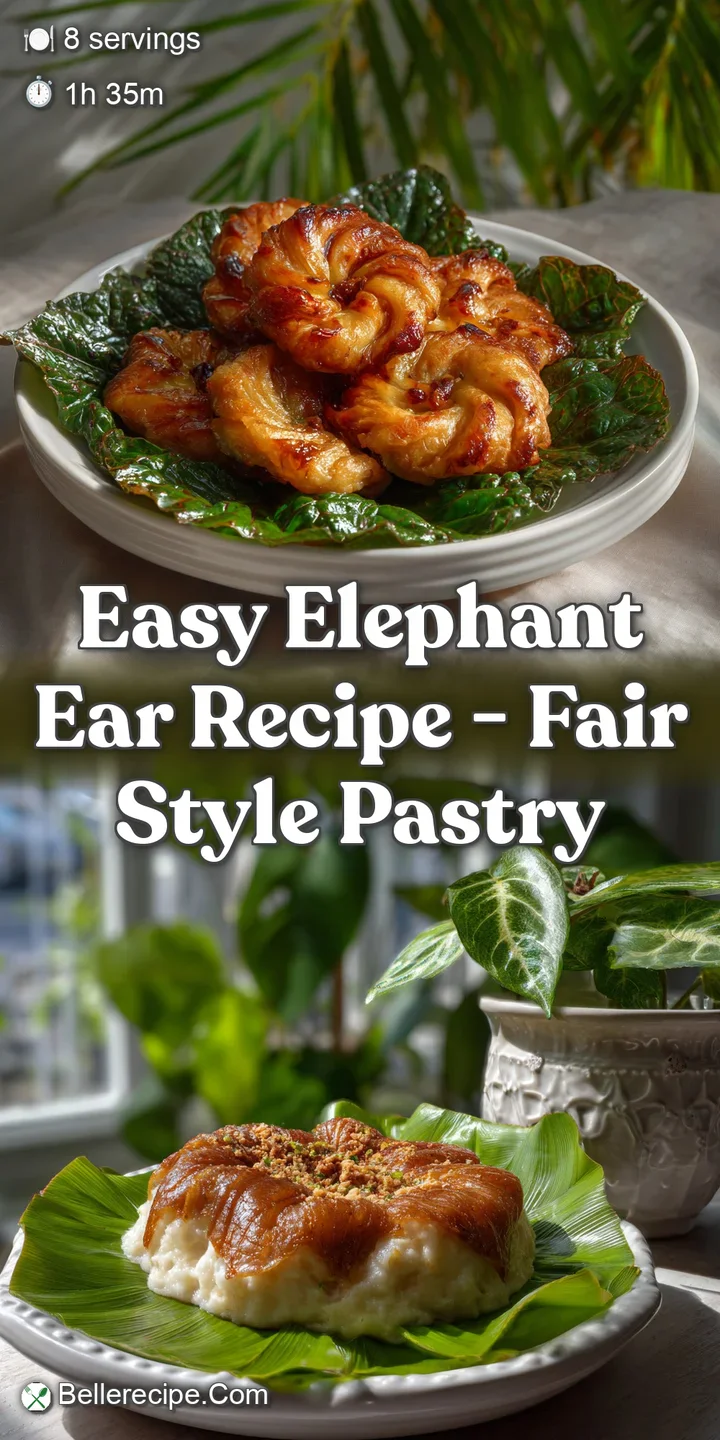
This recipe is the ultimate evidence that with a little science and a lot of heat, you can bring the best part of the fair right into your kitchen. This ear recipe is your new secret weapon for making memories that taste exactly like summer.
Recipe FAQs
how to make elephant ears?
Fry yeasted dough thin, then immediately dust with cinnamon sugar. Rapid thermal shock is essential for achieving the signature airy expansion and crispness. If you enjoyed mastering high hydration dough techniques here, see how the same principle applies to creating the perfect structure in our Robertas Pizza Dough: Authentic Brooklyn Style High Hydration Recipe.
how to make elephant ears pastry?
Use a high fat, yeasted dough recipe, not standard puff pastry. True elephant ears rely on yeast to create large, trapped air pockets during deep frying. Standard puff pastry (butter and many layers) creates too much brittle flakiness rather than the desired airy chew.
how to make elephant ears at home?
Maintain oil temperature precisely between 370°F and 380°F. Oil temperature dictates internal steam expansion versus external grease absorption. If the oil is too cool, the dough soaks up fat, resulting in a dense, soggy pastry rather than a crisp shell.
- Proof yeast in milk at 110°F
- Roll dough near translucent thinness
- Fry until deep golden brown
how to make elephant ears for costume?
how to make elephant ears with puff pastry?
What oil temperature is best for frying elephant ears?
Myth: Elephant ears must be fried in lard for authentic flavor.
Myth: Frying in lard is the only way to get them crispy. Reality: Modern high smoke point vegetable oils provide superior thermal stability, preventing flavor degradation and keeping the final product lighter.
Easy Elephant Ear Recipe

Ingredients:
Instructions:
Nutrition Facts:
| Calories | 414 calories |
|---|---|
| Protein | 6 grams |
| Fat | 19 grams |
| Carbs | 53 grams |
| Fiber | 1.8 grams |
| Sugar | 17 grams |
| Sodium | 162 milligrams |
