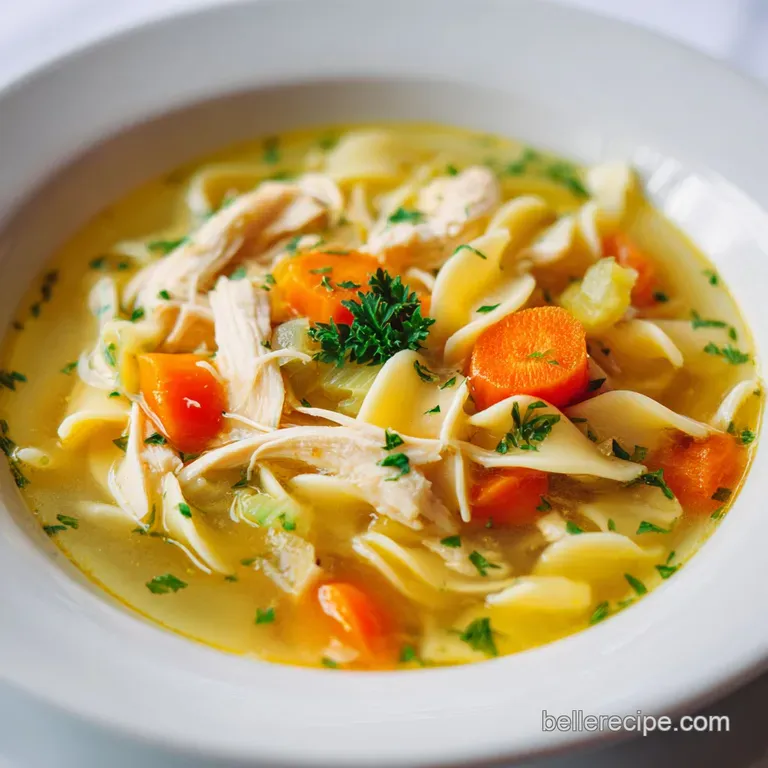
Homemade Chicken Noodle Soup: Soulful and Aromatic
- Time: Active 15 minutes, Passive 35 minutes, Total 50 minutes
- Flavor/Texture Hook: Silky broth with tender, melt in-your mouth chicken
- Perfect for: Rainy Sundays, nursing a cold, or family gatherings
- Mastering the Classic Homemade Chicken Noodle Soup Recipe
- Why This Pot of Comfort Works
- Essential Specs for the Best Soup Results
- Deep Dive Into Our Soup Components
- Necessary Tools for a Seamless Simmer
- Clear Steps for a Fragrant Finish
- Fixing Common Blunders and Soup Issues
- Exciting Variations for Your Next Batch
- Keeping Your Soup Fresh and Flavorful
- Perfect Sides for a Complete Meal
- Very High in Sodium
- Recipe FAQs
- 📝 Recipe Card
Mastering the Classic Homemade Chicken Noodle Soup Recipe
Picture this: it is a gray, drizzly Tuesday afternoon, the kind where the dampness seems to seep right through your coat. You walk into the kitchen, and there it is, the soft, sweet scent of onions and carrots softening in golden butter. It is a smell that instantly lowers your heart rate.
Whenever my kids come home with red noses and the sniffles, or when I just feel like the world is a bit too loud, this is the pot I put on the stove. It is more than just a meal, it is a warm hug in a bowl that makes everything feel manageable again.
We have all had those canned versions that taste mostly like salt and metal, but this is different. This is about building layers of flavor that feel intentional and mindful. We are talking about broth that actually tastes like chicken, vegetables that still have a soul, and noodles that do not disintegrate the moment they hit your spoon.
We are going to make something truly special today, and I promise you, your kitchen is about to smell like the best place on earth.
Right then, let's get into the heart of it. We are not just tossing things in a pot and hoping for the best. We are using a few little tricks, like poaching the chicken directly in the broth to keep it velvety, that change the game entirely.
You do not need to be a professional to pull this off, you just need to be patient with your aromatics and mindful of your timing. Trust me on this, once you taste the difference of a soup made from scratch with real butter and fresh thyme, there is no going back.
Why This Pot of Comfort Works
The secret to a truly great soup is not found in a spice packet. It is found in how we treat the basic ingredients we already have in the pantry.
- Fat Based Aroma Extraction: Melting butter to sauté the mirepoix allows the fat to absorb the essential oils from the onions, carrots, and celery, carrying that flavor through the entire pot.
- Gentle Poaching Technique: By simmering the chicken thighs directly in the broth, we ensure the protein never hits a temperature that makes it tough or rubbery.
- Starch Control: Adding the noodles at the very end prevents them from soaking up all the liquid and turning into a thick, gloopy mess.
- Acidic Brightening: A final splash of lemon juice at the end cuts through the richness of the chicken fat, making every spoonful taste vibrant rather than heavy.
| Chicken Cut | Internal Temp | Rest Time | Visual Cue |
|---|---|---|---|
| Thighs | 165°F | 5 mins | Meat pulls apart easily |
| Breasts | 160°F | 8 mins | Opaque and juices run clear |
| Whole Bird | 165°F | 15 mins | Legs move freely in joints |
There is a big debate in many kitchens about whether the stovetop or the oven is the best place for a long simmer. While a Dutch oven in a over low heat oven provides incredibly even heat, the stovetop is my go to for this specific homemade chicken noodle soup recipe because it allows you to monitor the evaporation and the tenderness of the noodles in real time.
| Method | Cook Time | Texture Result | Best For |
|---|---|---|---|
| Stovetop | 35 minutes | Bright, clear broth | Quick weeknight comfort |
| Oven (300°F) | 1 hour | Deep, concentrated flavor | Sunday meal prepping |
| Slow Cooker | 6 hours | Fall apart tender meat | Hands off convenience |
Using the stovetop gives you that immediate sensory feedback. You can hear the gentle bubble, smell when the garlic is perfectly toasted, and see the exact moment the carrots turn from crunchy to tender. It is a more engaged way of cooking that makes the result feel more personal.
Essential Specs for the Best Soup Results
When we talk about the components of a great soup, we are looking at how they interact with the water. A soup is essentially a flavored infusion, and the quality of that infusion depends on the surface area of your vegetables and the quality of your fats.
| Component | Role in Pot | Pro Secret |
|---|---|---|
| Unsalted Butter | Flavor Carrier | Use high-quality grass fed butter for a silkier mouthfeel and golden color. |
| Chicken Thighs | Moisture & Fat | Thighs have more connective tissue than breasts, which melts into the broth for a richer body. |
| Wide Egg Noodles | Texture | These hold onto the broth better than thin pasta, providing a satisfying, bouncy chew. |
| Fresh Thyme | Aromatic Depth | Rub the leaves between your palms before adding to "wake up" the volatile oils. |
I always tell my friends to pay attention to the onion dice. If the onions are too large, they won't disappear into the background like they should. You want them finely diced so they melt into the butter, creating a sweet, savory base that supports the carrots and celery without overwhelming them.
Deep Dive Into Our Soup Components
Getting the ingredients right is half the battle. Here is what you will need to gather on your counter before we start the sizzle.
- 2 tbsp unsalted butter: Why this? Butter adds a creamy richness that oil simply cannot replicate in a poultry based broth.
- Substitute: 2 tbsp olive oil (Note: Result will be less "creamy" and more "clean").
- 1 medium yellow onion, finely diced: Why this? Yellow onions have the perfect balance of sugar and sulfur for long simmering.
- Substitute: 1 large leek, white and light green parts only.
- 3 large carrots, peeled and sliced into 1/4 inch rounds: Why this? Rounds hold their shape better than diced carrots over a 35 minute simmer.
- Substitute: Parsnips for a woodier, sweeter flavor profile.
- 3 stalks celery, sliced into thin crescents: Why this? Celery provides the essential salty, herbal "third leg" of the flavor tripod.
- Substitute: A pinch of celery seed if you are in a desperate pinch.
- 4 cloves garlic, minced: Why this? Garlic provides the pungent backbone that rounds out the sweetness of the carrots.
- Substitute: 1 tsp garlic powder (added with the broth, not the sauté).
- 8 cups low sodium chicken broth: Why this? Using low sodium allows you to control the final seasoning without it becoming a salt bomb.
- Substitute: 8 cups of water with 3 tbsp high-quality chicken base (like Better Than Bouillon).
- 1.5 lbs boneless skinless chicken thighs: Why this? Thighs stay juicy and tender even if the soup simmers slightly longer than planned.
- Substitute: 1.5 lbs chicken breast (reduce simmer time by 5 minutes to avoid dryness).
- 8 oz wide egg noodles: Why this? Their floury surface slightly thickens the broth, giving it that classic "homemade" feel.
- Substitute: Rotini or Fusilli if you prefer a hard wheat pasta texture.
- 1 tbsp fresh thyme leaves: Why this? Thyme is the quintessential "chicken soup" herb, offering earthy, floral notes.
- Substitute: 1 tsp dried thyme (use less as dried is more concentrated).
- 1 tsp lemon juice: Why this? The acid acts as a "flavor highlighter," making every other ingredient stand out.
- Substitute: 1/2 tsp white wine vinegar.
Before you start, make sure your chicken is patted dry. Even though it is going into liquid, drying the surface helps you handle it better, and if you choose to sear it (an optional variation), it is non negotiable. If you are looking for another comforting meal that uses similar aromatics, you might want to try this Boursin Chicken recipe for a creamier stovetop experience.
Necessary Tools for a Seamless Simmer
You do not need a laboratory of gadgets to make a soul warming soup, but having a heavy bottomed pot is the difference between a successful sauté and burnt onions.
- Dutch Oven or Stockpot: A 6 quart Dutch oven (like a Le Creuset or Lodge) is the gold standard because it holds heat evenly.
- Chef's Knife: For those 1/4 inch carrot rounds and the finely diced onion.
- Wooden Spoon: Ideal for scraping up any "fond" (brown bits) from the bottom of the pot.
- Tongs: For safely removing the hot chicken thighs once they are cooked through.
- Liquid Measuring Cup: To ensure you get exactly 8 cups of broth.
I used to use a thin stainless steel pot I got in college, and I constantly fought with the vegetables sticking to the bottom. Once I switched to a heavy cast iron Dutch oven, the heat stayed so much more consistent. It made the 35 minutes of simmering much more predictable.
Clear Steps for a Fragrant Finish
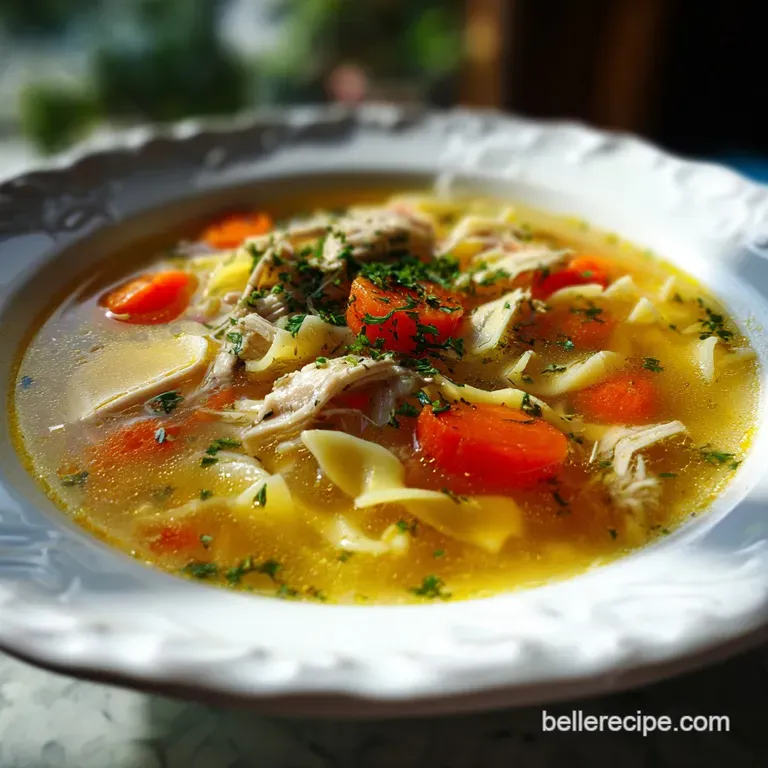
Let's get cooking. This process is all about the "smell checkpoints." If the kitchen doesn't smell right, something is missing!
- Melt the butter. Place your 2 tbsp of butter in the pot over medium heat. Wait for it to foam and turn slightly golden.
- Sauté the aromatics. Toss in the diced onion, sliced carrots, and celery. Cook for 6–8 minutes. Smell Checkpoint #1: You are looking for the sharp onion scent to turn into a mellow, buttery sweetness. The onions should be translucent.
- Infuse the garlic and thyme. Add the 4 cloves of minced garlic and 1 tbsp of fresh thyme. Stir constantly for exactly 60 seconds. Note: Garlic burns in a heartbeat, so stay focused here until it smells like a French bistro.
- Build the base. Pour in the 8 cups of chicken broth and drop in the 2 bay leaves. Stir to scrape up any bits from the bottom.
- Poach the chicken. Nestle the 1.5 lbs of chicken thighs into the liquid. Make sure they are fully submerged.
- Simmer to perfection. Bring the pot to a gentle boil, then immediately turn the heat down to low. Cover and simmer for about 15–20 minutes. Smell Checkpoint #2: The steam rising from the pot should now smell deeply savory and "meaty."
- Check the chicken. Use tongs to pull one thigh out. It should register 165°F and pull apart easily with a fork. Remove all chicken to a cutting board to rest.
- Cook the noodles. While the chicken rests, turn the heat back up to medium high and add the 8 oz of egg noodles. Boil for 6–8 minutes (check your package for "al dente" timing).
- Shred and return. While the noodles cook, shred the chicken into bite sized pieces using two forks.
- The Final Brightening. Once the noodles are tender, turn off the heat. Stir the chicken back in along with 1/4 cup parsley and 1 tsp lemon juice. Smell Checkpoint #3: The hit of lemon and fresh parsley should provide a bright, "green" finish to the rich aroma.
Chef's Tip: If you have an extra 10 minutes, sear the chicken thighs in the butter for 2 minutes per side before adding the vegetables. This creates a "fond" on the bottom of the pot that adds a deeper, roasted flavor to the final broth.
Fixing Common Blunders and Soup Issues
Even the best of us hit a snag sometimes. Maybe the broth looks cloudy, or the taste just feels "flat." Don't worry, we can fix it.
My broth disappeared overnight!
If you find that your leftovers have turned into a pile of noodles with no liquid, it is because the starch in the egg noodles keeps absorbing water even after the heat is off. This is very common with a homemade chicken noodle soup recipe.
The soup tastes flat.
Sometimes, even with all these ingredients, the soup can taste one dimensional. This usually means it is missing "top notes."
| Problem | Root Cause | Solution |
|---|---|---|
| Greasy Texture | Too much chicken fat rendered | Skim the surface with a wide spoon or a piece of bread. |
| Mushy Noodles | Cooked too long or at too high a heat | Add noodles in the last 6 minutes and use a timer. |
| Bland Flavor | Lack of salt or acid | Add a pinch of sea salt and another squeeze of lemon. |
The key to avoiding most of these issues is a simple checklist of "don'ts." I've made all of these mistakes so you don't have to!
- ✓ Never boil the chicken aggressively; a gentle simmer keeps it tender.
- ✓ Always pat the chicken dry before it touches the pot to prevent a "gray" look.
- ✓ Don't skip the lemon juice; it is the "volume knob" for all the other flavors.
- ✓ Sauté your vegetables until they are actually soft; don't rush the 6 8 minute window.
- ✓ Wait until the very end to add the parsley so it stays vibrant and green.
If you are dealing with a broth that just feels thin, you can try whisking a teaspoon of cornstarch into a tablespoon of cold water and stirring that in during the final boil for the noodles. It gives the broth a slightly "velvety" feel that is incredibly comforting.
Exciting Variations for Your Next Batch
Once you have the classic version down, it is fun to play with the boundaries of what a noodle soup can be.
- Crockpot Chicken Noodle Soup: Place everything except the noodles and parsley in a slow cooker. Cook on low for 6 hours. Add the noodles in the last 20 minutes of cooking.
- Creamy Chicken Noodle Soup Recipe: Stir in 1/2 cup of heavy cream or full fat coconut milk at the very end for a luxurious, silky finish.
- Easy Homemade Chicken Noodle Soup: Use a rotisserie chicken instead of raw thighs. Just shred the pre cooked meat and add it in at the very end when the noodles are done.
- The "Flu Fighter" Version: Double the garlic and add 1 tablespoon of freshly grated ginger and a pinch of turmeric for an anti inflammatory boost.
If you find yourself craving something even more restorative, you really should check out my Chicken Long Rice recipe. It uses bean thread noodles and a ginger heavy broth that is incredibly soothing for a sore throat.
For Maximum Umami Without Wait
If you want that "simmered all day" flavor in just 50 minutes, add a parmesan rind to the pot while the chicken poaches. The salty, nutty fats from the cheese rind dissolve into the broth, adding a massive savory punch. Just remember to fish out the rind before serving!
To Achieve Perfectly Tender Poultry
The most common mistake is overcooking the chicken. Use a meat thermometer! Chicken thighs are forgiving, but once they go past 175°F, they start to lose that "silky" texture and become stringy. Pull them out the moment they hit 165°F.
Keeping Your Soup Fresh and Flavorful
Soup is often better the next day, but noodles are the enemy of storage.
Storage: Store the soup in an airtight container in the fridge for up to 4 days. If you know you are going to have leftovers, I highly recommend boiling the noodles separately in a different pot and adding them to each bowl individually. This prevents the "soggy noodle syndrome" entirely.
Freezing: This soup freezes beautifully—if you freeze it without the noodles. Freeze the broth, chicken, and veggies for up to 3 months. When you are ready to eat, defrost, bring to a boil, and drop in fresh noodles.
Zero Waste Tip: Don't throw away those parsley stems or the onion skins! Keep a "scrap bag" in your freezer. Once it is full, boil the scraps with water to make your own "zero waste" vegetable stock for the next time you make this recipe.
Also, if you have leftover carrots that are starting to look a bit limp, they are perfect for soup the simmer will bring them back to life.
Perfect Sides for a Complete Meal
While a big bowl of this homemade chicken noodle soup recipe is a meal on its own, a few sides can turn it into a feast.
- Crusty Sourdough: There is nothing better than a thick slice of toasted sourdough to soak up the last few drops of golden broth.
- A Simple Green Salad: A crisp arugula salad with a sharp vinaigrette provides a nice textural contrast to the soft soup.
- Grilled Cheese: If you are leaning into the comfort vibe, a sharp cheddar grilled cheese is the ultimate companion.
If you are cooking for a crowd and want something a bit more substantial to serve alongside, this Broccoli Casserole recipe is a classic pairing that uses similar flavors like chicken and cheddar, making it a very cohesive meal.
If you want X, do Y: If you want a thicker soup, mash a few of the cooked carrot rounds against the side of the pot to release their starch. If you want a clearer broth, don't let the soup reach a rolling boil; keep it at a gentle "shiver." If you want more depth, add a splash of dry white wine (like Sauvignon Blanc) after sautéing the vegetables but before adding the broth.
Cooking this soup is a practice in mindfulness. It is about watching the steam rise, feeling the resistance of the carrots under your knife, and enjoying the way the kitchen transforms into a sanctuary. I hope this pot brings as much peace to your home as it does to mine. Happy simmering!

Very High in Sodium
845 mg of sodium per serving (37% of daily value)
The American Heart Association recommends limiting sodium intake to less than 2,300 milligrams per day, ideally striving for about 1,500 milligrams for most adults.
Tips to Reduce Sodium
-
Choose No-Salt Added Broth-30%
Replace the 8 cups of low-sodium chicken broth with no-salt added chicken broth. This is the biggest contributor to sodium in this recipe.
-
Halve the Added Salt-25%
Reduce the 1 tsp of sea salt to 1/2 tsp. You can always add more salt at the table if needed.
-
Boost Flavor with Herbs & Spices
Enhance the natural flavors with generous amounts of fresh thyme, Italian parsley, and black pepper. Consider adding other herbs like rosemary or sage for extra depth.
-
Increase Acidity-5%
Add a bit more lemon juice at the end of cooking to brighten the flavors, which can make the dish taste saltier without actually adding salt.
Recipe FAQs
What are the ingredients for chicken noodle soup?
Use fresh, whole ingredients for the best depth of flavor. You will need 2 tbsp unsalted butter, 1 yellow onion, 3 carrots, 3 stalks celery, 4 cloves garlic, 8 cups low-sodium chicken broth, 2 bay leaves, 1 tbsp fresh thyme, 1/4 cup parsley, 1 tsp lemon juice, 1.5 lbs boneless skinless chicken thighs,
and 8 oz wide egg noodles, seasoned with 1 tsp sea salt and 0.5 tsp pepper.
What are common mistakes when making chicken soup?
Overcooking the noodles is the most frequent error. If you boil the noodles directly in the main pot for too long, they will become mushy and absorb all your broth; instead, prepare them according to preference and add them near the end of the cooking process.
Is chicken soup good for a heart patient?
Yes, especially when using low-sodium chicken broth. Because you control the exact amount of salt added, you can keep the sodium levels lower than store-bought options, making it a heart healthy, hydrating choice.
What can you add to chicken noodle soup to give it more flavor?
Focus on acid and fresh aromatics to brighten the profile. Adding the final teaspoon of lemon juice just before serving cuts through the richness of the chicken, and a generous handful of fresh parsley provides a clean, herbaceous finish.
How to ensure the chicken remains tender and moist?
Nestle the raw chicken thighs directly into the simmering broth to poach them. This gentle, indirect cooking method ensures the meat stays succulent; if you enjoy this technique, you can see how we apply similar precision in our fried chicken recipe to keep the interior perfectly juicy.
Is it true I must boil the vegetables until they are falling apart?
No, this is a common misconception. You want your carrots and onions to have a slight bite and retain their structure, which is why you should only sauté them for 6 8 minutes until the onions are translucent and carrots are slightly softened.
How to achieve a clear, professional looking broth?
Skim any foam from the surface after the liquid reaches a boil. Keeping the heat at a gentle simmer rather than a rolling boil prevents the broth from becoming cloudy and maintains a clean, elegant appearance.
Homemade Chicken Noodle Soup
Ingredients:
Instructions:
Nutrition Facts:
| Calories | 368 calories |
|---|---|
| Protein | 30.8 g |
| Fat | 14.2 g |
| Carbs | 29.4 g |
| Fiber | 2.3 g |
| Sugar | 3.1 g |
| Sodium | 845 mg |
