Traditional Gipfeli Recipe
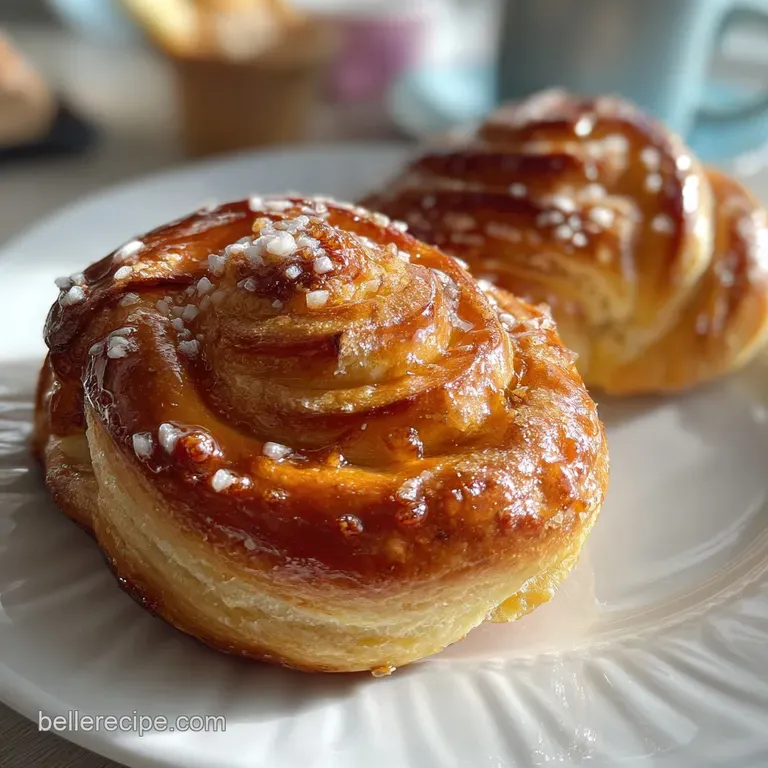
- Time: Active 1 hour 15 mins, Passive 3 hours 50 mins, Total 5 hours 5 mins
- Flavor/Texture Hook: Buttery, nutty aroma with a flaky, honeycomb like crumb
- Perfect for: Weekend brunch or a slow Sunday morning coffee treat
- Bringing Home the Authentic Gipfeli Recipe
- The Science of Flaky Layers
- Essential Stats for Your Bake
- Selecting Ingredients for Better Crumbs
- Professional Tools for Pastry Dough
- Transforming Dough into Golden Crescents
- Solving Common Dough Issues
- Creative Twists on Swiss Classics
- Keeping Pastries Fresh Longer
- Best Pairings for Morning Pastries
- Professional Knowledge for Perfect Results
- Recipe FAQs
- 📝 Recipe Card
You know that specific sound when you bite into a fresh pastry? Not a soft squish, but a definitive, glass like shatter that leaves golden flakes all over your sweater? That’s exactly what we’re chasing here.
For a long time, I was intimidated by the idea of making these at home, thinking it was a "bakery only" situation, but honestly, it’s just about patience and keeping things cold.
If you've ever had a croissant that felt a bit too greasy or collapsed into a sad, doughy mess, I feel your pain. I’ve been there, staring at a puddle of melted butter on my baking sheet. But this gipfeli recipe is different.
It’s the Swiss cousin to the French classic, focusing on a slightly sturdier, more "bready" texture that holds up beautifully to a thick swipe of jam or even a slice of ham.
We’re going to walk through the lamination process together. It’s essentially just folding butter into dough over and over, creating hundreds of microscopically thin layers. It sounds technical, but once you feel the dough under your hands, it’s actually quite therapeutic.
Let’s get your kitchen smelling like a Zurich bakery.
Bringing Home the Authentic Gipfeli Recipe
When we talk about this pastry, we are talking about the marriage of temperature and timing. The goal is to keep the butter in distinct, solid sheets between layers of dough. If the butter melts before it hits the oven, you’re just making brioche (which is fine, but not what we want today).
Steam Expansion: As the high heat hits the dough, the water in the butter layers evaporates into steam. This steam physically pushes the layers of dough apart, creating the "lift" and the honeycomb interior we crave.
Gluten Relaxation: Resting the dough between folds isn't just a suggestion; it prevents the gluten from becoming too tight. If you skip the rest, the dough will snap back like a rubber band and your layers will tear.
- Vapor Pressure: High fat butter contains less water, meaning more concentrated fat to separate the dough layers.
- Thermal Mass: Using cold 4°C milk keeps the overall dough temperature low, preventing the yeast from over proofing during the rolling stage.
- Starch Gelatinization: The rapid heat of a 200°C oven sets the starch in the flour quickly, locking the "puffed" structure in place before it can collapse.
Chef's Note: I always use a heavy metal rolling pin for this. The weight does the work for you, so you aren't pressing down and squishing those delicate layers you worked so hard to create.
The Science of Flaky Layers
| Ingredient | Science Role | Pro Secret |
|---|---|---|
| 500g All Purpose Flour | Provides the structural framework via gluten | Sift it twice to ensure no lumps interfere with thin layers |
| 250g High Fat Butter | Creates the physical barrier for lamination | Pound it between parchment to make it pliable but cold |
| 10g Instant Yeast | Biological leavening for internal lift | Mix with sugar first to "wake it up" even in cold milk |
| 300ml Whole Milk | Fat and liquid for a tender, velvety crumb | Use it straight from the fridge at 4°C to stay chill |
Cold Lamination Physics
Think of the butter as a series of walls. If the walls are too soft, they blend into the "rooms" (the dough). We need those walls to stay solid until the heat of the oven turns the moisture inside them into a gas.
This is why we use European style butter, like Kerrygold Unsalted Butter, which has a higher fat percentage and less water than standard supermarket sticks.
Controlled Fermentation
Because we’re using 10g of instant yeast, the dough wants to grow fast. We slow it down by using cold milk. This cold ferment develops flavor that slightly tangy, complex aroma without letting the dough get so puffy that it becomes hard to roll out.
The Windowpane Test
Before you start the first fold, your base dough needs to be strong. Cut off a small piece and stretch it gently. If it stretches thin enough to see light through it without tearing, your gluten is ready. If it snaps, give it another 5 minutes of rest.
Essential Stats for Your Bake
This isn't a "toss it in the bowl" kind of morning. We need precision. If you're looking for a hearty lunch to follow this up, these pastries actually go incredibly well with a warm bowl of Cheddar Broccoli Soup recipe. The crunch of the pastry against the creamy soup is world class.
| Feature | Classic Method | This Gipfeli Recipe |
|---|---|---|
| Total Time | 12 to 24 hours | 5 hours 5 mins |
| Texture | Airy and Shattering | Flaky with a Bread like Core |
| Yeast Type | Fresh Cake Yeast | Instant Dry Yeast |
Decision Shortcut If you want a shatteringly crisp crust: Bake at 200°C for the full 20 minutes. If you want a softer, richer pastry: Increase the heavy cream in the egg wash.
If you want a deeper flavor: Let the final dough rest in the fridge for 1 hour before shaping.
Selecting Ingredients for Better Crumbs
The quality of your flour matters more than you think. You want something with a mid range protein content. Too high (like bread flour) and it becomes chewy; too low (like cake flour) and it won't hold the layers.
- 500g All Purpose Flour: The backbone. Why this? Provides enough protein for structure without being overly tough.
- Substitute: Type 550 flour (common in Europe) for an authentic texture.
- 10g Fine Sea Salt: Flavor enhancer. Why this? It tightens the gluten network and balances the rich butter.
- Substitute: Table salt (use 8g as it is denser).
- 50g Granulated Sugar: Food for yeast and browning. Why this? Assists in the Maillard reaction for a golden crust.
- Substitute: Honey (adds moisture but may brown faster).
- 10g Instant Yeast: The lift. Why this? No need to bloom in warm water, keeping our dough cold.
- Substitute: 30g Fresh yeast if you prefer the traditional smell.
- 300ml Whole Milk (4°C): Hydration. Why this? Adds fat for a softer crumb than water based doughs.
- Substitute: Cold water (results in a crispier, leaner pastry).
- 250g High Fat European Style Butter: The lamination layer. Why this? Higher fat means more distinct layers and better flavor.
- Substitute: Standard unsalted butter (keep it extra cold as it melts faster).
Professional Tools for Pastry Dough
You don't need a professional bakery, but a few specific items make this much less stressful. I usually reach for my KitchenAid Stand Mixer to handle the initial kneading, which saves my arms for the rolling process later.
- Rolling Pin: A heavy, French style tapered pin is best for control.
- Baking Sheet: Use a heavy duty Nordic Ware Half Sheet Pan to prevent the bottoms from burning.
- Pizza Cutter: Seriously, this is the easiest way to cut perfect triangles without dragging the dough.
- Pastry Brush: For that essential egg wash.
- Parchment Paper: Don't skip this, or the butter leakage will smoke up your oven.
Transforming Dough into Golden Crescents
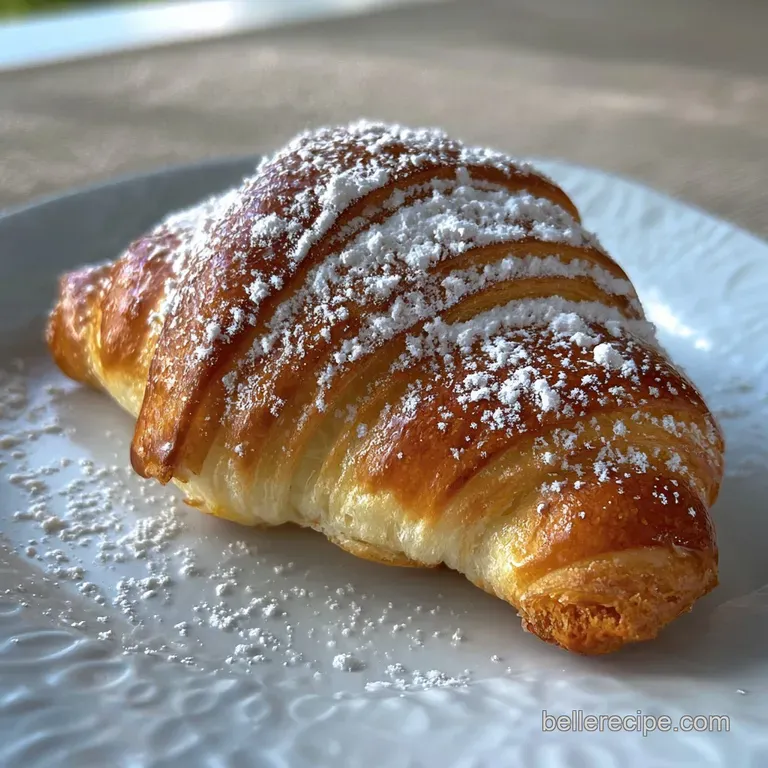
Right, let’s get into it. Clear off your biggest counter space and make sure your kitchen isn't too hot. If you've got the heater on high, turn it down for an hour.
1. Developing the Base Dough
Combine 500g flour, 10g yeast, 50g sugar, and 10g salt in your mixer bowl. Add 300ml cold milk and 50g softened butter. Mix on low until a shaggy dough forms, then knead for about 5 to 7 minutes until the dough is smooth and tacky but not sticky.
2. The First Chill
Flatten the dough into a rectangle, wrap it tightly in plastic, and pop it in the fridge for at least 1 hour. Note: This stops the yeast from going wild and makes the dough easier to roll.
3. Prepping the Butter Block
Take your 250g of cold butter and place it between two sheets of parchment. Beat it with your rolling pin until it's a flat square, about 1cm thick. It should be pliable like clay but still very cold.
4. The Lock In
Roll your chilled dough out into a rectangle twice the size of your butter block. Place the butter in the center and fold the dough over it, sealing the edges completely. You should see no butter peeking out.
5. Mastering the Three Fold Turn
Roll the dough out into a long rectangle. Fold the bottom third up to the center, and the top third down over it (like a letter). Wrap and chill for 30 minutes. Repeat this process two more times. You will feel the dough getting firmer with each turn.
6. Shaping the Iconic Crescent
Roll the final dough out to a thickness of about 4mm. Use your pizza cutter to cut long, skinny triangles. I usually go for about 10cm wide at the base and 25cm long.
7. The Roll
Starting at the wide base, gently roll the triangle toward the tip. Don't pull too hard, or you'll tear the layers. Place them on your baking sheet with the "tail" tucked underneath so they don't unravel.
8. The Final Proof
Brush them lightly with a mix of 1 egg yolk and 1 tbsp heavy cream. Let them sit at room temperature for about 1 hour 30 mins until they look puffy and wobble slightly when you shake the tray.
9. The Golden Bake
Preheat your oven to 200°C. Give them one last thin coat of egg wash and a pinch of salt. Bake for 20 minutes until they are a deep, mahogany gold and the kitchen smells like heaven.
Solving Common Dough Issues
Even the pros have "off" days with pastry. If your kitchen gets too warm, everything can go south quickly. If you're feeling overwhelmed, maybe take a break and try something simpler like a Silky Smooth Homemade recipe for a filling instead of worrying about the dough!
Why Your Pastry Leaked Butter
This usually happens if the oven wasn't hot enough or if the dough was too warm when it went in. If the butter melts before the dough "sets," it just runs out onto the tray.
Dough Snapping Back While Rolling
This is a classic sign of over worked gluten. If you try to force it, you'll just tear the butter layers. Walk away for 15 minutes, let it sit in the fridge, and try again.
Layers Are Bready and Not Flaky
If your layers didn't separate, the butter might have been too soft during the folding process and incorporated into the dough like a bread.
| Problem | Cause | Fix | Pro Tip |
|---|---|---|---|
| Butter Leaking | Oven too cool | Preheat to exactly 200°C | Use an oven thermometer |
| Tough Texture | Too much flour on bench | Brush off excess flour | Use a dry pastry brush |
| Flat Pastry | Yeast died in cold | Check yeast expiration | Use "Instant" not "Active" |
Creative Twists on Swiss Classics
Once you've mastered the plain gipfeli recipe, you can start playing with the "guts." Swiss baking is all about high-quality additions.
- Savory Gruyère & Ham: Before rolling the triangles, place a thin slice of ham and some grated Gruyère at the base. It’s the ultimate breakfast.
- Sweet Almond Frangipane: Spread a thin layer of almond cream inside before rolling. This is a great way to use up "day old" pastries too just slice, fill, and re bake.
- Seeded Everything Gipfeli: After the final egg wash, sprinkle a mix of poppy seeds, sesame seeds, and dried garlic on top.
- Pistachio Cream: For a decadent dessert, fill the baked pastry with a Silky Smooth Homemade recipe using a piping bag.
Keeping Pastries Fresh Longer
Pastries are best within 4 hours of leaving the oven. That’s just the law of the kitchen. But we can't always eat 12 at once (though I've tried).
Storage: Keep them in a paper bag at room temperature for up to 2 days. Avoid plastic bags, as they trap moisture and turn your beautiful flaky layers into a soggy sponge.
Freezing: You can freeze the shaped, un proofed gipfeli for up to 2 months. When you're ready to bake, let them thaw and proof in the fridge overnight, then bake as directed.
Reheating: Never use a microwave. It will ruin the texture. Put them in a 175°C oven for 5 to 8 minutes until the outside crisps back up.
Zero Waste Tip: If you have scraps of dough left over from cutting triangles, don't throw them away! Twist them with cinnamon sugar and bake them as "pastry fries." They are the cook's treat.
Best Pairings for Morning Pastries
A gipfeli is a social creature. It begs for a companion. In Switzerland, you'll often find these served with a "Milchkaffee" (latte) and a side of cold butter and jam.
If you’re leaning into a savory morning, try pairing these with a rich Grandmas Ghoulosh Recipe for a very non traditional but extremely satisfying brunch. The hearty sauce is incredible when mopped up with a buttery pastry.
For a lighter touch, a simple plate of sharp cheddar, some green apple slices, and a dollop of honey creates a beautiful balance of fat, acid, and sweetness.
Professional Knowledge for Perfect Results
There are a lot of old wives' tales about pastry. Let's clear some up.
Myth: You must use bread flour for croissants. Actually, many traditional Swiss bakers prefer All Purpose or a specific "Zopf" flour blend. Too much protein makes the pastry "snappy" and tough rather than tender and flaky.
The 500g of All Purpose in this recipe is chosen specifically for that delicate balance.
Myth: Warm milk helps the yeast work better. While true for bread, it's a disaster for lamination. We want the yeast to work very slowly. The 4°C milk ensures the butter stays solid while the dough develops.
Myth: You need a proofing box. Not at all. A turned off oven with a bowl of hot water at the bottom creates the perfect humid, warm environment for your final proof. Just make sure it’s not too hot, or the butter will melt out before you even start baking!
Right then, you're ready. This gipfeli recipe is a labor of love, but the first time you hear that "crunch," you'll know it was worth every minute. Happy baking!
Recipe FAQs
What is the difference between a croissant and a gipfeli?
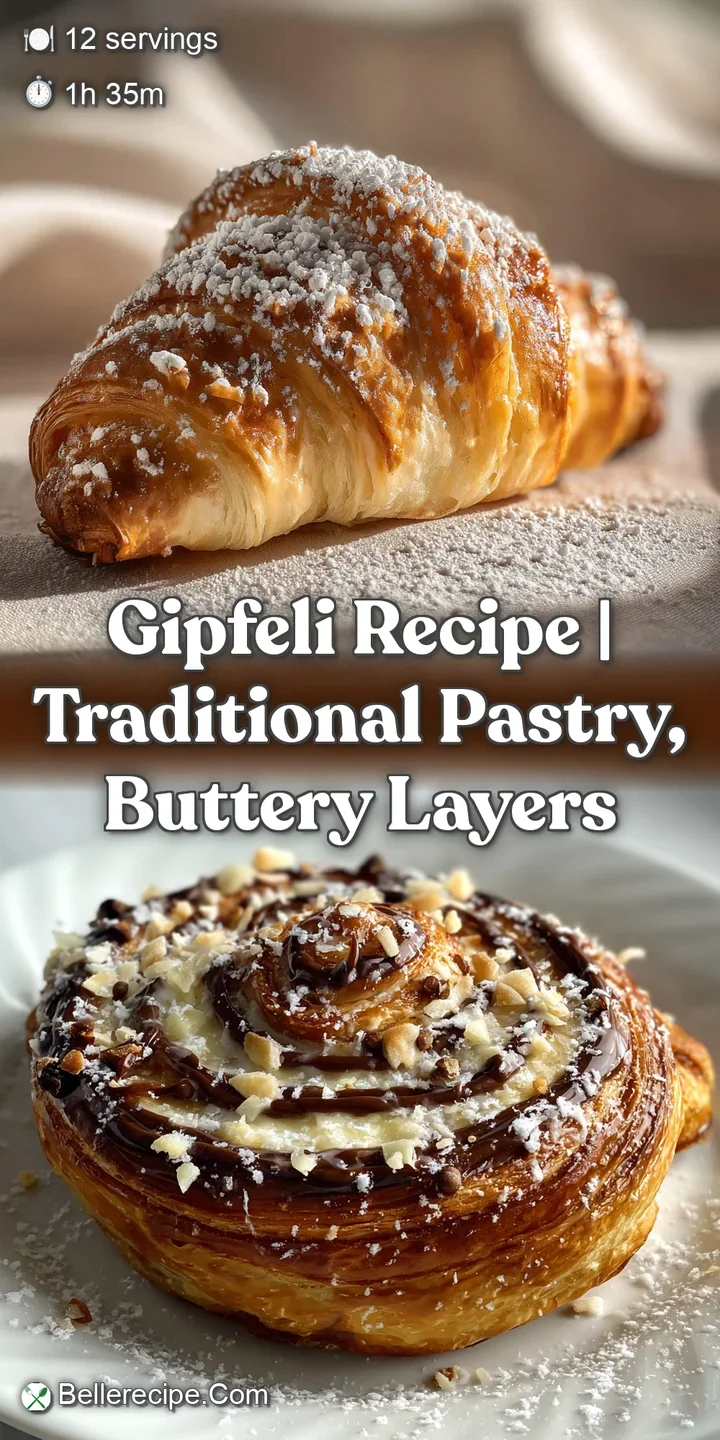
They are similar but structurally distinct. A croissant is typically lighter and airier, while the gipfeli often has a slightly denser, bread like interior and a firmer crust, developed through specific regional lamination techniques.
What ingredients are in a Gipfeli?
Flour, high fat butter, milk, yeast, sugar, and salt. The ratio emphasizes a higher butter content relative to the liquid to achieve distinct, shatteringly flaky layers during lamination.
What is the best way to eat a Gipfeli?
Warm, split open with butter and jam. They are traditionally eaten for breakfast or brunch, and the buttery, slightly savory notes pair excellently with strong coffee or even served alongside something rich, like our Chicken Bryan Recipe: Pan-Seared with Lemon Butter Sauce if you are going savory.
What is a gipfeli?
It is the Swiss term for a crescent shaped pastry, fundamentally similar to a French croissant but often tailored for a richer, slightly sturdier texture preferred in Swiss baking traditions.
Why is my butter leaking out while baking?
No, your oven was likely too cool or the dough was warm. If the butter melts before the surrounding dough sets, it liquefies and runs out; you need a hot oven, ideally around 200°C, to rapidly generate steam.
Can I substitute European butter for the required high fat butter?
Yes, but you must ensure it's high fat (82% or more). European style butter contains less water than standard American butter, which is crucial because that lower water content prevents layers from merging during the crucial rolling and resting phases.
How long should I rest the dough between folds?
Chill for at least 30 minutes after each turn. This rest period is essential because it allows the gluten network to relax; if you skip it, the dough will fight back and tear, ruining your delicate layer structure, a lesson applicable to many delicate doughs.
Homemade Gipfeli Recipe
Ingredients:
Instructions:
Nutrition Facts:
| Calories | 374 kcal |
|---|---|
| Protein | 5.7g |
| Fat | 22.4g |
| Carbs | 37.4g |
| Fiber | 1.1g |
| Sugar | 4.2g |
| Sodium | 367mg |
