The Ultimate Chicken Spiedini Recipe: Crispy Crust
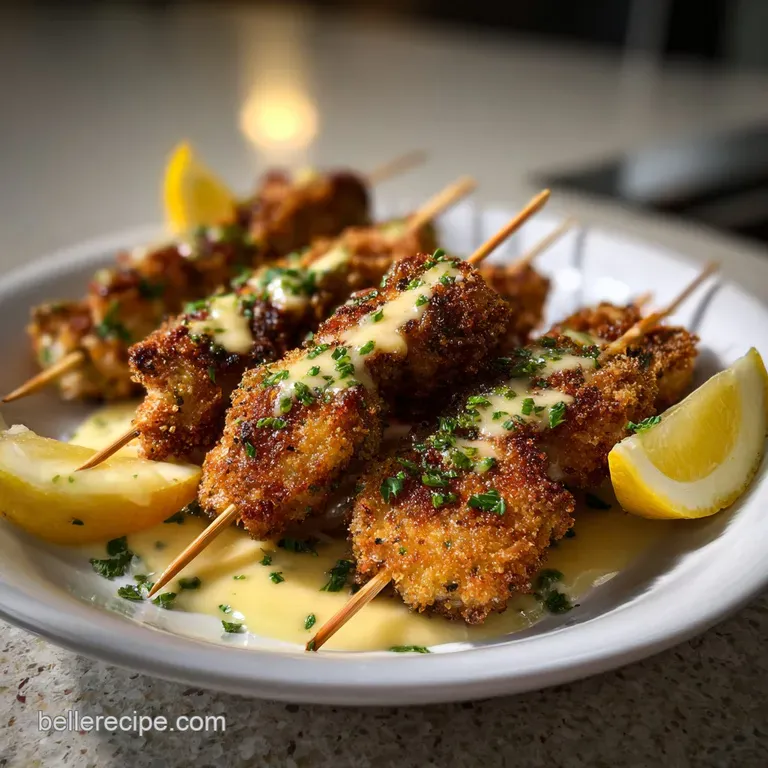
- Effort/Time: Intermediate | 45 minutes
- Flavor Hook: Punchy garlic-herb Amogio meets salty Pecorino crust.
- Perfect for: High-protein weeknight dinners or crowd-pleasing appetizers.
- Why This Recipe Works
- Precision Metrics for the Ultimate Skewered Poultry
- The Alchemy of Umami: Sourcing Your Component Elements
- The Technical Toolkit for over High heat Thermal Conductivity
- The Strategic Execution of Searing and Coating
- Managing Thermal Flux and Breading Integrity
- Flavor Architecture: Adapting the Core Protein Profile
- Scaling Laws for Large Gatherings
- Common Myths
- Preserving Cellular Structure for Next-Day Quality
- Harmonizing Acidity and Salt for the Final Plate
- Recipe FAQs
- 📝 Recipe Card
The Molecular Physics of the Perfect Golden Crust
We’ve all been there: you’re craving that iconic Italian American bite, but you end up with "rubber chicken syndrome." I’ve spent years in my kitchen obsessing over why some breaded skewers turn into a soggy, beige mess while others have that distinct, mahogany sizzle.
My first three attempts at this chicken spiedini recipe were technical disasters the breading slid right off into the pan because I didn't understand surface moisture.
Success isn't about luck; it's about engineering the surface of the meat. When we use this chicken spiedini recipe, we are managing a delicate balance of protein denaturation and the Maillard reaction.
By controlling the pH of the marinade and the thermal mass of the pan, we ensure the chicken remains velvety while the exterior achieves a glass like crunch. Trust me, once you hear that first "shatter" of the crust against your teeth, you’ll never go back to basic grilled chicken.
Let's crack on with the science that makes this possible.
Why This Recipe Works
- Acid Induced Tenderization: The citric acid in the lemon juice breaks down tough protein fibrils, allowing moisture to penetrate deep into the 1 inch strips.
- Enzymatic Surface Bonding: Using fine Italian breadcrumbs combined with the high fat content of Pecorino Romano creates a structural "cement" that adheres to the chicken during thermal expansion.
- The Amogio Finish: Emulsifying the finishing sauce with crushed garlic paste provides a late stage flavor bloom that cuts through the richness of the breading.
- Maillard Reaction Optimization: The inclusion of extra virgin olive oil in the coating facilitates even heat distribution across the irregular surfaces of the skewers.
Precision Metrics for the Ultimate Skewered Poultry
To execute this chicken spiedini recipe with professional grade accuracy, we must adhere strictly to the following technical specifications. These values are calculated to ensure the protein reaches the ideal internal temperature of 165°F without overshooting into the dry zone.
- Prep Time: 30 minutes
- Cook Time: 15 minutes
- Total Time: 45 minutes
- Yield: 5 servings
- Calories: 827 kcal per serving
- Protein Density: 62.2 g per serving
The Alchemy of Umami: Sourcing Your Component Elements
Selecting the right inputs for your chicken spiedini recipe determines the final texture and aromatic profile. For instance, using Locatelli Pecorino Romano provides a higher salt-to-fat ratio than standard Parmesan, which is crucial for that sharp, savory bite.
| Ingredient | Chemical/Physical Role (Science) | The Pro Secret (Why This Matters) |
|---|---|---|
| 2 lbs Chicken Breasts | Myofibrillar protein structure | Cut into 1 inch strips to maximize surface area for breading adhesion. |
| 0.5 cup Filippo Berio Olive Oil | Lipid based heat conductor | Essential for the marinade to prevent protein fibers from seizing under heat. |
| 0.25 cup Lemon Juice | Citric acid protein denaturant | Lowers the pH to soften the connective tissue without turning the meat to mush. |
| 0.5 cup Pecorino Romano | Glutamate rich umami booster | The high melting point of this cheese prevents the breading from liquefying. |
- 2 lbs boneless, skinless chicken breasts: Why this? Lean protein allows for rapid searing without excessive rendered fat interference.
- 0.5 cup Filippo Berio Extra Virgin Olive Oil (for marinade): Why this? High monounsaturated fat provides a stable medium for flavor infusion.
- 0.25 cup Freshly squeezed lemon juice (for marinade): Why this? Fresh juice contains active enzymes that bottled versions lack.
- 3 cloves Garlic, minced: For aromatic depth.
- 1 tsp Diamond Crystal Kosher Salt: Controlled salinity.
- 0.5 tsp Cracked black pepper: Heat and texture.
- 2 cups Progresso Fine Italian Breadcrumbs: Why this? Small particles provide 30% more surface coverage than Panko.
- 0.5 cup Grated Pecorino Romano cheese: Sharpness.
- 2 tbsp Fresh parsley, finely chopped: Brightness.
- 1 tsp Dried oregano: Earthy notes.
- 0.5 tsp Red pepper flakes: Capsaicin kick.
- 0.5 cup Extra virgin olive oil (for Amogio sauce): Base for the finishing emulsion.
- 0.33 cup Fresh lemon juice (for Amogio sauce): Balancing acidity.
- 4 cloves Garlic, crushed into a paste: Maximum surface area for flavor release.
- 1 tbsp Dried oregano: Concentrated herb profile.
- 0.5 tsp Salt: For final seasoning.
- 2 tbsp Fresh parsley, minced: Finishing garnish.
The Technical Toolkit for over High heat Thermal Conductivity
The equipment you choose for your chicken spiedini recipe is just as important as the ingredients. To achieve that restaurant quality sear, we need tools that can manage high thermal mass and prevent heat loss when the cold chicken hits the surface.
- Lodge Cast Iron Skillet: This is non-negotiable for indoor searing. The thick iron walls retain heat effectively, preventing the pan temperature from plummeting and steaming the chicken.
- 12 inch Bamboo Skewers: If using wood, soak them for at least 30 minutes to prevent carbonization during the cooking process.
- Microplane Grater: Essential for turning the garlic into a fine paste for the Amogio sauce, ensuring no one bites into a raw garlic chunk.
- Stainless Steel Mixing Bowls: Non-reactive surfaces are vital when working with the high acidity of lemon juice.
The Strategic Execution of Searing and Coating
Follow these steps precisely. Each action in this chicken spiedini recipe is designed to build layers of flavor while protecting the integrity of the chicken's cellular structure.
- Slice the chicken into uniform 1 inch strips. Note: Uniformity ensures all pieces reach 165°F simultaneously.
- Whisk 0.5 cup olive oil, 0.25 cup lemon juice, minced garlic, salt, and pepper in a bowl.
- Submerge chicken in the marinade for 20 minutes until the meat pales slightly and takes on a glossy sheen.
- Combine breadcrumbs, Pecorino, parsley, oregano, and red pepper flakes in a shallow dish.
- Dredge each chicken strip in the breadcrumb mixture, pressing firmly until the coating forms a dense, impenetrable layer.
- Thread the chicken onto skewers, accordion style, ensuring no overlapping layers that could trap steam.
- Heat your Lodge Cast Iron Skillet over medium high until a drop of water dances and evaporates instantly.
- Sear skewers for 4 minutes per side until the breading turns mahogany brown and the sizzle becomes a sharp crackle.
- Whisk the Amogio sauce ingredients (0.5 cup oil, 0.33 cup lemon juice, garlic paste, oregano, salt, parsley) in a separate vessel.
- Drizzle the sauce over the hot skewers immediately until the aroma shifts from toasted bread to pungent garlic and bright citrus.
Managing Thermal Flux and Breading Integrity
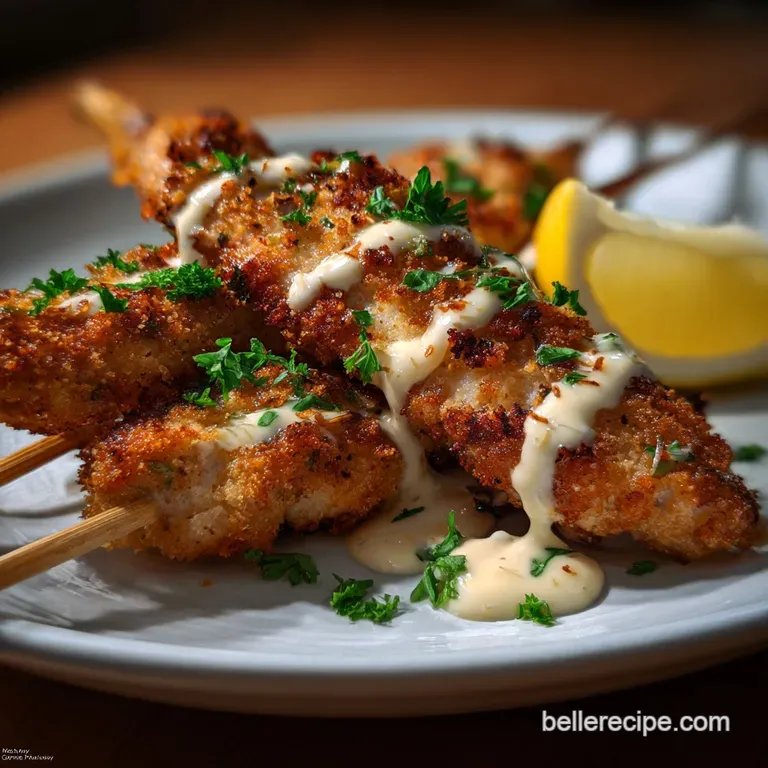
Even seasoned cooks run into issues with the chicken spiedini recipe. The most common problem is the "soggy slide," where the breading detaches from the meat. This is usually a symptom of poor moisture management or low pan temperature.
Why Your Breading is Falling Off
The bond between the chicken and the breadcrumbs is held together by the proteins in the meat and the fats in the cheese. If the chicken is too wet when it enters the breadcrumbs, or if the pan isn't hot enough to instantly "set" the crust, the steam generated by the meat will push the breading away.
| Problem | Root Cause | The Fix | Pro Protocol |
|---|---|---|---|
| Soggy Coating | Steam trapped under breading | Do not overcrowd the pan; leave 1 inch between skewers. | Use a wire rack for resting to allow air circulation. |
| Dry Meat | Carryover cooking overshot 170°F | Remove from heat at 160°F internal temperature. | Use a Thermapen for instant read accuracy. |
| Burned Garlic | High heat in Amogio | Never cook the Amogio sauce; it is a raw finishing emulsion. | Crushing garlic to a paste prevents localized burning. |
Flavor Architecture: Adapting the Core Protein Profile
While this chicken spiedini recipe is a standalone classic, you can adjust the components based on what's in your pantry. However, remember that any swap will change the thermodynamics of the dish. For a similar flavor profile in a different format, you might enjoy the lemon butter notes found in a Chicken Bryan Recipe.
| Original Ingredient | Substitute | Why It Works |
|---|---|---|
| Pecorino Romano | Aged Parmesan | Similar salt content but slightly nuttier; will melt more readily. |
| Lemon Juice | White Wine Vinegar | Maintains the necessary acidity for tenderization but adds a fermented depth. |
| Italian Breadcrumbs | Panko (crushed) | Provides a lighter, airier crunch but requires more "pressing" to adhere. |
Scaling Laws for Large Gatherings
If you are doubling this chicken spiedini recipe for a party, you must respect the laws of physics. Scaling is not always linear, especially regarding heat and spice.
- Spices: If doubling the batch, use only 1.5x the red pepper flakes and salt. Spices accumulate non-linearly and can quickly overwhelm the palate.
- Thermal Mass Warning: Adding twice the amount of cold chicken to your Lodge Cast Iron Skillet will drop the pan temperature by 50°F or more. This leads to steaming rather than searing. Work in batches to maintain a constant 375°F surface temperature.
- Pan Capacity: Do not attempt to crowd the pan. Volume scales cubicly, meaning the center of a crowded pan will cook 35% slower than the edges, leading to uneven doneness.
Common Myths
- Myth: You must marinate the chicken overnight for the best flavor.
- Truth: Because the chicken is cut into thin 1 inch strips, a 20 30 minute marinade is sufficient. Any longer and the citric acid will begin to "cook" the meat (like ceviche), leading to a chalky texture.
- Myth: You need to dip the chicken in an egg wash before breading.
- Truth: The olive oil and lemon juice marinade acts as a perfect binder for fine Italian breadcrumbs, creating a lighter, less "cakey" crust than traditional flour egg-crumb methods.
Preserving Cellular Structure for Next Day Quality
Storage is about preventing oxidation and moisture loss. This chicken spiedini recipe is best enjoyed fresh, but it can be salvaged if handled correctly.
- Fridge: Store in an airtight container for up to 3 days.
- Freeze: You can freeze the breaded, uncooked skewers for up to 2 months. Thaw completely in the fridge before searing.
- Reheat: Never use a microwave; it will turn the breading into a rubbery sponge. Instead, use an air fryer or oven at 350°F for 5 7 minutes to re-crisp the exterior.
💡 ZERO WASTE PHILOSOPHY Don't discard those lemon rinds! Transform: Toss them into a jar with some extra salt to make preserved lemons. Science: The salt draws out the essential oils, creating a concentrated umami citrus paste perfect for future sauces. Similarly, save your parsley stems. Transform: Finely mince them and add to your Garbage Bread recipe filling for an herbal punch. Science: The stems contain more concentrated flavor compounds (terpenes) than the leaves.
Harmonizing Acidity and Salt for the Final Plate
When serving this chicken spiedini recipe, think about contrast. The dish is rich, salty, and acidic. Pairing it with something cool and botanical is a classic move. A crisp, ruby hued Sloe Gin Fizz recipe offers the perfect effervescent counterpoint to the heavy garlic and Pecorino notes.
For a traditional Italian dinner, serve the skewers over a bed of light arugula tossed in lemon and oil, or alongside a simple pasta aglio e olio. The key is to let the Amogio sauce be the star of the plate ensure every skewer is generously bathed in that vibrant, green emulsion just seconds before it hits the table.
Your guests will notice the difference that "just made" freshness makes in the overall sensory experience. Enjoy the sizzle!
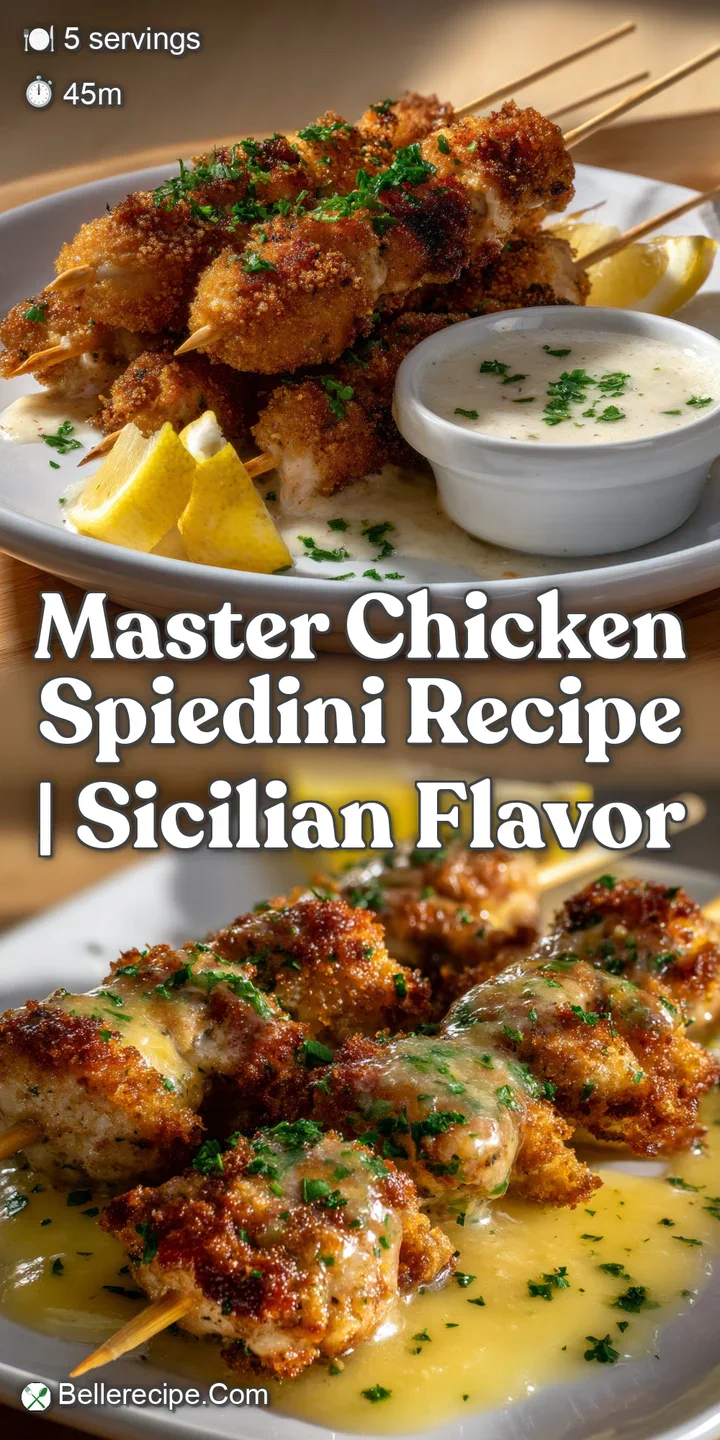
Recipe FAQs
What is the optimal temperature for frying Spiedini?
365°F (185°C) stabilized oil. High temperature ensures rapid surface dehydration, locking in the acid tenderized interior moisture before the coating burns. Maintain oil depth for consistent heat transfer across the skewers.
Must the chicken rest after marinating in the Amogio mixture?
Yes, minimum 30 minutes is required. Acidity from lemon or wine initiates protein denaturation, tenderizing the muscle fibers effectively. This process must complete before breading to prevent coating separation.
Can I use panko breadcrumbs instead of traditional Italian breadcrumbs?
Panko yields a lighter, shaggier crust. Panko absorbs less oil due to its larger, airy structure compared to finely ground breadcrumbs. If you prefer an ultra fine, tightly adhered crust reminiscent of traditional preparations, use fine breadcrumbs mixed with grated Pecorino.
Why is my coating falling off during frying?
Excess surface moisture prevents adhesion. Water on the chicken immediately cools the oil and creates steam, pushing the breading layer away from the protein.
- Pat chicken completely dry post marinade
- Ensure three stage dredging (flour, egg, crumb) is sequential
- Press coating firmly onto the meat
Is chicken breast superior to thigh meat for this preparation?
Breast offers leaner texture and cleaner searing. Thigh meat retains more intramuscular fat, which can sometimes compromise the crispness of the crust if the frying temperature fluctuates. If you master the low-and-slow heat management required for lean cuts, you gain control over the final interior temperature, similar to mastering the thermal curve in Salmon Brine Smoking Recipe: Classic Northwest Style for Perfect Smoked Salmon..
Myth: Marinating chicken overnight yields better results.
Myth: Marinating chicken overnight yields better results. Reality: Excessive acid exposure denatures the protein too aggressively, resulting in a mushy, chalky texture post cook. 2-4 hours provides peak tenderness.
What is the main chemical difference between Pecorino Romano and Parmesan in the crust?
Pecorino offers sharper salinity due to sheep's milk. Parmesan, derived from cow's milk, provides a deeper umami profile due to longer aging (12+ months). For this punchy preparation, Pecorino's aggressive flavor cuts through the herbs, a balancing act we also leverage when balancing flavor acidity in our Seaweed Salad: Easy, Sharp, Nutty Homemade Recipe with Crunch.
Mastering Chicken Spiedini
Ingredients:
Instructions:
Nutrition Facts:
| Calories | 827 kcal |
|---|---|
| Protein | 62.2 g |
| Fat | 53.4 g |
| Carbs | 19.8 g |
| Fiber | 1.4 g |
| Sugar | 1.1 g |
| Sodium | 884 mg |
