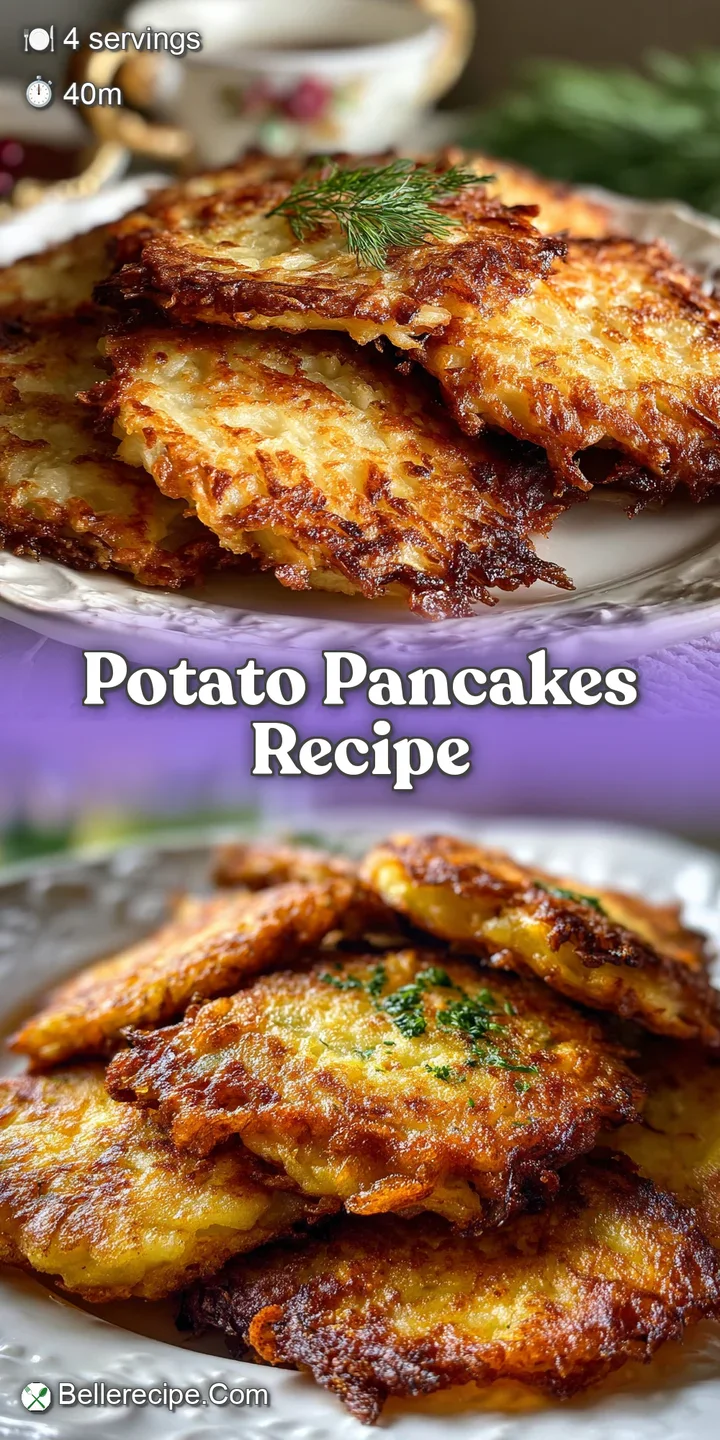
Potato Pancakes Recipe: Crispy and Savory
- Time: Active 20 minutes, Passive 20 minutes, Total 40 minutes
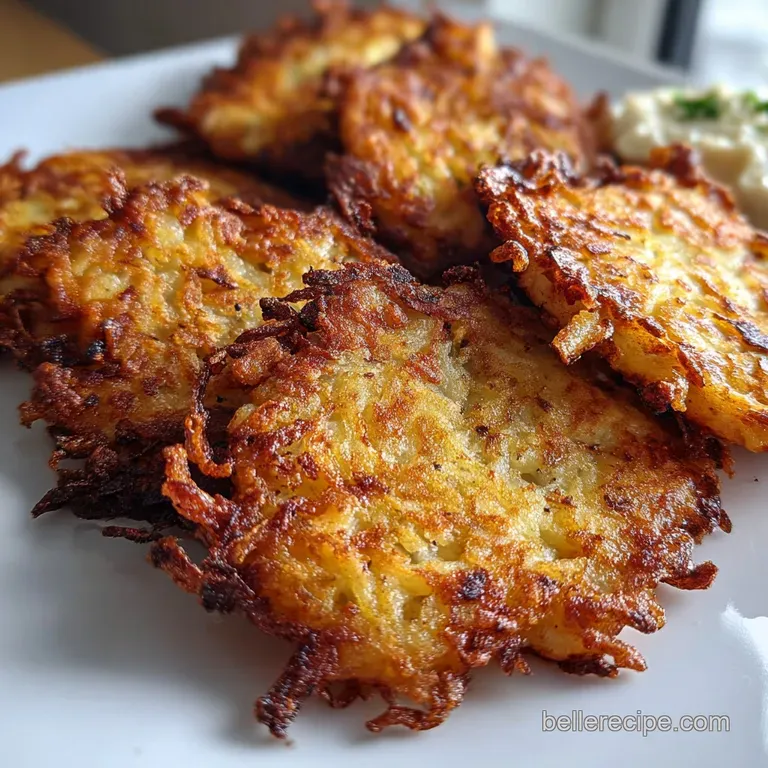
- Flavor/Texture Hook: Deeply savory with a mahogany, crisp lattice exterior and tender center.
- Perfect for: Cozy weekend brunches, holiday side dishes, or clearing out the pantry.
- The Comfort of a Traditional Potato Pancakes Recipe
- Why This Works
- Component Analysis Deep Dive
- Simple Ingredients for Maximum Crunch
- Minimal Tools for Kitchen Classics
- From Prep to Golden Sizzle
- Fixing Common Potato Pancake Mistakes
- Creative Twists and Ingredient Swaps
- Storage and Reheating Tips
- Refreshing Sides and Perfect Pairings
- Scaling Guidelines
- Debunking Kitchen Folklore
- High in Sodium
- Recipe FAQs
- 📝 Recipe Card
The Comfort of a Traditional Potato Pancakes Recipe
There is a specific sound that defines my Sunday mornings, it is the sharp, rhythmic scraping of a potato against a metal box grater. It’s followed almost immediately by the aggressive sizzle of batter hitting a pool of hot oil. That first whiff of frying onions and earthy starch is better than any alarm clock.
I remember my grandmother standing over a heavy skillet, her hands moving with a confidence that only comes from making thousands of these. She never used a food processor, just a simple grater and a worn out tea towel to squeeze out every drop of moisture.
We’ve all been there, standing at the stove with a soggy, grey mess that refuses to crisp up. It’s frustrating when you're craving that specific, golden crunch but end up with something limp. But honestly, don't even worry about that today.
I’ve spent years making mistakes, from using the wrong potato to being too timid with the heat, and I’ve distilled all those lessons into this one reliable method. We are going to make a potato pancakes recipe that actually holds its shape and delivers that satisfying shatter with every bite.
Right then, let’s crack on. This isn't just about frying potatoes, it is about transforming a few humble pantry staples into something that feels like a warm hug. Whether you call them latkes, kartoffelpuffer, or just plain old potato pancakes, the secret lies in the preparation of the starch and the management of moisture.
You’ll see that we don’t need fancy gadgets to get professional results, just a bit of patience and a good heavy pan.
Why This Works
- The Starch Bond Secret: When the Russet potatoes are shredded and squeezed, they release natural starches that, when combined with egg, create a thermal set binder that prevents the pancake from falling apart in the oil.
- Cellular Dehydration: By salting the raw shreds and waiting, we draw out internal moisture through osmosis, allowing the exterior to fry rather than steam.
- Baking Powder Lift: Adding a tiny amount of leavening creates micro pockets of air, preventing the interior from becoming a dense, leaden block of starch.
- Thermal Mass Stability: Using a generous amount of oil acts as a heat reservoir, ensuring the temperature doesn't plummet when cold batter is added, which is essential for a non greasy finish.
If you find yourself craving this kind of crispiness but want something a bit different for dinner tomorrow, you might enjoy the technique used in my Classic Lyonnaise Potatoes Recipe. It uses similar principles of heat and fat to achieve that golden glow.
Cooking Method Comparison
| Method | Time | Texture Outcome | Best For |
|---|---|---|---|
| Cast Iron Skillet | 20 minutes | Shattering, unevenly golden crust | Traditionalists seeking maximum crunch |
| Non Stick Pan | 25 minutes | Uniformly golden, slightly softer | Beginners who worry about sticking |
| Oven Baked (425°F) | 35 minutes | Consistently crisp but lacks "fried" depth | Large batches or health conscious cooks |
It is worth noting that while the oven method is easier for a crowd, nothing quite replicates the mahogany crust you get from a shallow fry in a skillet. The direct contact with hot oil creates a lattice like texture that is simply incomparable.
Component Analysis Deep Dive
| Ingredient | Science Role | Pro Secret |
|---|---|---|
| Russet Potatoes | High starch, low moisture | Always grate on the large holes to keep the fibers long for better structure. |
| Yellow Onion | Flavor and moisture provider | Grate the onion directly into the potato to let the sulfur compounds prevent browning. |
| Large Eggs | Protein binder | Beat them until frothy before adding to ensure they coat every shred of potato evenly. |
| Baking Powder | Aeration agent | It reacts with the acidic onion juice to create a lighter, less dense interior. |
The Physics of the Crunch
The "crunch" we all love is actually the result of the Maillard reaction and starch gelatinization happening simultaneously. As the water evaporates from the surface, the starches undergo a structural change that forms a rigid, crispy shell.
Simple Ingredients for Maximum Crunch
For this potato pancakes recipe, we are sticking to the basics. I’ve found that the more you try to complicate the batter with extra herbs or heavy flours, the more you lose the pure, earthy flavor of the potato.
- 2 lbs Russet potatoes Why this? Their high starch content creates the most shattering, golden crust possible.
- Substitute: Yukon Gold (note: they are waxier, so your pancakes will be creamier but less crisp).
- 1 large yellow onion Why this? Provides the essential savory backbone and moisture needed for the batter.
- Substitute: Shallots for a more delicate, sweet flavor profile.
- 2 large eggs Why this? Acts as the "glue" that keeps your shreds from scattering in the oil.
- Substitute: 1/4 cup of chickpea flour slurry for a vegan friendly binder.
- 3 tbsp all purpose flour Why this? Absorbs residual moisture that squeezing missed, ensuring a dry surface for frying.
- Substitute: Cornstarch or potato starch for a crispier, gluten-free option.
- 1 tsp baking powder Why this? Gives the pancakes a subtle puff so they aren't heavy like a brick.
- Substitute: Skip it, but your pancakes will be significantly denser.
- 1.5 tsp fine sea salt Why this? Enhances flavor and draws out water from the potatoes during the prep phase.
- Substitute: Kosher salt (use 2 tsp to account for the larger grain size).
- 0.5 tsp freshly cracked black pepper Why this? Adds a necessary punch to cut through the richness of the fried potato.
- Substitute: White pepper for a more subtle heat that won't show black flecks.
- 0.25 cup high smoke point oil Why this? Needed for frying without the oil breaking down and tasting burnt.
- Substitute: Ghee or clarified butter for a rich, nutty flavor.
Chef Tip: Freeze your onion for 10 minutes before grating. It prevents the onion "tears" and makes the structure firmer, so it grates into clean shreds rather than mush.
Minimal Tools for Kitchen Classics
You don't need a kitchen full of gadgets for this. In fact, using a food processor can often over process the potatoes into a paste, which we definitely don't want.
- Box Grater: Use the side with the largest holes. This keeps the potato fibers long, which creates those beautiful "lacework" edges.
- Large Mixing Bowl: Plenty of room to toss everything together without bruising the potato shreds.
- Clean Tea Towel or Cheesecloth: This is the most important tool. You need something strong enough to let you wring the potatoes out with all your might.
- Heavy Skillet: Cast iron is my favorite because it holds heat so well, but a heavy stainless steel or non stick pan works too.
From Prep to Golden Sizzle
- Grate the potatoes. Using the large holes of your box grater, shred the 2 lbs of Russet potatoes into a large bowl. Note: Keep the shreds long for better texture.
- Add the onion. Grate the 1 large yellow onion directly over the potatoes. Wait until the potato turns slightly pink; the onion juice will actually help slow down the oxidation (browning).
- Salt and wait. Sprinkle the 1.5 tsp of fine sea salt over the mixture. Let it sit for 10 minutes until a pool of liquid forms at the bottom.
- Wring it out. Transfer the mixture to a clean tea towel. Gather the corners and twist with all your strength. You should see at least a cup of murky liquid come out.
- Let the starch settle. Pour that liquid into a glass and wait 2 minutes. Pour off the water but keep the thick white paste at the bottom that’s pure potato starch! Add it back to your dry potato mix.
- Whisk the binders. In a separate small bowl, beat the 2 large eggs, 3 tbsp flour, 1 tsp baking powder, and 0.5 tsp pepper.
- Combine gently. Fold the egg mixture into the dried potatoes. Mix until every shred is lightly coated and no dry flour remains.
- Heat the oil. Add 0.25 cup oil to your skillet over medium high heat. Drop a tiny piece of potato in; it should sizzle immediately and vigorously.
- Fry the pancakes. Spoon about 1/4 cup of batter per pancake into the pan. Flatten slightly with a spatula. Fry for 3-4 minutes until the edges are dark mahogany and crisp.
- Flip and finish. Carefully flip and cook the other side for another 3 minutes until the center feels firm and the exterior is shattering.
- Drain properly. Transfer to a wire rack set over a baking sheet. Note: Draining on paper towels can make the bottoms steam and turn soggy.
If you're making these for a big family breakfast, they go beautifully alongside My Grandmother's Fluffy recipe for a sweet and savory spread that covers all the bases.
Fixing Common Potato Pancake Mistakes
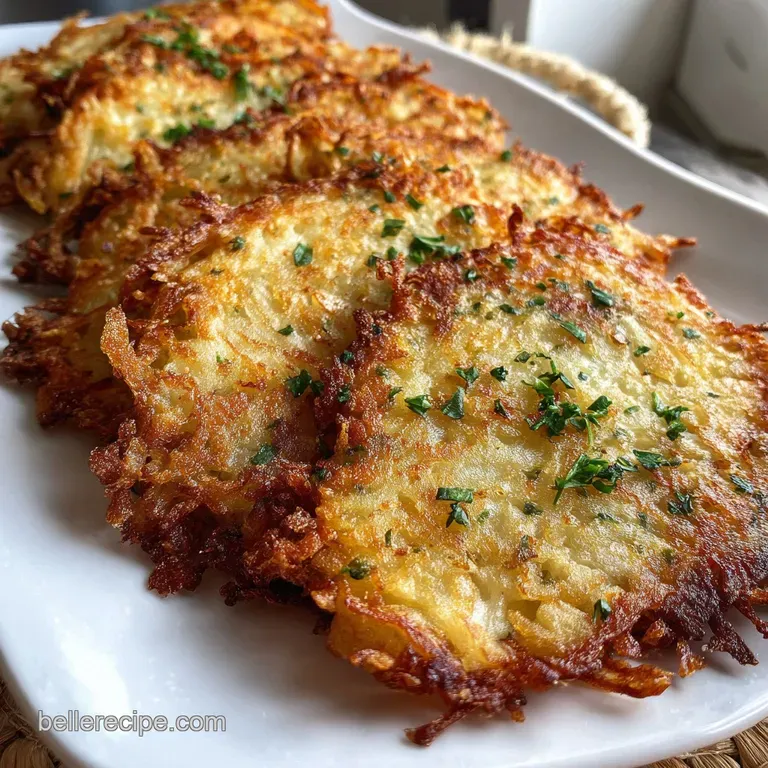
Making a potato pancakes recipe is simple, but it isn't always easy. Most of the time, failures come down to one of two things: moisture or temperature. If your pancakes are falling apart, they're too wet. If they're greasy, your oil wasn't hot enough.
Why Your Pancakes Are Soggy
The number one culprit is lingering water. Potatoes are about 80% water, and if you don't get that out, it turns to steam the moment it hits the oil. This results in a boiled potato texture rather than a fried one.
Also, if you stack the hot pancakes on top of each other, the steam from the bottom ones will soften the ones on top.
| Problem | Root Cause | Solution |
|---|---|---|
| Pancakes falling apart | Too much moisture or not enough binder | Wring out potatoes harder and add an extra tablespoon of flour if needed. |
| Greasy, heavy texture | Oil temperature too low | Let oil reheat for 60 seconds between batches; look for active bubbles. |
| Burned outside, raw inside | Heat too high | Reduce heat to medium and use a thinner pancake for faster heat penetration. |
Common Mistakes Checklist
- ✓ Always use Russet potatoes; waxy potatoes like Red Bliss will never get truly crispy.
- ✓ Never skip the "squeeze" step wring that towel until your knuckles turn white.
- ✓ Preheat your pan for at least 3 full minutes before adding the first drop of batter.
- ✓ Don't overcrowd the pan; leave at least an inch of space between pancakes so they fry, don't steam.
- ✓ Use a wire rack for cooling to allow air circulation all around the pancake.
- ✓ Season with a tiny extra pinch of salt immediately after they come out of the oil.
Creative Twists and Ingredient Swaps
I love an authentic potato pancakes recipe, but sometimes the pantry is bare or you want to impress someone. You can easily adapt this base to fit different needs without losing that comforting soul.
Authentic German Kartoffelpuffer
To make these truly German, grate the potatoes on the finest holes of the grater until they are almost a pulp. This results in a much smoother, almost pancake like interior that is traditionally served with a side of cold applesauce and a dusting of sugar.
Using Leftover Mashed Potatoes
If you have leftovers, you can make a "leftover mashed potato pancakes recipe" by skipping the grating and squeezing. Just mix 2 cups of cold mashed potatoes with one egg, 1/4 cup of flour, and some chopped chives. They will be much softer and creamier, almost like a potato croquette.
Going gluten-free Naturally
This is one of the easiest recipes to convert. Simply swap the all purpose flour for a 1 to-1 gluten-free blend or, even better, use potato starch. Since you're already using potatoes, the flavor profile remains completely intact.
Chef Tip: For a "vegan potato pancakes recipe", replace the eggs with a "flax egg" (1 tbsp ground flax mixed with 3 tbsp water) and ensure your flour is a high protein variety to help with the structural binding.
Storage and Reheating Tips
Potato pancakes are undeniably best when they are fresh and sizzling, but they actually hold up surprisingly well if you treat them right. Whatever you do, do not use the microwave. It will turn your beautiful mahogany crust into a rubbery, sad mess.
- Fridge: Store in an airtight container for up to 3 days. Place a piece of parchment paper between layers to prevent sticking.
- Freezer: These freeze brilliantly! Freeze them in a single layer on a baking sheet first, then pop them into a freezer bag for up to 2 months. You can reheat them straight from frozen.
- Zero Waste: If you have leftover batter that you didn't fry, don't throw it away! You can thin it out with a little milk and an extra egg to make a savory potato waffle in a waffle iron the next morning.
For the best results when reheating, I highly recommend using an air fryer. It circulates hot air perfectly to crisp the outside without drying out the middle. It’s a trick I learned while perfecting my Air Fryer Potato recipe. Set it to 375°F for about 4-5 minutes, and they will taste almost as good as the day you made them.
Refreshing Sides and Perfect Pairings
The classic pairing for a potato pancakes recipe is, of course, sour cream and applesauce. The cool, tangy creaminess of the sour cream cuts right through the salt and fat, while the sweetness of the applesauce provides a lovely contrast to the savory onion.
If you want to turn this into a full meal, try topping them with a piece of smoked salmon and a sprinkle of fresh dill. The heat from the pancake slightly warms the fish, releasing its oils. Alternatively, a poached egg on top with a runny yolk creates a rich, velvety sauce that coats every crispy shred.
Decision Shortcut
- If you want maximum crunch, use a cast iron skillet and Russet potatoes.
- If you want a quick weeknight meal, use leftover mashed potatoes and a non stick pan.
- If you are serving a crowd, bake them on a preheated, oiled sheet tray at 425°F.
Scaling Guidelines
When you're making these for a big holiday gathering or just a quiet breakfast for two, you need to adjust more than just the potato count.
- Scaling Down (1/2 batch): Use 1 lb of potatoes and 1 large egg. Use a smaller 8 inch skillet to maintain oil depth. Reduce frying time by about 1 minute per side as the smaller pan often stays hotter.
- Scaling Up (2x-4x): Increase the potatoes and onions linearly, but only increase the salt and pepper by 1.5x to avoid over seasoning. You will need to work in batches, so keep a wire rack in a 200°F oven to keep the finished pancakes warm and crisp while you finish the rest of the batter.
- Baking Adjustment: If doubling the recipe to bake in the oven, use two separate large rimmed baking sheets. Do not crowd one sheet, or the pancakes will steam instead of crisping up.
Debunking Kitchen Folklore
One of the biggest myths is that you must soak shredded potatoes in water to remove starch. While this works for French fries, it is actually counterproductive for a potato pancakes recipe. We want that natural starch because it helps bind the pancake together.
If you wash it all away, you'll have to add significantly more flour, which can make the pancakes taste pasty and dull.
Another common misconception is that you need an inch of oil to fry them. You really only need about 1/4 inch just enough to come halfway up the side of the pancake. This allows the bottom to fry while the top steams slightly, creating that perfect contrast in textures.
Using too much oil makes them harder to flip and can lead to a greasy interior.
Trust me on this one, the simplest path is usually the best. Don't overthink the process. Once you get that first batch of golden, shattering pancakes onto the plate, all the grating and squeezing will feel like a small price to pay for such a comforting reward. Enjoy the sizzle!
High in Sodium
885 mg mg of sodium per serving (38% of daily value)
The American Heart Association recommends limiting sodium intake to no more than 2,300mg per day for most adults.
Tips to Reduce Sodium in Your Potato Pancakes
-
Reduce Salt-25%
Reduce the amount of fine sea salt added to the mixture. Start by using only 0.75 tsp instead of 1.5 tsp and taste as you go, adding more only if needed.
-
Salt Free Baking Powder-15%
Ensure your baking powder is sodium free, as some brands contain added salt. Read the nutrition label and opt for a sodium free alternative.
-
Embrace Onion Flavor-5%
Enhance the onion flavor by caramelizing the onion slightly before adding it to the batter. This will naturally bring out its sweetness, allowing you to reduce reliance on salt.
-
Herbs & Spices
Experiment with fresh herbs and spices to add flavor without sodium. Consider adding garlic powder, onion powder (salt free), or a pinch of nutmeg to enhance the flavor profile.
Recipe FAQs
What is the secret to the best potato pancakes?
Wringing out the moisture completely. The secret lies in removing almost all the water from the shredded potatoes using a tea towel or cheesecloth until your knuckles ache. This ensures the surface can fry rapidly and develop a shattering crust instead of steaming.
What are common mistakes when making potato pancakes?
Oil temperature being too low is the most common error. If the oil isn't hot enough, the batter absorbs the fat and results in a greasy, soft pancake. Make sure the oil aggressively sizzles when you drop a small test shred in.
Is there a difference between latkes and potato pancakes?
Yes, traditionally there is a regional difference, but functionally they are the same. Latkes are the Jewish potato pancakes traditionally served during Hanukkah, usually featuring finely grated potatoes and served with sour cream or applesauce.
How are potato pancakes made?
Grate Russet potatoes and onions, then vigorously squeeze out all released liquid using a cloth. Mix the dried shreds with eggs, flour, salt, and baking powder, then shallow fry dollops in hot oil for 3-4 minutes per side until deep golden brown.
Is it true that soaking shredded potatoes in water is necessary for crispness?
No, this is a common misconception for this recipe. Washing the starch away by soaking prevents the potato starch from acting as a natural binder, requiring you to add excess flour which dulls the flavor.
Can I use a food processor instead of a box grater?
No, try to avoid using the blade attachment for grating. The food processor tends to over process the potato into a mushy paste, which results in a dense interior rather than the desired light, shredded texture. For optimal texture, mastering the hand grater is key, similar to how we control dough hydration in our How to Bake recipe.
What is the best way to serve or store leftover potato pancakes?
Reheat in an air fryer or oven for best results, never the microwave. The microwave turns the crust soggy; an air fryer at 375°F for 5 minutes will reactivate the crispness. They pair wonderfully with a sharp dip, such as a homemade Tartar Sauce Recipe if you're serving them alongside fish.
Potato Pancakes Recipe Crispy
Ingredients:
Instructions:
Nutrition Facts:
| Calories | 282 kcal |
|---|---|
| Protein | 7.8 g |
| Fat | 11.2 g |
| Carbs | 41.5 g |
| Fiber | 3.2 g |
| Sugar | 1.9 g |
| Sodium | 885 mg |
