Pumpkin Bread: Velvety & Spiced
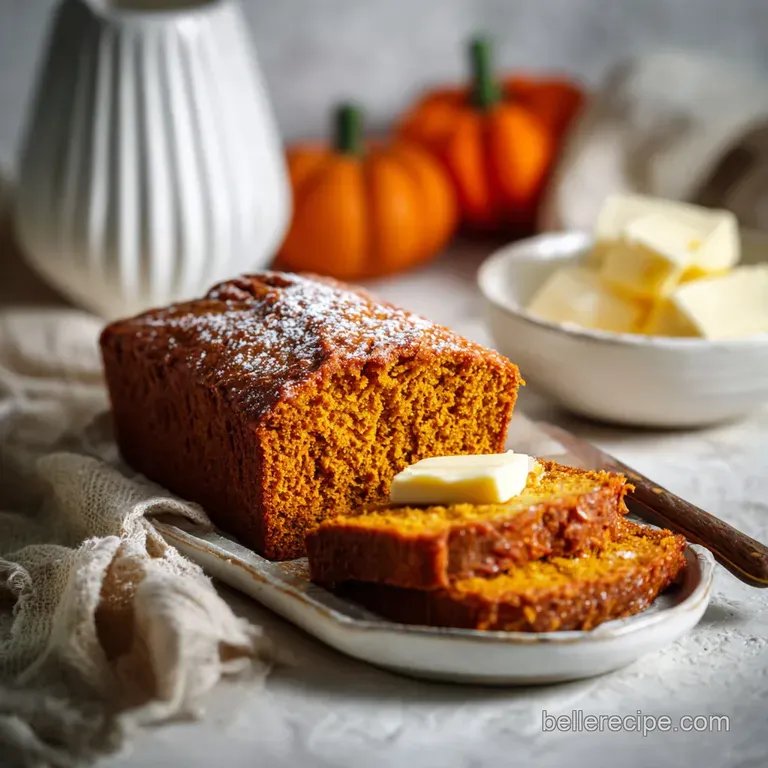
- Time: Active 15 minutes, Passive 60 minutes, Total 1 hours 15 mins
- Flavor/Texture Hook: Velvety crumb with a shatter crisp cinnamon crust
- Perfect for: Stress free weekend baking or thoughtful holiday gifting
- Secrets to Success for This Pumpkin Bread Recipe
- Understanding the Science of the Loaf Performance
- Analyzing the Component Roles
- Gathering Your Seasonal Pantry Elements
- Mixing and Baking the Perfect Loaf
- Fixing Common Baking Stumbling Blocks
- Guidelines for Adjusting Your Batch Size
- Debunking Kitchen Myths
- Guidelines for Keeping Bread Fresh
- Styling Slices for Heartfelt Sharing
- Pumpkin Bread Recipe FAQs
- 📝 Recipe Card
Secrets to Success for This Pumpkin Bread Recipe
The house is quiet, the air outside is turning crisp, and then it happens. That first whiff of cinnamon and ginger begins to drift from the oven, curling around the hallway like a familiar memory. I remember the first time I nailed this specific version.
I was trying to impress my mother in-law, who is the undisputed queen of quick breads, and I decided to take a risk by adding a splash of orange juice. When she took that first bite, she didn't say a word - she just reached for a second slice and gestured for the recipe.
That was the moment I knew I’d found something special.
This isn't just another dry, crumbly loaf that needs a gallon of coffee to wash down. We are talking about a texture so tender it almost melts, yet it has enough structure to hold up to a thick slab of salted butter.
It’s the kind of bread that makes you want to cancel your plans, put on your thickest socks, and just exist in the moment. We’ve all made those "fine" pumpkin breads before, but honestly, "fine" isn't what we’re going for here. We want something that makes the kitchen feel like a sanctuary.
You’re going to love how the sugar caramelizes against the sides of the pan, creating these slightly chewy, deeply golden edges that are, quite frankly, the best part. Whether you're a seasoned baker or someone who usually finds themselves staring at a sunken loaf in despair, I’ve got you.
We’re going to walk through the "how" and "why" so your kitchen smells like a dream and your bread comes out perfectly every single time. Trust me, once you see how the orange juice reacts with the spices, there is no going back to the basic versions.
Understanding the Science of the Loaf Performance
Acidic Activation: The orange juice provides necessary acidity that reacts instantly with the baking soda, creating a massive initial surge of carbon dioxide for a better rise.
Emulsion Stability: Using four large eggs creates a strong protein network that traps the vegetable oil, ensuring the fat doesn't leak out and leave the bread greasy.
Hygroscopic Balance: The combination of granulated and brown sugar pulls moisture from the air into the crumb, which is why this loaf actually tastes better on day two.
Starch Gelatinization: The high moisture content in the pumpkin puree hydrates the flour's starches during baking, resulting in a silky, "custard like" bread texture rather than a bready one.
| Thickness | Internal Temp | Rest Time | Visual Cue |
|---|---|---|---|
| 9x5 inch loaf | 205°F (96°C) | 15 minutes | Deep crack on top looks dry, not shiny |
| 8x4 inch loaf | 200°F (93°C) | 12 minutes | Sides pull away slightly from the pan |
| Mini Loaves | 195°F (90°C) | 5 minutes | Toothpick comes out with three moist crumbs |
While the timing for a standard loaf usually sits around an hour, every oven has its own personality. Using a digital thermometer is the most reliable way to ensure you aren't pulling out a gummy center.
If you don't have one, look for that specific visual cue: the deep "canyon" crack that runs down the center of the loaf should look matte and cooked through, not wet or glistening.
Analyzing the Component Roles
| Ingredient | Science Role | Pro Secret |
|---|---|---|
| Pumpkin Puree | Moisture & Structure | Use canned puree, not pie filling, for consistent water content. |
| Vegetable Oil | Tenderness | Oil coats flour proteins better than butter, keeping the bread soft even when cold. |
| Orange Juice | Flavor Brightness | The Vitamin C and citric acid act as a natural dough conditioner for a finer crumb. |
| Large Eggs | Binding Agent | Room temperature eggs emulsify faster, preventing a "heavy" or dense bottom layer. |
The relationship between the oil and the pumpkin is where the magic happens. Unlike butter, which contains water and can make the bread feel "bready," neutral vegetable oil stays liquid at room temperature. This means your bread won't turn into a brick the moment it hits the counter. If you are looking for a different kind of bake, you might enjoy the technique in my Heavenly Homemade White recipe which uses different fats for a totally different structural result.
Gathering Your Seasonal Pantry Elements
- 3 cups (375g) all purpose flour: The backbone of our structure. Why this? Provides enough protein for height without making the bread tough or chewy.
- Substitute: 1:1 gluten-free baking flour (with xanthan gum) for a gluten-free pumpkin bread recipe.
- 2 tsp baking soda & 1 tsp baking powder: Our lifting team. Why this? The soda reacts with the OJ, while the powder provides a second lift in the heat.
- Substitute: None recommended; the balance is specific to the acidity of the pumpkin.
- 1.5 tsp sea salt: The flavor anchor. Why this? Cuts through the sugar to make the pumpkin flavor pop.
- Substitute: 2 tsp Kosher salt if you prefer a less intense saltiness.
- 2 tsp ground cinnamon, 1 tsp ginger, 0.5 tsp nutmeg, 0.25 tsp cloves: The "autumn" quartet. Why this? This ratio provides warmth without one spice overpowering the others.
- Substitute: 4 tsp of a pre mixed pumpkin pie spice for a quick pumpkin bread recipe.
- 15 oz pumpkin puree: The star ingredient. Why this? Adds natural sweetness and an incredible amount of moisture.
- Substitute: Roasted and pureed butternut squash for a slightly nuttier, sweeter profile.
- 1 cup (200g) granulated sugar & 1 cup (200g) light brown sugar: The sweetness duo. Why this? White sugar helps with the crust; brown sugar adds depth and moisture.
- Substitute: Coconut sugar works well but will result in a slightly darker, less sweet loaf.
- 1 cup (235ml) neutral vegetable oil: The texture king. Why this? Ensures a velvety mouthfeel that lasts for days.
- Substitute: Melted coconut oil for a subtle tropical note and slightly firmer crumb.
- 4 large eggs, room temperature: The glue. Why this? Holds the heavy batter together so it rises upward instead of spreading outward.
- Substitute: Flax eggs (4 tbsp meal + 12 tbsp water) for a vegan pumpkin bread recipe.
- 0.5 cup (120ml) orange juice: The secret weapon. Why this? Adds a hidden zing that makes the spices taste more "alive."
- Substitute: Apple cider for a more traditional, "orchard" flavor profile.
Mixing and Baking the Perfect Loaf

- Prep the environment. Preheat your oven to 350°F (175°C) and grease two 9x5 inch loaf pans with oil or butter. Note: Using parchment paper "slings" makes removing the bread much easier later.
- Whisk the dry foundation. In a large bowl, combine 3 cups all purpose flour, 2 tsp baking soda, 1 tsp baking powder, 1.5 tsp sea salt, and all your spices (cinnamon, ginger, nutmeg, cloves). Note: Use a balloon whisk to remove any lumps and aerate the flour.
- Emulsify the wet core. In a separate medium bowl, beat 4 large eggs with 1 cup granulated sugar and 1 cup light brown sugar until the mixture looks pale and slightly frothy.
- Integrate the fats. Slowly pour in 1 cup neutral vegetable oil while whisking constantly. Note: This creates a stable emulsion that prevents the oil from separating during the long bake.
- Add the aromatics. Stir in 15 oz pumpkin puree and 0.5 cup orange juice until the mixture is a uniform, vibrant orange.
- Merge the mixtures. Pour the wet ingredients into the dry ingredients and fold gently with a spatula. Stop the moment you see no more white flour streaks to avoid over working the gluten.
- Divide the batter. Pour the batter evenly into your two prepared pans, smoothing the tops with the back of a spoon.
- Bake for the rise. Place the pans in the center of the oven and bake for 60 minutes until a skewer inserted into the center comes out clean or with a few moist crumbs.
- Monitor the crust. If the bread looks dark at 45 minutes, tent it loosely with foil. Listen for a faint "whistling" sound which indicates the steam is releasing from a fully cooked center.
- Cool and set. Let the loaves sit in the pans for 15 minutes until the structure firms up before transferring to a wire rack to cool completely.
Fixing Common Baking Stumbling Blocks
The Mystery of the Sunken Center
It is heartbreaking to pull a beautiful loaf out only to watch the middle collapse into a valley as it cools. This usually happens because the oven was opened too early, causing a sudden temperature drop before the egg proteins had "set." Another culprit is over measuring the baking soda; too much lift too fast causes the structure to pop like a balloon.
Always level off your measuring spoons with a knife to stay precise.
The Dreaded Gummy Bottom Layer
If you slice into your loaf and find a dark, dense, rubbery line at the bottom, your emulsion likely failed. This happens when the oil isn't fully incorporated into the eggs and sugar, or if your eggs were cold from the fridge. Cold eggs can't hold onto the fat as well as room temperature ones.
To fix this mid bake is impossible, but you can prevent it next time by whisking your wet ingredients until they are truly unified and look like a thick syrup.
| Problem | Root Cause | Solution |
|---|---|---|
| Dry/Crumbly Texture | Too much flour or over baking | Use the spoon and level method for flour and check temp at 55 mins |
| Burnt Top, Raw Inside | Oven temp too high or rack too high | Move rack to the lower third and tent with foil after 40 mins |
| Bitter Aftertaste | Too much baking soda or cloves | Ensure measurements are level; check expiration of baking soda |
Avoiding Common Mistakes Checklist
- ✓ Always use room temperature eggs to ensure the oil emulsifies perfectly.
- ✓ Avoid over mixing the batter; stop as soon as the last streak of flour disappears.
- ✓ Check your baking soda for freshness by dropping a pinch into vinegar (it should fizz violently).
- ✓ Don't skip the orange juice; the acidity is vital for the chemical reaction that creates the height.
- ✓ Let the bread cool completely before slicing, or the steam will escape and leave the loaf dry.
Guidelines for Adjusting Your Batch Size
If you are baking for a smaller household, you can easily cut this recipe in half. Since the recipe calls for 4 eggs, use 2. Use a single 9x5 pan and keep the baking time the same, though you should start checking for doneness at 50 minutes. For an even smaller version, use a muffin tin.
Fill the cups 3/4 full and bake at the same temperature for 20-25 minutes. It’s a great way to have a quick pumpkin bread recipe experience without the commitment of a full loaf.
Scaling up for a bake sale or holiday gifts is just as simple. You can double the ingredients to make four loaves. However, when doubling, I recommend only increasing the spices to 1.75x instead of 2x to avoid the flavor becoming too medicinal. Make sure your oven has enough space for air to circulate between the pans; if you crowd them, the sides won't get that beautiful golden crust. You might also find that similar scaling logic applies to my How to Make recipe when you're feeding a crowd on Sunday morning.
| Method | Time | Texture | Best For |
|---|---|---|---|
| Standard Oven | 60 minutes | Even, crisp crust, soft crumb | Traditional gift loaves |
| Muffin Tin | 22 minutes | High crust to crumb ratio | On the-go breakfast |
| Bundt Pan | 50 minutes | Dense, cake like, elegant | Dinner party dessert |
Debunking Kitchen Myths
One common myth is that "fresh pumpkin is always better than canned." In the case of this bread, that’s actually false. Fresh pumpkin varies wildly in water content and sweetness, which can make your bake unpredictable.
Canned puree is steamed and concentrated, providing a consistent, thick base that ensures your bread isn't soggy.
Another misconception is that you need to "cream" the oil and sugar. You can't actually cream oil because it doesn't have the solid structure of butter to hold air bubbles. Instead, we whisk the eggs and sugar to create a foam, which provides a different kind of lift.
Don't waste your arm strength trying to get the oil to look "fluffy" - it just needs to be fully integrated.
Guidelines for Keeping Bread Fresh
This bread is a moisture powerhouse. You can keep it at room temperature, wrapped tightly in plastic wrap or stored in an airtight container, for up to 4 days. In fact, many people (myself included) think it tastes even better on the second day once the spices have had time to "bloom" and settle into the crumb.
If you live in a very humid climate, you might want to move it to the fridge after day two to prevent mold, though the fridge can sometimes slightly toughen the texture.
For long term storage, this bread freezes like a dream. Wrap the fully cooled loaf in a double layer of plastic wrap, then a layer of aluminum foil. It will stay fresh for up to 3 months. When you're ready to eat, thaw it on the counter overnight. To use up any "scraps" or the slightly drier end pieces, don't throw them away! They make the most incredible pumpkin bread pudding or can be cubed and toasted to make sweet "croutons" for a fall salad. You can also use leftover slices for a decadent twist on my How to Make recipe — just dip them in the custard and fry as usual.
Styling Slices for Heartfelt Sharing
When you're ready to serve, don't just hack into it. Use a long, serrated bread knife and saw gently rather than pressing down. This preserves the airy holes we worked so hard to create.
If you want that "bakery look," sprinkle a tablespoon of coarse turbinado sugar or some toasted pepitas over the top of the batter right before it goes into the oven. It creates a crunch that contrasts beautifully with the soft interior.
For a true "flavor map" experience, serve a warm slice with a tiny pinch of flaky sea salt on top. The salt heightens the orange notes and makes the cinnamon feel deeper. If you're feeling fancy, a quick schmear of maple infused cream cheese or even a simple honey butter transforms this from a "snack" into a proper dessert.
It’s all about those small, mindful touches that turn a simple bake into a lasting memory for whoever is sitting at your table.
Chef's Tip: If you want a deeper chocolatey note without adding chips, stir in 1 teaspoon of espresso powder with your dry ingredients. It won't make the bread taste like coffee, but it acts like a "volume knob" for the spices and the pumpkin's natural earthiness.

Pumpkin Bread Recipe FAQs
What are common pumpkin bread mistakes?
Overmixing the batter is a common mistake. Mixing beyond the point where flour streaks disappear develops gluten too much, leading to a tough, dense loaf. Always stop mixing as soon as everything is just combined.
What ingredients are in pumpkin bread?
Typical ingredients include pumpkin puree, flour, sugar, eggs, oil, leavening agents (baking soda/powder), and warm spices like cinnamon and nutmeg. Some recipes also add a touch of liquid like orange juice or milk for moisture and flavor complexity.
Is it better to use oil or butter in pumpkin bread?
Oil generally yields a moister and more tender crumb for pumpkin bread. Unlike butter, oil remains liquid at room temperature, preventing the bread from hardening as quickly. If you enjoyed mastering the texture in this recipe, see how fat choices impact results in our Heavenly Homemade White recipe.
Is pumpkin bread healthy?
Generally, no, it's more of a treat than a health food due to sugar and refined flour content. While pumpkin itself is nutritious, the typical preparation often includes significant amounts of sugar and fat, similar to cakes and muffins.
How do I ensure my pumpkin bread is moist?
Use the right fat and don't overbake. Neutral oil, like vegetable or canola, contributes more consistent moisture than butter because it stays liquid. Also, bake until a skewer comes out with just a few moist crumbs, not completely dry.
Can I use fresh pumpkin puree instead of canned?
No, stick with canned pumpkin puree for consistency. Fresh pumpkin's water content can vary significantly, making your bread either too wet or too dry. Canned puree is steamed and concentrated, ensuring a predictable outcome.
Why did my pumpkin bread sink in the middle?
This often happens from opening the oven door too early. A sudden temperature drop before the bread has set can cause the structure to collapse. Over leavening or too much liquid can also contribute; ensuring precise measurements is key.
Pumpkin Bread Recipe
Ingredients:
Instructions:
Nutrition Facts:
| Calories | 243 kcal |
|---|---|
| Protein | 3.1 g |
| Fat | 10.9 g |
| Carbs | 33.3 g |
| Fiber | 1.2 g |
| Sugar | 23.5 g |
| Sodium | 262 mg |
