Crock Pot Cheesy Chicken Spaghetti
- Time: Active 15 minutes, Passive 360 minutes, Total 375 minutes
- Flavor/Texture Hook: Velvety, tangy, and deeply savory
- Perfect for: Stress free Sunday family dinners or easy meal prep
- Achieving the Perfect Creamy Glow with This Crock Pot Cheesy Chicken Spaghetti Recipe
- Essential Specs for Planning Your Slow Cooker Family Feast
- Handpicking the Best Elements for Your Golden Pasta Base
- Simple Tools You Need for This One Pot Wonder
- Master the Three Stage Flavor Infusion for Total Success
- Solving the Mystery of Clumpy Pasta and Grainy Sauces
- Personalize Your Pot with These Clever Flavor Swaps
- Storing Your Leftovers and Keeping the Sauce Silky
- Choosing the Brightest Sides to Pair with Rich Pasta
- CRITICAL Sodium Alert!
- Recipe FAQs
- 📝 Recipe Card
Achieving the Perfect Creamy Glow with This Crock Pot Cheesy Chicken Spaghetti Recipe
There is a specific, heartbreaking failure that happens when you try to make a one pot pasta in a slow cooker without a plan. I remember the first time I tried it, years ago. I tossed everything in at once, thinking the machine would work some kind of magic while I was out.
When I lifted the lid, I didn't find a comforting dinner. Instead, I found a gray, gummy mass where the noodles had dissolved into paste and the sauce had curdled into oily clumps. It was a texture that I can only describe as "sad cafeteria food," and it nearly turned me off from the concept forever.
But the aroma of chicken and peppers is too good to give up on. I realized the mistake wasn't the slow cooker, it was the timing. Most recipes treat the pasta as an afterthought or an early addition, but the real secret to this crock pot cheesy chicken spaghetti recipe is the two stage approach.
We let the chicken reach that fall apart tender state first, creating a savory broth, and only then do we invite the pasta and cheese to the party. This keeps the noodles from becoming mush while ensuring the sauce stays glossy and unified.
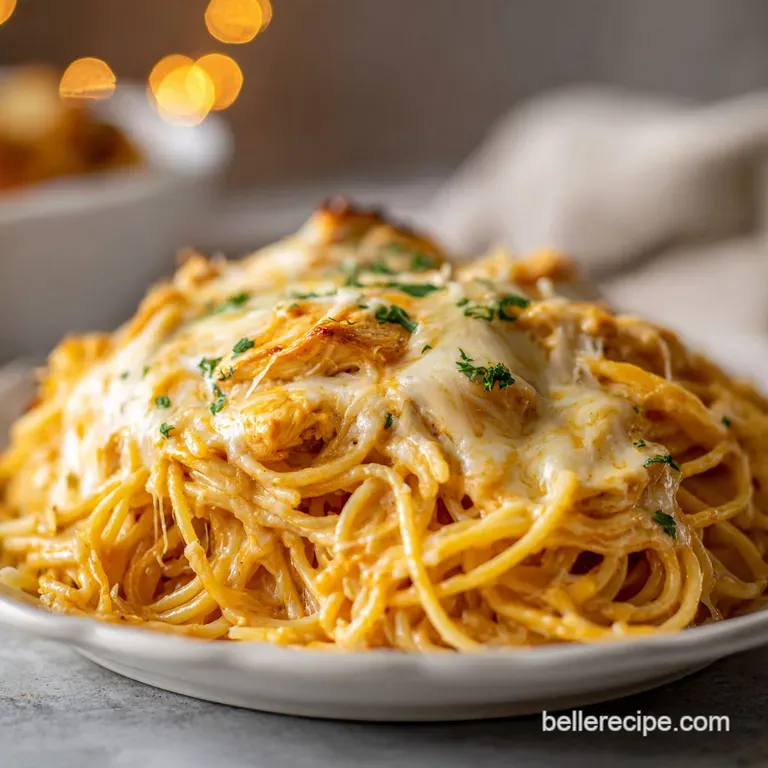
We are going for a texture that is silkier than a standard casserole. When you pull a forkful of this out of the pot, the cheese should cling to the spaghetti in a smooth, golden curtain.
There should be tiny pops of brightness from the green chilies and a soft crunch from the peppers that have mellowed out over six hours. It is the kind of meal that makes the whole house smell like a warm hug, and honestly, it is the only way I make chicken spaghetti now.
Essential Specs for Planning Your Slow Cooker Family Feast
Understanding how much food you are actually making is the first step to a successful dinner party. This recipe is designed to be hearty. Because we use a full pound of pasta and a significant amount of protein, it stretches much further than you might expect.
I have found that a standard 6 quart slow cooker is the sweet spot for this volume, giving the pasta enough room to expand without hitting the lid.
The way the heat moves through the ceramic pot is what creates that deep flavor. During the first 6 hours, the chicken thighs go through a beautiful transformation. Since thighs have more connective tissue than breasts, they don't dry out.
Instead, they release juices that mingle with the condensed soup and the tomatoes, creating a concentrated base. This base is what eventually hydrates the dry spaghetti, infusing the noodles with flavor from the inside out rather than just coating the exterior.
| Servings | Ingredient Adjustments | Slow Cooker Size | Total Cook Time |
|---|---|---|---|
| 4 People | Half all ingredients | 3 to 4 Quart | 5 hours 45 mins |
| 8 People | Use official recipe amounts | 6 Quart | 6 hours 15 mins |
| 12 People | 1.5x all ingredients | 8 Quart | 6 hours 45 mins |
When you are looking at the clock, remember that the 6 hours of passive time is where the magic happens. You aren't just heating things up, you are letting the onion and bell pepper melt into the sauce until they are barely visible but fully tasted.
If you try to rush this on the high setting, you might get the chicken done in 3 hours, but the vegetables won't have that same mellow sweetness. Patience is the hidden ingredient that makes the sauce truly velvety.
Handpicking the Best Elements for Your Golden Pasta Base
Every ingredient in this pot has a specific job to do. We aren't just throwing things in for the sake of it. For example, using chicken thighs instead of breasts is a non negotiable for me. Breasts tend to get stringy and straw like after six hours of heat, but thighs stay succulent.
They have a higher fat content which protects the protein fibers, ensuring that when you shred them, they stay moist and tender.
The choice of cheese is equally intentional. While I love a sharp aged cheddar, it often breaks and becomes oily in a slow cooker. This is why we use a combination of Velveeta and cream cheese.
The Velveeta provides that classic, nostalgic melt and a punch of salt, while the cream cheese adds a tangy richness that prevents the sauce from feeling too heavy. It creates a stable emulsion that won't separate even if the pot stays on the "warm" setting for an extra hour while you wait for everyone to get to the table.
How the Starch Bind Method Prevents a Broken Sauce?
The biggest hurdle with creamy slow cooker meals is the fat separation. When you have fats from the chicken, the soup, and the cheese all swirling together, they want to pull apart. The "Starch Bind" happens when we add the dry spaghetti directly into the liquid.
As the pasta cooks, it releases starches into the surrounding sauce. This starch acts as a bridge, holding the fats and liquids together in a smooth, unified texture.
Why do Chicken Thighs Beat Breasts in This Recipe?
Thermodynamics tells us that different muscles react differently to long term heat. Chicken breasts are lean and lose their moisture quickly once they pass 155°F. In a slow cooker, where temps often hover around 200°F, breasts become parched. Thighs, however, contain collagen.
Over the 6 hours of cooking, that collagen transforms into gelatin. This not only keeps the meat juicy but actually adds body and a "lip smacking" quality to the surrounding sauce.
| Component | Role in the Dish | Pro Secret |
|---|---|---|
| Chicken Thighs | Provides moisture and protein | Trim excess skin but keep some fat for flavor |
| Velveeta Cheese | Creates a stable, glossy melt | Cut into small cubes so it melts evenly without hot spots |
| Chicken Broth | Hydrates the dry pasta | Use low sodium to control the final salt levels |
If you find yourself missing an ingredient, don't panic. This dish is forgiving, but some swaps will change the final vibe. For instance, if you want to swap the cream of chicken soup for something else, a cream of mushroom or cream of celery works perfectly well, though it will shift the color and add an earthy undertone.
For a slightly different twist on a creamy chicken dish, you might enjoy my Chicken Parmesan Penne which uses a similar pasta to sauce ratio but focuses on Italian bright notes.
- 1.5 lbs boneless skinless chicken thighs: Why this? Stays juicy during long cooks compared to lean breasts. (Substitute: Chicken breasts, but reduce cook time by 1 hour)
- 16 oz Velveeta cheese, cubed: Why this? Guarantees a smooth, non grainy sauce that won't separate. (Substitute: 12 oz Sharp Cheddar + 4 oz extra cream cheese)
- 12 oz dry spaghetti noodles: Why this? The starch from the pasta thickens the sauce as it cooks. (Substitute: Fettuccine or Linguine)
- 10 oz diced tomatoes and green chilies (Rotel): Why this? The acidity cuts through the heavy cheese and cream. (Substitute: Plain diced tomatoes + 4 oz can mild green chilies)
- 4 oz cream cheese: Why this? Adds a necessary tang and extra silkiness to the finish. (Substitute: 1/2 cup heavy cream or Greek yogurt)
- 1.5 cups low sodium chicken broth: Why this? Essential for cooking the dry pasta in the final stage. (Substitute: Vegetable broth or water with a bouillon cube)
- 1 medium yellow onion, diced: Why this? Provides a foundational aromatic sweetness. (Substitute: 1 tbsp onion powder)
- 1 medium green bell pepper, diced: Why this? Adds a mild, garden fresh contrast to the rich cheese. (Substitute: Red bell pepper for more sweetness)
Simple Tools You Need for This One Pot Wonder
One of the reasons I gravitate toward this crock pot cheesy chicken spaghetti recipe is the lack of dishes. You don't need a colander, you don't need a heavy stockpot for boiling water, and you don't need a separate skillet. Everything happens inside that ceramic insert.
However, having a few specific tools on hand makes the process much smoother and ensures you don't accidentally scratch your slow cooker.
I always recommend using a silicone coated whisk or a sturdy wooden spoon. When you get to the stage where you are stirring in the cheese and pasta, the sauce becomes quite thick. A flimsy plastic spatula just won't cut it.
You need something with a bit of backbone to scrape the bottom of the pot, ensuring no pasta strands get stuck and scorch. Scorched pasta in a slow cooker has a very distinct, bitter taste that can ruin the whole batch, so a good stir every 15 minutes during the final phase is vital.
- 6 Quart Slow Cooker: A standard size such as a Crock Pot or Hamilton Beach model is ideal for this volume.
- Two Large Forks: For shredding the chicken thighs directly in the pot.
- Chef's Knife: A sharp blade like a Wüsthof or Victorinox makes dicing the onion and peppers effortless.
- Measuring Cups and Spoons: For precise seasoning and broth levels.
- Wooden Spoon or Silicone Spatula: For incorporating the cheese and pasta without scratching the insert.
Chef's Tip: If you really want to save time on cleanup, use a slow cooker liner. However, I find that the sauce develops a slightly better crust around the edges without one, which some people (like me!) actually enjoy.
Master the Three Stage Flavor Infusion for Total Success
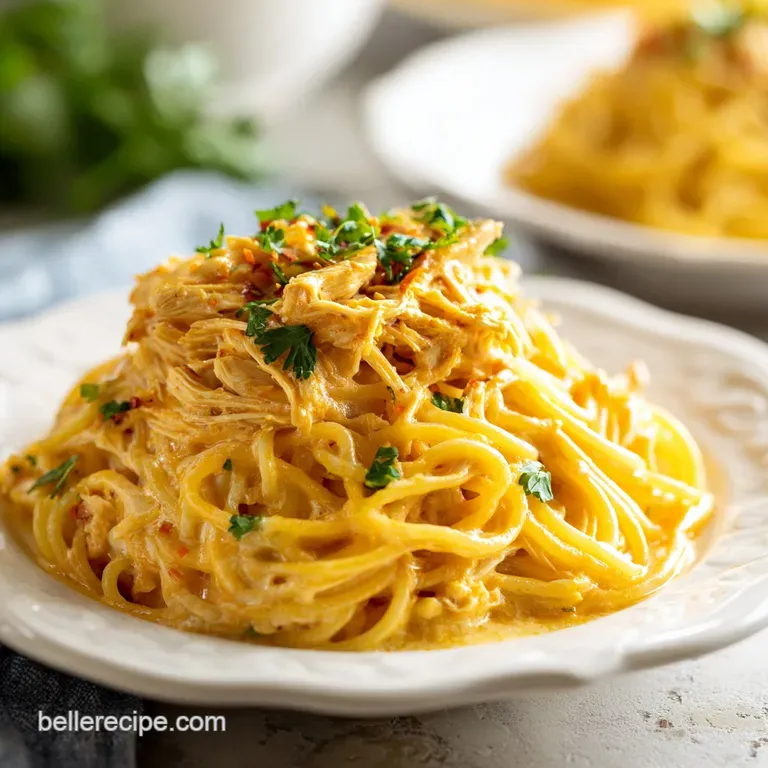
The way we build this dish is all about timing. We start with a base of aromatics and protein, move into a shredding phase, and finish with the pasta. Following these steps in order ensures the chicken is tender and the pasta is "al dente" rather than mushy.
- Layer the base. Place the 1.5 lbs chicken thighs at the bottom of the slow cooker and top with the diced onion, diced green bell pepper, 1 tsp garlic powder, 1 tsp onion powder, 0.5 tsp smoked paprika, and 0.5 tsp black pepper. Note: Placing the chicken on the bottom ensures it is in direct contact with the most consistent heat source.
- Add the liquids. Pour the 10.5 oz condensed cream of chicken soup and the 10 oz undrained Rotel over the chicken. Do not stir.Note: Leaving the soup on top allows it to slowly baste the chicken as it thaws and cooks.
- Slow cook. Cover and cook on Low for 6 hours (or High for 3 hours) until chicken is tender and easy to shred.
- Shred the chicken. Remove the lid and use two forks to shred the thighs into bite sized pieces directly in the slow cooker liquid.
- Prepare for pasta. Add the 16 oz cubed Velveeta, 4 oz softened cream cheese, and 12 oz dry spaghetti (snapped in half).
- Integrate the broth. Pour in 1.5 cups chicken broth and stir vigorously to distribute the cheese and submerge the pasta.
- Final cook phase. Cover and cook on High for 30–45 minutes, stirring once or twice until the pasta is tender and the sauce is glossy.
- The final rest. Turn the slow cooker to "Warm" and let the spaghetti sit for 5 minutes. until the sauce thickens and clings to the noodles.
The transformation in those last 45 minutes is incredible. You go from a watery, messy looking pot to a cohesive, creamy masterpiece. Seeing the Velveeta disappear into the broth while the spaghetti softens is one of the most satisfying parts of the process.
If you notice the pasta is sticking together, just give it a gentle nudge with your spoon to separate the strands; the steam will do the rest of the work for you.
Solving the Mystery of Clumpy Pasta and Grainy Sauces
Even with a foolproof recipe, things can go sideways if the temperature or moisture levels are off. The most common issue people face with any chicken spaghetti recipe is the "pasta clump." This happens when the dry noodles are added and not immediately coated in liquid or fat.
They stick together as the starch releases, creating a hard center that never quite cooks through.
Another frequent headache is a sauce that looks "broken" or grainy. This usually happens if the cheese is added too early or if the heat is too high for too long. If you follow the two stage method, you avoid this because the cheese only spends about 45 minutes under heat.
This is just enough time to melt it into a silky state without breaking down the proteins that keep it smooth.
Why is My Pasta Sticking Together in a Clump?
This is almost always due to a lack of agitation. When dry pasta hits a hot liquid, the surface starch becomes very sticky. If the strands are resting against each other, they will bond. To fix this, make sure you snap the spaghetti in half as directed and stir it thoroughly as soon as it enters the pot.
A second stir about 15 minutes into the final cook phase will break up any stubborn clusters.
What if the Sauce Looks Too Thin?
It is tempting to add more cheese if the sauce looks watery at the 30 minute mark of the pasta phase. Don't do it! The sauce will continue to thicken significantly as it rests. The pasta is like a sponge; it will keep absorbing liquid even after you turn the pot off.
If you add more solids now, you will end up with a dry, stiff mess once it hits the dinner plates.
| Problem | Root Cause | Solution |
|---|---|---|
| Tough Chicken | Used breasts or undercooked | Switch to thighs or cook until 165°F |
| Mushy Pasta | Added too early in the cook | Only add dry pasta for the final 30-45 mins |
| Grainy Sauce | Cheese overheated or "broken" | Add cheese at the end and stir frequently |
Often, a little acidity or extra moisture is all you need to bring a dish back to life. If you feel like the flavor is a bit flat after all that cooking, a tiny splash of the juice from the Rotel can brighten everything up.
It is the contrast between the heavy fat and the sharp acid that makes this dish craveable rather than just heavy.
- ✓ Pat the chicken dry before putting it in the pot to avoid excess water release.
- ✓ Snap the spaghetti in half to ensure it fits easily and cooks evenly.
- ✓ Cubing the cheese into small 1 inch pieces ensures it melts before the pasta overcooks.
- ✓ Use low sodium broth to prevent the dish from becoming overly salty as it reduces.
- ✓ Stir at the halfway point of the pasta phase to prevent sticking.
- ✓ Let it rest for 5 minutes after cooking to allow the sauce to set.
Personalize Your Pot with These Clever Flavor Swaps
One of the best things about this crock pot cheesy chicken spaghetti recipe is how adaptable it is. Once you have the base method down, you can start playing with the flavors. I often think of this recipe as a blank canvas for whatever is in my pantry.
If I'm feeling like something a bit more vibrant, I'll add a handful of chopped pickled jalapeños or a spoonful of taco seasoning to the initial chicken phase.
If you are looking for a more nutrient dense version, you can easily sneak in some extra vegetables. Finely chopped spinach stirred in during the last 5 minutes will wilt perfectly without changing the texture.
Alternatively, if you want a "Crack Chicken" style version, you can swap the Rotel for extra cream cheese and add a packet of ranch dressing mix and some crispy bacon bits at the very end. It is a completely different flavor profile but uses the exact same reliable technique.
If you love the idea of a creamy chicken bake but want something with a bit more of a "from scratch" feel, check out my Broccoli Casserole recipe. It uses a similar creamy base but incorporates a touch of curry powder for an unexpected depth that pairs beautifully with the chicken.
| Original Ingredient | Substitute | Why It Works |
|---|---|---|
| Velveeta | Sharp Cheddar + Sodium Citrate | Sodium citrate acts as an emulsifier to keep the cheddar smooth. |
| Rotel | Mild Salsa | Similar acidity and heat levels; adds more onion/garlic notes. |
| Spaghetti | Rotini or Penne | Sturdier shapes hold up well in the slow cooker environment. |
When scaling this recipe, remember that liquids don't evaporate in a slow cooker the same way they do on a stovetop. If you are doubling the recipe for a big crowd, you don't necessarily need to double the chicken broth.
I usually start with 1.5 times the liquid and only add more if the pasta looks like it is struggling to soften. Over hydrated pasta in a slow cooker is much harder to fix than under hydrated pasta.
Storing Your Leftovers and Keeping the Sauce Silky
Leftover chicken spaghetti is, in my opinion, one of the greatest joys of meal prepping. As it sits in the fridge, the flavors have even more time to meld together. However, pasta has a tendency to continue drinking up the sauce while it sits.
When you pull it out the next day, it might look a bit dry or clumped together. This is normal and easily fixed with a little bit of moisture and gentle heat.
To store, let the dish cool to room temperature before transferring it to airtight containers. It will stay fresh in the refrigerator for up to 4 days. If you want to freeze it, I recommend doing so in individual portions. It will last in the freezer for about 2 to 3 months.
Just be aware that the pasta will be slightly softer after freezing and thawing, but the flavor will still be fantastic.
- Reheating in the Microwave: Add a splash of milk or chicken broth to the bowl and cover it loosely. Heat in 1 minute intervals, stirring in between, until it is creamy and hot all the way through.
- Reheating on the Stovetop: Place the leftovers in a small saucepan with a bit of extra broth. Heat over low medium, stirring constantly to prevent the cheese from scorching on the bottom.
- Zero Waste Tip: If you have leftover veggies in the crisper drawer like celery or carrots, dice them up and throw them in with the onions and peppers at the start. It’s a great way to clear out the fridge while adding more depth to your sauce.
Don't toss out the liquid at the bottom of the Rotel can! That tomato chili juice is liquid gold. We use it in this recipe to help thin the condensed soup and provide the necessary acidity to balance the Velveeta.
If you find yourself with extra chicken broth after measuring, save it in a jar in the fridge for your next batch of rice or soup.
Choosing the Brightest Sides to Pair with Rich Pasta
Since this crock pot cheesy chicken spaghetti recipe is so rich and decadent, I like to serve it with sides that offer a fresh, crisp counterpoint. A heavy meal needs something to "cut" through the fat, otherwise, you might find yourself feeling a bit sluggish after dinner.
Think about textures that provide a snap like a cold salad or a roasted green vegetable.
A simple arugula salad with a lemon tahini dressing is my go to. The peppery bite of the arugula and the sharp citrus in the dressing act as a palate cleanser between bites of cheesy pasta. If you want something warm, a tray of roasted broccoli with plenty of garlic and a pinch of red pepper flakes is excellent.
The charred edges of the broccoli provide a "shatter" texture that contrasts beautifully with the velvety spaghetti.
- The Fresh Counterpoint: A crisp Caesar salad with extra lemon juice and crunchy croutons.
- The Garlic Lover's Choice: Toasted baguette slices rubbed with a raw garlic clove and a smear of butter.
- The Healthy Balance: Steamed green beans tossed in a little bit of olive oil and sea salt.
At the end of the day, this dish is about comfort and sharing. It isn’t about being fancy or technical; it’s about that moment when everyone sits down, the steam rises from the bowls, and the room goes quiet because everyone is too busy enjoying that first, perfect bite.
It’s a recipe that has seen me through busy Mondays and rainy Sundays alike, and I hope it becomes just as much of a staple in your kitchen as it is in mine. Happy cooking!

CRITICAL Sodium Alert!
1375 mg 1375 mg (60% 60% of daily value)
The American Heart Association recommends a maximum daily sodium intake of 2,300mg, with an ideal limit of less than 1,500mg for most adults.
Tips to Reduce Sodium in Your Recipe
-
Swap Condensed Soup-30%
Replace the 10.5 oz of condensed cream of chicken soup with low-sodium cream of chicken soup or a homemade béchamel sauce made with low-sodium broth and milk. This is a major sodium contributor.
-
Choose Lower Sodium Canned Goods-20%
Opt for no-salt added diced tomatoes and green chilies (Rotel). If unavailable, drain and rinse the regular canned version to remove excess sodium.
-
Reduce Cheese Sodium-15%
Use reduced sodium Velveeta or a blend of regular Velveeta and a lower sodium cheese like Monterey Jack. While cheese adds flavor, it's also a significant sodium source.
-
Boost Natural Flavor
Increase the amount of fresh garlic and onion, and consider adding more herbs like parsley or chives. These natural flavor enhancers can compensate for reduced sodium.
-
Rinse Canned Chilies-10%
If you cannot find no-salt added diced tomatoes and green chilies, drain and rinse the regular canned version thoroughly before adding it to the recipe to significantly cut down on added sodium.
Recipe FAQs
Is it true I must boil the spaghetti noodles before adding them to the slow cooker?
No, this is a common misconception. You can add the dry, snapped spaghetti directly into the pot during the final cooking stage to absorb the flavorful sauce.
How to keep the leftover sauce from drying out?
Add a small splash of chicken broth before reheating. The pasta continues to absorb moisture while stored, so stirring in extra liquid and heating gently restores the silky, emulsified texture.
How to tell when the chicken is fully cooked?
Use a meat thermometer to check for an internal temperature of 165°F. If you enjoyed learning to gauge doneness here, apply the same temperature precision to our other chicken dishes for consistently juicy results.
How to avoid a gummy or mushy texture in the pasta?
Monitor the spaghetti closely during the final 30 45 minutes of cooking. Stir occasionally to ensure even cooking, and stop as soon as the noodles reach a tender, al dente state.
How to ensure the Velveeta and cream cheese melt smoothly?
Cut the Velveeta into 1 inch cubes and ensure the cream cheese is softened before adding. Smaller, room temperature pieces incorporate into the hot broth and soup base much faster, preventing lumps.
Can I stir the ingredients before the first cooking cycle?
No, keep the layers undisturbed until the chicken is cooked. Placing the soup and undrained tomatoes on top without stirring allows the flavors to steam through the chicken without scorching the bottom.
How to adjust the cooking time if I am in a hurry?
Switch your slow cooker to the High setting for 3 hours. This halves the initial cooking time for the chicken thighs while maintaining the integrity of the base ingredients.
Crock Pot Chicken Spaghetti
Ingredients:
Instructions:
Nutrition Facts:
| Calories | 574 calories |
|---|---|
| Protein | 37 g |
| Fat | 26 g |
| Carbs | 45 g |
| Fiber | 2 g |
| Sugar | 6 g |
| Sodium | 1375 mg |
