Edible Cookie Dough Recipe for One
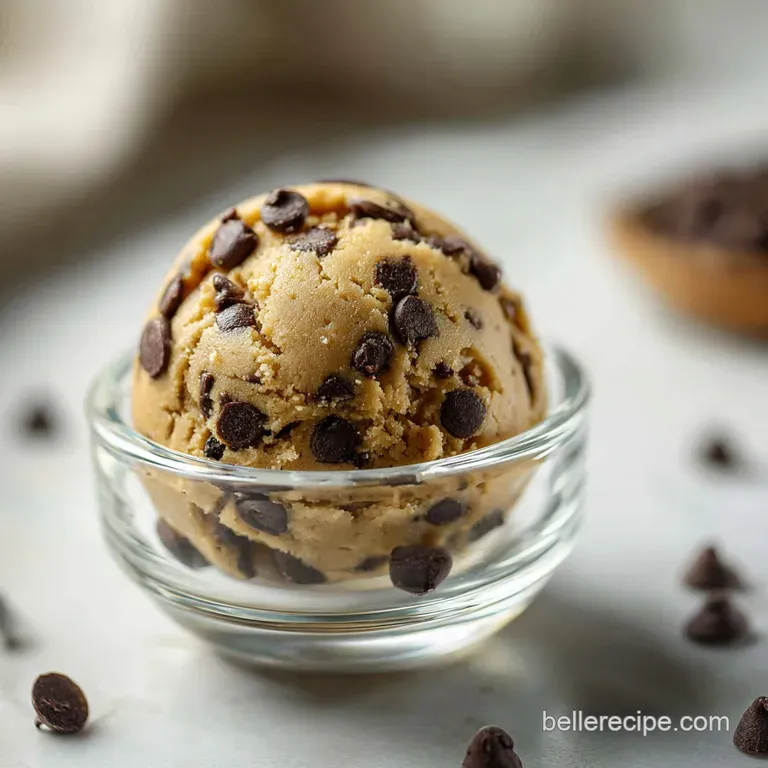
- Time: Active 4 minutes, Passive 1 minute, Total 5 minutes
- Flavor/Texture Hook: Fudgy, melt in-the mouth texture with a salty sweet crunch
- Perfect for: Late night cravings, dorm room snacks, or a mindful solo dessert
- Mastering the Edible Cookie Dough Recipe for One
- Essential Specs for Single Servings
- The Building Blocks of Texture
- Necessary Equipment for Solo Baking
- Bringing the Sweet Mixture Together
- Avoiding Common Cookie Dough Pitfalls
- Simple Variations and Smart Substitutions
- Freezing and Reheating Your Treat
- Mindful Serving Ideas for One
- Edible Cookie Dough Recipe for One FAQs
- 📝 Recipe Card
Mastering the Edible Cookie Dough Recipe for One
I remember a rainy Tuesday last October when the house was unusually quiet. I was tucked under a blanket, nursing a craving for something sweet but didn't want the fuss of preheating the oven or washing a dozen baking sheets.
There is something deeply comforting about the gritty, buttery texture of raw dough, but the nagging worry about raw flour always used to dampen the mood. That afternoon, I started experimenting with the smallest possible batch, trying to find that exact ratio that feels like a hug in a bowl.
The smell of toasting flour is surprisingly nostalgic. It reminds me of browned butter and toasted nuts, a scent that signals something special is happening. When you whisk that warm flour into softened butter and see the sugars begin to melt into a glossy paste, it is pure magic.
This recipe isn't just about a quick fix, it is about creating a tiny, mindful ritual that honors your own cravings without the mess of a full batch of cookies.
We have all been there, standing in front of the fridge with a spoon, looking for a shortcut. But this version is different because it focuses on the contrast between the cool chocolate chips and the rich, room temperature dough.
It is a humble treat that manages to feel like a small luxury, and I have found it is the perfect companion for a quiet book or a favorite show. Let's look at how to make this work every single time.
Mechanism: Thermal processing at 71°C (160°F) neutralizes surface pathogens in raw flour while slightly denaturing proteins to reduce that raw, "sticky" mouthfeel.
This creates a safer, smoother base that carries the fat and sugar flavors more effectively than untreated grains.
| Method | Time | Texture | Best For |
|---|---|---|---|
| Microwave | 60 seconds | Very soft | Immediate cravings |
| Stovetop | 5 minutes | Slightly nutty | Enhanced flavor depth |
| Oven | 7 minutes | Consistent | Preparing larger "single" batches |
The beauty of the stovetop method is the control it gives you over the aroma. You can actually smell the flour transforming from a dusty scent to a toasted, popcorn like fragrance. While the microwave is faster, the stovetop offers a sensory experience that adds a layer of mindfulness to your kitchen time.
Essential Specs for Single Servings
| Component | Science Role | Pro Secret |
|---|---|---|
| All Purpose Flour | Structural Base | Heat treat to 160°F to ensure safety and remove "raw" taste. |
| Unsalted Butter | Emulsion Carrier | Use "plastic" state butter (cool but soft) for a fudgy crumb. |
| Brown Sugar | Humectant | The molasses adds moisture and a deep, chewy mouthfeel. |
| Sea Salt | Flavor Enhancer | Contrasts the sugar to brighten the vanilla notes. |
Understanding these components helps you navigate the balance of your snack. When you work with such small quantities, every gram matters. If your butter is too hot, the sugars will dissolve into a syrup rather than staying suspended in a creamy matrix.
This is why we aim for "softened" rather than "melted" butter, maintaining that classic dough structure we love.
The interaction between the granulated sugar and the brown sugar is where the magic happens. The white sugar provides a subtle crunch, while the brown sugar brings that signature softness. It is a delicate dance of textures that makes a single serving edible cookie dough feel like the real deal rather than a pale imitation.
The Building Blocks of Texture
To get this right, we start with 5 tablespoons (65g) of all purpose flour. This is our foundation. I’ve learned that a pinch of sea salt is non negotiable, it acts like a volume knob for all the other flavors. Then we need 2 tablespoons (28g) of unsalted butter.
It should be soft enough that your finger leaves an easy indentation but not so soft that it’s greasy.
For the sweetness, we use a combination of 1 tablespoon (15g) of packed brown sugar and 1 tablespoon (12g) of granulated sugar. A splash of 0.25 teaspoon vanilla extract provides that floral aroma, and 1.5 teaspoons of milk bring it all together into a cohesive ball.
Finally, 2 tablespoons (28g) of semi sweet chocolate chips provide the essential "shatter" when you bite in.
Pathogen Neutralization in Flour
Flour is a raw agricultural product, which means it can carry bacteria like E. coli or Salmonella. By heating your 5 tablespoons of flour in the microwave for 60 seconds (stirring every 15 seconds) or on the stovetop until it reaches 160°F, you make it safe to eat. This step is the most important part of any Edible Cookie Dough Recipe.
Emulsifying Without Liquid Eggs
Since we are skipping the eggs, we rely on a touch of milk and the natural fats in the butter to create a stable emulsion. The 1.5 teaspoons of milk are just enough to hydrate the flour without making it soggy.
If you find the dough too crumbly, add the milk half a teaspoon at a time until it reaches a velvety consistency.
Balancing Grainy Smooth Ratios
The contrast between the dissolving sugars and the solid chocolate chips is what makes cookie dough so addictive. Using a mix of granulated and brown sugar ensures you get a bit of that classic "sandy" texture that defines a great dough.
It shouldn't be perfectly smooth like a frosting, it should have the character of a real cookie to be.
Necessary Equipment for Solo Baking
You don't need a stand mixer for this, in fact, I prefer using a simple small bowl and a fork. A microwave safe plate is essential for heat treating the flour if you're using the quick method.
I also recommend a digital scale if you have one, as measuring 5 tablespoons of flour can vary wildly depending on how you pack the spoon.
Chef's Tip: If your butter is still cold from the fridge, grate it with a cheese grater. The small shreds will soften in minutes, allowing you to make your dough almost immediately without waiting for a whole stick to temper.
A small silicone spatula is also helpful for folding in the 28g of chocolate chips. It ensures you scrape every last bit of buttery goodness from the sides of the bowl. When you're making a healthy edible cookie dough recipe for one, having the right tools makes the process feel intentional rather than just a quick snack.
Bringing the Sweet Mixture Together
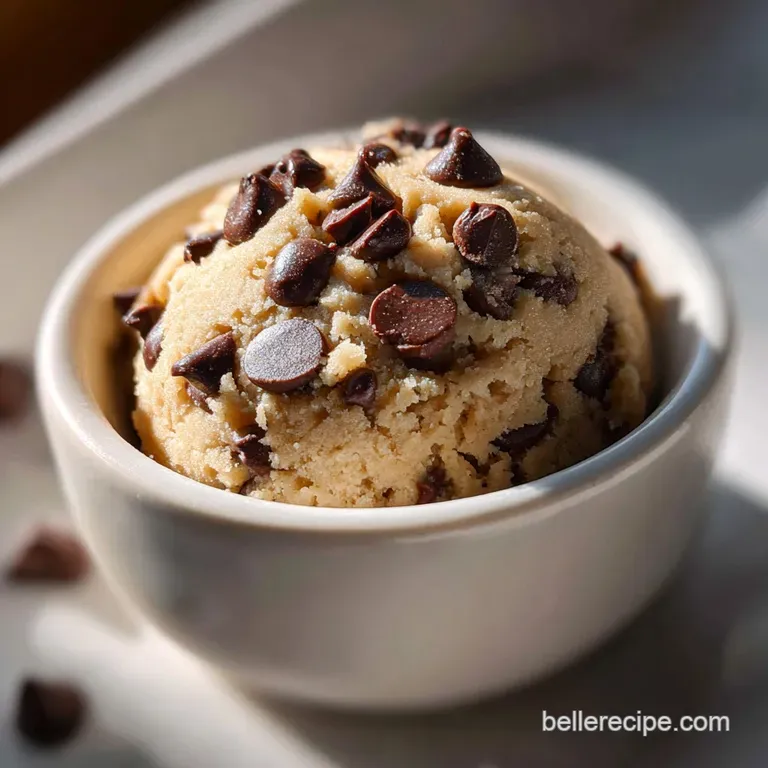
- Heat treat the flour. Place 5 tablespoons (65g) of flour in a bowl and microwave in 15 second bursts until the temperature reaches 160°F. Note: This kills bacteria and removes the raw taste.
- Sift and cool. Pass the warmed flour through a fine mesh sieve to remove any clumps formed by steam. Note: This ensures a silky texture.
- Cream the butter. In a separate small bowl, mash 2 tablespoons (28g) of softened butter with a fork until it looks smooth and pale.
- Incorporate the sugars. Add 1 tablespoon (15g) of brown sugar and 1 tablespoon (12g) of granulated sugar. Mix until the mixture resembles a gritty paste.
- Add flavorings. Stir in 0.25 teaspoon vanilla extract and a pinch of sea salt. Note: Salt is crucial to balance the sweetness.
- Combine wet and dry. Add the cooled flour to the butter mixture and toss with a fork until crumbly and dry.
- Hydrate the dough. Pour in 1.5 teaspoons of milk and stir until a cohesive ball forms.
- Fold in chocolate. Gently stir in 2 tablespoons (28g) of chocolate chips until evenly distributed.
- Rest and enjoy. Let the dough sit for 2 minutes until the sugars fully hydrate.
| Original Ingredient | Substitute | Why It Works |
|---|---|---|
| Unsalted Butter | Coconut Oil (Solid) | High fat content creates similar richness. Note: Adds a subtle tropical flavor. |
| Brown Sugar | Maple Syrup | Provides sweetness and moisture. Note: Dough will be softer/stickier. |
| Semi sweet Chips | Cacao Nibs | Offers a deep, bitter crunch. Note: Less sweet, very sophisticated flavor. |
If you decide to use coconut oil, make sure it is in its solid, scoopable state. If it is liquid, your dough will turn into a greasy puddle. The goal is to maintain that "plastic" fat structure that allows the flour to be suspended without becoming a liquid.
Avoiding Common Cookie Dough Pitfalls
One mistake I once made was adding the milk to the hot flour. This essentially cooked the flour into a thick, gluey paste that was impossible to eat. Always ensure your flour has come back to room temperature before mixing it with the butter and milk. This preserves the delicate crumbly yet-soft texture we are looking for in an edible chocolate chip cookie dough for one.
Why Your Dough Is Gritty
This usually happens when the sugars haven't had a chance to slightly dissolve into the butter and milk. While a little grit is traditional, excessive crunch can be distracting. Letting the dough sit for just a few minutes after mixing allows the moisture in the milk and butter to soften the sugar crystals.
Why Your Dough Is Dry
If your dough looks like sand and won't clump together, you likely over measured the flour. This is common when using volume measurements. The fix is simple: add milk in tiny increments of 1/4 teaspoon until it holds its shape.
| Problem | Root Cause | Solution |
|---|---|---|
| Greasy texture | Butter was too hot | Chill the dough for 10 minutes to firm up fats. |
| Floury aftertaste | Flour wasn't heated enough | Ensure flour smells toasted and reaches 160°F. |
| Too sweet | Lack of salt balance | Add an extra tiny pinch of flaky sea salt on top. |
Common Mistakes Checklist: ✓ Never skip heat treating the flour; safety is the priority. ✓ Don't use melted butter; it destroys the fluffy emulsion. ✓ Sift the flour after heating to avoid stubborn lumps. ✓ Let the flour cool completely before adding it to the fats.
✓ Use room temperature milk to prevent the butter from seizing.
Simple Variations and Smart Substitutions
If you are looking for an edible cookie dough recipe for one without brown sugar, you can replace the brown sugar with an equal amount of granulated sugar and a tiny drop of molasses or honey. This helps mimic that deep, caramelized flavor that brown sugar usually provides. For a different profile, try swapping the vanilla for almond extract or even a pinch of cinnamon.
Double Chocolate Chip Twist
To transform this into a chocolate lover's dream, replace 1 tablespoon of the flour with 1 tablespoon of high-quality cocoa powder. You may need an extra 1/2 teaspoon of milk as cocoa powder is very absorbent. This creates a deep, dark base that pairs beautifully with white chocolate chips or even chopped walnuts.
Adjusting for Vegan Diets
This easy edible cookie dough recipe for one is very easy to adapt. Use a vegan butter stick (one that is firm at room temperature) and any plant based milk like almond or oat milk. Since there are no eggs to worry about, the swap is straightforward and doesn't significantly change the final texture.
Healthy Dough for One
For a version that feels a bit more like a balanced snack, you can use heat treated oat flour instead of all purpose flour. Oat flour has a naturally sweet, nutty taste that works perfectly with the butter.
You can also swap the chocolate chips for dark chocolate (70% or higher) to add antioxidants and a more intense flavor profile.
Freezing and Reheating Your Treat
While this recipe is designed for immediate consumption, you can definitely save some for later. I often double the batch and roll half into small "truffles." These keep beautifully in the fridge for up to 5 days if kept in an airtight container.
Because there are no eggs, you don't have to worry about the dough spoiling as quickly as traditional cookie dough.
If you want to freeze it, roll the dough into a log using parchment paper. It will stay fresh in the freezer for up to 3 months. When you're ready to eat, you don't even need to reheat it; many people prefer the texture of frozen cookie dough!
If you do want it soft again, let it sit at room temperature for 15 minutes.
Chef's Tip: If you're using this as a mix in for ice cream, freeze the dough in tiny, pea sized balls first. This prevents them from smearing into the ice cream and keeps them as distinct, chewy bites.
Don't use a microwave to reheat the dough if it has chocolate chips in it. The chips will melt and turn the whole thing into a muddy mess. The goal is to maintain the contrast between the dough and the solid inclusions. A gentle thaw at room temperature is always the best path for preserving the intended texture.
Mindful Serving Ideas for One
- Sweet
- The warm notes of vanilla and molasses.
- Savory
- The sharp bite of sea salt.
- Rich
- The velvety coating of dairy fat.
- Bright
- The floral aroma of high-quality vanilla extract.
I love serving this in a small, vintage teacup. There is something about using a beautiful vessel for a simple snack that makes it feel like a celebration. If I am feeling particularly indulgent, I might press the dough into a small ramekin and top it with a scoop of cold vanilla bean ice cream.
The warmth of the freshly made dough slightly melts the bottom of the ice cream, creating a creamy sauce that is hard to resist.
Another way to transform this is to use it as a dip. Serve the dough alongside some tart apple slices or salty pretzels. The crispness of the apple cuts through the richness of the butter, while the pretzels lean into that sweet and salty profile that everyone loves.
It is a mindful way to enjoy a treat while adding a bit of fiber or crunch to the experience.
Honestly, don't even bother with low-fat butter substitutes here. The joy of an edible cookie dough recipe for one no bake lies in its decadence. It is a small portion, so make those 2 tablespoons of butter count. Use the best quality you can find, and you'll taste the difference in every single spoonful. Trust me, it is worth the extra effort to find the good stuff.

Edible Cookie Dough Recipe for One FAQs
What is a safe edible cookie dough recipe for one?
Yes, heat treating the flour is the key. This process neutralizes potential pathogens, making it safe to consume raw. Our recipe focuses on this crucial step for a worry free treat.
How do you make edible cookie dough with only a few ingredients?
Combine heat treated flour, softened butter, sugar, vanilla, and a pinch of salt. For a basic, safe edible dough, you'll need minimal pantry staples like flour, butter, brown and granulated sugar, vanilla extract, and salt. Milk is often added to bind it.
How do you make cookie dough that is safe to eat raw?
Heat the flour to 160°F (71°C). This is the most important step to kill harmful bacteria. You can do this in a microwave or on the stovetop.
Can I make edible cookie dough without eggs?
Yes, absolutely. Edible cookie dough recipes inherently omit eggs, as eggs are a primary concern for raw consumption. The binding comes from butter, sugars, and a touch of milk.
What is the best way to heat treat flour for edible cookie dough?
Microwave at 50% power in 20-second intervals, stirring between each. Ensure the flour reaches an internal temperature of 160°F (71°C) to kill bacteria safely and effectively, similar to ensuring proper cooking temperatures in recipes like our Classic Gingerbread Cookies: A Heartwarming Holiday Dessert.
Why is my edible cookie dough gritty?
The sugars may not have fully dissolved. Letting the dough rest for a few minutes after mixing allows the moisture from the butter and milk to soften the sugar crystals, reducing grittiness.
How long does edible cookie dough last?
Refrigerated, it lasts up to 5 days. Keep it in an airtight container to maintain freshness, as there are no eggs to spoil quickly.
Edible Cookie Dough For One

Ingredients:
Instructions:
Nutrition Facts:
| Calories | 679 kcal |
|---|---|
| Protein | 8.1 g |
| Fat | 31.6 g |
| Carbs | 94.2 g |
| Fiber | 3.3 g |
| Sugar | 41.8 g |
| Sodium | 196 mg |
