Tender Kabobs on Bbq with Acid Marinade
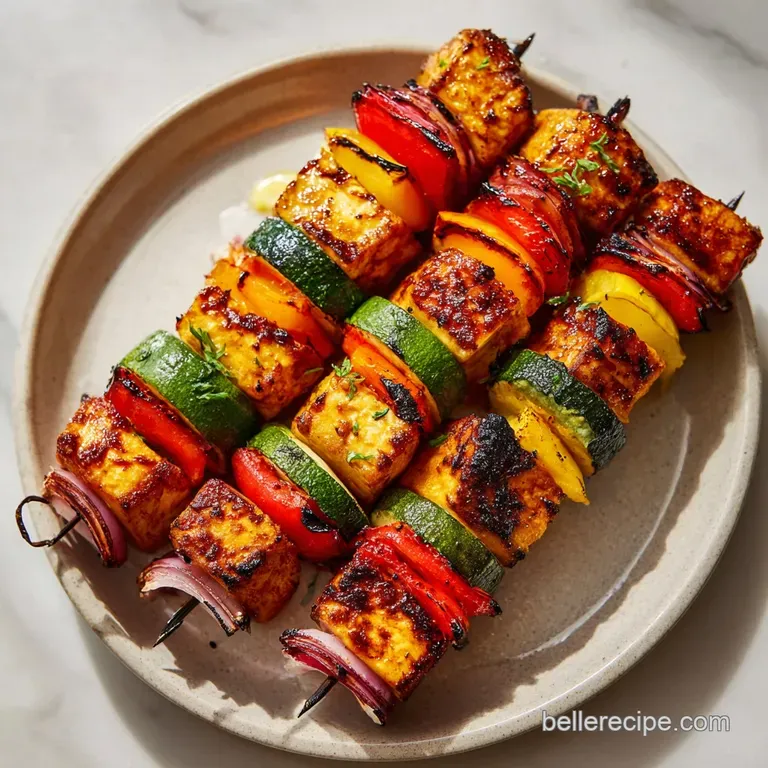
- Time: Active 20 minutes, Passive 10 minutes, Total 32 minutes
- Flavor/Texture Hook: Smoky, charred edges with a velvety, melt in-your mouth interior
- Perfect for: Low stress backyard gatherings or a quick, protein packed family dinner
- Mastering the Perfect Kabobs on BBQ
- Efficiency and Specs for Your Next Backyard Cookout
- The Flavor Profile of Beef Shish Kabob Marinade
- Essential Tools for Managing High Heat Grilling Success
- Orchestrating the Perfect Sear for Your Meat Skewers
- Solving the Most Common Grilling Mishaps with Ease
- Smart Swaps and Budget Friendly Ingredient Variations
- How to Properly Store and Repurpose Your Leftovers
- Serving Your Skewers with Style and Family Warmth
- Searing Speed: Fast vs Classic Methods
- Debunking Common Grilling Misconceptions
- Recipe FAQs
- 📝 Recipe Card
Mastering the Perfect Kabobs on BBQ
I can still hear the rhythmic tink tink tink of my grandmother’s knife hitting the wooden board as she prepped peppers for the grill. The smell of woodsmoke would drift through the screen door, mingling with the sharp, bright scent of lemon juice and garlic.
There is something deeply comforting about the ritual of sliding meat and vegetables onto a skewer; it feels like we’re making something special out of the simplest things. Whenever I fire up the grill now, I’m chasing that specific moment when the beef hits the grate and that first puff of fragrant steam rises up to greet you.
Honestly, I used to be terrified of making kabobs on bbq because I always ended up with charcoal on the outside and raw meat on the inside. We’ve all been there, right? You’re trying to look like a grill pro while secretly poking the meat with a fork, hoping for the best.
After years of trial and error and a few burnt onions along the way I discovered that the secret isn't a fancy grill or expensive Wagyu. It’s all about the prep and understanding how the heat moves through the skewer.
Today, I’m sharing the method that actually works so you can relax and enjoy the sunshine instead of hovering nervously over the flames.
We’re going to use top sirloin for this because it’s budget friendly but has a fantastic beefy flavor that stands up well to high heat. By the time we’re done, you’ll have skewers that boast a beautiful, dark crust and a tender, juicy center.
This isn't just about a meal; it's about the joy of sharing something handmade with the people you love. Let’s get our hands a little messy and make something wonderful.
Efficiency and Specs for Your Next Backyard Cookout
Before we get the charcoal glowing, let's look at the logistics. Planning is the friend of every home cook, especially when you're managing a hot grill and hungry guests. I’ve found that consistency is the key to avoiding those "is it done yet?" moments.
If you cut everything to the same size, you've already won half the battle.
| Thickness | Internal Temp | Rest Time | Visual Cue |
|---|---|---|---|
| 1 inch cubes | 145°F (Medium) | 5 minutes | Glossy surface with dark charred edges |
| 1.5 inch cubes | 145°F (Medium) | 7 minutes | Slight resistance when pressed with a finger |
| 0.5 inch slices | 145°F (Medium) | 2 minutes | Edges look crisp and slightly curled |
The Physics of the Skewer Char
Thermal Bridging: Metal skewers act as a heat conductor, cooking the meat from the inside out while the grill fires cook the exterior. This dual direction heating ensures the center reaches a safe temperature before the outside becomes a blackened rock.
The Flavor Profile of Beef Shish Kabob Marinade
When we talk about the Beef Shish Kabob Marinade, we are looking for a balance between acid, fat, and aromatics. The acid in the lemon juice and Worcestershire sauce doesn't just add tang; it physically changes the structure of the meat.
It's like giving the steak a little spa day, softening it up so it stays tender even under the intense heat of the BBQ. I always use a generous amount of garlic because it toasts beautifully against the beef, creating these little bits of savory crunch that are just addictive.
| Ingredient | Science Role | Pro Secret |
|---|---|---|
| Worcestershire | Protease Enzyme | Adds "umami" while deepening the Maillard reaction for better browning. |
| Lemon Juice | Acidic Denaturant | Breaks down surface proteins to allow the oil to penetrate deeper. |
| Smoked Paprika | Particulate Barrier | Creates a micro crust that holds onto the beef's natural juices. |
| Olive Oil | Heat Transfer | Conducts heat evenly across the meat's irregular surfaces. |
For this recipe, you'll need 1.5 lbs Top Sirloin or New York Strip, cut into 1 inch cubes. If you're looking for a slightly different flavor profile to mix things up, you might want to try making a batch of Memphis BBQ Sauce recipe to brush on during the last two minutes of cooking. It adds a wonderful tangy sweetness that complements the beef perfectly.
The Skewer Components
- The Meat: 1.5 lbs Top Sirloin or New York Strip, cut into 1 inch cubes. Why this? Sirloin provides a lean but flavorful bite that doesn't flare up. (Substitute: Ribeye for more fat/flavor, though it's pricier).
- The Marinade Base: 1/2 cup Extra Virgin Olive Oil and 1/4 cup Worcestershire sauce. Why this? This combo provides the fat for searing and the acid for tenderizing. (Substitute: Soy sauce for Worcestershire if you want an Asian flair).
- The Brighteners: 3 tbsp Freshly squeezed lemon juice and 4 cloves Garlic, minced. Why this? Lemon cuts through the fat; garlic provides the aromatic backbone. (Substitute: Lime juice for a punchier, sharper citrus note).
- The Spice: 1 tbsp Smoked paprika, 1 tsp Cracked black pepper, and 1/2 tsp Coarse sea salt. Why this? Paprika adds color and a "cheater" smoky flavor even on gas grills. (Substitute: Chili powder for a subtle heat).
- The Vegetables: 2 Large Bell Peppers (Red and Green), 1 Large Red Onion, and 8 oz Cremini mushrooms. Why this? These hold up to high heat without turning into mush instantly. (Substitute: Zucchini rounds or thick chunks of pineapple).
Essential Tools for Managing High Heat Grilling Success
You don't need a professional kitchen, but a few specific items make the process much smoother. I personally prefer metal skewers because they don't require soaking and they help the meat cook more evenly. However, if you're using bamboo, make sure you soak them for at least 30 minutes!
I once forgot and ended up with a small bonfire in the middle of my grill not exactly the "smoky flavor" I was going for.
- Sturdy Skewers: Preferably flat metal ones. Round skewers tend to let the food spin around when you try to flip them, which is incredibly frustrating.
- Long Handled Tongs: Safety first! You want to be able to reach the back of the grill without losing your arm hair.
- Basting Brush: For applying that last bit of avocado oil or extra marinade to the vegetables so they don't dry out.
- Instant Read Thermometer: This is the only way to be 100% sure your beef is perfectly medium rare.
Chef's Tip: Freeze your beef for about 20 minutes before cutting. It firms up the fat and muscle, allowing you to get those perfectly clean, 1 inch cubes without the meat sliding around under your knife.
Orchestrating the Perfect Sear for Your Meat Skewers
Let's get cooking. Remember, grilling is a sensory experience listen for that sizzle and watch for the color change. If the meat is sticking to the grate, it’s not ready to be flipped yet. Patience is a flavor, too!
- Whisk the marinade. In a large bowl, combine the 1/2 cup olive oil, 1/4 cup Worcestershire, lemon juice, paprika, garlic, pepper, and salt. Note: This emulsifies the oil and acid for even coating.
- Prep the beef. Cut your 1.5 lbs of steak into 1 inch cubes. Look for consistent sizing to ensure they all finish at the same time.
- Marinate the meat. Toss the beef in the mixture and let it sit for at least 10 minutes (up to 30). Note: Don't go over 2 hours or the lemon juice will turn the meat mushy.
- Chop the veg. Cut the bell peppers and red onion into 1 inch squares. Remove stems from the 8 oz cremini mushrooms.
- Thread the skewers. Alternate beef, pepper, onion, and mushroom. Leave a tiny gap between items so the heat can circulate around the entire surface of the meat.
- Preheat and oil. Set your BBQ to medium high (about 400°F/200°C). Brush the grates with the 1 tbsp avocado oil. Wait for the oil to shimmer before adding food.
- Sizzle and sear. Place skewers on the grill. Cook for 3 minutes without touching them until a dark crust forms and they release easily from the grate.
- The rotation. Turn the skewers 90 degrees every 3 minutes. Total cook time should be about 12 minutes until the internal temp hits 145°F.
- The final touch. Brush any remaining vegetable surfaces with a tiny bit of oil in the last 2 minutes to prevent wilting.
- The rest. Remove from heat and place on a warm platter. Wait 5 minutes before serving to let the juices redistribute.
While these beef skewers are a classic, I sometimes like to mix things up by offering a poultry option. You can follow a similar assembly method for a Tropical Hawaiian BBQ recipe if you have guests who prefer chicken over beef. It adds a lovely variety to the table!
Solving the Most Common Grilling Mishaps with Ease
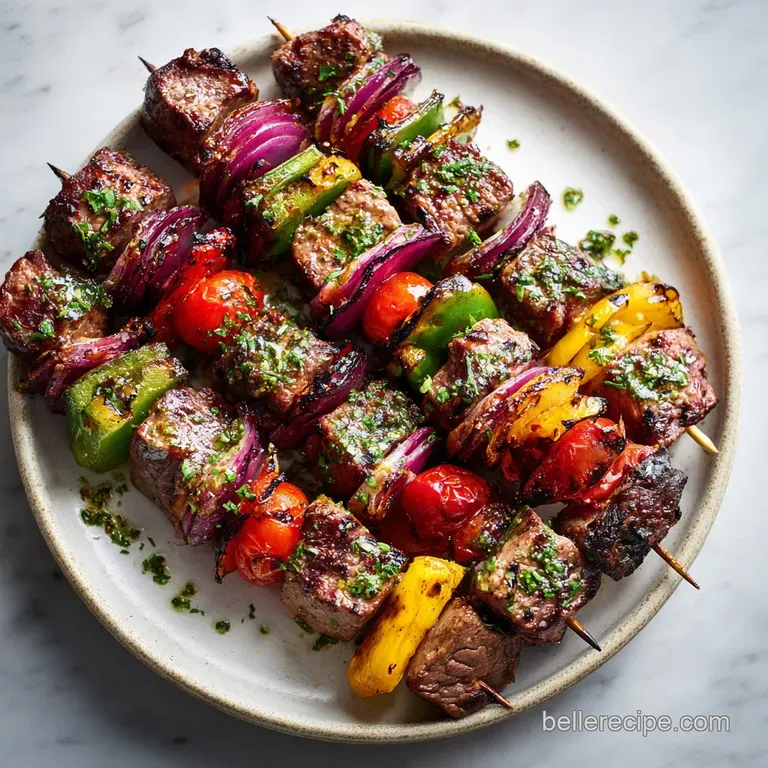
Even the most seasoned grillers run into trouble sometimes. The most common heartbreak? Tough meat. Usually, this happens because the grill wasn't hot enough, causing the meat to bake slowly and lose its moisture rather than searing quickly.
Or, perhaps the cubes were cut into uneven sizes, leaving some pieces dry while others stay cold in the middle.
Why Your Meat is Tough and Chewy
If your beef feels like a rubber band, it’s likely one of two things: the cut of meat was too lean and overcooked, or the marinade didn't have enough time to work. Top sirloin is a "working muscle," meaning it has great flavor but needs that acid from the lemon juice to soften the fibers.
If you skip the 10 minute rest in the marinade, you lose that chemical advantage.
| Problem | Root Cause | Solution |
|---|---|---|
| Meat is dry/gray | Overcooking or low heat | Use a thermometer; sear at 400°F (200°C) for a fast crust. |
| Veggies are burnt | Cut too thin or placed over "hot spots" | Cut veggies into thick 1 inch chunks; move to cooler side of grill. |
| Food spinning on skewer | Round skewers or loose threading | Use flat metal skewers; thread pieces tightly through the center. |
Common Mistakes Checklist: - ✓ Forgetting to pat the meat dry if it's too wet (excess moisture steams the meat instead of searing it). - ✓ Crowding the skewers too tightly (prevents the sides of the meat from browning). - ✓ Using a cold grill (the meat will stick and tear).
- ✓ Slicing into the meat immediately after grilling (the juices will run out, leaving it dry). - ✓ Using wooden skewers without soaking (they will catch fire and add a bitter ash flavor).
Smart Swaps and Budget Friendly Ingredient Variations
We all want that high end steakhouse experience without the high end bill. While New York Strip is wonderful, Top Sirloin is the budget hero of kabobs on bbq. If even that is a bit steep this week, you can use "stew meat," but you'll need to marinate it for at least an hour with a teaspoon of baking soda to help tenderize the tougher fibers.
| Original Ingredient | Substitute | Why It Works |
|---|---|---|
| Top Sirloin | Chicken Thighs | High fat content keeps them juicy. Note: Requires longer cook time than beef. |
| Cremini Mushrooms | Zucchini | Provides a similar earthy, soft texture when charred. |
| Avocado Oil | Grapeseed Oil | Both have high smoke points; won't burn and turn bitter on the BBQ. |
If you want to try something a bit more adventurous but still mindful of the budget, consider making BBQ Chicken Kabobs. Use chicken thighs (which are usually cheaper than breasts) and swap the lemon for lime and a bit of honey.
It’s a crowd pleaser that feels fancy but costs very little per serving.
How to Properly Store and Repurpose Your Leftovers
If you happen to have leftovers which is rare in my house! you can keep them in an airtight container in the fridge for up to 3 days. For the best texture, slide the meat and veg off the skewers before storing.
To reheat, I recommend a quick toss in a hot skillet with a splash of water and a lid for 2 minutes. This "steams" them back to life without drying out the centers. You can also freeze the cooked meat (off the skewer) for up to 2 months, though the vegetables tend to get a bit soft after thawing.
Don't let those scraps go to waste! The leftover charred onions and peppers are incredible when chopped up and stirred into a morning omelet or folded into a breakfast burrito. If you have extra raw beef cubes that didn't fit on the skewers, sear them off quickly and save them for a stir fry the next day.
Even the mushroom stems you removed can be tossed into a freezer bag to make a savory vegetable stock later on.
Serving Your Skewers with Style and Family Warmth
Presentation is where you can really let your personality shine. I love serving these on a large wooden board lined with flatbreads or a bed of fluffy rice. The bread soaks up all those delicious juices that escape during the resting period.
Sprinkle everything with a handful of fresh parsley or cilantro to add a pop of green and a hit of freshness that cuts through the smoky char.
If you’re hosting a larger group, you can set out small bowls of different sauces. A simple yogurt tahini dip or even a bowl of extra marinade (boiled for 2 minutes to make it safe!) adds a layer of interactivity. People love being able to customize their bites.
At the end of the day, these kabobs are about gathering people together. There’s no "right" way to eat them straight off the skewer or piled onto a plate, it’s all about that smoky, homemade goodness that only a BBQ can provide.
The "If you want X, do Y" Decision List
- If you want a Deep Smokiness: Add a half teaspoon of liquid smoke to the marinade or use wood chips (hickory or mesquite) in a foil packet on the grill.
- If you want Caramelized Veggies: Brush the onions and peppers with a tiny bit of honey or balsamic glaze during the last 60 seconds of grilling.
- If you want Extra Tender Beef: Add 1 tablespoon of pineapple juice to the marinade. The bromelain enzyme acts as a powerful natural tenderizer, but don't let it sit for more than 15 minutes!
Searing Speed: Fast vs Classic Methods
Sometimes we have all afternoon, and sometimes we need dinner on the table before the sun goes down. Here is how the two approaches stack up.
| Method | Time | Texture | Best For |
|---|---|---|---|
| Fast Sear | 8 minutes | Very crisp exterior, rare middle | Thinly sliced steak or flank |
| Classic BBQ | 12 minutes | Evenly charred, medium well veg | 1 inch cubes of sirloin/strip |
| Low & Slow | 20 minutes | Soft veggies, very juicy meat | Larger 2 inch chunks of beef |
Debunking Common Grilling Misconceptions
One of the biggest myths is that "soaking bamboo skewers prevents them from burning entirely." In reality, wood will eventually burn if exposed to 400°F heat for long enough. Soaking just buys you an extra 5 minutes.
If you’re doing a long cook, metal is always the better choice. Another one I hear a lot is that you should "salt the meat right before it hits the grill." Actually, salting the meat in the marinade (as we do here) allows the salt to penetrate the fibers, seasoning the beef all the way through rather than just on the surface.
Finally,, many people believe that you should only flip meat once. While that’s a great rule for thick steaks to get perfect grill marks, for kabobs, frequent flipping (every 3 minutes) ensures the vegetables don't burn while the meat reaches the correct internal temperature.
It’s a more active way of grilling, but the results are much more consistent. Trust the process, keep those skewers moving, and you'll be rewarded with the best kabobs you've ever tasted.
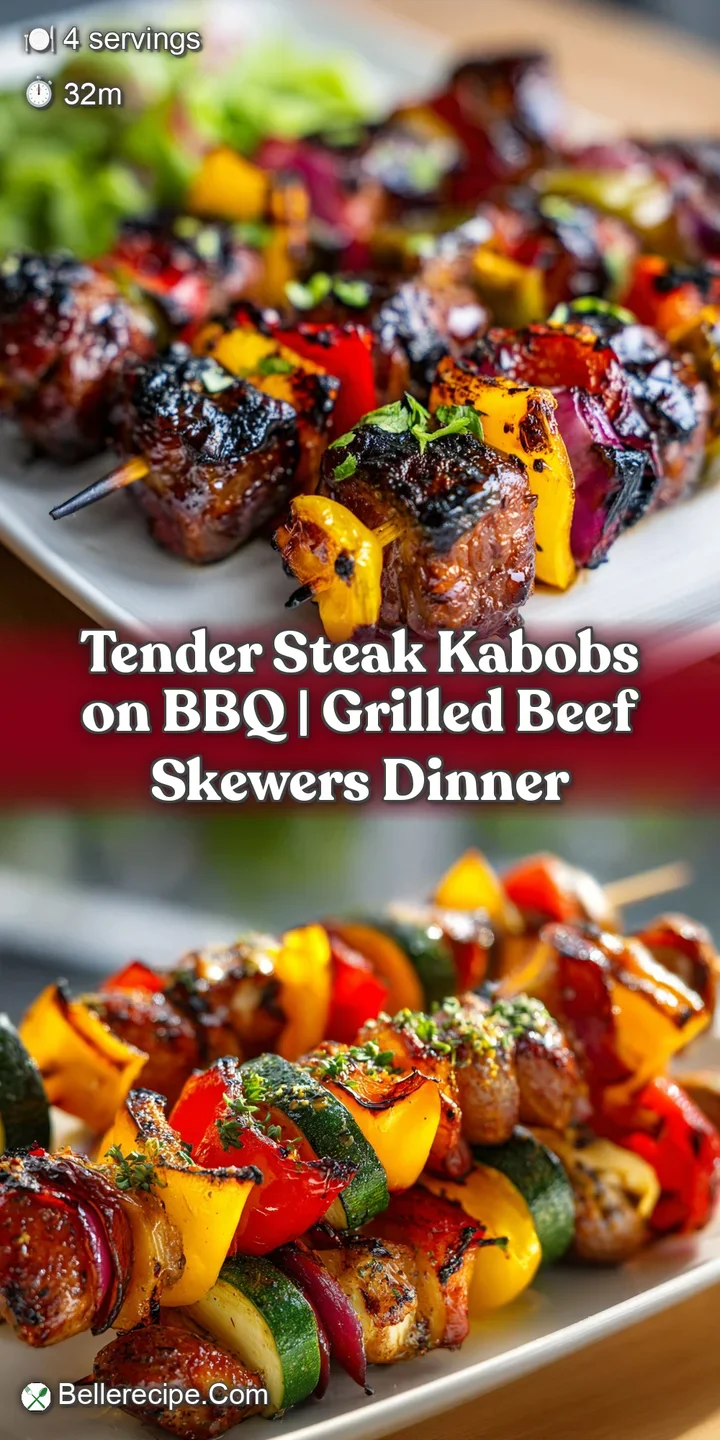
Recipe FAQs
How do you cook kebabs on a barbecue?
Preheat the grill to medium high (around 400°F) and oil the grates well. Thread marinated meat and vegetables, leaving a tiny gap between pieces for air circulation. Sear for 3 minutes per side, rotating every 3 minutes until the internal temperature reaches 145°F, typically 12 minutes total.
What to put on skewers for a barbecue?
Use protein cubes (like sirloin) interspersed with hearty vegetables like bell peppers, red onion, and cremini mushrooms. Ensure all components are cut to a consistent 1 inch size for even cooking. If you want a lighter option, try the seafood variations in our Lemon Herb Grilled recipe.
How long does it take to barbecue kabobs?
The total active cooking time is typically 12 minutes for 1 inch beef cubes over medium high heat. This accounts for turning the skewers every 3 minutes to ensure all sides achieve a good sear. Always check the internal temperature rather than relying solely on time.
What is the secret to tender kebabs?
The secret is a high acid marinade resting for at least 10 minutes before cooking. Acid helps break down the surface proteins in the meat, leading to a much more tender final product. Mastering this principle of chemical tenderizing will improve all your grilled meats; see how we apply flavor balancing in our Smokey & Sweet recipe.
Is it true I must soak bamboo skewers before grilling?
Yes, soak them for a minimum of 30 minutes. While soaking doesn't prevent burning entirely, it significantly delays the process, giving you crucial time to cook the meat thoroughly before the wood begins to char and impart ash flavor.
Should I let kebabs rest after taking them off the grill?
Yes, rest them for 5 minutes loosely covered with foil before serving. This resting period allows the internal juices, which are forced to the center by the high heat, to redistribute throughout the meat fibers. Skipping this step results in a dry, flavorless bite when you cut into them.
What temperature should the grill be for kabobs?
Aim for a medium high heat, consistently around 400°F (200°C). This temperature is high enough to achieve a dark, flavorful sear quickly but low enough that the center of the meat can cook through before the exterior burns completely.
Grilled Sirloin Kabobs On Bbq
Ingredients:
Instructions:
Nutrition Facts:
| Calories | 468 kcal |
|---|---|
| Protein | 35.6 g |
| Fat | 29.2 g |
| Carbs | 8.4 g |
| Fiber | 2.1 g |
| Sugar | 3.2 g |
| Sodium | 618 mg |
