Italian Piadina: One-Skillet Method

- Total1 Hrs
- Calories463 kcal
- CuisineItalian
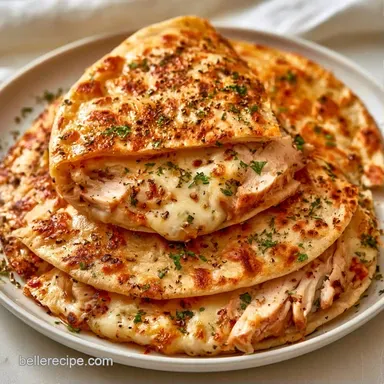
This Italian piadina is a thin, pliable flatbread from Emilia-Romagna that cooks in one skillet with no yeast and no waiting for a rise. The dough comes together in one bowl, and a 30-minute rest does most of the work.
- Time: 15 min active + 15 min cooking + 30 min resting
- Taste: Mild, lightly toasty wheat with creamy stracchino and peppery arugula
- Best for: A quick weekday lunch or a folded wrap you can take anywhere
Picture a weekday lunch with a dry skillet heating on the stove and a bowl of dough resting under a towel. That's the moment piadina is made for. You want something hot, folded, and filling in about an hour, without planning a day ahead for yeast.
Italian Piadina comes from Romagna, where the thin round has long been cooked on a hot griddle and folded around salty meat, soft cheese, and greens. This version keeps that thin, pliable texture and skips the yeast and the long rise.
Expect a dough that rests half an hour, four rounds about 8 inches (20 cm) wide, and a couple of minutes per side in the pan. A good piadina bends around its filling without cracking and shows pale golden spots underneath.
Why Italian Piadina Stays Soft and Pliable
- Rest Before Rolling: The 30-minute rest relaxes the gluten, so the rounds stretch to 8 inches without snapping back.
- Oil in the Dough: Olive oil coats the flour strands, which keeps the bread flexible as it cools instead of drying into a cracker.
- A Short Cook on Dry Heat: A dry pan browns the surface in spots within a minute or two, and that quick cook leaves the middle soft.
How It Comes Together
Nothing rises here, so the whole process moves quickly. The timing of each pass in the pan matters more than anything else.
| Method | Time | Texture | Best For |
|---|---|---|---|
| Dry skillet, medium-high | 1 to 2 mins per side | Pliable with spotty brown patches | Folding around fillings the same day |
| Oven hold at 200°F (95°C) | Until you serve | Stays soft while you cook the rest | Keeping a stack warm |
A heavy cast iron or nonstick skillet both work. Cast iron holds heat best and leaves darker spots, while nonstick browns more gently, so keep the heat at medium-high and watch the first round.
Timing, Yield and Dough Checkpoints
This batch makes 4 servings. Three checks tell you you're on track:
- Each dough piece weighs 3 3/4 oz (107 g) and rolls into an 8-inch (20 cm) round.
- The rounds sit at about 1/8 inch (3 mm) thick, thin enough to bend without tearing.
- The skillet is ready when a drop of water sizzles on contact, about 2 minutes after you turn the heat to medium-high.
Ingredients for the Dough and Fillings
- 2 cups (250 g) all-purpose flour
- 2 tablespoons (16 g) all-purpose flour for dusting
- 1/2 teaspoon (2.5 g) fine sea salt
- 1/4 teaspoon (1.2 g) baking soda
- 3 tablespoons (45 ml) extra-virgin olive oil
- 1/2 cup plus 1 tablespoon (15 ml) lukewarm water
- 4 oz (115 g) sliced seasoned turkey breast
- 4 oz (115 g) stracchino cheese, softened
- 1 cup (30 g) baby arugula
- 1 medium tomato (150 g), thinly sliced
Why this? Stracchino spreads easily on warm bread and stays mild next to the turkey and arugula.
What Each Ingredient Does
| Ingredient | Role | If You Don't Have It |
|---|---|---|
| Baking soda | Gives a light lift without yeast | No drop-in swap. Leaving it out makes the bread denser. |
| Olive oil | Keeps the dough flexible as it cools | Melted butter works, but it browns faster and firms up sooner. |
| Stracchino | Creamy, mild base for the filling | Crescenza is closest in texture, though it's not an exact match. |
| Sliced seasoned turkey breast | Savory, salty meat in the fold | Sliced roast chicken or beef bresaola works well. |
Keep the baking soda even though it's a small amount. It's the only leavening in the dough, so it's worth measuring exactly.
From Dough to Folded Wrap
Step 1: Mix the Dough
Whisk the flour, salt, and baking soda in a large bowl. Add the olive oil and lukewarm water, then stir with a spoon until a shaggy dough forms. Knead on a lightly floured surface for 1 to 2 minutes, until smooth and no longer sticky. Shape it into a ball.

Step 2: Rest the Dough
Cover the dough with a clean towel or an upturned bowl. Let it rest at room temperature for 30 minutes.
Step 3: Roll Four Rounds
Divide the dough into 4 equal pieces, about 3 3/4 oz (107 g) each. Roll each piece into an 8-inch (20 cm) round, about 1/8 inch (3 mm) thick. Dust the surface only as needed.

Step 4: Cook Both Sides
Heat a skillet over medium-high for about 2 minutes, until a drop of water sizzles. Lay one round in the pan and cook 1 to 2 minutes, until the underside shows spotty brown patches. Prick any large bubbles with a fork. Flip and cook the second side 1 to 2 minutes.
It should still feel pliable, not crisp. Repeat with the rest, in batches if they don't fit in one layer.
Note: A fork lets the trapped steam escape, so the bread stays flat.

Step 5: Keep Them Warm
Move each flatbread to a plate and cover it with a clean towel while you cook the rest. For a longer hold, keep them in an oven set to 200°F (95°C).
Step 6: Fill and Fold
Spread the stracchino evenly over half of each flatbread. Divide the turkey, arugula, and tomato slices among them, layering them over the cheese. Fold each one in half and serve it warm.
Chef: Fold while the bread is still warm. Cooled piadina cracks along the fold.

If Something Goes Wrong
Most problems trace back to a skipped rest, too much time in the pan, or a skillet running too hot.
Fixing Dough That Cracks
Cracked edges usually mean the dough skipped the full rest or got rolled thin in one spot. Roll from the center outward and turn the round a quarter turn after each pass.
When the Dough Springs Back
Snapping back means the gluten is still tight. Cover the round and leave it for a few minutes, then roll it again.
Preventing Tough, Dry Flatbread
Piadina turns tough when it cooks too long, and it dries out as it cools. Pull it off the pan while it still bends, not when it looks crisp.
Stopping Scorched Bottoms
A pan that's too hot chars the underside before the middle cooks. Lower the heat to medium and check the first round after a minute.
| Problem | Root Cause | Solution |
|---|---|---|
| Cracked edges | Dough skipped the rest or is thin in spots | Rest the full 30 mins, roll from the center outward |
| Dough springs back | Gluten still tight | Cover and rest a few minutes, then roll again |
| Tough, dry flatbread | Overcooked or too much dusting flour | Cook 1 to 2 mins per side and dust lightly |
| Scorched bottom | Pan running too hot | Lower to medium and check the first round |
Storing and Reheating Leftovers

Wrap cooled flatbread in a clean towel and store it in an airtight fridge container for three to four days. Avoid leaving filled piadine at room temperature for more than 2 hours, per USDA freezing and food safety guidance.
Plain flatbread is great for freezing. Stack the cooled rounds with parchment separators, seal them in a freezer bag, and freeze. Filled piadine does not freeze well, so add the fillings after reheating. Heat a plain round in an ungreased pan on medium for about 30 seconds per side.
When reheating cooked leftovers, check with a food thermometer that the center reaches 165°F (74°C); the appliance temperature and time alone do not confirm this.
Make It Your Own
- Vegetarian: Swap the turkey for grilled zucchini or roasted peppers, and keep the stracchino and arugula.
- Herb dough: Stir about 1 teaspoon of finely chopped rosemary into the flour for a herby edge.
- Lighter filling: Use less stracchino and more arugula if you want a fresher bite.
Italian Piadina takes well to your own fillings, so start with what's already in the fridge.
Frequently Asked Questions
How to make Italian piadina?
Whisk the flour, salt, and baking soda in a large bowl, then stir in the olive oil and lukewarm water until a shaggy dough forms.
Tip: knead for 1 to 2 minutes until smooth, then cover the dough and let it rest at room temperature for 30 minutes before dividing it.
What keeps the dough from sticking when I roll it out?
Dust the surface lightly and only as needed, using the reserved flour.
Tip: roll each 107 g piece into an 8-inch round about 3 mm thick, lifting and turning it often instead of adding more flour.
What do you do if the dough keeps springing back while rolling?
Let the dough rest, covered, at room temperature for 30 minutes, since a tight, elastic dough shrinks back when rolled.
Tip: if a round still pulls back, cover it and let it rest again before rolling further.
Why does the piadina turn tough or dry, and how is that avoided?
Overcooking is the usual cause, so cook each side only 1 to 2 minutes until the piadina still feels pliable rather than crisp.
Tip: cover finished rounds with a clean towel while you cook the rest so they stay soft.
How do you keep the flatbread from burning on the bottom?
Heat the skillet over medium-high for about 2 minutes, until a drop of water sizzles, then cook each side 1 to 2 minutes until spotty brown patches appear.
Tip: prick any large bubbles with a fork and cook in batches so the pan isn't crowded; if the spots darken too fast, lower the heat slightly.
Italian Piadina: One-Skillet Method
Ingredients:
Instructions:
You May Also Like

Homemade Vegetable Soup
Home cooks seeking comfort will love this Homemade Vegetable Soup.

Classic Macaroni Salad
This Classic Macaroni Salad is a crowd-pleaser. Try this creamy macaroni salad recipe with mayo.

Meat Spaghetti Sauce with Ground Beef
Master Meat Spaghetti Sauce with this slow cooker spaghetti sauce with ground beef.
