Classic Pot Roast Recipe with Red Wine Reduction
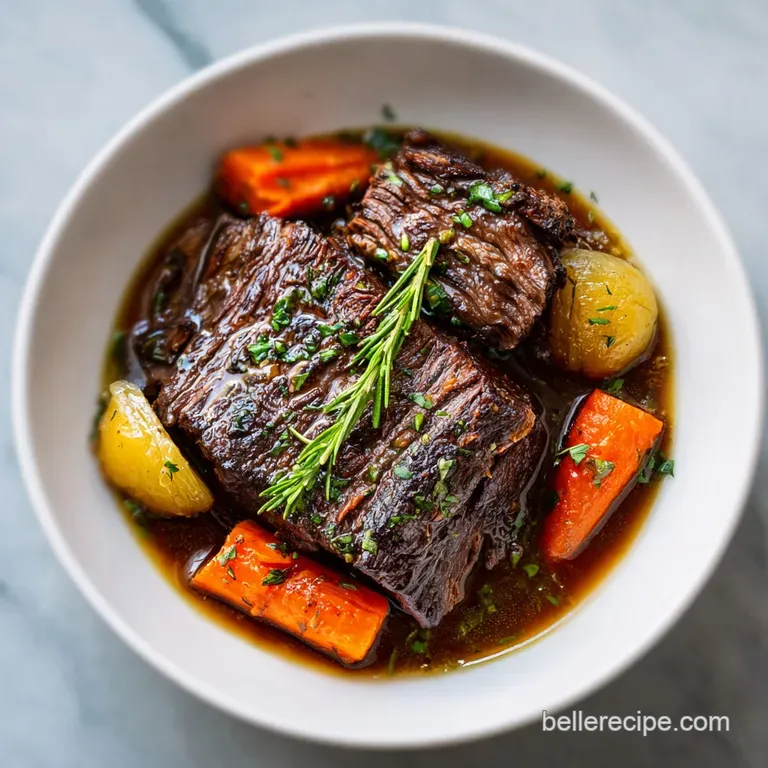
- Time: Active 20 minutes, Passive 3 hours 30 mins, Total 3 hours 50 mins
- Flavor/Texture Hook: Silky, melt in-your mouth beef with a rich, savory glaze
- Perfect for: Slow Sunday family dinners or hands off meal prep
- Master This Classic Slow Cooked Pot Roast Recipe
- The Science of Succulent Meat
- Component Analysis of Ingredients
- Gathering Your Quality Ingredients
- Minimal Tools for Maximum Flavor
- Step-by-Step Braising Success
- Fixing Common Braising Mishaps
- Creative Twists and Smart Swaps
- Storage and Mindful Waste Management
- Perfect Pairings for Your Meal
- High in Sodium
- Recipe FAQs
- 📝 Recipe Card
Master This Classic Slow Cooked Pot Roast Recipe
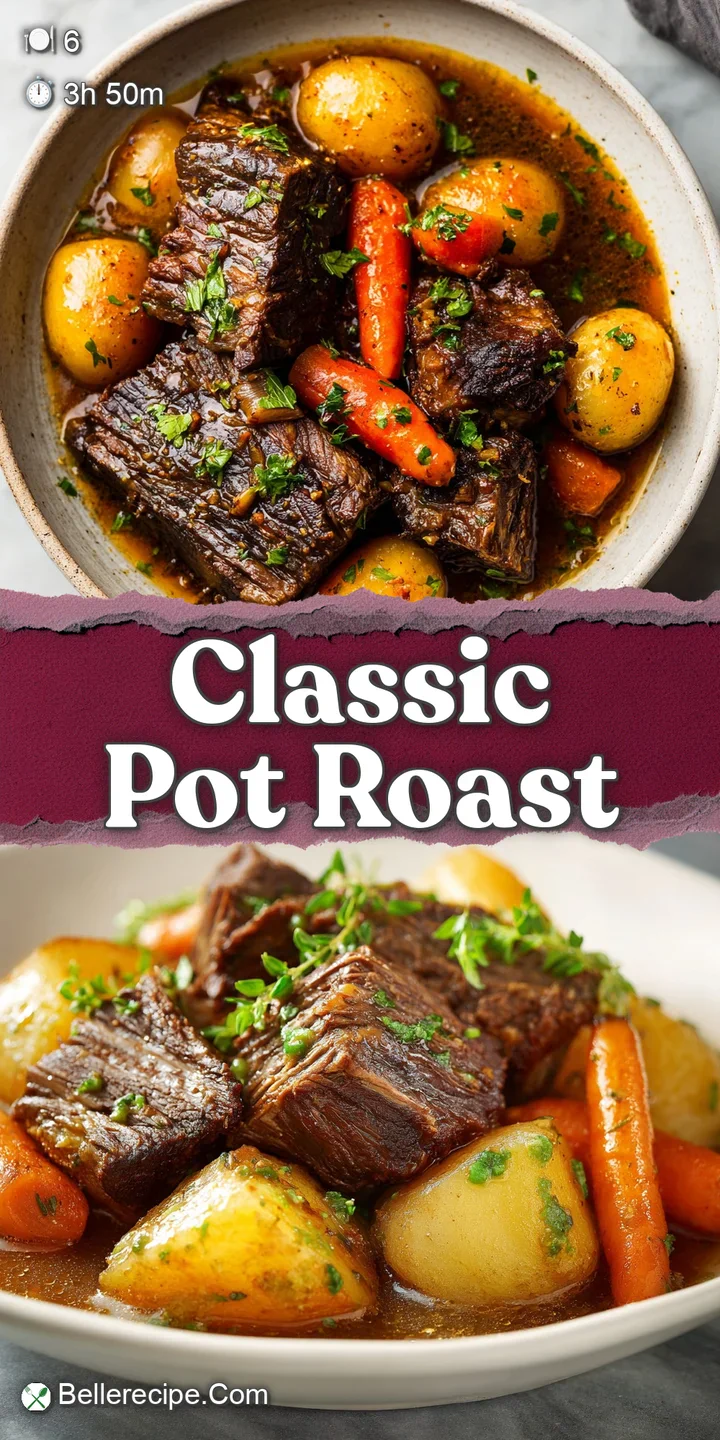
The sizzle of beef hitting hot oil is the sound of home. I remember the first time I tried to make a pot roast for my family; I was so nervous I’d end up with a dry, gray block of wood. I stood in my tiny kitchen, clutching a worn out wooden spoon, and watched the steam rise as the red wine hit the pan.
The aroma that filled the room woody thyme, sweet onions, and deep, browning meat felt like a warm hug before the food was even on the table.
Since then, I've made this dish dozens of times, learning that the magic isn't in fancy equipment but in the quiet patience of a slow braise. We’ve all had those days where everything feels a bit much, and honestly, the simple act of searing and simmering is my favorite way to slow down.
You don't need to be a professional to get that fall apart texture; you just need to trust the process and let the heat do the heavy lifting for you.
This recipe is about mindful cooking using simple, whole ingredients like carrots and potatoes to create something far greater than the sum of its parts. It’s the kind of meal meant for sharing, with plenty of extra gravy for dipping crusty bread. But what about the common fear of tough meat?
We’ll get to that. This guide will walk you through every step so you can feel confident and relaxed in your own kitchen.
The Science of Succulent Meat
The Collagen Conversion: Low, steady heat over several hours breaks down tough connective tissue (collagen) into gelatin. This process is what creates that buttery, silky mouthfeel rather than a dry, stringy texture.
The Maillard Reaction: Searing the beef at a high temperature creates a complex layer of savory compounds on the surface. These browned bits, or fond, dissolve into the braising liquid to provide a deep, mahogany color and intense flavor.
| Thickness | Internal Temp | Rest Time | Visual Cue |
|---|---|---|---|
| 2 inch slab | 200°F - 205°F | 15 minutes | Meat shreds easily with a fork |
| 3 inch slab | 200°F - 205°F | 20 minutes | Center is dark and glistening |
| 4 inch slab | 200°F - 205°F | 25 minutes | Fat cap has completely softened |
Choosing the right cut of meat is the most important decision you'll make today. While a lean roast might look healthier, it lacks the intramuscular fat needed to survive a long cook without becoming parched and tough as a boot.
Component Analysis of Ingredients
| Ingredient | Science Role | Pro Secret |
|---|---|---|
| Beef Chuck Roast | Primary fat/protein source | Pat it bone dry with paper towels to get a crust that doesn't steam. |
| Tomato Paste | Umami booster/thickener | Fry it in the oil for 2 minutes to remove the "tinny" metallic taste. |
| Dry Red Wine | Acid for fiber breakdown | Use a Cabernet or Merlot you’d actually enjoy drinking with the meal. |
| Beef Bone Broth | Liquid braising medium | Opt for bone broth over standard stock for a higher gelatin content. |
The foundation of any good braise is the aromatic base. By gently softening the onions and garlic before adding the liquids, you create a sweet, mellow background that balances the heavy richness of the beef fat.
Gathering Your Quality Ingredients
- 3.5 lb beef chuck roast: Why this? The high fat content ensures the meat stays moist during the long braise. (Substitute: Bottom round, though it will be slightly leaner)
- 2 tsp kosher salt: Why this? Enhances the natural beefiness without being overly sharp. (Substitute: 1 tsp table salt)
- 1 tsp coarsely ground black pepper: Why this? Provides a subtle heat and texture to the crust. (Substitute: White pepper for a milder bite)
- 2 tbsp avocado oil: Why this? High smoke point allows for a hard sear without burning. (Substitute: Vegetable or Grapeseed oil)
- 1 large yellow onion, quartered: Why this? Releases sweetness as it breaks down in the broth. (Substitute: 2 large shallots)
- 4 cloves garlic, smashed: Why this? Infuses the liquid with a mellow, nutty aroma. (Substitute: 1 tsp garlic powder in a pinch)
- 2 tbsp tomato paste: Why this? Adds color and a concentrated savory depth. (Substitute: 1 tbsp tomato jam)
- 1 cup dry red wine: Why this? The acidity helps tenderize the meat fibers. (Substitute: 1/4 cup balsamic vinegar plus extra broth)
- 3 cups beef bone broth: Why this? Provides the volume needed for braising while adding protein. (Substitute: Beef bouillon dissolved in water)
- 1 lb Yukon Gold potatoes, quartered: Why this? Their waxy texture prevents them from turning to mush. (Substitute: Red potatoes)
- 1 lb carrots, cut into 2 inch chunks: Why this? Adds a natural sugary contrast to the salty beef. (Substitute: Parsnips)
- 3 sprigs fresh thyme: Why this? Adds a woody, earthy fragrance. (Substitute: 1 tsp dried thyme)
- 2 bay leaves: Why this? Provides a subtle floral background note. (Substitute: Omit if necessary)
If you're looking for a different way to use beef, you might love this crispy Vaca Frita Recipe which uses a similar cut but a totally different finishing technique.
Minimal Tools for Maximum Flavor
For this pot roast recipe, you don't need a kitchen full of gadgets. A heavy bottomed pot is your best friend here. I personally love using a large cast iron Dutch oven because it holds heat so evenly, but any deep, oven safe pot with a tight fitting lid will work perfectly well.
Aside from the pot, you'll want a pair of sturdy tongs. Searing a 3.5 lb piece of meat can be a bit of a workout, and flimsy tongs are a recipe for a messy splash. A sharp chef's knife for the vegetables and a cutting board are the only other essentials you'll need to get this meal on the stove.
| Element | Fresh Choice | Shortcut Option | Quality Impact |
|---|---|---|---|
| Aromatics | Fresh garlic/onion | Jarred garlic/dried onion | Fresh provides much better texture |
| Liquid Base | Dry red wine | Red wine vinegar (small amount) | Wine adds a more complex sweetness |
| Herb Profile | Fresh thyme sprigs | Dried thyme leaves | Fresh is more fragrant; dried is more potent |
step-by-step Braising Success
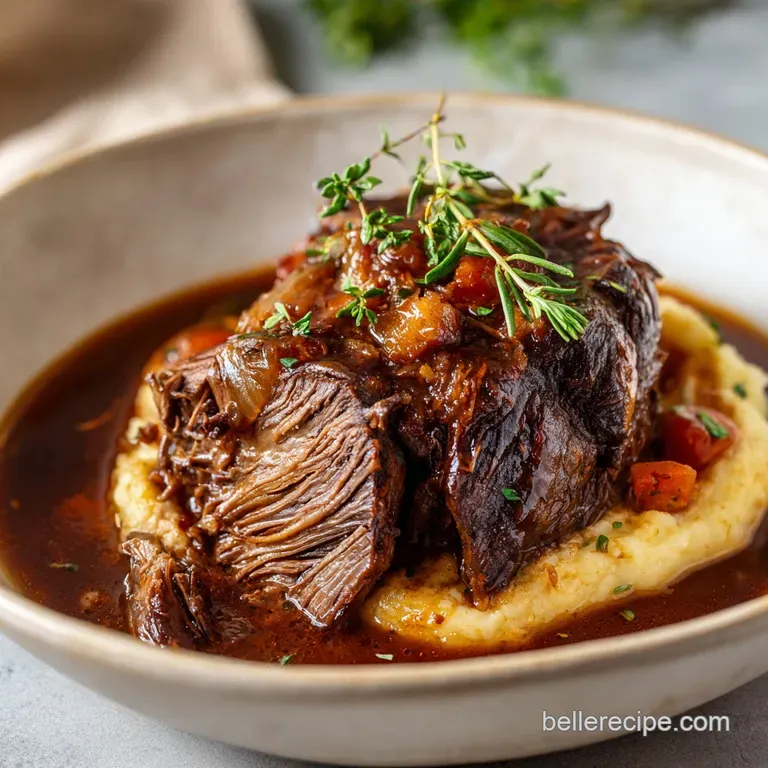
- Season the beef. Rub the 3.5 lb beef chuck roast with the 2 tsp kosher salt and 1 tsp black pepper. Note: Do this 30 minutes early if you can for better salt penetration.
- Sear the meat. Heat 2 tbsp avocado oil in your pot over medium high heat. Brown the beef for 5 minutes per side until a dark, crusty bark forms.
- Sauté aromatics. Remove the beef and set aside. Add the quartered yellow onion to the pot and cook for 4 minutes until the edges turn translucent and golden.
- Add garlic and paste. Stir in 4 cloves smashed garlic and 2 tbsp tomato paste. Cook for 2 minutes until the paste turns a deep brick red.
- Deglaze the pan. Pour in 1 cup dry red wine. Use a wooden spoon to scrape all the browned bits (fond) off the bottom until the liquid is smooth.
- Build the braise. Return the beef to the pot. Add 3 cups beef bone broth, 3 sprigs thyme, and 2 bay leaves until the liquid covers about half the meat.
- Simmer low and slow. Bring to a gentle boil, then cover and reduce heat to low (or place in a 300°F oven). Cook for 2 hours 30 mins.
- Add the vegetables. Gently tuck the 1 lb Yukon Gold potatoes and 1 lb carrots around the beef. Cover and cook for another 1 hour until the vegetables are fork tender.
- Rest the meat. Remove the beef to a board and let it sit for 15 minutes. Note: This prevents all the juices from running out when you slice it.
- Finish the sauce. Skim any excess fat from the liquid. Boil the remaining sauce for 5 minutes until it thickens into a velvety glaze.
Chef's Tip: For a glossy, professional finish, whisk a tablespoon of cold butter into the sauce right before serving. This emulsifies the fat and gives the gravy a stunning sheen.
Fixing Common Braising Mishaps
Meat Texture Issues
If your roast feels rubbery or difficult to chew, it’s likely undercooked. Even though it's been in the pot for hours, the collagen might not have fully melted yet. Put the lid back on and give it another 30 minutes; it’s almost impossible to "overcook" a chuck roast in liquid.
Sauce Consistency Issues
Sometimes the sauce feels a bit thin or watery. This usually happens if the lid wasn't quite tight enough or the broth didn't reduce. You can fix this by removing the meat and veggies and boiling the liquid on high for a few minutes.
If you're in a rush, a small cornstarch slurry (1 tsp cornstarch mixed with 1 tsp cold water) will thicken it up in seconds.
| Problem | Root Cause | Solution |
|---|---|---|
| Greasy Sauce | Excess fat from the chuck roast | Use a wide spoon or fat separator to skim the top layer. |
| Bland Gravy | Lack of salt or acidity | Add a splash of balsamic vinegar or a pinch more salt. |
| Mushy Carrots | Added too early in the cook | Always wait until the final hour to add root vegetables. |
Common Mistakes Checklist
- ✓ Never skip the searing step; it’s where 80% of your flavor comes from.
- ✓ Don't boil the meat aggressively; a gentle simmer keeps the fibers tender.
- ✓ Always pat the meat dry before it hits the oil to avoid steaming.
- ✓ Resist the urge to peek; every time you lift the lid, you lose valuable heat.
- ✓ Let the roast rest! Slicing too early results in dry, disappointing meat.
Creative Twists and Smart Swaps
While the classic version is hard to beat, I often like to change things up based on what I have in the pantry. For another special occasion beef dish, you might consider my Perfectly Roasted Beef Tenderloin recipe, which is leaner but equally festive.
If you want a different flavor profile, try these variations: The "Yankee" Variation: Add a tablespoon of Worcestershire sauce and a splash of apple cider vinegar for a tangier, New England style finish.
The Keto Swap: Replace the potatoes with large chunks of cauliflower or radishes. Radishes lose their sharp bite when braised and take on a texture very similar to potatoes!
Decision Shortcut
- If you want a thicker gravy, whisk in 1 tbsp of flour with the onions before adding liquid.
- If you want a smokier flavor, add 2 strips of thick cut bacon to the pot at the very start.
- If you want a child friendly version, swap the wine for extra bone broth and a teaspoon of sugar.
Storage and Mindful Waste Management
Leftover pot roast is a gift. It actually tastes better the next day because the flavors have more time to meld together. Store the meat and vegetables submerged in the gravy in an airtight container in the fridge for up to 4 days.
When reheating, do it gently on the stove over medium low heat so the meat doesn't toughen up.
For freezing, this dish is a superstar. Place the shredded beef and sauce in a freezer safe bag, removing as much air as possible. It will stay fresh for up to 3 months. I don't recommend freezing the potatoes, as they can become grainy, but the meat and carrots freeze beautifully.
Don't toss those onion skins or carrot peels! I keep a "stock bag" in my freezer where I collect all my vegetable scraps. Once the bag is full, I simmer them with water to make a zero waste vegetable broth for future soups. It’s a simple way to be more mindful of what we use.
Perfect Pairings for Your Meal
Since this pot roast recipe already includes potatoes and carrots, you really have a complete meal in one pot. However, a side of buttered egg noodles is a classic way to soak up all that extra gravy.
My grandmother always served this with a simple green salad dressed in a sharp vinaigrette to cut through the richness of the beef.
If you're feeling a bit more ambitious, a tray of roasted Brussels sprouts or some sautéed green beans with almonds adds a nice textural contrast. And of course, no pot roast dinner is complete without a piece of crusty sourdough bread to swipe the plate clean.
It’s all about creating that comforting, shared experience around the table.
Searing meat does not "seal in juices." This is an old kitchen tale. The actual reason we sear is to trigger the Maillard reaction, which creates hundreds of new flavor compounds. Moisture loss happens regardless of the sear, but the flavor gained is worth every second of effort.
High in Sodium
1120 mg mg of sodium per serving (49% of daily value)
American Heart Association recommends limiting sodium intake to about 2,300mg per day.
Tips to Reduce Sodium in Your Pot Roast
-
Low-Sodium Broth-30%
Swap regular beef bone broth for a low-sodium or no-sodium version. This simple switch significantly reduces the overall sodium content.
-
Reduce Added Salt-25%
Cut the kosher salt in half, using only 1 tsp instead of 2 tsp. Taste and adjust seasonings after cooking to avoid over salting.
-
Consider Wine Type-10%
While dry red wine contributes flavor, some can have slightly higher sodium content. Opt for a lower sodium wine option if concerned, or slightly reduce the amount used.
-
No-Salt Added Tomato Paste-10%
Use a no-salt added tomato paste. Many brands offer this option, and it won't noticeably affect the flavor profile.
-
Fresh is Best-5%
Ensure you are using fresh garlic and not garlic salt, as garlic salt adds unnecessary sodium.
-
Flavor Boost
Enhance the flavor of the pot roast with other herbs and spices like smoked paprika, garlic powder (ensure it's just garlic), onion powder, or dried oregano.
Recipe FAQs
What is the secret to a good pot roast?
Low and slow cooking. The secret is patience, as low, steady heat over several hours breaks down tough connective tissue (collagen) into gelatin, creating that buttery, silky mouthfeel.
What is the best liquid to cook pot roast in?
Beef bone broth combined with dry red wine. The broth provides volume and gelatin, while the wine's acidity helps tenderize the meat fibers, though you can substitute with extra broth if avoiding alcohol.
How many hours does it take to do a pot roast?
Plan for 3.5 to 4 hours total cook time. This usually involves about 20 minutes of active searing and vegetable prep, followed by 3 to 3.5 hours of hands off braising until the meat easily shreds.
What cut of meat is pot roast usually?
Chuck roast is usually the best choice. It has the ideal balance of intramuscular fat and connective tissue needed to survive a long cook without drying out.
Should I sear the roast even if I am using a slow cooker?
Yes, searing is crucial for maximum flavor. Searing the beef at high heat triggers the Maillard reaction, creating a savory crust (fond) that dissolves into the liquid to build color and depth in your sauce.
How do I thicken the pot roast gravy quickly without flour?
Reduce the liquid aggressively on high heat. Skim off any excess fat, then bring the remaining broth to a rapid boil uncovered for about 5 to 10 minutes until it coats the back of a spoon, concentrating the natural gelatin.
My roast is tough and chewy, what did I do wrong?
It likely needs more time at a lower temperature. Tough meat means the collagen hasn't fully converted to gelatin yet; return it to the heat for another 30 to 45 minutes. If you master the sensory doneness cues here, this mistake will be less common in future cooks, much like when you are preparing our Leftover Brisket Recipe.
Tender Pot Roast Recipe
Ingredients:
Instructions:
Nutrition Facts:
| Calories | 858 kcal |
|---|---|
| Protein | 56 g |
| Fat | 55 g |
| Carbs | 24 g |
| Fiber | 4 g |
| Sugar | 6 g |
| Sodium | 1120 mg |
