Tzatziki Sauce Recipe
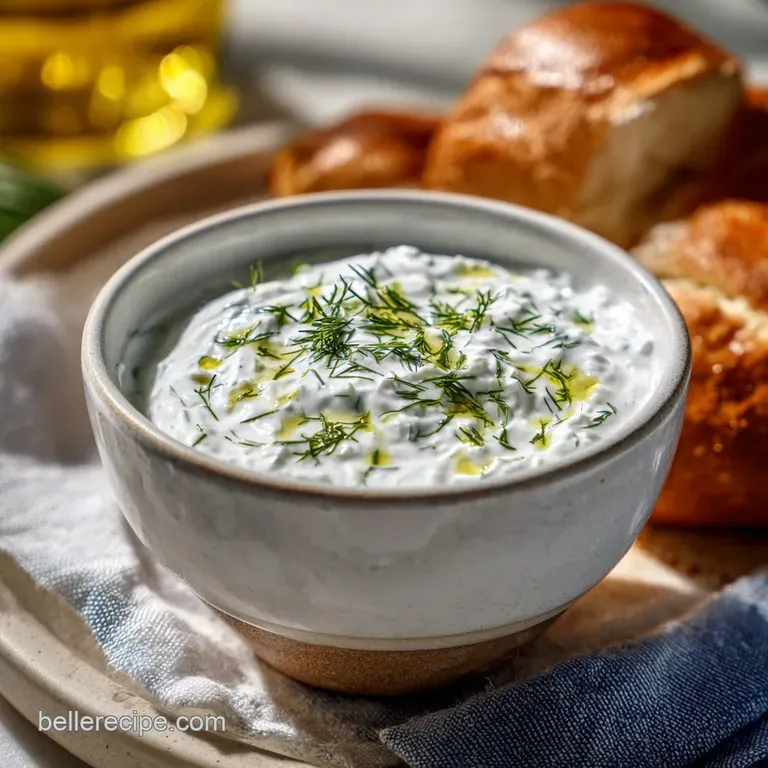
- Time: Active 15 minutes, Passive 30 minutes, Total 45 minutes
- Flavor/Texture Hook: Velvety Greek yogurt meets the crisp, cooling shatter of strained English cucumbers.
- Perfect for: Mediterranean feast nights, pita dipping, or a vibrant topper for grilled proteins.
- Master the Ultimate Authentic Tzatziki Sauce Recipe
- Why This Vibrant Mediterranean Dip Works
- Serving Size Guide for Large Gatherings
- Component Deep Dive for Superior Texture
- Essentials for This Aromatic Greek Sauce
- Step-by-Step Culinary Preparation Guide
- Solving Common Texture and Flavor Issues
- Adjusting Yields for Any Crowd Size
- Shortcuts for Faster Weeknight Meal Prep
- Common Mediterranean Kitchen Myths Debunked
- Optimal Storage and Waste Reduction Tips
- Best Pairings for Dipping and Topping
- Recipe FAQs
- 📝 Recipe Card
Master the Ultimate Authentic Tzatziki Sauce Recipe
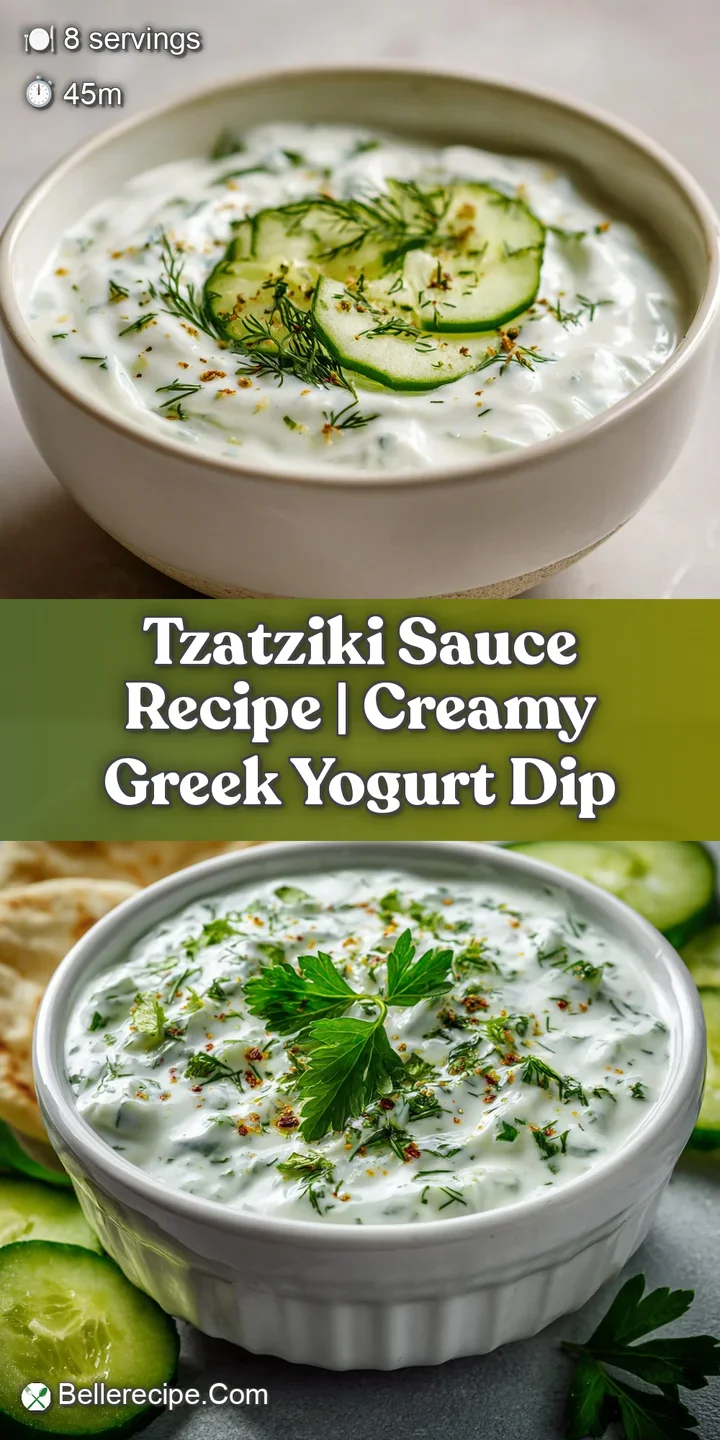
I remember sitting in a sun drenched courtyard where the air smelled of salt and wild thyme, waiting for a simple plate of grilled meat. When the bowl arrived, it wasn't the thin, watery puddle I’d seen back home; it was a thick, ivory cloud that clung to the warm pita like a dream.
That first bite was a sharp, aromatic hit of raw garlic softened by the cooling embrace of rich, strained yogurt.
That’s the secret to a real tzatziki sauce recipe. It’s all about the tension between the cooling cucumber and the biting garlic. We aren't just mixing ingredients here; we're managing moisture to create a sauce that stays thick and vibrant for days.
Honestly, don't even bother with low-fat yogurt you need that fat to carry the aromatics of the dill and mint properly.
Why This Vibrant Mediterranean Dip Works
- Osmotic Dehydration: Salt draws internal moisture out of the cucumber cells before they hit the yogurt. This prevents the vegetable from "weeping" and turning your thick dip into a runny soup.
- Acidic Tempering: The acetic acid in the white wine vinegar and citric acid in the lemon juice partially "cook" the raw garlic. This mellows the harsh sulfur compounds so the garlic tastes aromatic rather than acrid.
- Lipid Infusion: The high fat content in Greek yogurt absorbs the essential oils from the fresh dill and mint. This creates a deep, lingering herbal finish that lasts much longer than the initial bite.
- Emulsification Stability: Slowly whisking in extra virgin olive oil creates a temporary emulsion with the yogurt proteins. This adds a silky mouthfeel and a subtle peppery back note to every spoonful.
Serving Size Guide for Large Gatherings
| Servings | Cucumber Count | Greek Yogurt Amount | Recommended Bowl Size |
|---|---|---|---|
| 4 People | 0.5 Large English | 1 cup (225g) | Small Cereal Bowl |
| 8 People | 1 Large English | 2 cups (450g) | Medium Mixing Bowl |
| 16 People | 2 Large English | 4 cups (900g) | Large Serving Bowl |
Right then, before we get into the heavy lifting of the ingredients, you need to decide how much you're actually making. If you're hosting a big backyard grill out, I always suggest doubling the batch because this stuff disappears faster than the actual meat.
Component Deep Dive for Superior Texture
| Ingredient | Science Role | Pro Secret |
|---|---|---|
| English Cucumber | Structural Texture | Keep the skin on for a vibrant green fleck and extra fiber. |
| Greek Yogurt | Protein Matrix | Always use full fat to ensure the sauce doesn't break when chilled. |
| Fresh Garlic | Aromatic Backbone | Grate it into a paste to avoid biting into raw chunks. |
Essentials for This Aromatic Greek Sauce
- 1 large English cucumber (300g): Use a seedless variety to minimize excess liquid.
- Substitute: Persian cucumbers (use 3-4).
- Why this? The skin is thinner and the seeds are almost non existent for better texture.
- 2 cups full fat Greek yogurt (450g): Provides the thick, velvety base.
- Substitute: Labneh for an even thicker, almost cheese like spread.
- Why this? Strained yogurt has the protein density needed to hold the other ingredients.
- 2 tbsp extra virgin olive oil: Adds richness and a peppery finish.
- Substitute: Avocado oil for a more neutral flavor profile.
- 1 tbsp fresh lemon juice: Provides the bright, citrusy lift.
- Substitute: Apple cider vinegar if you're out of citrus.
- 1 tsp white wine vinegar: Adds a sharp, fermented tang.
- Substitute: Red wine vinegar.
- 3 cloves garlic, finely grated: The soul of the sauce.
- Substitute: 1 tsp garlic powder (though the flavor will be much flatter).
- Why this? Grating breaks more cell walls, releasing more of those spicy aromatic oils.
- 2 tbsp fresh dill, finely chopped: The classic Mediterranean herb.
- Substitute: Fresh fennel fronds for a slight licorice twist.
- 1 tbsp fresh mint, finely chopped: Adds a cooling, sweet undertone.
- Substitute: Extra dill if you aren't a mint fan.
- 0.5 tsp sea salt & 1 pinch black pepper: To season and draw out moisture.
step-by-step Culinary Preparation Guide
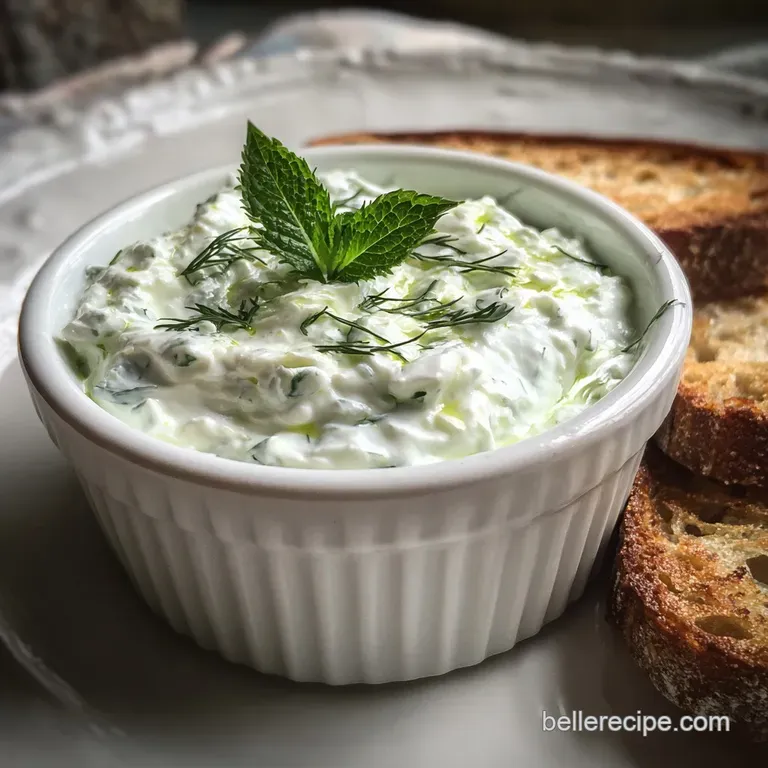
- Grate the cucumber using the large holes of a box grater into a bowl. Note: Don't peel it; the skin adds color and a nice bite.
- Toss with salt (0.5 tsp) and let it sit for at least 15 minutes. Until you see a pool of green liquid forming.
- Squeeze the cucumber inside a clean kitchen towel until your knuckles turn white. Note: This is the most important step for a thick sauce.
- Macerate the garlic by grating the 3 cloves directly into the 1 tbsp lemon juice and 1 tsp vinegar. Until the garlic paste looks slightly translucent.
- Combine the base by whisking the 2 cups of yogurt with the 2 tbsp olive oil. Until the oil is fully incorporated and the surface is glossy.
- Fold in solids including the bone dry cucumber, the garlic acid mixture, and the black pepper.
- Incorporate the herbs by gently stirring in the 2 tbsp dill and 1 tbsp mint. Note: Over mixing herbs can bruise them and make the sauce look muddy.
- Chill the mixture in the fridge for at least 30 minutes. Until the flavors have melded and the sauce is cold.
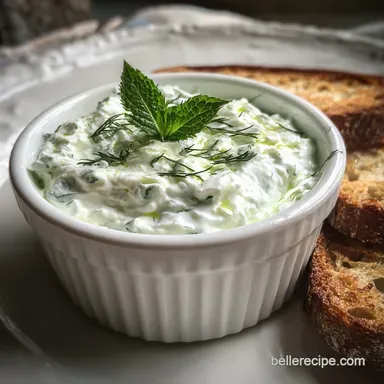
- Garnish the top with an extra drizzle of olive oil and a sprig of fresh dill.
Solving Common Texture and Flavor Issues
If Your Sauce is Too Thin
This usually happens because the cucumber wasn't squeezed enough, or you used a low-fat yogurt that has more whey. Even if you think you've squeezed it enough, give it one more go. It's the difference between a dip and a dressing.
If the Garlic is Too Aggressive
Raw garlic can be a real punch to the face if it's too fresh. If the sauce feels like it’s burning your tongue, you can mellow it out with a tiny bit more yogurt or a teaspoon of honey to balance the sulfur.
| Problem | Root Cause | Solution |
|---|---|---|
| Watery Sauce | Residual cucumber juice | Strain cucumber through a cloth, not just a mesh sieve. |
| Bitter Aftertaste | Bruised herbs | Use a very sharp knife and chop herbs only once. |
| Grainy Mouthfeel | Garlic chunks | Use a microplane to create a paste instead of mincing. |
Common Mistakes Checklist ✓ Never skip the 15 minute salting period for the cucumbers. ✓ Don't use dried dill; it tastes like dust compared to the vibrant fresh stuff. ✓ Always use full fat yogurt; fat is the primary vehicle for Mediterranean flavors.
✓ Let the sauce rest; the garlic needs time to lose its sharp raw edge in the acid. ✓ Pat your herbs dry after washing to prevent adding extra water to the mix.
Adjusting Yields for Any Crowd Size
When you're scaling down for a solo lunch, the math is easy, but you should still use at least half a clove of garlic to keep that aromatic profile. Reduce your resting time by about 20% since there’s less volume for the flavors to penetrate.
If you’re scaling up for a party, don't just quadruple the salt. Start with 1.5x the salt and spices, then taste as you go. Liquids like lemon juice should also be scaled back by about 10% initially to prevent the sauce from becoming too loose.
Working in batches for the cucumber squeezing will save your wrists and ensure every bit is dry.
Shortcuts for Faster Weeknight Meal Prep
| Shortcut | Time Saved | Flavor Impact |
|---|---|---|
| Food Processor | 5 minutes | Slightly more watery; requires extra straining. |
| Garlic Paste (Tube) | 3 minutes | Less "bite" but still gives that aromatic base. |
| Dried Mint | 2 minutes | Earthier, less cooling than fresh leaves. |
While I love the ritual of the box grater, you can pulse the cucumber in a processor if you're in a rush. Just be careful not to turn it into a puree, or you'll lose that essential shatter like crunch.
Common Mediterranean Kitchen Myths Debunked
Many people think you must peel the cucumber to get a "clean" flavor. In reality, the peel contains most of the nutrients and provides a necessary structural contrast to the velvety yogurt. Another myth is that you can't freeze tzatziki.
Well, you technically can, but the yogurt will split and the cucumber will turn to mush so just don't do it. Finally, adding more lemon doesn't always mean more "brightness"; sometimes too much acid actually masks the delicate aromatic notes of the mint.
Optimal Storage and Waste Reduction Tips
Store your sauce in an airtight glass container in the fridge for up to 4 days. It actually tastes better on day two as the garlic and herbs have more time to infuse the dairy. If you notice a little liquid on top after a day, don't panic that’s just a bit of whey or residual cucumber juice.
Just give it a quick stir.
For zero waste, take those leftover cucumber ends and the juice you squeezed out and toss them into a glass of water or a gin cocktail. The cucumber infused water is incredibly refreshing and full of electrolytes. Any leftover dill stems can be thrown into a freezer bag for the next time you make a vegetable stock.
Best Pairings for Dipping and Topping
This sauce is the perfect companion to my Homemade Chicken recipe if you're looking for a refreshing contrast to a warm, savory bake. The cooling nature of the yogurt cuts through the richness of the cheese and sauce beautifully.
If you're in the mood for a different kind of tang, you might also enjoy my Tonkatsu Sauce Recipe for your next fried dish. While the flavor profiles are worlds apart, both rely on that perfect balance of acid and aromatics to make a dish sing. Trust me, once you have a jar of this tzatziki in the fridge, you'll find yourself putting it on everything from scrambled eggs to roasted potatoes. It's a versatile, vibrant staple that every home cook needs in their repertoire.
Recipe FAQs
What are the ingredients of tzatziki?
English cucumber, full fat Greek yogurt, extra virgin olive oil, fresh lemon juice, white wine vinegar, fresh garlic, fresh dill, fresh mint, sea salt, and black pepper. These components come together to create its signature cool, creamy, and herbaceous flavor profile.
What's the secret to great tzatziki?
Thoroughly straining the cucumber and using full fat Greek yogurt. Removing as much moisture as possible from the cucumber prevents a watery sauce, and the fat in the yogurt carries the flavors beautifully, ensuring a rich, stable texture.
How to make tzatziki simple?
Grate the cucumber, salt it, and squeeze out all liquid. Then, combine it with full fat Greek yogurt, grated garlic, lemon juice, a touch of vinegar, olive oil, and fresh herbs like dill and mint. Chill before serving.
What is the best yogurt to use for tzatziki?
Full fat Greek yogurt is best. Its high protein content and lower moisture content create a thick, luxurious base that holds up well and prevents the sauce from becoming watery, similar to how fat content affects texture in other sauces.
Why is my tzatziki watery?
You likely didn't squeeze enough liquid out of the cucumber. This is the most crucial step; pressing the grated cucumber firmly in a clean kitchen towel until nearly dry is essential for achieving a thick, spoonable consistency.
Can I use dried herbs instead of fresh for tzatziki?
No, stick with fresh herbs for the best flavor and aroma. Dried herbs lack the vibrant, essential oils that give tzatziki its distinctive cooling and fragrant notes; fresh dill and mint are key to achieving authentic taste.
How long does tzatziki last in the refrigerator?
Up to 4 days in an airtight container. The flavors actually meld and deepen over time, making it taste even better on the second day, much like how complex flavors develop in sauces like Au Poivre Sauce.
Tzatziki Sauce Recipe
Ingredients:
Instructions:
Nutrition Facts:
| Calories | 92 kcal |
|---|---|
| Protein | 5.4 g |
| Fat | 6.2 g |
| Carbs | 4.1 g |
| Fiber | 0.4 g |
| Sugar | 2.3 g |
| Sodium | 156 mg |
