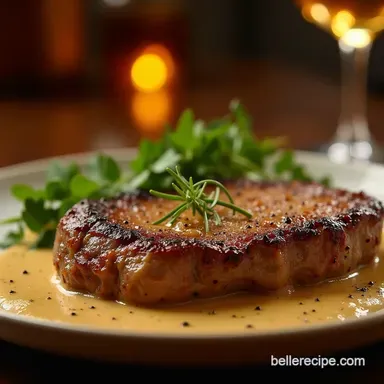
The Ultimate Peppercorn Perfection Classic Steak Au Poivre with Cognac Cream Sauce
- Unveiling the Secrets of Bistro-Worthy Steak Au Poivre
- Assembling Your Essential Components for Peppercorn Glory
- Mastering the Mise En Place: Tools and Ingredients Checklist
- The Step-by-Step Alchemy: From Sear to Sauce Perfection
- Elevating and Adapting Your Peppercorn Steak Experience
- Ensuring Longevity: Storing Leftover Sauce and Steak
- Recipe FAQs
- 📝 Recipe Card
Unveiling the Secrets of Bistro-Worthy Steak Au Poivre
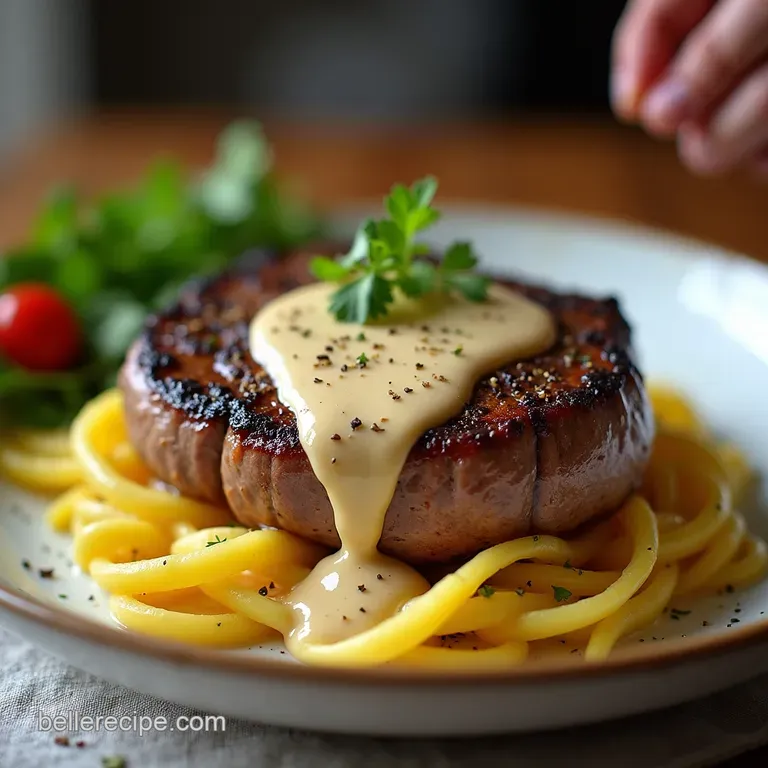
Ah, Steak Au Poivre, a true cornerstone of classic French cooking. This dish features a perfectly seared steak, aggressively crusted with cracked black peppercorns, followed by a swift, dramatic deglazing of the pan with brandy or cognac, resulting in a rich, velvety, and deeply flavourful cream sauce.
It’s pure bistro magic, delivering heat, richness, and sophistication in every bite. Guaranteeing a memorable meal, whether you're hosting an elegant dinner party or simply craving a proper Sunday supper, mastering this technique elevates your home cooking immediately.
Though it sounds complex, this incredible au poivre sauce recipe transforms humble steak into an event, often achievable in under forty minutes total time.
Why This Peppercorn Crust Makes All the Difference
The defining feature of this classic dish isn't just the sear; it’s the aggressive application of cracked peppercorns that forms an aromatic, spicy crust. Unlike a simple sprinkle of ground pepper, which can burn quickly under high heat, coarsely crushed peppercorns bloom in the fat, releasing volatile oils that create a complex, pungent flavour layer that adheres beautifully to the meat.
This crust serves as the flavour anchor for the entire meal, ensuring that every mouthful delivers that signature kick before melting into the decadent sauce.
A Culinary Salute to Classic French Technique
The methodology behind Steak Au Poivre is deeply rooted in classical French technique, specifically utilizing the fond —those wonderfully browned, flavourful bits stuck to the bottom of the pan after searing the protein.
These browned remnants are the source of deep, savoury notes that cannot be replicated with just bottled stock. The creation of this classic steak au poivre sauce is a testament to respecting the ingredients and maximizing pan flavour through precise deglazing.
Achieving medium-rare perfection on your steak (about 130° F/ 54° C internal temperature) ensures tenderness, setting the stage for the sauce transformation.
Decoding the Magic Behind the Signature Au Poivre Sauce
What exactly separates this from a standard pan gravy? It’s the balance of heat, acidity, and luxurious fat. The alcohol, typically Cognac or Brandy, acts as the primary solvent to lift the flavour profile from the pan floor.
Once reduced, the beef broth adds body and umami, culminating in the final, crucial addition of heavy cream. This results in that wonderfully punchy creamy sauce recipe we crave, spicy from the crust, tangy from any added mustard, and profoundly rich from the dairy.
Selecting the Ideal Steak Cut for Maximum Flavor Impact
While filet mignon is the most traditional choice due to its tenderness, other cuts work wonderfully, especially when paired with such a flavourful sauce. A quality New York Strip or a thick-cut Sirloin (about 1 ¼ inches thick) offers more internal marbling and a richer beef flavour to stand up to the robust peppercorns.
Crucially, ensure your steaks are brought close to room temperature before cooking; this promotes an even sear, resulting in less grey banding beneath that beautiful crust.
Assembling Your Essential Components for Peppercorn Glory
Successfully executing this recipe hinges on preparedness. Since the sauce comes together in mere minutes after the steak is cooked, having everything pre-measured and ready, your mise en place —is non-negotiable.
We are building layers of flavour quickly, and hesitation will lead to scorched shallots or an underdeveloped sauce base. Remember, this robust flavour profile shines whether you are opting for the traditional Cognac or exploring an au poivre sauce without alcohol variation.
Mastering the Mise En Place: Tools and Ingredients Checklist

To create this culinary masterpiece, you'll need a heavy-bottomed skillet, preferably cast iron, which retains heat brilliantly for an even sear. For the supporting ingredients, organization is key.
We need roughly four steaks (6-8 oz each), plenty of cracked pepper, aromatics like shallots, high-quality beef broth, heavy cream, and your spirit of choice.
Selecting Premium Peppercorns: Whole, Cracked, and Coarse
Forget the tiny shaker pepper. For the crust, you must start with whole black peppercorns, about 3 tablespoons for four steaks. The goal is a coarse crack , not a fine grind.
Place the whole peppercorns in a small plastic bag and use a heavy rolling pin or the bottom of a heavy skillet to crush them unevenly. You want chunks and pieces, not dust. This texture is vital for the crust adherence and the slow release of flavour during searing.
A quick dusting of kosher salt alongside the pepper is all the seasoning the steak needs pre-sear.
The Spirits Required: Brandy vs. Cognac for Pan Deglazing
The alcohol step is where much of the distinctive aroma and depth comes from. Traditionally, Cognac is the spirit of choice, lending a subtle fruity complexity as it burns off. high-quality Brandy serves as an excellent substitute.
If you are looking for an au poivre sauce no cognac experience, dry sherry or even Madeira can provide the necessary acidity and flavour depth needed for proper deglazing. Always use alcohol you would enjoy sipping, as its flavour concentrates dramatically during reduction.
Essential Pantry Staples for Building Richness
Beyond the main players, the supporting cast adds crucial balance. Finely minced shallots offer a sweeter, milder allium base compared to harsh onions. high-quality, low-sodium beef broth is necessary for dissolving the fond and creating volume.
Finally, heavy cream (at least 35% fat) is essential; this emulsifies with the fats and alcohol remnants to form that signature glossy, clingy sauce texture. A tiny teaspoon of Dijon mustard will act as a brilliant binder, adding a necessary tang without overpowering the pepper.
Related Recipes Worth Trying
- Foolproof Beurre Blanc Sauce Recipe Bistro Magic at Home — Master the classic beurre blanc sauce recipe This foolproof guide makes emulsified butter sauce easy even if youre a beginner Get that perfect French bistro...
- Beurre Blanc Recipe My Foolproof French Butter Sauce — Want a silky smooth beurre blanc recipe This easy French butter sauce is foolproof Perfect for fish veggies or chicken Get the white wine butter sauce recipe
- Kickin Kansas City BBQ Sauce How to Make BBQ Sauce — Learn how to make BBQ sauce from scratch This Kansas City style BBQ sauce is sweet smoky tangy perfect for ribs An easy BBQ sauce recipe youll love
The step-by-step Alchemy: From Sear to Sauce Perfection
With your ingredients prepped, the cooking process moves quickly. The primary goal here is cooking the steak perfectly, followed immediately by harvesting every bit of flavour left in the pan to construct your sauce.
Technique Deep Dive: Achieving the Perfect Pepper Crust Adherence
After patting your room-temperature steaks completely dry, press the cracked peppercorns, along with a light touch of salt, firmly onto both faces of the meat. You want a thick, generous coating.
The dryness of the steak is paramount; moisture prevents that crucial sear from forming, resulting in steaming rather than crusting.
Searing Secrets: Getting That Golden-Brown Exterior
Heat a tablespoon of high smoke-point oil (like grapeseed) in your cast iron skillet until it shimmers slightly over medium-high heat. Carefully lay the pepper-crusted steaks away from you. Resist the urge to move them for at least three to four minutes until a deep, dark crust has formed.
Flip, add a tablespoon of butter to the pan, and begin basting the top of the steak with the foaming butter until it reaches your desired internal temperature. Once done, immediately transfer the steaks to a warm plate and tent them loosely with foil to rest; this resting period is sacred.
The Flambé Factor: Safely Introducing Alcohol to the Pan
Keep the pan on the stove, retaining all the rendered fat and pepper residue. Reduce the heat to medium and toss in your minced shallots, sautéing for about two minutes until softened. Now comes the dramatic part: Remove the pan from the heat source entirely and pour in your 1/2 cup of Cognac.
Return the pan to the heat and, if you are comfortable, carefully tilt the pan toward the flame (using a long match or lighter) to ignite the fumes. This process, called flambéing, burns off the harsh alcohol content, leaving behind concentrated flavour.
If you prefer to skip this dramatic step, or if you are seeking an au poivre sauce gluten free option that avoids high-proof spirits, simply let the alcohol boil vigorously for a full minute, scraping the bottom constantly.
Finishing Touches: Reducing the Cream and Seasoning Precision
Once the flames subside or the alcohol is boiled off, pour in the 1/2 cup of beef broth, ensuring you aggressively scrape up every browned bit from the bottom, this is the fond which makes your au poivre sauce ingredients sing. Let this liquid reduce by half.
Next, whisk in the 3/4 cup of heavy cream and the teaspoon of Dijon mustard. Allow this mixture to simmer gently for about three to five minutes until the sauce visibly thickens enough to lightly coat the back of a spoon. Taste and adjust salt if necessary before spooning this luxurious sauce over your rested steak.
Elevating and Adapting Your Peppercorn Steak Experience
While the classic preparation is divine, this base recipe offers fantastic room for creativity and adaptation based on dietary needs or flavour preferences.
Flavor Variations: Beyond the Classic Cognac Au Poivre Sauce
If you are aiming for an au poivre sauce gluten free version, ensure your beef broth is certified gluten-free, and you may need to use a very small, pre-dissolved cornstarch slurry near the end if the cream reduction doesn't yield enough body for your liking.
For a completely different profile, try substituting the shallots with finely minced garlic and adding a pinch of dried tarragon when you add the broth; this pushes the flavour profile closer to a French Béarnaise style.
Pairing Suggestions: The Perfect Wine and Side Dish Complements
The richness of this dish demands sturdy side dishes. Creamy mashed potatoes ( Pommes Purée ) are unparalleled for soaking up every drop of the sauce. For greens, snappy green beans ( Haricots Verts ) tossed lightly with butter and sea salt provide necessary textural contrast.
On the beverage front, a powerful red wine, such as a structured Bordeaux or a dark Zinfandel, will stand up beautifully to the intense pepper spice and creaminess.
Troubleshooting Common Issues: Why Isn't My Sauce Thickening?
If, after simmering for five minutes, your sauce still seems watery, resist the urge to crank the heat; this can cause the cream to break or curdle. Instead, continue to simmer gently, allowing evaporation to concentrate the flavour and thickness.
Alternatively, whisk in a small amount of cold butter (about half a tablespoon) vigorously; this helps emulsify the sauce, giving it a richer mouthfeel and shine.
Nutritional Snapshot of This Decadent Main Course
It is important to acknowledge that this is a decadent dish, rich in flavour derived from quality fats. While the steak provides excellent protein, the inclusion of heavy cream and butter in the pan means the final sauce portion carries significant caloric density, primarily from fat.
This is best enjoyed as an occasional treat rather than a nightly staple, though the intense flavour ensures you don't need an overly large serving to feel satisfied.
Ensuring Longevity: Storing Leftover Sauce and Steak
Any leftover steak should be cooled quickly and stored airtight in the refrigerator for up to three days. The leftover au poivre sauce can also be refrigerated separately in an airtight container. When reheating, do so gently on the stovetop over low heat, whisking constantly.
If the sauce has separated upon reheating (which can happen with dairy), whisk in a splash of fresh milk or broth to bring it back together before serving over reheated steak or even roasted chicken the next day.
Recipe FAQs
Why is my Au Poivre Sauce a bit gritty instead of smooth?
That's usually down to the peppercorns! For the best texture, you must use coarsely cracked peppercorns, not fine ground pepper you'd sprinkle on your morning toast. If you want that ultra-silky restaurant finish, you can always push the finished sauce through a fine-mesh sieve right before serving, leaving behind any stray shallot or larger pepper fragments.
Can I skip the Cognac in the Au Poivre Sauce? What's a good substitute?
While Cognac or Brandy is the traditional heart of the flavour, you absolutely can skip it if you prefer not to use spirits or flambé. Your best bet is to substitute it with an equal amount of good quality beef broth mixed with 1 teaspoon of balsamic vinegar or dry sherry to mimic that necessary acidity and depth.
Just ensure you boil this mixture down well to cook off the raw edge!
I'm nervous about flambéing the alcohol. Is it safe to do at home?
It’s perfectly safe if you take sensible precautions, just like grilling sausages! Make sure the pan is NOT directly over a high gas flame when you pour the spirit in, and remove the pan from the heat source entirely before tilting it towards a lighter or match.
If you'd rather avoid flames altogether, simply return the pan to medium heat and let the alcohol boil vigorously for a good minute until the sharp smell dissipates.
How should I store leftovers of the Au Poivre Sauce, and how long will it keep?
The sauce keeps rather well, which is handy for midweek meals! Store any leftovers in an airtight container in the fridge for up to three days. When reheating, do so gently over low heat, stirring occasionally, as high heat can sometimes cause the cream to split slightly.
Can I make this sauce ahead of time, perhaps before my guests arrive?
You certainly can prepare the bulk of the sauce base, steps 1 through 7—a few hours ahead of time, stopping just before the final simmer. Keep it warm on the hob on very low heat, stirring frequently.
Right before you serve the steaks, bring it up to temperature, whisk in the final seasoning, and check the consistency. It’s nearly as good as freshly made!
Foolproof Steak Au Poivre Sauce Recipe Bistro Creamy Perfection