Vietnamese Fresh Spring Rolls with Shrimp
- Time: 30 minutes preparation + 10 minutes cooking
- The Highlight: Crunchy, raw vegetables paired with a creamy peanut sauce
- Best for: Refreshing summer starters or a nutritious party spread
- Fresh Spring Rolls: A Vibrant Feast
- Why These Rolls Stay Together
- Fresh vs Shortcut Comparison
- What Each Ingredient Does
- Essential Kitchen Gear
- Creating the Rolls
- Fixing Common Roll Issues
- Adjusting the Batch Size
- Keeping the Rolls Fresh
- New Flavor Ideas
- Plating and Serving
- Recipe FAQs
- 📝 Recipe Card
Fresh Spring Rolls: A Vibrant Feast
The scent of crushed mint and the splash of warm water always transport me back to the bustling street markets of Saigon. In Vietnam, Gỏi cuốn is a centerpiece for social connection.
I recall watching families huddle around platters of julienned vegetables and bowls of warm water, each person rolling their own with a deft, practiced motion. The act of assembling these together feels like a cherished communal tradition.
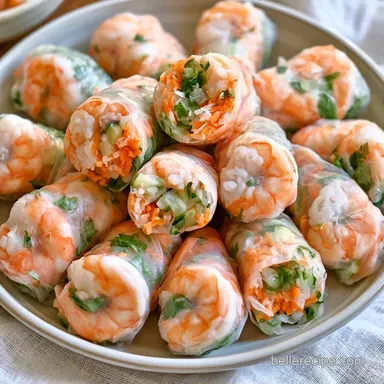
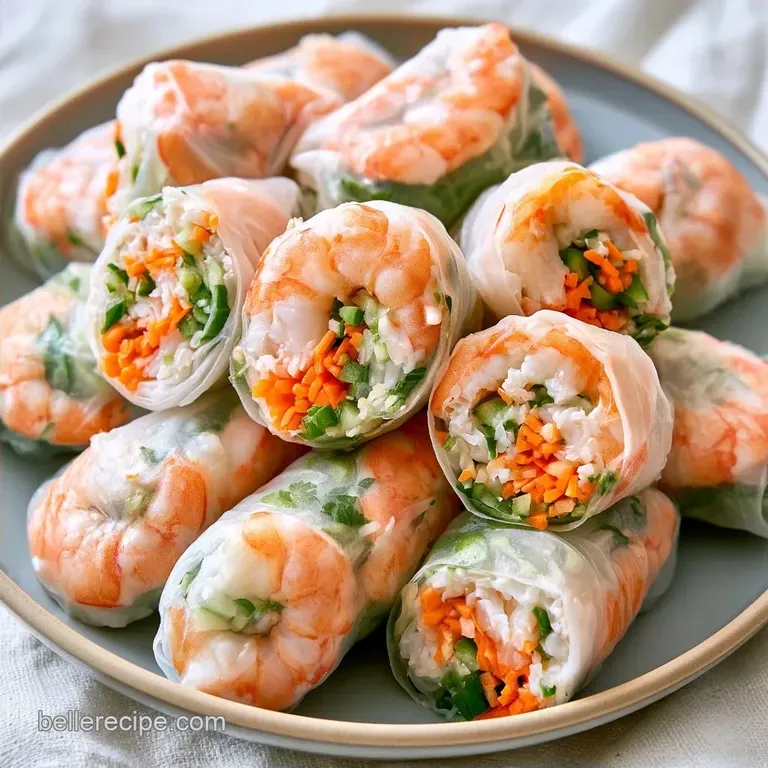
These rolls are a tribute to raw, vibrant ingredients. Unlike the fried varieties often found on takeout menus, these are translucent, showcasing the bright orange of carrots and the vivid pink of shrimp. They provide a crisp, cooling sensation that awakens the palate, especially when dipped in a rich, savory sauce.
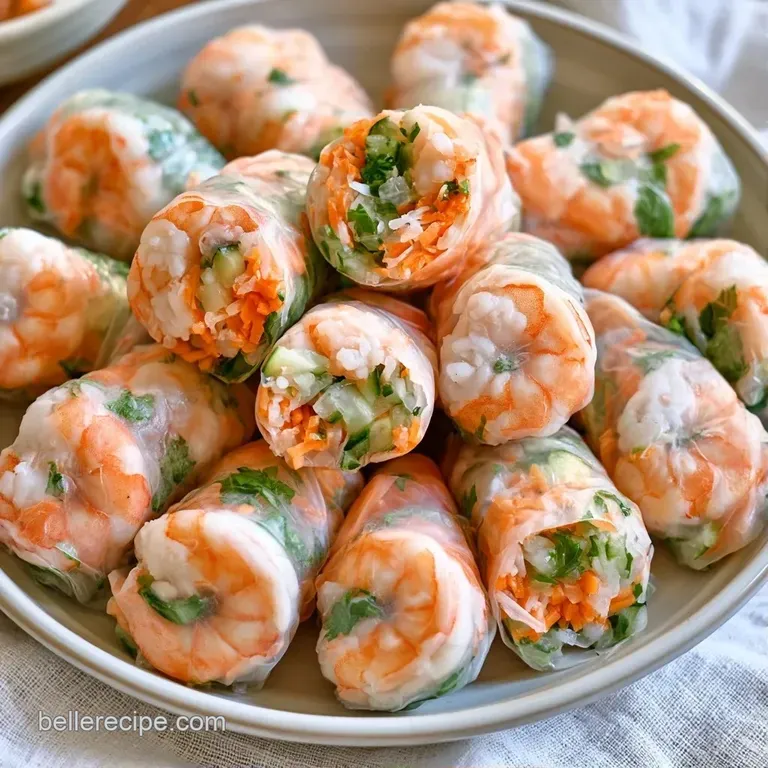
Preparing Fresh Spring Rolls is as much about aesthetics as it is about flavor. The objective is to create a tight, shimmering cylinder that keeps the shrimp prominently visible through the wrapper.
While it takes a moment to get a feel for the rice paper, once you master the hydration, the process is quick and deeply satisfying.
Why These Rolls Stay Together
Under dipping: Dipping the rice paper for only 2-3 seconds prevents it from becoming too gummy, allowing it to firm up as you roll.
Strategic Layering: Placing the heavier, structural vegetables first creates a base that supports the shrimp, preventing the wrapper from sagging or tearing.
Fresh vs Shortcut Comparison
A common debate in my kitchen is whether to go for the fresh version or the fried shortcut. While fried rolls are satisfying, they lack the brightness of a raw assembly.
| Feature | Fresh (This Recipe) | Shortcut (Fried) |
|---|---|---|
| Texture | Chewy and snap crisp | Greasy and brittle |
| Flavor Profile | Herbaceous and clean | Savory and toasted |
| Nutrient Density | High raw vitamins | Higher fat content |
Right then, if you're undecided on how to approach your platter, use this guide to tweak the outcome based on your goal.
| Goal | What to change |
|---|---|
| Extra Crunch | Add shredded cabbage |
| Bolder Sauce | Double the sriracha |
| Lighter Roll | Skip the noodles |
What Each Ingredient Does
Getting the balance of textures is the most important part of this process. If one ingredient is too wet, the whole thing falls apart.
| Ingredient | What It Does | Best Swap |
|---|---|---|
| Rice Paper | Creates the translucent seal | Wheat wrappers (changes texture) |
| Rice Vermicelli | Adds bulk and chew | Shredded cabbage (low carb) |
| Shrimp | Provides protein and color | Firm tofu strips |
| Peanut Butter | Thickens the sauce base | Almond butter |
Essential Kitchen Gear
Professional equipment isn't necessary, though certain tools can streamline the assembly. I prefer a shallow, wide plastic container for the water so the rice paper stays flat.
For the vegetables, use a mandoline or a very sharp knife to ensure you get thin matchsticks instead of chunks; otherwise, thick carrot slices might tear the rice paper. I also suggest placing a damp, lint free cloth on your workspace to stop the wrappers from adhering to the surface.
A small whisk is the best tool for the sauce. Because peanut butter is so dense, whisking it with the soy sauce and lime juice prevents lumps by emulsifying the mixture. For larger quantities, a small blender is a great alternative.
Creating the Rolls
Prepping the Components
- Boil rice vermicelli for 3-5 minutes until tender but not mushy. Drain and immediately rinse with cold water to halt the cooking process and wash away extra starch.
- Cut the carrots and cucumbers into thin, matchstick julienne strips. Thoroughly wash and pat the herbs dry Note: Wet herbs make the wrapper slide.
- Split the cooked shrimp lengthwise so they lie flat against the rice paper.
Crafting the Dipping Sauce
- In a small bowl, whisk together peanut butter, hoisin, soy sauce, lime juice, and sriracha. For a more complex flavor profile, you can substitute with a homemade hoisin sauce.
- Gradually stir in warm water in small increments until the sauce is smooth and pourable.
Mastering the Roll
- Submerge a single rice paper sheet in warm water for exactly 2-3 seconds until it is slightly flexible but still firm.
- Lay the wrapper flat on a damp towel. In the center, add a small handful of lettuce, a few sprigs of herbs, a bit of noodles, and the julienned vegetables.
- Arrange 3-4 shrimp halves, cut side down, across the center of the filling.
- Fold the bottom edge over the ingredients, then tuck in both sides. Roll tightly toward the top, applying gentle pressure to ensure a snug fit.
Chef's Tip: To achieve perfectly uniform strips, try popping your carrots in the freezer for 10 minutes before julienning; it makes them firmer and easier to slice.
Fixing Common Roll Issues
Working with rice paper can be finicky. The most common frustration is the "sticky mess" phase where the wrappers fuse together or rip under the weight of the fillings.
Preventing Rice Paper Tears
If the wrapper rips, you're likely over hydrating. The paper continues to soften even after you take it out of the water. If you soak it until it feels completely soft, it will be too fragile to hold the shrimp. Stick to that 3 second rule.
Stopping Rolls from Unraveling
This usually happens when the filling is too loose. You need to tuck the sides in tightly, almost like you're wrapping a present. Use your fingers to press the noodles into a compact bundle before folding the edges.
Fixing a Too Thick Sauce
Peanut sauce can thicken quickly as it cools. If it becomes a paste, whisk in warm water half a teaspoon at a time.
| Problem | Root Cause | Solution |
|---|---|---|
| Wrapper rips | Over soaked in water | Reduce dip time to 2 seconds |
| Rolls are soggy | Wet herbs or vegetables | Pat all produce bone dry |
| Filling falls out | Loose rolling technique | Fold sides tightly before rolling up |
Adjusting the Batch Size
When preparing a large quantity, avoid rolling everything at once before serving. These rolls are freshest before they begin to "sweat."
For a double batch, only multiply the salt and sriracha in the sauce by 1.5x. Scaling seasoning linearly often makes the sauce overly salty. Prepare the rolls in groups of eight, covering each finished set with a damp paper towel so the skins don't dry.
If you only need two or three for a snack, you can halve the noodles while keeping the vegetable prep as is. It's much simpler to julienne a full carrot than a small piece, and any extras keep well in the refrigerator.
Keeping the Rolls Fresh
These are designed to be eaten immediately, but you can store them if you're prepping for a party. Place the rolls in a container and line them with a damp paper towel. This stops the rice paper from hardening into a plastic like texture. They stay good in the fridge for about 24 hours.
Do not freeze these. The water content in the raw vegetables will expand, bursting the wrapper and leaving you with a mushy mess upon thawing.
As for zero waste, don't toss the cucumber ends or carrot peels. I throw mine into a freezer bag and simmer them with onion skins and celery for a quick vegetable stock.
New Flavor Ideas
While the shrimp version is the classic, you can ignite different flavor profiles by swapping the protein. For a vegan version, use thick strips of marinated tofu or avocado slices for a creamy contrast.
If you want a Thai twist, swap the peanut sauce for a Thai sweet chili sauce to add a zesty, spicy kick. You can also add shredded mango to the filling for a tropical, sweet and sour vibe.
For those watching their carbs, replace the rice vermicelli with spiralized zucchini or extra shredded cabbage. It maintains the crunch while lowering the glycemic load.
Plating and Serving
Because these rolls are translucent, the way you present them is where you can really excel. I view the serving platter as a blank canvas.
Simple Plating
Arrange the rolls whole on a white ceramic dish, placing a small bowl of peanut sauce in the center. This is the most relaxed, casual approach for a weeknight meal.
Polished Plating
Slice the rolls at a 45-degree angle and arrange them in an overlapping fan. This highlights the colorful interior of herbs and shrimp, making the presentation feel more deliberate.
Restaurant Plating
Using a squeeze bottle, create a bold swipe of peanut sauce across a rectangular plate. Position three diagonally cut rolls atop the sauce, then garnish with a single Thai basil leaf and a drizzle of sriracha oil for a high contrast, artistic finish.
| Level | Tweak | Vibe |
|---|---|---|
| Simple | Whole rolls, side bowl | Homey |
| Polished | Diagonal cut, fan shape | Dinner Party |
| Restaurant | Sauce smear, mint garnish | Fine Dining |
Now you have everything required to craft Fresh Spring Rolls that look every bit as delicious as they taste. The secret lies in the hydration and how tightly you roll. Just remember to keep your herbs dry and your dip concise. Enjoy the crunch!
Recipe FAQs
What goes in a fresh spring roll?
They consist of rice vermicelli, shrimp, carrots, cucumber, romaine lettuce, mint, cilantro, and Thai basil. These are wrapped in rice paper and paired with a peanut sauce featuring homemade hoisin.
How to stop rice paper from tearing?
Dip the wrapper in warm water for exactly 2-3 seconds so it remains slightly firm. Avoid overfilling the center to prevent putting too much pressure on the skin.
Is it true that fresh spring rolls are identical to egg rolls?
False. Fresh rolls use uncooked rice paper for a translucent look, while egg rolls use a wheat based wrapper and are deep fried.
Why do rolls stick together on the plate?
The starch in the rice paper creates a natural adhesive when moist. Use a damp towel or separate the rolls with pieces of lettuce to prevent sticking.
Are Vietnamese fresh rolls a healthy choice?
Yes, they are nutrient dense because they feature lean shrimp and plenty of raw vegetables. Most of the richness comes from the accompanying peanut sauce.
Which mistakes should I avoid when rolling?
Avoid soaking the paper for too long, which makes it gummy and difficult to handle. Also, ensure your herbs are patted completely dry to keep the wrapper from slipping.
Can I prepare these ahead of time?
Prep the julienned vegetables and sauce in advance to save time. Roll them just before serving to ensure the rice paper stays supple and doesn't harden.
Do the rolls require a specific technique to stay tight?
Roll them tightly by applying gentle pressure as you fold the edges. This ensures the filling is compressed and the wrapper adheres to itself.
Vietnamese Fresh Spring Rolls