Fish Stock the Essential White Fumet Recipe for Sauces and Risotto
- The Crucial Difference: Why We Need a Proper Fumet
- Elevating Your Cuisine with Homemade Fish Stock
- Sourcing the Best: Choosing Quality Components
- Necessary Equipment for a Clear Stock
- Mastering the Technique: Step and by-Step Fumet Preparation
- The Gentle Simmer: Achieving Perfect Fish Stock Clarity
- FAQs and Troubleshooting Your Homemade Fish Stock
- Storing, Freezing, and Extending the Life of Your Stock
- Recipe FAQs
- 📝 Recipe Card
The Crucial Difference: Why We Need a Proper Fumet
So listen, if you are still using that store and bought powdered seafood base for your sauces, stop right now. Seriously. I know it’s convenient, but it tastes like a desperate apology for fish. We are better than that!
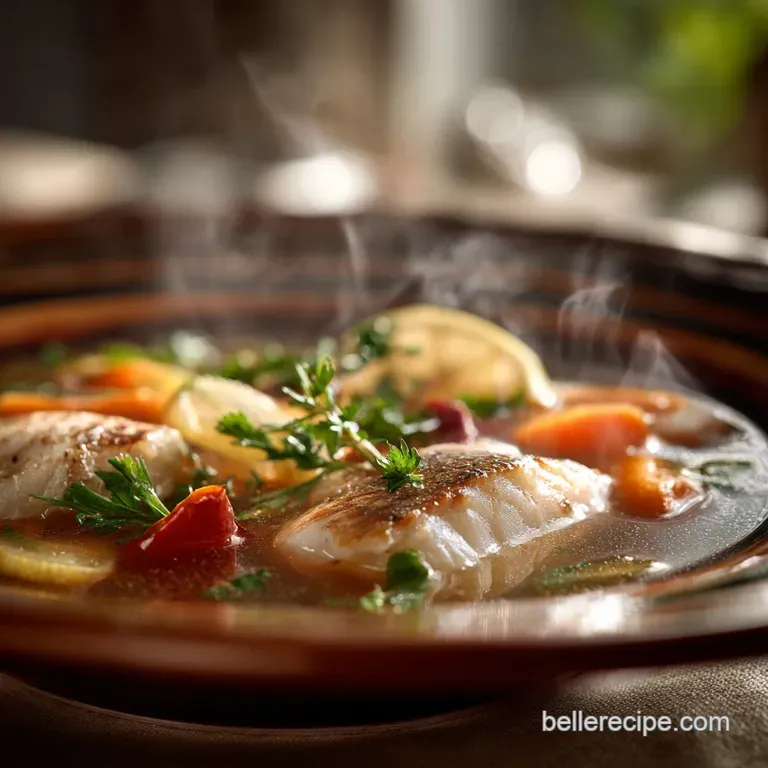
The secret weapon in the classic French kitchen is the Fumet (pronounced foo and MAY). It’s basically French for "aroma," and that tells you everything you need to know. A fumet is not your grandmother's hearty beef stock. It is light, it is clear, and it is quick.
It provides a pure, clean essence of the sea without the heavy, gummy, or oily texture you get if you overcook it or use the wrong bones. If you try to build a delicate, creamy velouté sauce on top of heavy, muddy and tasting liquid, the whole thing is just going to fall flat and taste vaguely wrong.
Trust me, I learned that the hard way trying to rush a paella once. The difference between a true fumet and standard, dark seafood broth is night and day.
Elevating Your Cuisine with Homemade Fish Stock
I honestly believe that once you make fish stock at home, you will never look back. It’s brilliant. It transforms weeknight cooking. It means you can actually make sauces like a pro chef, because you have the foundational ingredients they use every single day.
Defining Clarity: The Secret to a Light Base
The entire objective of a white fish stock is clarity. You want it almost translucent, with a beautiful golden and white hue. How do we achieve this? It boils down to three things:
- Cold Water Start: Always, always start your bones in cold water. This allows the impurities to slowly dissolve and rise to the surface before the water gets hot enough to set them permanently into the liquid.
- Diligent Skimming: Skim every bit of foam (the "scum") off the top right as the simmer begins. If you let that stuff cook back into the stock, it's going to turn murky, and there’s no going back.
- The Time Limit: Fish bones contain very little collagen but a lot of tiny amounts of residual fat and mineral compounds. Cook them past the 45 minute mark, and they start releasing bitter, unpleasant notes. It’s like a race against the clock, but a short one!
Beyond Bouillabaisse: Essential Uses for Your Finished Stock
Sure, a classic Bouillabaisse needs this, but your homemade fish stock recipe is far more versatile than just fancy stews.
- Risotto Base: Use it instead of plain water or chicken stock when making shrimp or scallop risotto. It changes the game completely.
- Simple Poaching Liquid: Reduce it slightly, add a splash of white wine, and you have the perfect light liquid to poach delicate white fish fillets.
- The Ultimate Pan Sauce: Reduce two cups down to half a cup, whisk in some butter and fresh herbs, and you have a stunning sauce for almost any fish or shellfish dish.
Understanding the Risks of Overcooking Seafood Stock
Let me tell you about the time I tried to make fish stock like I make chicken stock (simmering for four hours). Disaster. The resulting liquid was gelatinous, dark brown, and tasted metallic and bitter. It went straight down the drain.
Crucial Warning: Overcooking fish stock anything over 45 minutes releases compounds and residual oils from the bones that impart a metallic, sometimes fishy, and definitely bitter flavor.
This is the single biggest mistake people make, assuming 'longer is better.' Not here. Keep it short. Keep it light.
Sourcing the Best: Choosing Quality Components
This is where the relationship with your local fishmonger comes in handy. Don't be shy about asking for the heads and frames (skeletons). Most places sell them for pennies, or even give them away, because they see them as waste. You see them as gold.
Necessary Equipment for a Clear Stock
Honestly, you don't need much. The biggest must and have is a fine and mesh sieve or a chinois, preferably lined with a bit of cheesecloth. Why? Because the purity of the stock depends on trapping every tiny piece of sediment.
Think of your straining setup as a very strict bouncer keeping unwanted guests out of your perfect party.
What Fish Bones Make the Ideal Fumet Base?
We need lean, white, non and oily fish bones. This is non and negotiable for a delicate white stock.
| Use These Bones (Lean White) | Absolutely AVOID These Bones (Oily/Strong) |
|---|---|
| Cod, Haddock, Snapper | Salmon, Tuna, Mackerel, Sardines |
| Flounder, Sole, Halibut | Smoked Fish Bones (too overpowering) |
Why avoid the oily guys? Their fat releases a strong, pungent flavour that makes the stock taste aggressively fishy, rather than delicately sea and scented. It’ll also turn your stock murky and yellowish.
The Aromatic Standard: Vegetables and Herbs to Include
Keep your aromatics simple and clean. For a classic white fumet, we use the "white mirepoix" (or close to it):
- Onion
- Celery
- Leeks (The light part only, they are sweet and clean)
- Parsley stems (Tons of clean flavour, zero cloudiness from the leaves)
- Thyme and Bay Leaf
Ingredients to Strictly Avoid for a Pure White Stock
This might seem basic, but people mess this up:
- Carrots: They will darken the stock and give it a slight sweetness we don't necessarily want in a pure fumet.
- Tomato Products: Tomato paste is fantastic for a brown or shellfish stock (like for a bisque), but it will definitely ruin the clarity and whiteness of a fumet.
- Salt: Do not add salt! We want this concentrated so we can reduce it later for sauces. If it’s already salty, reducing it will make it inedible.
Related Recipes Worth Trying
- My Secret to Delicious Seafood Stock (Easy Recipe!) — Forget bland stock! This homemade seafood stock recipe, inspired by fumet de poisson , is packed with flavor. Elevate your chowders and risottos! Get the...
- Creamy Lobster Bisque: Recipes with Lobster Stock Made Easy! — Dreaming of Creamy Lobster Bisque? This easy recipe with lobster stock (homemade or store-bought) is pure comfort. A touch of sherry makes it extra special....
- Crispy Fish & Chips Recipe: Proper Pub Grub at Home! — Fancy proper pub grub? This classic fish and chips recipe delivers perfectly flaky fish in a golden, bubbly batter! My secret for extra crispy chips? Let's fry!
Mastering the Technique: Step and by-Step Fumet Preparation
The prep stage is where you win the game. If you prep right, the cooking is easy.
The Gentle Simmer: Achieving Perfect Fish Stock Clarity
Rinsing and Prepping the Fish Frames
You cannot skip this step. Grab those fish frames (especially the heads) and run them under cold water until every trace of blood and muck is gone. Check inside the gills. Gills must be removed if they are attached, as they contain blood and bitterness.
I usually just give the bones a five and minute cold bath before rinsing one last time. This is where you remove the elements that cause cloudiness and off and flavors.
The Initial Sweat: Building the Flavor Foundation
In the case of a fumet, we actually skip the heavy sweating step often used in chicken stock. If you were making a richer, brown stock, you might gently sweat the veg in butter. But for this delicate white stock, we want the lightest extraction possible.
Simply combine the rinsed bones and all the rough and chopped aromatics right into the pot.
Calculating the Perfect Simmer Time
Set your timer the moment the stock hits a gentle, lazy simmer (that’s tiny bubbles barely breaking the surface). 30 minutes is ideal. You can go up to 45 minutes, but not a minute longer.
Seriously, set a kitchen timer and walk away, but not too far you need to come back for the final, crucial step.
Skimming and Straining: Ensuring Crystal and Clear Results
The best trick for perfectly clear straining? Patience.
- When you lift the pot off the heat, let it rest for 5 minutes. This allows any residual sediment to settle to the bottom.
- Ladle the stock gently into your cheesecloth and lined sieve.
- Do not press the solids! When you press, you squeeze out all the bitter sediment and cloudy liquid that has settled around the bones. Just let gravity do the work.
I often do a double strain, just to be super sure. The resulting liquid should look clean and smell amazing.
FAQs and Troubleshooting Your Homemade Fish Stock
Q: My stock looks cloudy. What went wrong? A: You either boiled it too hard, or you didn't skim diligently enough in the first 15 minutes, or you pressed the solids when straining. Cloudy stock tastes dull.
Q: Does fish stock gel like chicken stock? A: No, not usually, because fish bones contain far less collagen than land animal bones. Don't worry if it doesn't set up; it’s still full of flavour.
Q: Can I use shrimp shells? A: Yes, but that makes it shellfish stock, which is stronger and often used for bisque. You should sauté those shells first to build depth.
Storing, Freezing, and Extending the Life of Your Stock
Once cooled rapidly (use an ice bath!), you have about 4 days in the fridge. For longer storage, freezing is your best friend. I love freezing stock in silicone muffin trays or ice cube trays (for those times you just need a splash in a pan sauce).
Once frozen, pop the cubes out and transfer them to a labeled freezer bag. It keeps beautifully for 6 months.
Salvaging Stock That Has Turned Cloudy
If your stock is cloudy, don't despair. You can clarify it, just like making a classic French consommé. Whisk an egg white until frothy, stir it into your cold, cloudy stock, and bring the liquid very slowly to a simmer. The egg white will solidify and trap all the impurities.
Ladle the stock carefully through a cheesecloth, leaving the egg raft behind. It’s extra work, but it saves the batch.
Scaling the Recipe: Adjusting Yields for Commercial Use
The basic ratio is simple: 1 part fish bones to 2 parts cold water. If you want 4 quarts instead of 2, just double the bones and water (10 lbs bones to 10 quarts water). Keep the aromatic ratio the same, but remember that scaling up means you absolutely must maintain a gentle simmer across the whole larger surface area of the pot.
Quick Variation: Transforming Fumet into a Court Bouillon
Need a poaching liquid for tonight? You’ve got a fumet. To turn it into a Court Bouillon (meaning "short broth"), simply bring your finished fumet back to a simmer and add:
- 1 cup dry white wine
- 1/4 cup lemon juice (or vinegar)
- A pinch of coarse salt (since this version is usually used immediately for poaching, a little salt is okay.)
This acidulated broth is perfect for gently cooking salmon or cod fillets; the acid helps the fish retain its shape. Give it a try! You’re going to feel so accomplished when you pull out a bag of this frozen gold later this winter.

Recipe FAQs
Do I really need to stand there skimming the pot, or is that just chef nonsense?
Absolutely essential, old chap! Skimming removes residual blood and impurities that rise to the surface; missing this step means your stock will be cloudy, fatty, and taste slightly muddy, rather than achieving that beautiful, crystal clear fumet finish.
What kind of fish is best for making a proper Fish Stock?
Stick to lean, non-oily white fish like cod, haddock, or snapper for the best Fish Stock; salmon, trout, or mackerel bones must be avoided as their high fat content will make the stock oily and rapidly turn bitter or fishy.
Why is the cooking time so short? Won't I lose flavour if I don't simmer it all afternoon?
Unlike beef stock, fish stock must be cooked quickly (no more than 45 minutes!) because overcooked fish bones release bitter, unpleasant compounds that spoil the delicate, fresh flavour we are after, so patience is certainly not a virtue here.
How long will this lovely fish stock keep in the fridge or freezer?
Your homemade stock is quite perishable, so keep it in the fridge for no more than 4 days, or freeze it in airtight containers or even ice cube trays for easy sauce portions where it will happily last for up to six months.
Is homemade stock much better than using a store-bought cube or concentrate?
It’s leagues ahead! Homemade stock is wonderfully low in sodium, allowing you full control over seasoning, and its pure flavour is crucial if you plan on reducing it down to a concentrated glaze (glace) for high end sauces.
White Fish Stock Fumet Recipe
Ingredients:
Instructions:
Nutrition Facts:
| Calories | 15 calories |
|---|---|
| Fat | 1 g |
| Fiber | 0 g |
