Old Fashioned Apple Jelly Recipe
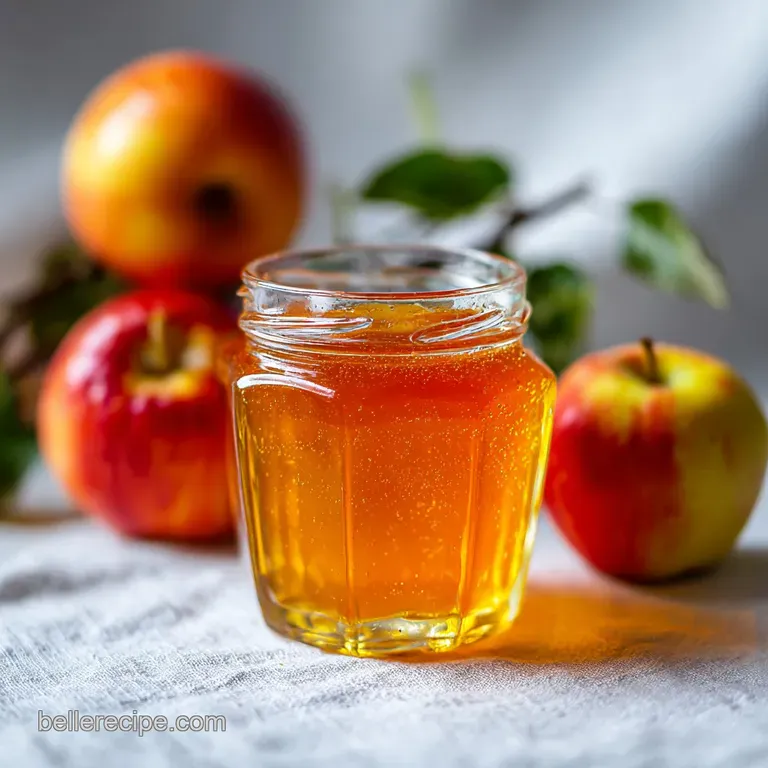
- Time: Active 20 minutes, Passive 45 minutes, Total 1 hours 5 mins
- Flavor/Texture Hook: Glossy, firm set spread with a bright, concentrated orchard tang
- Perfect for: Weekend canning projects or thoughtful holiday gifting
- The Science of Why it Works
- Understanding Success and Expected Yield
- Ingredient Analysis for Better Results
- Selecting the Best Apples and Their Substitutes
- Tools for Achieving Crystal Clarity
- Precise Steps for Making Jelly
- Solving Jelly Consistency Issues
- Flavor Variations and Ingredient Substitutes
- Proper Storage and Waste Reduction
- Serving Ideas and Perfect Pairings
- Recipe FAQs
- 📝 Recipe Card
There is a specific kind of magic that happens in the kitchen when the air turns crisp and the scent of simmering apples begins to drift through the house. I remember the first time I tried an apple jelly recipe; I was so impatient that I squeezed the jelly bag, resulting in a cloudy mess that looked more like murky cider than the sparkling amber gems I saw in my grandmother's pantry.
It tasted fine, but it lacked that "shimmer" that makes jelly so special.
Today, we are going to do it the right way. We are talking about a preserve so clear you could read a newspaper through the jar, with a texture that holds its shape on a spoon but melts like velvet the moment it hits warm toast. It’s about being mindful of the process and letting gravity do the heavy lifting.
We will focus on the balance of natural pectin and sugar to ensure a firm set without the need for boxed additives. Whether you are using a mix of tart Granny Smiths or sweet Galas, the goal is the same: capturing sunshine in a jar. Let’s get our jars ready and dive into the rhythm of the boil.
The Science of Why it Works
The Science of Why it Works: Pectin chains, naturally abundant in apple skins and cores, bond together to create a structural mesh only when sugar draws away the water molecules and acid provides the correct pH environment.
This chemical "web" traps the liquid, transforming a thin juice into a semi solid, shimmering gel.
| Method | Time | Texture | Best For |
|---|---|---|---|
| Fresh Whole Fruit | 1 hours 5 mins | Concentrated, complex | Maximum flavor depth |
| Bottled Juice | 25 minutes | Mild, consistent | Quick batches |
| Green Apples Only | 1 hours 15 mins | Very firm, tart | High pectin reliability |
Choosing the right method depends on your patience and what is currently sitting in your fruit bowl. While the whole fruit method takes longer, the depth of flavor is incomparable because you are extracting pectin directly from the seeds and skins.
Understanding Success and Expected Yield
When we follow this apple jelly recipe, we are looking for a specific concentration of sugar to liquid. Typically, we aim for a 1:1 ratio of strained juice to granulated sugar. This isn't just about sweetness; sugar acts as a preservative and a structural component.
If you skimp on the sugar, your jelly won't set, and it will likely spoil much faster in the fridge.
This specific batch uses 4 lbs of apples and 4 cups of sugar to produce approximately 5 half pint jars. It’s a manageable amount for a standard large pot, ensuring the liquid evaporates efficiently.
If the pot is too small, the jelly might boil over, or worse, take so long to reach the setting point that the sugar begins to caramelize, turning your bright gold jelly into a dark, burnt tasting syrup.
Ingredient Analysis for Better Results
| Component | Science Role | Pro Secret |
|---|---|---|
| Apple Peels/Cores | Pectin Source | Never peel the apples; the skin holds the setting power. |
| Lemon Juice | pH Adjuster | Lowers the pH so pectin chains can finally bond. |
| Granulated Sugar | Hydrophilic Agent | Attracts water to allow the pectin to form a solid structure. |
Selecting the Best Apples and Their Substitutes
To get that classic flavor, I highly recommend using 4 lbs apples (a mix of Granny Smith, Fuji, or Gala). Granny Smiths provide the necessary acid and pectin, while Fuji or Gala add that rounded sweetness we love in a Homemade Apple Sauce Recipe.
- 4 lbs apples (chopped into 1 inch chunks)Why this? Provides the bulk of the flavor and natural pectin for the set.
- 4 cups filtered waterWhy this? Extracts the juice from the fruit without diluting the flavor too much.
- 4 cups granulated sugarWhy this? Essential for preservation and creating the jelly's firm, glossy texture.
- 2 tbsp lemon juiceWhy this? Brightens the flavor and triggers the pectin's gelling ability.
- 1/2 tsp butterWhy this? A tiny amount breaks surface tension to prevent foam from forming.
| Original Ingredient | Substitute | Why It Works |
|---|---|---|
| Granny Smith Apples | Crabapples | Extremely high in pectin and tartness. Note: Result will be very tart. |
| Granulated Sugar | Cane Sugar | Similar molecular structure. Note: May slightly darken the final color. |
| Filtered Water | Unsweetened Apple Cider | Adds intense apple flavor. Note: Will result in a cloudier jelly. |
If you find yourself with an abundance of sweet apples, you can still make this work, but don't skip the lemon juice. The acidity is the "on" switch for the pectin.
Tools for Achieving Crystal Clarity
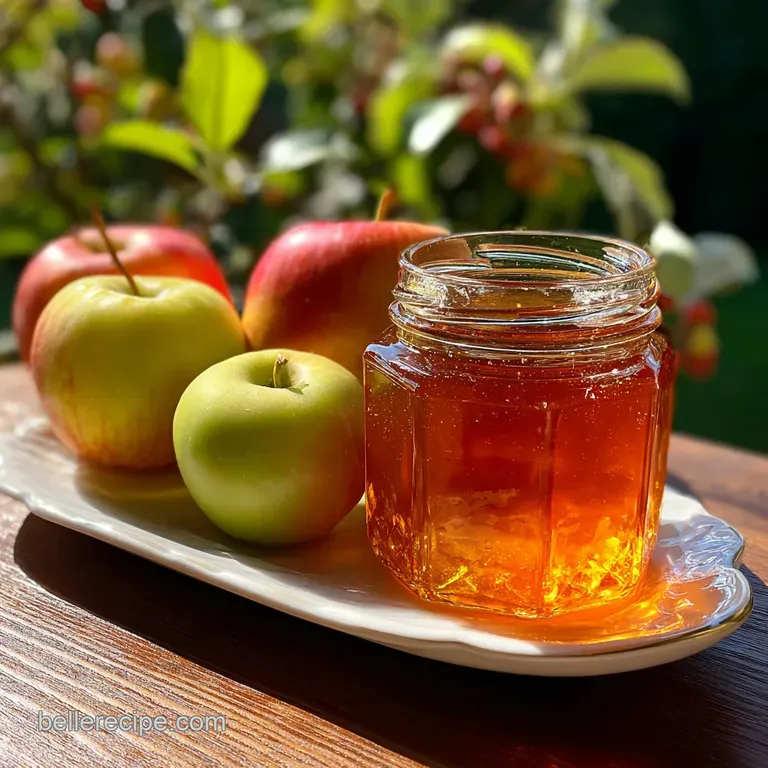
You don't need a lab, but a few specific tools make this apple jelly recipe much easier. A heavy bottomed stainless steel pot is non negotiable. Aluminum can react with the acid in the apples and give your jelly a metallic "off" flavor.
You’ll also want a jelly bag or a very fine mesh sieve lined with several layers of cheesecloth.
Chef's Tip: To check the set without a thermometer, place three small ceramic plates in the freezer before you start. When you think the jelly is done, drop a spoonful on the cold plate. If it "wrinkles" when you push it with your finger, it's ready.
Another unconventional trick is to use a candy thermometer to hit exactly 220°F. This is the thermal landmark where the sugar concentration is high enough to ensure a stable shelf life and a perfect "wobble."
Precise Steps for Making Jelly
- Prepare fruit. Wash and chop 4 lbs apples into 1 inch chunks, including skins and cores. Note: The cores contain the highest concentration of pectin.
- Simmer apples. Combine apples and 4 cups filtered water in a large pot. Cook 25 minutes until apples are soft and mushy.
- Strain juice. Pour the mixture into a jelly bag suspended over a large bowl. Let drip 4 hours or overnight. Note: Do not squeeze the bag if you want clear jelly.
- Measure liquid. Measure the strained juice. You should have about 4 cups. If you have less, adjust the sugar to a 1:1 ratio.
- Combine ingredients. Pour juice into a clean pot. Add 4 cups granulated sugar, 2 tbsp lemon juice, and 1/2 tsp butter.
- Dissolve sugar. Stir over medium heat until sugar granules have completely disappeared.
- Hard boil. Increase heat to high. Boil 15-20 minutes until the mixture reaches 220°F.
- Test the set. Use the frozen plate method or watch for the "sheeting" action off a metal spoon.
- Skim and jar. Remove from heat. Skim any remaining foam. Pour into sterilized jars leaving 1/4 inch headspace.
- Seal and process. Wipe rims and apply lids. Process in a boiling water bath for 10 minutes.
The aroma during step 7 is incredible it shifts from a light, fruity steam to a deep, honey like fragrance that fills the entire house. You'll notice the bubbles change too; they start large and watery but become small, glossy, and "noisy" as the jelly thickens.
Solving Jelly Consistency Issues
Why Your Jelly Stayed Liquid
If your jelly is more like a syrup than a spread, it usually means it didn't reach the proper temperature or the apples lacked enough natural pectin. This is common with overripe fruit.
The Cloudiness Mystery
Cloudy jelly is almost always caused by squeezing the jelly bag. When you squeeze, you force tiny bits of fruit pulp through the mesh. It doesn't ruin the taste, but you lose that professional, translucent look.
| Problem | Root Cause | Solution |
|---|---|---|
| Jelly won't set | Under cooking or low acidity | Re boil with an extra teaspoon of lemon juice. |
| Crystals in jar | Sugar didn't dissolve | Ensure all sugar is melted before reaching a boil. |
| Bubbles trapped | Poured too slowly | Fill jars quickly while the jelly is hot and fluid. |
Common Mistakes Checklist: ✓ Never peel your apples; the skin is where the pectin lives. ✓ Resist the urge to squeeze the jelly bag if you want clarity. ✓ Use a pot that is at least twice the volume of your liquid.
✓ Check your thermometer accuracy in boiling water before starting. ✓ Don't double the recipe; large batches often fail to set properly.
Flavor Variations and Ingredient Substitutes
If you want to move beyond the classic version, this jelly is a fantastic canvas. For a "Green Apple" version, use 100% Granny Smith apples and add a tiny drop of natural green food coloring for a vibrant look. It’s particularly stunning when served alongside a cheese board.
If you are looking for something cozier, try an "Autumn Spice" variation. Add two cinnamon sticks and three whole cloves to the initial apple simmering stage. The spices will infuse the juice, creating a flavor profile that pairs beautifully with a Classic Apple Crisp recipe.
- If you want a savory kick, add a teaspoon of crushed red pepper flakes during the final boil.
- If you want a floral note, swap 1/2 cup of water for food grade rose water.
- If you want a deeper color, use brown sugar for half of the granulated sugar (the set will be slightly softer).
Proper Storage and Waste Reduction
Once processed in a water bath, your jars are shelf stable for up to 12 months in a cool, dark place. Once opened, keep the jar in the fridge and consume it within 3 weeks. If you choose not to process the jars in a water bath, they must go straight into the refrigerator and be treated as "refrigerator jelly," which lasts about 2 months.
Don't throw away that leftover apple pulp in the jelly bag! Even though we've extracted much of the juice, the mash is still full of fiber and flavor. You can press it through a food mill to remove the seeds and skins, then use the smooth pulp to make a quick batch of fruit leather or mix it into oatmeal.
It's the ultimate zero waste kitchen move.
Serving Ideas and Perfect Pairings
Apple jelly is surprisingly versatile. While it's a staple on buttered biscuits, it also makes an incredible glaze for roasted meats. Try brushing a thin layer over a pork tenderloin during the last 10 minutes of roasting; the sugar will caramelize into a beautiful, savory sweet crust.
For a dessert focused pairing, serve a dollop of this jelly alongside a Silky Homemade Caramel recipe over vanilla bean ice cream. The tartness of the jelly cuts right through the richness of the caramel. It’s also the secret ingredient in my Grandma's Golden homemade recipe — I brush a little melted jelly over the crust as soon as it comes out of the oven to give it a professional, high gloss shine.
Whatever you do, make sure you save at least one jar for yourself. There is nothing quite like opening a bit of autumn sunshine in the middle of a cold January morning. Enjoy the process, watch the bubbles, and embrace the slow drip of the jelly bag. It’s worth every minute.
Recipe FAQs
What kind of apples are best for apple jelly?
A mix of tart and sweet. For classic flavor and good pectin content, a blend of Granny Smith (for tartness and pectin) with sweeter apples like Fuji or Gala is ideal. If you only have sweet apples, be sure to add extra lemon juice for pectin activation.
What's the difference between apple jam and apple jelly?
Jelly is made from strained apple juice, while jam uses the whole fruit or crushed fruit. This means apple jelly is smooth, clear, and translucent, whereas apple jam typically contains fruit pulp and pieces, giving it a thicker, sometimes chunkier texture.
How to prepare apples to make apple jelly?
Wash and chop the apples. You'll want to chop about 4 lbs of apples into 1 inch chunks, including the skins and cores. The skins and cores are rich in natural pectin, which is essential for the jelly to set.
What is apple jelly used for?
Versatile spread and glaze. Apple jelly is excellent on toast, biscuits, or as a filling for pastries. It also makes a fantastic glaze for roasted meats like pork, adding a sweet and tangy finish. You can even use it as a shiny topping for baked goods, similar to how we use it to achieve a perfect shine on our Grandma's Golden homemade recipe.
Can I make apple jelly with apples that aren't very tart?
Yes, but add extra acid. If your apples are predominantly sweet, you might find the jelly doesn't set properly because of lower pectin or insufficient acidity. Adding extra lemon juice can help activate the pectin and ensure a good set.
What if my apple jelly doesn't set?
Re-boil with more lemon juice. If your jelly remains liquid, it likely didn't reach the correct temperature or lacked sufficient pectin/acidity. You can often fix this by re-boiling the liquid with an additional teaspoon or two of lemon juice until it reaches the setting point. If you enjoyed mastering temperature control here, you can apply that precision to our Spiced Rum Bread Pudding Recipe: A Boozy Twist on a Classic for perfectly cooked results.
How long does homemade apple jelly last?
Up to a year if properly processed. Properly processed and sealed jars can last up to 12 months in a cool, dark place. Once opened, refrigerate and consume within 3 weeks. If not water bath processed, refrigerate immediately and use within about 2 months.
Apple Jelly Recipe
Ingredients:
Instructions:
Nutrition Facts:
| Calories | 45 calories |
|---|---|
| Protein | 0 g |
| Fat | 0 g |
| Carbs | 11.4 g |
| Fiber | 0 g |
| Sugar | 11.2 g |
| Sodium | 1 mg |
