Beef Cheek Recipe with Red Wine: Slow Braised Garlic
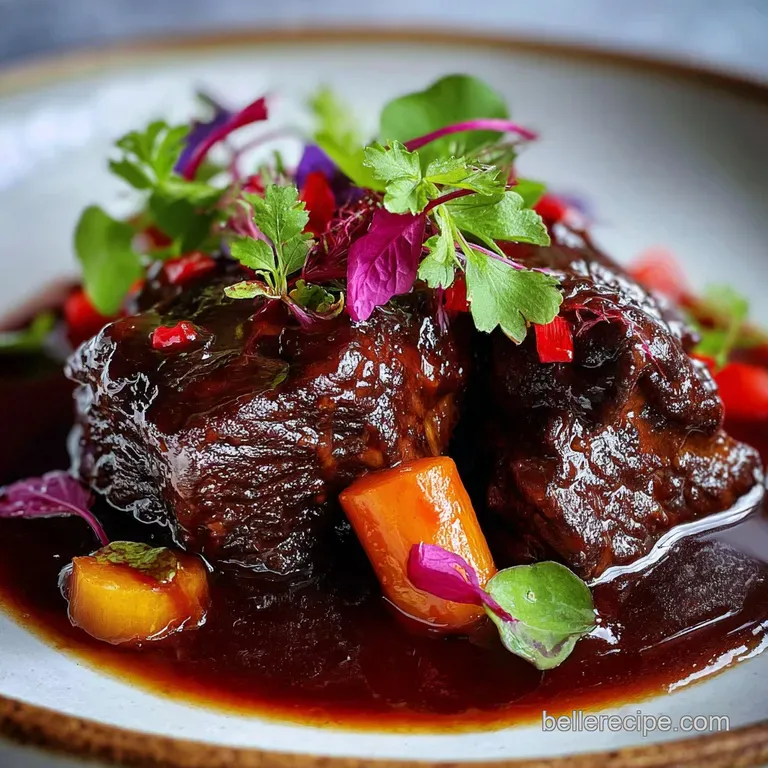
- Time: Active 20 minutes, Passive 4 hours, Total 4 hours 20 minutes
- Flavor/Texture Hook: Deeply savory, melt in-your mouth beef in a glossy wine reduction
- Perfect for: Cold weekend evenings and dinner parties that require impressive results with low effort
- Comforting Beef Cheek Recipe with Red Wine
- The Science of Why it Works
- Selection of Earthy Aromatics
- Essential Heavy Bottomed Cooking Vessels
- Steps for Achieving Braising Perfection
- Troubleshooting for a Velvety Finish
- Creative Flavor Transformations to Explore
- Storage and Using Scraps Mindfully
- Perfect Partners for This Dish
- Recipe FAQs
- 📝 Recipe Card
Comforting Beef Cheek Recipe with Red Wine
There is a specific kind of magic that happens in a kitchen when you commit to a slow braise. It starts with the aggressive sizzle of cold meat hitting a hot, oiled pan and ends hours later with a silence that can only be described as reverence.
This article shares a fantastic Beef Cheek Recipe with Red Wine and Garlic that's sure to impress. I remember the first time I attempted this; I was skeptical that such a tough, overlooked cut of meat could ever become something elegant.
But then, the aroma hit. It was that intoxicating blend of simmering Cabernet, sweet onions, and the earthy hum of garlic. By the time I pulled the pot out of the oven, the beef didn't just fall apart; it practically dissolved under the weight of a spoon.
It was a transformative moment for my cooking, teaching me that patience is often the most important ingredient in any recipe.
We often rush through our meals, but this dish demands that we slow down. You aren't just making dinner; you are creating a memory that lingers long after the plates are cleared. Trust me, once you see how the collagen transforms into a silky sauce, you'll never look at a standard pot roast the same way again.
Let's look at the science of why this works so well.
The Science of Why it Works
The Collagen to Gelatin Transformation: Beef cheeks are packed with connective tissue that stays tough during quick cooking but melts into rich gelatin at low temperatures over several hours. This process creates a velvety mouthfeel and naturally thickens the braising liquid into a glossy sauce.
The Maillard Reaction Foundation: Searing the meat at a high temperature creates a complex layer of amino acids and sugars on the surface. These browned bits, known as the fond, dissolve into the wine and broth to provide the deep, savory baseline for the entire dish.
| Thickness | Internal Temp | Rest Time | Visual Cue |
|---|---|---|---|
| 2-3 inch cuts | 205°F | 15 minutes | Meat yields to a dull spoon |
| 1-2 inch cuts | 203°F | 10 minutes | Fibers separate with no resistance |
| Large Whole | 208°F | 20 minutes | Bone (if present) pulls out clean |
Choosing the right cut is half the battle, but understanding how to handle it makes the difference between a good meal and a masterpiece. Unlike the quick sear needed for a Perfectly Roasted Beef Tenderloin recipe, we are playing the long game here. We want to maximize the breakdown of those tough fibers without drying out the protein.
Component Analysis
| Ingredient | Science Role | Pro Secret |
|---|---|---|
| Beef Cheeks | High Collagen Content | Trim the silver skin but leave the internal fat for moisture. |
| Dry Red Wine | Acidic Tenderizer | Use a wine you'd actually drink; the flavors concentrate as it reduces. |
| Tomato Paste | Umami & Body | Sauté it until it turns brick red to remove the raw metallic tang. |
| Beef Bone Broth | Gelatin Source | Use bone broth over standard stock for a stickier, richer sauce finish. |
Each element in this beef cheek recipe red wine garlic combination serves a purpose. The acidity of the wine cuts through the richness of the fat, while the aromatics provide a garden fresh lift to the heavy protein.
Selection of Earthy Aromatics
To begin your Cheek Recipe with Red Wine and Garlic, gather your ingredients with a focus on freshness. The herbs should be fragrant, and the vegetables should be firm.
- 2 lbs beef cheeks: Look for pieces with good marbling.
- 2 tbsp high smoke point oil: Avocado or grapeseed oil works best for the sear.
- 1 large yellow onion: Finely diced to melt into the sauce.
- 2 medium carrots: Adds a necessary subtle sweetness.
- 2 stalks celery: Provides the savory "green" base note.
- 8 cloves garlic: Smashed to release oils without burning too quickly.
- 2 tbsp tomato paste: Concentrated tomato flavor.
- 750 ml dry red wine: A full bottle of Cabernet or Malbec.
- 2 cups beef bone broth: For a deeply savory liquid.
- 3 sprigs fresh thyme: Earthy and floral.
- 2 sprigs fresh rosemary: Piney and pungent.
- 2 dried bay leaves: Adds a subtle herbal depth.
- Salt and cracked black pepper: Essential for every layer.
| Original Ingredient | Substitute | Why It Works |
|---|---|---|
| Beef Cheeks | Beef Chuck Roast | Similar fat and collagen. Note: Less silky texture than cheeks. |
| Red Wine | Pomegranate Juice | High acidity and tannins. Note: Adds a fruity tartness. |
| Fresh Thyme | Dried Thyme (1 tsp) | Concentrated oils. Note: Lacks the bright floral top notes. |
Essential Heavy Bottomed Cooking Vessels
For this recipe with red wine and garlic, the equipment is just as vital as the ingredients. You need a vessel that can hold heat steadily over several hours without scorching the bottom of your precious sauce.
A heavy bottomed Dutch oven, like one from Lodge or Le Creuset, is the gold standard here. The thick walls distribute heat evenly, and the heavy lid prevents moisture from escaping. If you don't have one, a deep oven safe sauté pan with a very tight fitting lid can work in a pinch.
You will also want a pair of sturdy tongs for flipping the meat and a wooden spoon to scrape up every bit of that flavorful fond after deglazing.
Chef's Tip: Freeze your butter for 10 minutes before the final sauce stage. Whisking in a knob of ice cold butter at the very end creates a "monte au beurre" effect, resulting in a sauce that is exceptionally glossy and thick.
Steps for Achieving Braising Perfection
1. The Meat Preparation
Pat your 2 lbs beef cheeks completely dry with paper towels. Season aggressively with salt and cracked black pepper on all sides. Note: Moisture is the enemy of a good sear; dry meat browns, wet meat steams.
2. Executing an Aggressive Sear
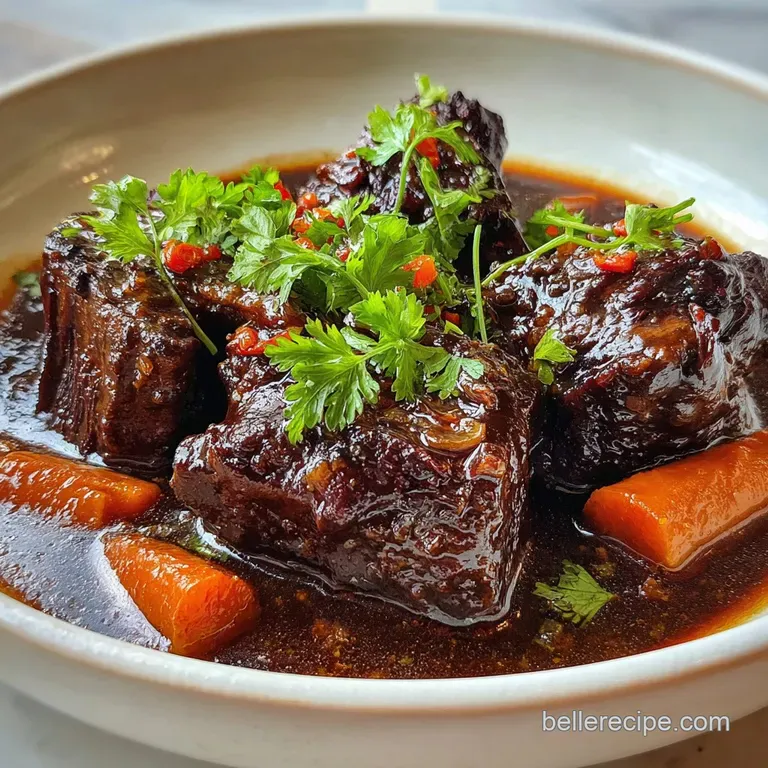
Heat the 2 tbsp oil in your Dutch oven over medium high heat until it shimmers. Add the beef in batches, searing until a dark, mahogany crust forms on every surface, about 4 minutes per side. Remove the meat and set aside.
3. Building the Aromatic Foundation
Lower the heat to medium. Toss in the diced onion, carrots, and celery. Cook for 8 minutes until the onions are translucent and gold.
4. The Garlic and Tomato Bloom
Add the 8 cloves of smashed garlic and 2 tbsp tomato paste. Stir constantly for 2 minutes until the paste smells sweet and looks like rust.
5. Deglazing the Fond
Pour in the 750 ml of dry red wine. Use your wooden spoon to scrape the bottom of the pot vigorously. Note: This lifts the caramelized proteins into the liquid, providing incredible depth.
6. Combining the Liquids
Return the beef to the pot along with any accumulated juices. Add the 2 cups beef bone broth, thyme, rosemary, and bay leaves. The liquid should almost cover the meat.
7. The Gentle Long Braise
Cover with a tight lid and place in a preheated 300°F oven. Braise for 4 hours until the meat is tender enough to cut with a feather.
8. Perfecting the Final Sauce
Remove the meat and herbs. Skim the fat from the surface of the liquid. Boil the remaining sauce on the stove for 10 minutes until it coats the back of a spoon with a silky shimmer.
| Method | Time | Texture | Best For |
|---|---|---|---|
| Dutch Oven | 4 hours | Most concentrated flavor | Traditional Sunday dinners |
| Slow Cooker | 8 hours | Very soft, less sauce reduction | Busy weekdays/hands off |
| Pressure Cooker | 1 hour | Tender but less depth | Last minute cravings |
While the oven method is my favorite for developing a deep braised beef cheek red wine garlic profile, the slow cooker beef cheek red wine garlic method is a lifesaver when you're out of the house.
Just remember that the sauce won't reduce as much in a slow cooker, so you'll definitely need to finish it on the stovetop.
Troubleshooting for a Velvety Finish
Meat Remaining Too Bouncy
If your beef feels rubbery or "bouncy" when you poke it, it simply hasn't cooked long enough. This isn't a steak; it requires the collagen to physically melt. Put it back in the oven for another 30 to 45 minutes.
Sauce Tasting Too Acidic
Sometimes the red wine and garlic can leave a sharp, acidic bite, especially if the wine was particularly young. A tiny pinch of sugar or a teaspoon of balsamic vinegar can balance this out beautifully.
| Problem | Root Cause | Solution |
|---|---|---|
| Thin Sauce | Not enough reduction | Remove lid and boil rapidly for 10 minutes. |
| Dry Meat | Oven temperature too high | Keep heat at 300°F or lower; check liquid levels. |
| Greasy Texture | Too much rendered fat | Use a fat separator or skim the top with a wide spoon. |
Common Mistakes Checklist ✓ Never skip the sear; it is where 50% of your flavor lives. ✓ Don't use "cooking wine"; if it's too bitter to drink, it's too bitter for your sauce. ✓ Avoid crowding the pan during searing or the meat will boil in its own juices.
✓ Resist the urge to peek; opening the lid lets out the precious steam needed for tenderizing. ✓ Always let the meat rest in the sauce for a few minutes before serving to reabsorb moisture.
Creative Flavor Transformations to Explore
If you want to move away from the traditional, try adding a tablespoon of unsweetened cocoa powder to the braising liquid. Much like the trick used in some versions of Grandmas Ghoulosh Recipe, the chocolate adds a dark, mysterious bass note that makes people wonder what your secret ingredient is.
For an easy beef cheek recipe red wine variant, you can swap the rosemary for star anise and cinnamon sticks. This moves the dish toward an Asian inspired flavor profile that is incredible when served over rice noodles.
Another favorite of mine is adding a handful of dried porcini mushrooms to the braise; they act like an umami bomb, intensifying the "beefiness" of the whole dish.
The Bold Umami Bomb
Adding a splash of soy sauce or Worcestershire sauce during the deglazing phase can heighten the savory notes without making the dish taste "salty." It rounds out the red wine and garlic beautifully.
The Bright Citrus Lift
Just before serving, grate the zest of one lemon over the top. The oils in the zest cut through the heavy fats and wake up your palate, making each bite feel fresh rather than heavy.
Storage and Using Scraps Mindfully
Beef cheeks are actually better the next day. As the meat cools in the sauce, it acts like a sponge, pulling all that Red Wine and Garlic flavor into the center of the fibers.
- Fridge: Store in an airtight container for up to 4 days.
- Freezer: This recipe freezes beautifully. Place meat and sauce in a freezer bag for up to 3 months. Thaw overnight in the fridge before reheating.
- Zero Waste: Don't throw away the braising liquid! If you have leftover sauce, it makes the most incredible base for a ragu. Toss it with some pappardelle pasta and a bit of parmesan for a "free" second meal. Even the leftover carrot and onion bits can be blended into the sauce for extra body.
Perfect Partners for This Dish
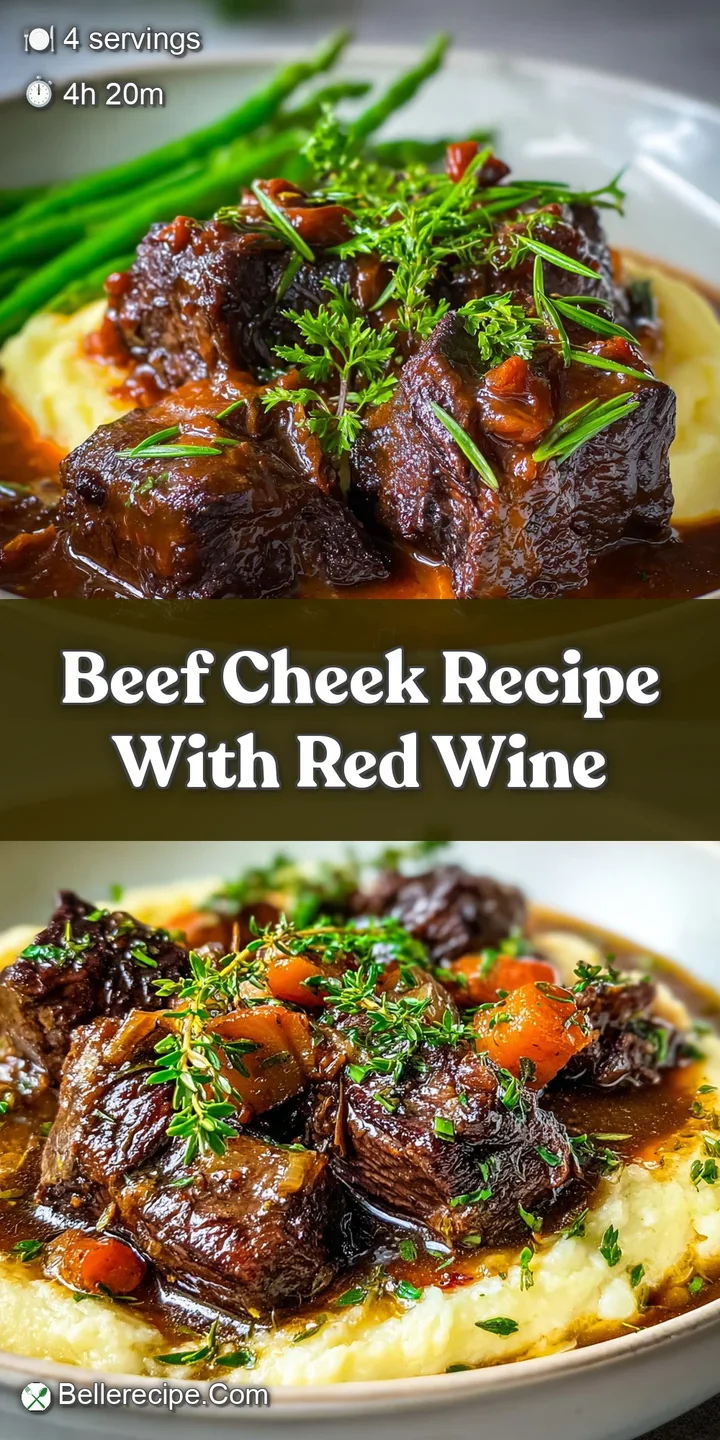
A dish this rich needs a partner that can handle the weight. A buttery potato mash is the classic choice, acting as a soft pillow for the beef. However, if you want something lighter, a crisp arugula salad with a sharp lemon vinaigrette provides a necessary contrast.
For a formal dinner, I love starting the meal with something delicate and cool, like a Classic Carpaccio recipe. It sets the stage for the beef theme while keeping the appetite sharp. When it comes to the beef cheeks red wine sauce recipe, the goal is balance. You want textures that are soft but not mushy, and flavors that are bold but not overwhelming.
Chef's Tip: Grate two cloves of fresh garlic into the sauce in the final 30 seconds of cooking. This "raw" garlic hit provides a spicy, pungent top note that complements the mellow, sweet roasted garlic already in the braise.
The Searing Myth
Many people believe that searing meat "seals in the juices." This is actually a myth. Searing is entirely about the Maillard reaction creating new flavor molecules and textures. Moisture loss actually happens more rapidly during over high heat searing, but the trade off in flavor is 100% worth it.
The real moisture retention comes from the low and slow braising process later on.
Whatever path you take with this oven baked beef cheek red wine garlic experience, remember that the best results come from being mindful of the process. Watch the colors change, smell the transition from wine to sauce, and enjoy the quiet patience of a slow cooked meal.
It's more than just a recipe; it's a way to show love through the medium of fire and time.
Recipe FAQs
What is the best way to prepare beef cheeks for braising?
Pat them completely dry and season generously. Moisture prevents a good sear, which is crucial for developing flavor through the Maillard reaction, a key technique also vital in our Classic New York Style chopped cheese recipe: Juicy & Easy Sandwich.
How long should beef cheeks be braised?
Braise for approximately 4 hours at 300°F. They are ready when the meat is fork tender and can be easily separated with a spoon, similar to how you'd check for doneness in a How to Make Slow Cook Eye of Round Roast Delightfully Tender.
Can I use a different cut of beef if I can't find cheeks?
Yes, beef chuck roast is a good substitute. It also has good marbling and connective tissue, though it might not achieve the same exceptionally silky texture as beef cheeks.
Why is searing the meat so important?
Searing creates the foundation of flavor through the Maillard reaction. It caramelizes the exterior, developing complex tastes and textures, which is essential for a deeply savory dish, much like the searing process in My Favorite Steak au Poivre Recipe: A Simple French Classic.
How can I thicken the braising sauce if it's too thin?
Boil the sauce rapidly without the lid until it coats the back of a spoon. You can also whisk in a small amount of cornstarch slurry or a knob of cold butter at the end for extra glossiness and body.
Is it true that searing seals in the juices?
No, this is a common misconception. Searing is primarily about flavor development through the Maillard reaction, not about trapping moisture. Actual moisture retention comes from the slow braising process itself.
What are good side dishes to serve with braised beef cheeks?
Creamy mashed potatoes or a crisp arugula salad are excellent pairings. For a more elevated starter, consider a delicate Béarnaise Sauce Recipe: Foolproof French Elegance! to complement the rich flavors.
Beef Cheek Red Wine
Ingredients:
Instructions:
Nutrition Facts:
| Calories | 562 kcal |
|---|---|
| Protein | 48g |
| Fat | 24g |
| Carbs | 14g |
| Fiber | 3g |
| Sugar | 6g |
| Sodium | 680mg |
