Gin Martini the Zenith of Elegance a Bonedry Blueprint

- Declaring the Perfect Ratio: Why Precision Matters for Your Gin Martini
- The Arsenal of Purity: Essential Components and Equipment
- Mastering the Method: Crafting the Arctic Chill Gin Martini
- Elevating Your Serve: Pro Tips and Garnishing Philosophy
- Frequently Asked Questions about the Classic Gin Martini
- Recipe FAQs
- 📝 Recipe Card
Declaring the Perfect Ratio: Why Precision Matters for Your Gin Martini
Right, let’s be brutally honest. Making a great Gin Martini is about precision. It is not about guessing. If you’re just pouring until it "looks right," you are making a mistake I made for years. This isn't a fruity tropical number where you can hide behind sugar. This is gin, and gin requires respect.
We are building the Zenith of Elegance here.
I am not talking about those soft, overly diluted Martinis that taste like cold water and disappointment. We are going for bracing, arctic cold, and absolutely crystalline clarity. The difference between a good one and a legendary one is a few milliliters of vermouth.
For this classic approach, we are sticking firmly to the 4:1 or 5:1 ratio. Five parts gin, one part vermouth. Yes, that is a strong drink. That is the point.
Defining "Bone Dry": The Vermouth Whisper
When you ask for a dry Martini, or specifically a bone dry Martini, you are asking for minimal vermouth. In my opinion, the vermouth’s job is simply to introduce a slight complexity and smooth out the high proof spirit. It shouldn't taste like herbal wine.
It should taste like cold, beautiful gin, slightly softened.
Think of it this way: Vermouth is the shadow of flavor. It’s what you notice when it’s gone, but you barely register it when it’s perfectly balanced. If you hear stories about people just waving the bottle over the glass, that’s where the Bone Dry Gin Martini Recipe comes from.
We need enough to count, but not enough to dominate.
The Unseen Ingredient: The Power of Extreme Temperature
People worry endlessly about stirring technique. I worry about the cold. If your Gin Martini isn't painfully cold, you’ve failed. Sorry, but it’s true.
The secret to that velvety, rich mouthfeel that thickness, almost is extreme temperature. Warm alcohol burns the palate. Near freezing alcohol coats it. This means your gin needs to live in the freezer. Your serving glass needs to be frosty.
This is the one ingredient you can’t buy, only achieve through discipline. Warm ingredients increase the time you need to stir, which inevitably leads to over dilution. We want cold, not watery.
Shaken or Stirred? Dispelling the Movie Myth
I love James Bond. I love espionage. But when it comes to mixology, I disregard him completely. The moment you shake a spirit only cocktail like this, you introduce tiny ice fractures and air bubbles. This results in a cloudy drink (it’s called bruising the gin) and a rougher texture.
We stir. Stirring allows the liquid to slowly dilute and drop its temperature uniformly. It keeps the texture smooth, silky, and crystalline clear. If you want a perfectly pure Gin Martini Blueprint, you must stir. It’s non-negotiable.
The Arsenal of Purity: Essential Components and Equipment
This is where the home cook mentality comes in. We don’t need 12 esoteric bottles, but we need high-quality for the two we use. Remember, there's nowhere to hide flaws here.
Curating Your Gin Selection: Navigating Juniper Profiles
Since the vast majority of your cocktail is gin, choose wisely. For a classic, bone dry execution, you need a traditional London Dry. You need that bold juniper profile to stand up to the chill and the vermouth. If you pick a modern, floral gin, it risks disappearing entirely.
My current rule for selecting my gin is this: If it’s complex enough to drink neat at room temperature, it will be exceptional at minus five degrees. Don't be shy about investing here. It makes all the difference in your Gin Martini Ingredients list.
Understanding the Vermouth Spectrum
If I could scream one thing at every aspiring Martini drinker, it would be this:
Vermouth is wine! Treat it like wine! Store it in the refrigerator immediately after opening, and for heaven’s sake, use it within four weeks.
I used to be guilty of this. Buying a huge bottle, using 15 ml, and letting it sit on the counter for six months. It goes rancid. It oxidizes. If your vermouth tastes flat or vaguely metallic, you need a new bottle. A top-tier, fresh dry vermouth (like Dolin or Noilly Prat) should be slightly floral and herbal.
A stale one will ruin that expensive gin.
Tools of the Trade: Beyond the Cocktail Shaker
You can’t stir properly in a tiny glass. You need thermal mass.
- Mixing Glass: A heavy bottomed, sturdy glass container. It needs to be thick so it can hold the cold efficiently.
- Bar Spoon: Long, twisted shaft. This allows your hand to stay outside the ice line, enabling a smooth, consistent stir without splashing or violently chipping the ice.
- Jigger: Seriously, use the measurements provided. You must be precise.
Related Recipes Worth Trying
- Classic El Diablo Cocktail Tequila Cassis and Spicy Ginger Zing — Learn the history and technique for a perfect El Diablo Cocktail This sophisticated tequila drink blends rich cassis with spicy ginger beer Foolproof and...
- The Best Easy Cucumber Gin Cocktail Recipe for Summer — Level up your GT with this incredibly refreshing Cucumber Gin Cocktail Its the best way to create a simple crisp garden party drinkrecipe inside
- My Bangin Homemade Breakfast Sausage Recipe Better Than Bangers — Ditch storebought My easy breakfast sausage recipe delivers juicy flavorful bangers Perfect homemade sausage seasoning blend ready in under an hour Get the...
Mastering the Method: Crafting the Arctic Chill Gin Martini
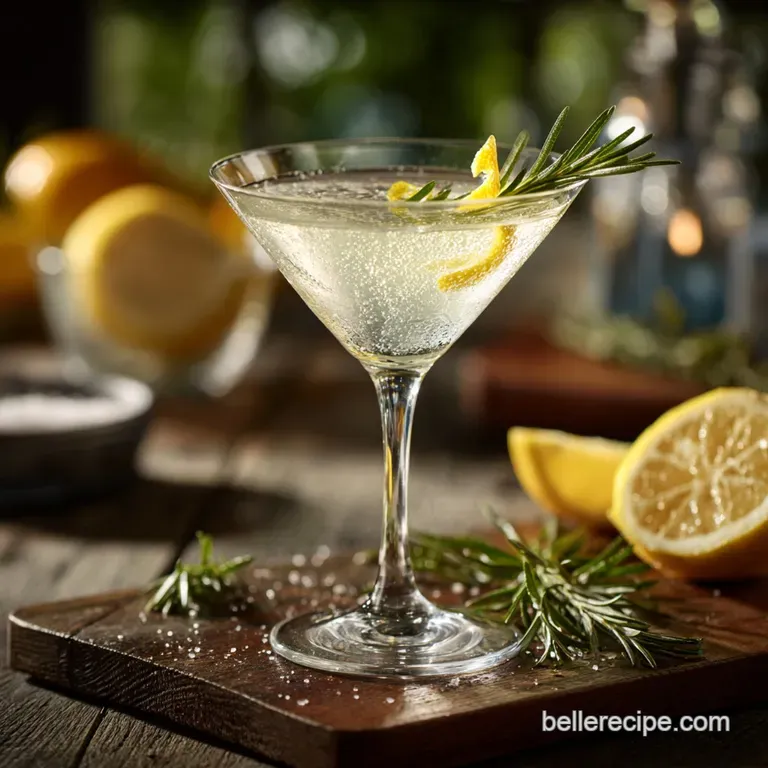
This is the technique that separates the legends from the hopefuls.
The Chilling Protocol: Preparing Your Glassware
I often keep my gin in the freezer. That’s step one. Step two: Put that beautiful coupe or martini glass deep into the freezer for at least 15 minutes. Cold ingredients, meet cold vessel. This maximizes the drinkable lifespan of your cocktail.
Before mixing, I throw some spare ice into my mixing glass just to drop its temperature. Then, I dump the resulting meltwater. This little trick ensures none of your measured alcohol is wasted on pre-chilling the container.
The Dilution Dance: Achieving the Optimal Texture
Accuracy is key for the Gin Martini Ratio. Measure your vermouth (15 ml) and pour it in. Measure your gin (75 ml) and pour it in.
Now, the ice. Use large, dense cubes that you made from fresh water. Fill the mixing glass completely. The idea is to chill the liquid down to near freezing rapidly without excessive meltwater.
Hold the base of the glass (it should be shocking to the touch) and stir gently, using the back of the spoon to glide the liquid around the ice. Count to 30. Test. Count to 45. The outside of the glass should be heavily frosted. Stop.
The Crucial Pour: Filtering and Serving
Immediately put your Hawthorne strainer over the mixing glass. Lift the chilled serving glass out of the freezer. Pour in one swift, clean motion.
That’s it. You have achieved ideal dilution and temperature. There should be a slight surface slick a telltale sign of well chilled gin.
Elevating Your Serve: Pro Tips and Garnishing Philosophy
The garnish isn’t just decoration; it’s an aromatic finishing note.
If you opt for the twist (the choice of the aromatic purist), you must express the oils. Hold the peel, shiny side facing the drink, and pinch it firmly over the surface. You'll see a tiny, ethereal mist. Rub the rim with the outside of the peel, which releases a final layer of fragrance, and then drop it in.
You must release those citrus oils.
-
Pro Tip List for Gin Martini Perfection:
- Always Store Vermouth Cold: If you take one thing from this post, let it be this.
- Skip the Cheap Ice: It melts too fast and ruins the texture we worked so hard for.
- Keep Your Ratios Consistent: Write them down until they become muscle memory.
- Chill the Gin: If your 75 ml of gin isn't ice cold before it hits the mixing glass, you'll dilute it far too much trying to bring the temperature down.
Frequently Asked Questions about the Classic Gin Martini
The Perfect Garnish Debate: Lemon Twist vs. Olive Brine
The lemon twist provides a bright, crisp, slightly acidic aromatic note it keeps the drink clean and sharp. Olives, particularly if you add a splash of the brine (creating a Dirty Gin Martini Recipe), introduce salinity and an oily, savory element.
I find the twist better complements the bold juniper of a true London Dry, but sometimes you just need that salty kick. It’s mood dependent.
Variation: Transforming the Bone Dry into a Wet Martini
If our 5:1 ratio sounds too severe, you can explore the Wet Martini. This historically popular version often uses a much higher proportion of vermouth, sometimes up to a 2:1 ratio (two parts gin, one part vermouth). This creates a softer, more herbaceous, and less aggressively alcoholic drink.
Try scaling up the vermouth just slightly to 20 ml (instead of 15 ml) to find your personal sweet spot.
Pairing Perfection: Snacks That Complement the Crispness
The sharp, almost bitter cold of a good Martini is best paired with salty, slightly fatty snacks. Think high-quality, oil-cured olives, salted Marcona almonds, or perhaps thinly sliced prosciutto. The fat content balances the biting cold and high ABV.
Is Ice Quality Really That Important?
Yes, absolutely. Ice is crucial to the ultimate quality of the Gin Martini Recipe ML. If your ice is cloudy, it means it has air pockets and dissolved solids (impurities), making it melt faster. Fast melting ice equals watery dilution. Use large, dense cubes, preferably made from filtered water.
Decoding Classic Martini Terminology (e.g., Gibson, Vesper)
This cocktail comes with its own language.
| Term | Meaning |
|---|---|
| Gibson | A Martini garnished with a pickled cocktail onion. |
| Vesper | A mixture of Gin, Vodka, and Lillet Blanc (made famous by James Bond). |
| Perfect | Use equal parts dry and sweet vermouth. |
| Naked | A Martini made with extremely minimal or zero vermouth. |
Nutritional Snapshot: Calories and ABV Estimate
Be aware that a Gin Martini Calories count is high because this is almost pure alcohol. Since our recipe uses 75 ml (2.5 oz) of 80-proof spirit, you are looking at roughly 190 to 210 calories per serving.
The ABV estimate for this bone dry mix will be substantial, usually hovering around 35-40% depending on your chosen gin. Treat this drink with respect; it’s a powerful classic.

Recipe FAQs
This recipe insists on stirring is shaking a Gin Martini really such a massive faux pas?
Absolutely, stirring is the secret sauce here! Shaking a clear spirit cocktail like this bruises the gin, introduces tiny air bubbles, and creates a cloudy texture, whereas stirring achieves the necessary arctic chill and dilution (about 15-20%) while maintaining a wonderfully smooth, silky mouthfeel.
My bottle of dry vermouth has been lurking in the cupboard for ages. Does it matter how fresh it is?
It matters immensely! Dry vermouth is an aromatized wine, not a spirit, and oxidizes quickly once opened, making it taste stale or flat; treat it like a fine white wine, store it tightly sealed in the fridge, and aim to use it within three to four weeks.
What is the difference between a 'Wet' and a 'Bone Dry' Gin Martini?
The distinction lies solely in the ratio of vermouth: a Bone Dry version, like this one, uses minimal vermouth (4:1 or 5:1 Gin to Vermouth), focusing purely on the gin, while a 'Wet' Martini uses substantially more, sometimes even a 50/50 ratio, which results in a softer, more herbal drink.
I prefer vodka over gin; can I just swap it out, and what’s the difference?
You can certainly swap Gin for high-quality Vodka, but technically, you will then be making a Vodka Martini; this dramatically changes the flavour profile as you lose the defining juniper and complex botanical notes that give the traditional Gin Martini its signature sharp crispness.
Blimey, this sounds potent! Are there any ways to make a slightly lighter version?
It is definitely strong, as it is mainly high proof spirits! To reduce the overall ABV slightly, switch to the classic "Fifty Fifty" ratio (equal parts gin and vermouth), or use a larger, denser ice cube in your mixing glass to slightly increase dilution without sacrificing the chill.
Bonedry Gin Martini Blueprint
Ingredients:
Instructions:
Nutrition Facts:
| Calories | 14 kcal |
|---|---|
| Protein | 0.2 g |
| Fat | 0.0 g |
| Carbs | 0.7 g |
| Fiber | 0.2 g |
| Sodium | 0 mg |
