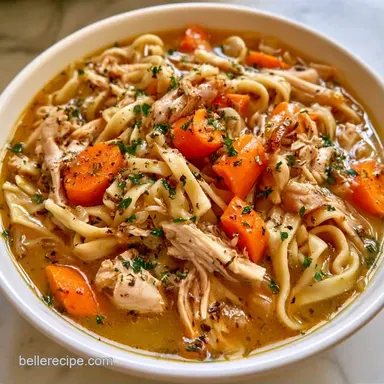
Grandmas Chicken Noodle Soup with Chicken Thighs
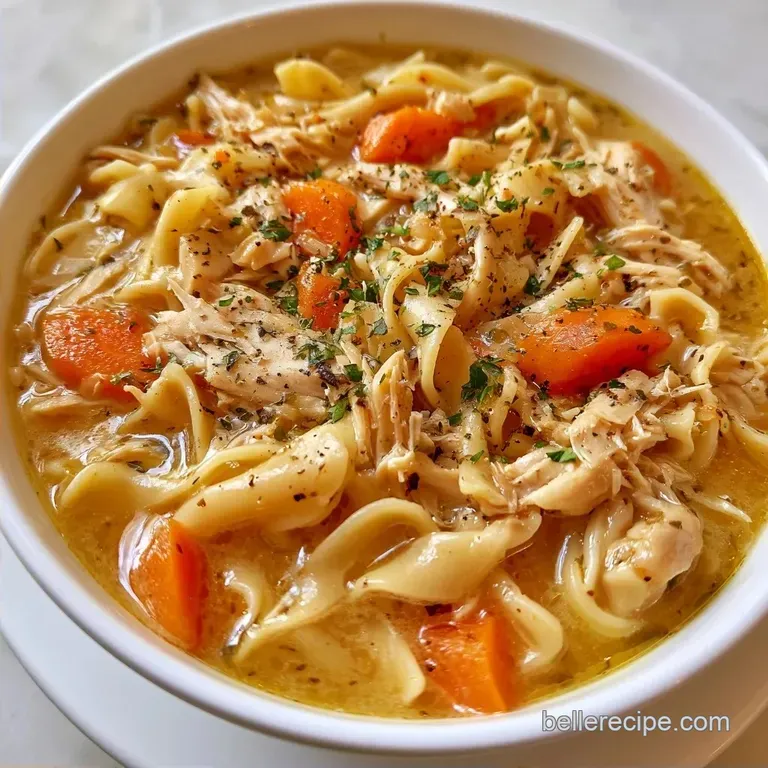
- Time: 15 min active + 120 min simmering
- Flavor/Texture Hook: Rich, mahogany sear flavor with tender, chunky vegetables
- Perfect for: Cold rainy days or when someone in the house feels under the weather
Grandmas Chicken Noodle Soup
The smell of butter sizzling in a heavy Dutch oven is a memory I can almost taste. For a long time, I tried to make this dish using chicken breasts because they felt "healthier," but the result was always a watery, pale broth that tasted like nothing.
It lacked that soulful, heavy bottomed richness that makes you feel better just by looking at the steam.
The real shift happened when I stopped treating the chicken as just a protein and started treating it as the base of the entire meal. By using bone in thighs and letting them brown deeply, the broth changes from a thin liquid to something that coats the back of a spoon.
This version of Grandmas Chicken Noodle Soup focuses on building layers of flavor. We aren't just boiling ingredients; we're browning, sweating, and simmering. You can expect a hearty, chunky soup that doesn't turn into a mushy mess by the time it hits the table.
What Makes This Version Work
- Bone In Thighs: A two-hour simmer allows the bones to release collagen, giving the broth a silky texture and a more substantial body.
- The Fond: Searing the skin creates flavorful brown bits on the bottom of the pot that meld into the soup, providing a deep, savory foundation.
- Timing the Noodles: Stirring in the egg noodles at the very end prevents them from soaking up too much liquid and becoming bloated.
Here is how this traditional method compares to the rapid versions often found online.
| Approach | Prep/Cook Time | Broth Depth | Best For |
|---|---|---|---|
| Fast Version | 30 minutes | Light/Salty | Quick lunch |
| Classic Way | 135 minutes | Deep/Rich | Sunday dinner |
Basic Recipe Specs
This dish serves 8 people, making it a great option for a family gathering. The prep is quick, but the magic happens during those 120 minutes on the stove. It's a mindful process that fills the whole house with a comforting aroma.
The focus here is on simple, high-quality ingredients. We aren't using processed bouillon cubes here, just real bone broth and fresh aromatics. It's a sharing experience, meant to be served in big bowls with plenty of fresh parsley on top.
Shopping List Breakdown
To ensure the best results, use the freshest produce available. Your carrots should be firm and the celery should have a crisp snap.
| Component | Purpose | Substitute Notes |
|---|---|---|
| Bone-in Thighs | Core flavor & gelatin | Breasts: less flavorful, leaner |
| Bone Broth | Richer consistency | Stock: thinner, less viscous |
| Egg Noodles | Substantial feel | Pasta: try shells or ditalini |
| Lemon Juice | Zesty lift | Apple Cider Vinegar: more pungent |
The Full List:
- 2 lbs bone in, skin on chicken thighsNote: fat and collagen create a richer broth
- 2 tbsp unsalted butterNote: gives a nutty, creamy depth
- 1 tbsp extra virgin olive oilNote: stops the butter from browning too quickly
- 1 tsp kosher salt
- 1/2 tsp cracked black pepper
- 1 large yellow onion, diced
- 3 large carrots, sliced into thick roundsNote: ensures they stay intact during simmering
- 3 stalks celery, sliced
- 4 cloves garlic, minced
- 1 bay leaf
- 1 tsp dried thyme
- 8 cups chicken bone brothNote: superior protein and viscosity compared to stock
- 2 cups water
- 8 oz wide egg noodles
- 1 tbsp fresh lemon juiceNote: balances the heavy flavors
- 1/4 cup fresh parsley, chopped
Gear For The Job
A professional kitchen isn't necessary, but a pot with a heavy bottom is essential. I prefer a 6 quart Dutch oven for its consistent heat distribution and the fact that it can go straight from the stove to the table. A sturdy wooden spoon is also key for scraping up those flavorful browned bits from the base.
Should you lack a Dutch oven, a large stockpot is a viable substitute, though the chicken may not brown as evenly. Just monitor the temperature to prevent the butter from smoking.
Bringing It Together
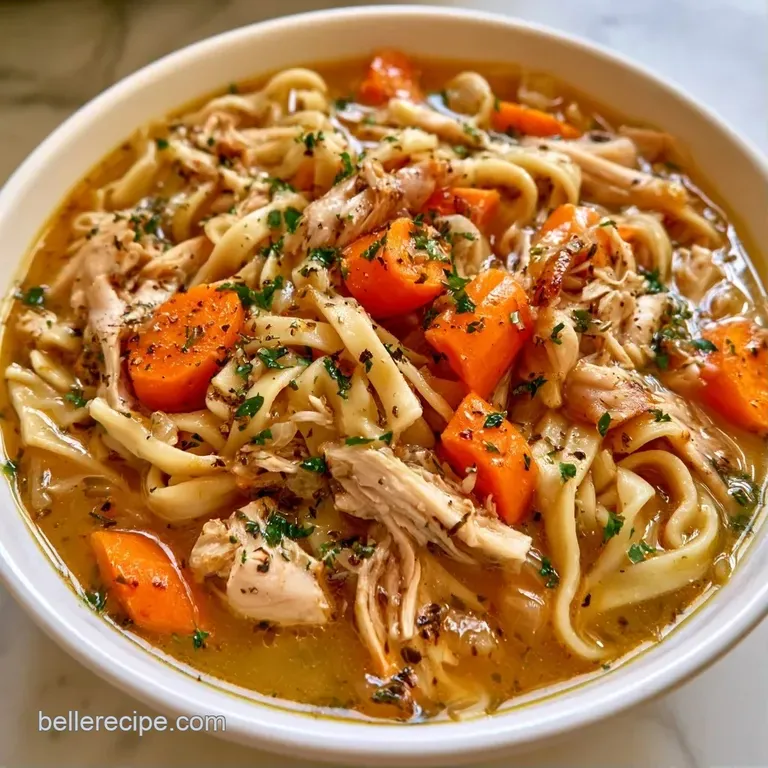
To achieve the flavor of Grandma's Chicken Noodle Soup, take your time during the searing stage. Rushing the chicken means you'll miss out on that signature golden crust.
Phase 1: Searing for Depth
Dry the chicken thighs with paper towels and season them well with salt and pepper. Bring the olive oil and butter to a medium high heat in the pot. Place the chicken skin side down and sear for 5-7 minutes until the skin is mahogany colored and crisp.
Flip the pieces and sear for another 3 minutes before moving them to a plate.
Phase 2: Sweating the Aromatics
Drop the heat to medium. Add the diced onion, carrots, and celery, sautéing for 6-8 minutes until the onions look translucent and carrots soften. Mix in the minced garlic and dried thyme, cooking for only 60 seconds.
Be careful garlic burns easily, so don't let it overcook.
Phase 3: The Slow Simmer
Pour in the water and chicken bone broth. Scrape the bottom of the pot with your spoon to release the savory brown bits. Return the seared chicken and any resting juices to the liquid. Add the bay leaf. Bring to a gentle boil, then immediately reduce the heat to low. Cover and simmer for 90 minutes.
Phase 4: The Noodle Finish
Take the chicken out of the pot. Remove the skin and bones, then shred the meat into bite sized pieces. Stir the shredded chicken back in. Increase the heat to medium and add the egg noodles. Cook for 7-10 minutes until the noodles are al dente.
Turn off the heat, stir in the fresh parsley and lemon juice, and serve.
Pro Tips & Pitfalls
Even the most comforting recipes can go sideways if you aren't watching the details. Here is how to handle the common hiccups.
Stopping the Noodle Soak
The most common issue with Grandmas Chicken Noodle Soup is the noodles absorbing all the broth, leaving you with a thick stew. This happens if you leave the soup on heat for too long or store the noodles in the pot.
To prevent this, cook the noodles in a separate pot of salted water and add them to individual bowls before pouring the soup over them.
Fixing a Bland Broth
If the soup tastes flat, it usually needs acid, not more salt. A splash of lemon juice or a teaspoon of apple cider vinegar wakes up the heavy flavors of the bone broth. I've found that adding the lemon at the very end, off the heat, keeps the flavor bright.
Preventing Cloudy Broth
Cloudiness usually comes from a rolling boil. If the soup bubbles too aggressively, the fats and proteins emulsify into the liquid. Keep it at a gentle simmer, where only a few bubbles break the surface every second.
Handling Leaner Meat
If you must use chicken breasts, be careful with the simmer time. Breasts will turn to rubber if cooked for 90 minutes. Instead, poach them in the simmering broth for about 15-20 minutes, remove them to shred, and then stir them back in at the end.
Creative Twists and Swaps
The classic recipe is excellent, but you can easily adapt it to suit your taste. For a more unique variation, my Chicken Long Rice recipe provides another perspective on restorative chicken broth.
Quick Adjustments:
- Extra tang? → stir in 1 tsp lemon zest
- More heat? → mix a pinch of red pepper flakes into the sauté
- Thicker broth? → simmer without the lid for the last 30 minutes
If you prefer a different base, feel free to replace the chicken with a hearty vegetable mix. For those wanting a plant based option, this Vegetable Soup recipe uses similar aromatic methods to build deep flavor without using meat.
Storage & Reheating
This soup stays fresh, provided you handle the noodles carefully. Storing them directly in the liquid causes them to soak up broth and become mushy within 24 hours.
Fridge Guidelines Keep the chicken, vegetables, and broth in a sealed container for 3 to 4 days. Store your cooked noodles separately. To reheat, warm the broth before stirring the noodles back in.
Freezer Tips The chicken and broth are freezer friendly for a period of 3 months. Omit the noodles and fresh parsley before freezing. Defrost in the refrigerator overnight, simmer on the stovetop, and stir in fresh noodles at the end.
Zero Waste Ideas Instead of discarding chicken skins, crisp them up in the oven for a savory garnish. Collect any leftover celery or carrot scraps in a freezer bag to use for your next homemade stock.
Presentation Tips
For a professional bistro presentation, emphasize the visual contrast. Let the vibrant green parsley and bright orange carrots stand out against the rich golden broth.
Pour the soup into shallow, wide bowls. Make sure each serving includes plenty of shredded chicken and several thick carrot slices. A final sprinkle of freshly cracked black pepper adds a polished finish.
For a complete meal, pair this dish with Homemade Soup Crackers. The crisp texture of the crackers provides a wonderful balance to the tender egg noodles.
What Nobody Tells You
The magic of Grandmas Chicken Noodle Soup lies in the gelatin from the bone in thighs. This collagen breaks down during the simmer, creating a rich, lip smacking texture that lean meat simply cannot provide.
The Power of the Fond
That brown glaze on the pot is the most important flavor component. When you deglaze with broth, you're pulling those toasted protein flavors back into the liquid, which creates the "old fashioned" taste.
The Starch Timing
Adding noodles at the end prevents them from releasing too much starch into the broth. This keeps the liquid clear and the noodles distinct, rather than creating a cloudy, thick porridge.
The Acid Balance
Fat from the chicken skin and butter makes the soup feel heavy. The lemon juice at the end acts as a chemical counterweight, brightening the savory notes and making the overall flavor feel balanced.
Myths about this dish: Searing the chicken doesn't "seal in the juices" - that's a common misconception. Instead, it creates new flavor through browning, which adds a depth that boiling alone never reaches.
Another myth is that you need to simmer soup for 8 hours to get a rich taste. With bone broth and bone in thighs, 120 minutes is plenty to extract the necessary collagen and flavor.
Right then, that's how you handle Grandmas Chicken Noodle Soup without the common pitfalls. It's all about those slow layers of flavor and the patience to let the chicken brown properly. Trust me, the extra time spent searing and simmering is where the real soul of the dish lives.
Now, grab your Dutch oven and get started.
Recipe FAQs
What makes this soup so flavorful?
Searing the chicken thighs until mahogany colored creates deep browned bits in the pot. Simmering these with chicken bone broth adds a rich, hearty depth to the base.
How to prepare the chicken for the best taste?
Pat the thighs dry and season them with salt and pepper before searing. Brown them skin side down in butter and olive oil for 5 7 minutes to develop a crisp texture.
Is it true that you can store the noodles in the broth?
Actually, no. The noodles will swell and turn into mush within 24 hours if they are kept in the liquid.
Which ingredients are needed for this recipe?
You will need chicken thighs, butter, olive oil, onion, carrots, celery, garlic, bay leaf, thyme, bone broth, water, egg noodles, lemon juice, and parsley. This meal pairs perfectly with quick drop biscuits.
Could you thicken the broth if it seems too thin?
Simmer the liquid for a longer period without a lid to reduce the water content. The starch from the egg noodles also helps naturally thicken the soup as they cook.
Can the soup be kept in the refrigerator?
Keep the broth and chicken for 3 to 4 days. Store your cooked noodles separately to maintain their firm texture.
What are the best ways to garnish the finished dish?
Stir in fresh parsley and a splash of lemon juice right before serving. These additions provide a bright, acidic contrast to the rich chicken broth.
Does using bone-in thighs provide the most richness?
No, this is a common misconception. While bone-in thighs are used here for maximum flavor, other cuts work well if you use a high-quality bone broth.
Grandmas Chicken Noodle Soup