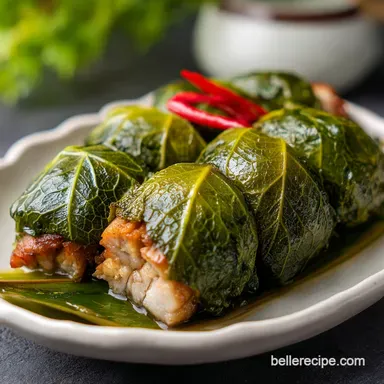
Lau Lau Recipe: the Ultimate Hawaiian
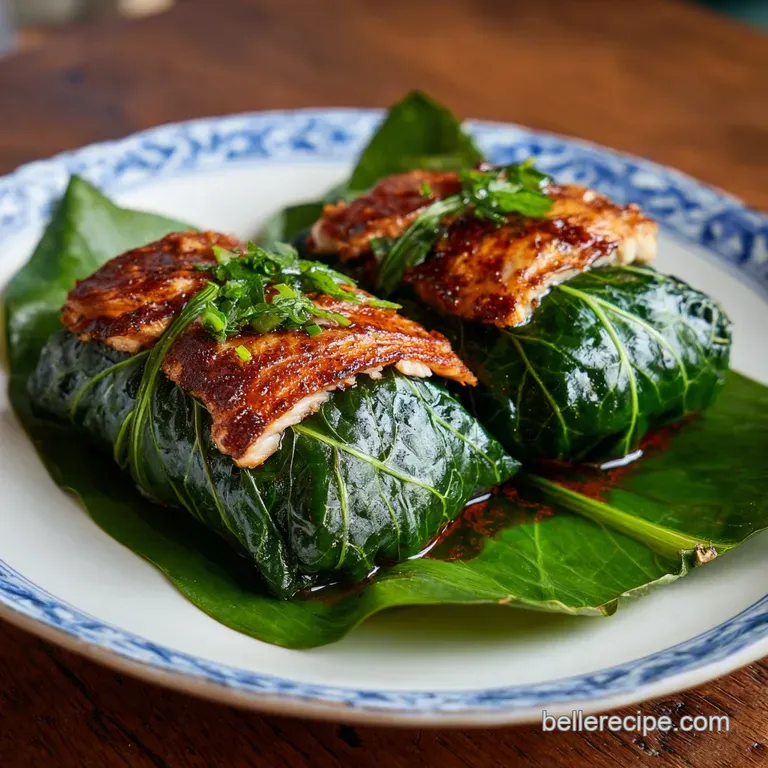
- Time:30 minutes active + 3 hours cooking = Total 3 hours 30 mins
- Flavor/Texture Hook: Salty, earthy, and melt in-your mouth tender
- Perfect for: Family gatherings or a comforting Sunday dinner
The smell of steaming ti leaves is something you never forget, it's like a warm, grassy hug that fills the whole kitchen. I remember the first time I tried to make this at home, and it was a total disaster.
I thought I could cut the steaming time in half to be "efficient," but I ended up with pork that was tough as a boot and taro leaves that were so bitter they tasted like medicine.
The real trick is patience and the seal. If your bundle leaks, the pork just boils in the water instead of steaming in its own juices, and you lose that concentrated, briny depth. I spent a few weekends messing up the wrap until I realized the ti leaves need to be tight, almost like a little present, to keep the steam trapped inside.
Once you get the wrap right, this lau lau recipe becomes a mindful experience. It's not about rushing; it's about letting the heat do the hard work of breaking down the pork and mellowing out the leaves. You'll know it's ready when the aroma changes from raw greenery to something deeply savory and comforting.
Authentic Hawaiian Lau Lau Recipe
Right then, let's get into the details. When you're making this, you aren't just cooking meat; you're creating a little pressurized steamer pod for each portion. The goal is a velvety texture where the pork practically dissolves when it hits your tongue.
The most important part is the layering. The taro leaves provide the bulk and the earthy flavor, but the ti leaves are the armor. They protect the food and infuse it with a subtle, tea like scent.
Honestly, don't even bother with low quality salt here, the Hawaiian sea salt makes a huge difference in how the seasoning penetrates the thick cuts of pork.
Steam Time Truths
Many people think you can just throw this in a pot for an hour and call it a day. But that's where the "bitter leaf" problem comes from. Taro leaves contain calcium oxalate crystals, which can actually make your throat feel itchy if they aren't cooked through.
- Heat Duration
- Long steaming neutralizes the crystals in taro leaves, turning them from bitter to silky.
- Collagen Melt
- The low, steady heat transforms the tough connective tissue in pork shoulder into gelatin.
- Flavor Fusion
- The butterfish acts as a seasoning agent, leaching salt and brine into the pork over several hours.
- Moisture Lock
- The ti leaf wrap prevents evaporation, meaning the meat poaches in its own rendered fat.
| Method | Time | Texture | Best For |
|---|---|---|---|
| Traditional Steam | 3 hours | Velvety & Moist | Big family meals |
| Instant Pot | 90 minutes | Very Tender | Busy weeknights |
| Slow Cooker | 6-8 hours | Fall apart | Set and forget |
The difference between the fast and classic ways is mostly about the "bite" of the leaf. The traditional steam gives you a more distinct layer of flavor, while the pressure cooker makes everything blend together into one soft mass.
Texture Secrets
To get the right feel, you have to understand how the proteins are reacting. I used to wonder why the meat felt different when I used a pressure cooker versus a steamer. It comes down to how the fibers break. According to Serious Eats, slow cooking allows for a more gradual breakdown of collagen, which preserves a bit more of the meat's structure while still being tender.
Breaking Down Collagen
Pork shoulder is full of connective tissue. At around 160°F to 180°F, that collagen turns into gelatin, which is what gives the dish that silky, luxurious mouthfeel.
Neutralizing Oxalates
Taro leaves are beautiful but tricky. You need a sustained temperature to break down the oxalates, which is why we don't rush the 3 hour steam time.
Creating Pressure
The ti leaves aren't just for show. By wrapping them tightly and tying them with twine, you create a natural pressure vessel that forces the steam into the center of the pork.
| Ingredient | Science Role | Pro Secret |
|---|---|---|
| Pork Shoulder | Protein Base | Trim exterior fat but leave some marbling |
| Taro Leaves | Wrapper/Flavor | Use the youngest, most flexible leaves |
| Butterfish | Salt Source | Salted butterfish adds an "ocean" depth |
| Hawaiian Salt | Seasoning | Coarse grains penetrate deeper into meat |
The Component List
For this, you'll need a few specific items. If you can't find ti leaves, you can use banana leaves, though the flavor will shift slightly toward a more tropical, sweet note.
- 2 lbs pork shoulder, trimmed of excess exterior fat Why this? High fat content prevents drying during long steams
- 2 tbsp Hawaiian sea salt Why this? Provides a clean, mineral rich saltiness
- 12-16 large taro leaves Why this? Essential for the authentic earthy taste
- 8 large ti leaves Why this? Seals the bundle and adds fragrance
- 4 oz salted butterfish Why this? Traditional brining agent for the pork
- 1 tbsp Hawaiian sea salt (for the fish) Why this? Enhances the fish's natural saltiness
Ingredient Swaps
| Original Ingredient | Substitute | Why It Works |
|---|---|---|
| Taro Leaves | Spinach (Blanched) | Similar color/texture. Note: Lacks the earthy taro flavor |
| Ti Leaves | Banana Leaves | Strong, flexible wrap. Note: Slightly sweeter aroma |
| Butterfish | Salted Salmon | Similar fat and salt profile. Note: More pronounced fishy taste |
| Pork Shoulder | Pork Belly | More fat, more richness. Note: Can be overly greasy |
Trust me on this: don't skip the salted fish. It sounds odd if you've never had it, but it provides a background savoriness that salt alone can't replicate.
Kitchen Gear Needed
You don't need a professional kitchen, but a few tools make this lau lau recipe much easier to handle. I recommend a large steamer basket that fits your bundles without crowding them, as steam needs to circulate freely to cook the leaves evenly.
- Large steamer pot or basket
- Instant Pot (if using the fast method)
- Butcher's twine (essential for the seal)
- Sharp chef's knife
- Large mixing bowl
Step by step Guide
Let's crack on. Make sure your leaves are washed and patted dry before you start, or the bundles might slide around while you're tying them.
- Rub the trimmed pork shoulder portions generously with Hawaiian sea salt. Note: Massage the salt in to ensure full coverage
- Place a small piece of salted butterfish atop each pork portion to add traditional briny depth.
- Lay two ti leaves in a cross shape on your workspace and place 3-4 overlapping taro leaves on top.
- Set the seasoned meat in the center and fold the taro leaves over the meat. Note: Ensure the pork is completely encased in taro
- Wrap the ti leaves tightly around the bundle and secure with butcher's twine to create a sealed chamber.
- Place bundles in a steamer basket over boiling water.
- Cover tightly and steam on medium low heat for 3 hours until the leaves are dark and the meat is tender.
- (Optional IP Method) Cook in an Instant Pot on High Pressure for 90 minutes with 1 cup of water.
- Let the bundles rest for 10 minutes until the internal heat settles before unwrapping.
Common Fixes
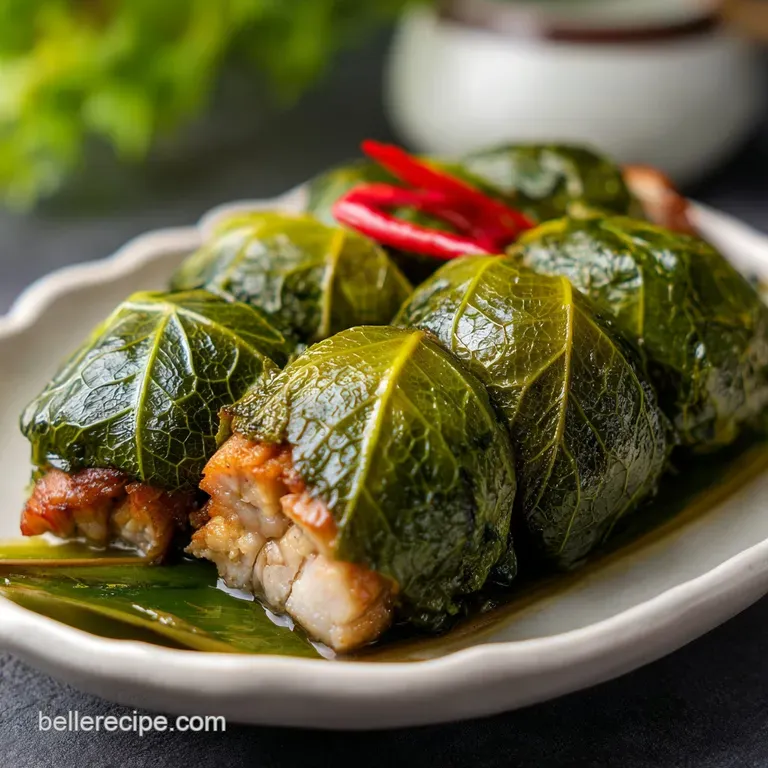
If your pork comes out tough, it's usually because the wrap wasn't tight enough, and the steam escaped. I've had a few bundles "burst" in the pot, and those are always the ones that don't cook quite right.
Troubleshooting Common Issues
| Issue | Solution | ||||||||
|---|---|---|---|---|---|---|---|---|---|
| Why Your Meat Is Tough | This usually happens if the heat was too high (boiling instead of steaming) or the time was too short. The collagen simply didn't have time to melt. | ||||||||
| Why Your Leaves Are Bitter | If the taro leaves still taste sharp or "itchy," they weren't steamed long enough. Don't be afraid to put them back in for another 30 minutes. | ||||||||
| Why Your Bundle Unraveled | This is a tying issue. Use a double knot with the twine and make sure the ti leaves are overlapping by at least two inches. | Problem | Root Cause | Solution | --------- | ------------ | ---------- |
Easy Ingredient Swaps
If you're cooking for a crowd, scaling this up is pretty simple, but you have to be careful with the salt. I've found that if you double the recipe, you only need about 1.5x the salt, otherwise, it can become overwhelming.
Scaling Down (1-2 portions): Use a smaller steamer or a narrow pot. Reduce the steaming time by about 20% since smaller bundles heat through faster.
Scaling Up (8+ portions): Work in batches for the wrapping process so the meat doesn't sit out too long. If you use a giant commercial steamer, keep the heat medium low to avoid scorching the bottom bundles.
For those who want a different protein, you can use chicken thighs, but you'll need to reduce the cook time to about 1.5 hours to avoid the meat becoming mushy. If you love these kinds of hearty meats, you might also enjoy my Vaca Frita recipe for a different kind of savory treat.
Leaf and Meat Myths
You might hear that you can use any kind of leaf for this, but that's not true. Some leaves are toxic or simply don't hold the steam. Ti leaves are the gold standard for a reason.
Another myth is that the pork needs to be marinated overnight. While it doesn't hurt, the butterfish and the long steam time create enough flavor infusion that a quick rub is usually plenty.
Finally,, some say you can't use an Instant Pot for this. While traditionalists might disagree, the result is actually very similar, provided you don't overcook it into a paste.
Save and Store
Since this takes so much time, I usually make a big batch. This lau lau recipe holds up surprisingly well in the fridge.
- Fridge Storage
- Keep the bundles wrapped in foil and store them for up to 4 days.
- Freezer Storage
- You can freeze the cooked bundles for up to 3 months. Just wrap them tightly in freezer paper first to avoid freezer burn.
- Reheating
- The best way to reheat is to steam them again for 15-20 minutes. If you're in a rush, a microwave works, but you lose some of that velvety texture.
Zero Waste Tip: Don't throw away the steamed ti leaves. While you can't eat them, they make a wonderful, fragrant addition to a compost pile or can be used as decorative wraps for other food presentations.
Side Dish Ideas
This dish is very rich, so you need something to cut through the fat. I love serving it with a side of steamed poi or a bright, acidic slaw.
If you want something to soak up the juices, a few homemade dinner rolls are a great way to make the meal feel complete. The sweetness of the bread contrasts perfectly with the salty, earthy pork.
Another great option is a simple side of steamed cabbage or a fresh pineapple salad. The acidity of the pineapple cleanses the palate between bites of the rich, buttery pork. Trust me, the contrast is what makes the whole meal sing.
Critical Sodium Level
1150 mg 1,150 mg of sodium per serving (50% 50% of daily value)
The American Heart Association recommends a daily limit of 2,300mg, with an ideal limit of 1,500mg for most adults to reduce the risk of cardiovascular disease.
Tips to Reduce Sodium
-
Reduce Sea Salt-25%
Decrease the Hawaiian sea salt from 2 tbsp to 1 tbsp or less to drastically lower the primary source of sodium.
-
Swap Butterfish-25%
Replace the salted butterfish with fresh, unsalted butterfish to remove processed sodium from the recipe.
-
Add Citrus Acidity-10%
Squeeze fresh lemon or lime juice over the pork shoulder to enhance the flavors and mimic the brightness of salt.
-
Boost Aromatics
Incorporate fresh ginger, garlic, or green onions into the filling to add depth and complexity without adding sodium.
Recipe FAQs
What is Hawaiian lau lau made of?
Pork shoulder and salted butterfish wrapped in taro and ti leaves. It is seasoned with Hawaiian sea salt and steamed until tender.
How long should you steam laulau?
Steam for 3 hours over boiling water on medium-low heat. Alternatively, cook in an Instant Pot on High Pressure for 90 minutes with 1 cup of water.
Do you eat the ti leaves in Lau Lau?
No, the ti leaves are used only for wrapping. They create the sealed chamber necessary for steaming and are discarded before serving.
Is lau lau healthy to eat?
Yes, as it uses steaming rather than frying. This makes it a lighter alternative to breaded proteins like homemade shake and bake.
Why are my taro leaves bitter or itchy?
They were not steamed long enough. Return the bundles to the steamer for another 30 minutes to fully neutralize the sharpness.
How to secure the lau lau bundles so they don't unravel?
Tie a double knot with butcher's twine. Ensure the ti leaves overlap by at least two inches to maintain a tight seal.
What makes the meat tough in lau lau?
Excessive heat or insufficient cooking time. If the water boils too vigorously or the time is cut short, the collagen in the pork shoulder fails to melt.
Lau Lau Recipe for 4 Servings