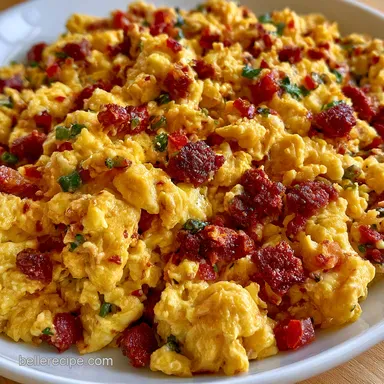
Huevos Con Chorizo: Rich and Spicy
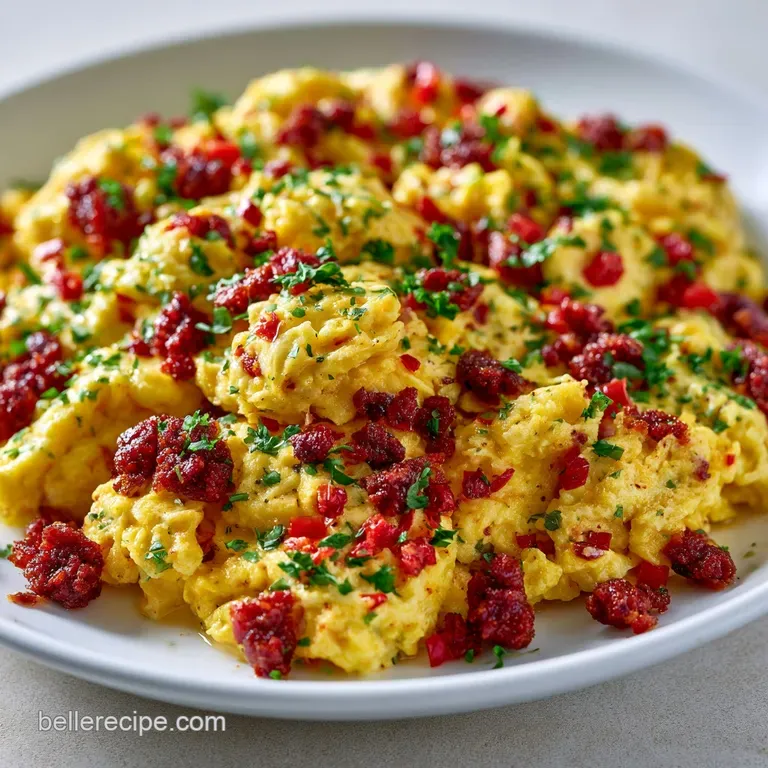
- Time: 5 min prep + 10 min cook = Total 15 minutes
- Flavor/Texture Hook: Rich, spicy, and velvety
- Perfect for: A hearty family brunch or a quick, high protein breakfast
- Making Authentic Huevos Con Chorizo
- The Secret To Best Texture
- The Core Ingredient Science
- The Building Blocks
- From Prep to Plate
- Fixing Common Cooking Problems
- Adjusting Portion Sizes
- Truths About Breakfast Cooking
- Storage and Zero Waste
- Serving Ideas and Pairs
- High in Sodium
- Recipe FAQs
- 📝 Recipe Card
Making Authentic Huevos Con Chorizo
That sharp, vinegary sizzle hitting a hot cast iron skillet is the only alarm clock I actually need. There is something about the way raw Mexican chorizo releases its paprika stained oils that just wakes up every sense in the room.
The aroma is heavy, smoky, and slightly sweet, filling the kitchen with a scent that promises a serious meal.
I remember the first time I tried this, I made a rookie mistake and bought Spanish chorizo. I spent ten minutes wondering why the meat wasn't breaking down or releasing fat, only to realize I was trying to scramble eggs with a cured, hard sausage. It was a disaster.
Once I switched to the raw, ground pork version, everything clicked. The contrast between the intense, salty punch of the chorizo and the mild, buttery nature of the eggs is what makes this a staple.
We're going for a specific balance here. You want the chorizo to be almost crisp at the edges, but the eggs to remain tender and slightly moist. If you overcook the eggs, you lose that velvety contrast and end up with something that feels like rubber.
Trust me on this, pulling the pan off the heat early is the only way to do it.
The Secret To Best Texture
The Fat Render: Cooking the chorizo first allows the fat to melt and carry the spices into the vegetables and eggs. This ensures every bite is saturated with flavor rather than just having "chunks" of spice.
Carry Over Heat: Eggs continue to cook after they leave the pan. By removing them at 90% doneness, the residual heat finishes the job without drying them out.
Aromatic Layering: Sautéing onions and peppers in the rendered chorizo fat creates a flavor bridge between the heavy meat and the light eggs.
Protein Coagulation: Whisking the eggs until frothy incorporates air, which results in a lighter, softer curd that doesn't feel dense.
| Method | Time | Texture | Best For |
|---|---|---|---|
| Fast (This Recipe) | 15 mins | Soft & Velvety | Weekdays |
| Classic (Slow) | 30 mins | Hearty & Chunky | Lazy Sundays |
The Core Ingredient Science
The magic here isn't about complex techniques, but about how the ingredients interact. When you heat the chorizo, the fats liquefy, creating a medium that toasts the aromatics.
| Ingredient | Science Role | Pro Secret |
|---|---|---|
| Mexican Chorizo | Fat & Flavor Base | Use raw, not cured, for the best render |
| Large Eggs | Structural Protein | Whisk until frothy for a lighter feel |
| White Onion | Sweetness/Aroma | Dice finely to ensure they soften quickly |
| Bell Pepper | Brightness/Contrast | Add after the meat to keep a slight snap |
The Building Blocks
For this recipe, quality matters, especially with the sausage. Look for "Mexican style" chorizo which is soft and raw, not the firm Spanish links.
- 1 lb (450g) Mexican Chorizo (raw, ground pork) Why this? Provides the essential fat and smoky spice base
- 1 medium (110g) white onion, finely diced Why this? Adds a sharp sweetness to cut through the fat
- 1 bell pepper (120g), finely diced Why this? Adds color and a fresh, vegetal note
- 1 tbsp (15ml) olive oil Why this? Prevents sticking before the chorizo renders
- 12 large (600g) eggs Why this? Provides the velvety, rich contrast to the meat
- 1/2 tsp (3g) salt Why this? Enhances the natural flavors of the eggs
- 1/4 tsp (1g) cracked black pepper Why this? Adds a subtle, earthy heat
- 2 tbsp (30g) fresh cilantro, chopped Why this? A bright, citrusy finish to lighten the dish
| Original Ingredient | Substitute | Why It Works |
|---|---|---|
| Mexican Chorizo | Soyrizo (Plant based) | Similar spice profile. Note: Less fat; add 1 tbsp extra oil |
| Bell Pepper | Poblano Pepper | Earthier flavor. Note: Slightly less sweet than bell peppers |
| White Onion | Shallots | More delicate flavor. Note: Use 3-4 large shallots for same volume |
| Olive Oil | Avocado Oil | High smoke point. Note: Neutral flavor, works perfectly |
If you find yourself without pre made chorizo, you can actually make your own blend. I've shared a spicy smoky seasoning that works wonders when mixed with raw ground pork.
From Prep to Plate
Right then, let's get into the actual cooking. Grab a large skillet, preferably cast iron, as it holds the heat better and gives the meat a better sear.
- Heat a 12 inch cast iron skillet over medium high heat. Add the 1 tbsp olive oil and the 1 lb chorizo. Note: The oil just helps until the pork fat starts to leak out.
- Break the chorizo apart with a spatula into small crumbles. Sauté for 5–7 minutes until the meat is mahogany colored and edges are slightly crisp.
- Push the cooked chorizo to the sides of the pan, creating a hole in the middle.
- Add the diced onion and bell pepper to the center. Sauté for 3–4 minutes until vegetables are translucent and fragrant.
- While the vegetables cook, whisk the 12 eggs, 1/2 tsp salt, and 1/4 tsp black pepper in a bowl until pale and frothy.
- Lower the heat to medium. Pour the whisked eggs over the chorizo and vegetable mixture.
- Gently fold the mixture with your spatula every 30 seconds. Note: This creates those soft, large curds instead of tiny, dry bits.
- Remove the pan from the heat when the eggs are 90% set but still glistening. Wait 1 minute for the carry over heat to finish the set.
- Garnish with 2 tbsp chopped fresh cilantro and serve immediately.
Fixing Common Cooking Problems
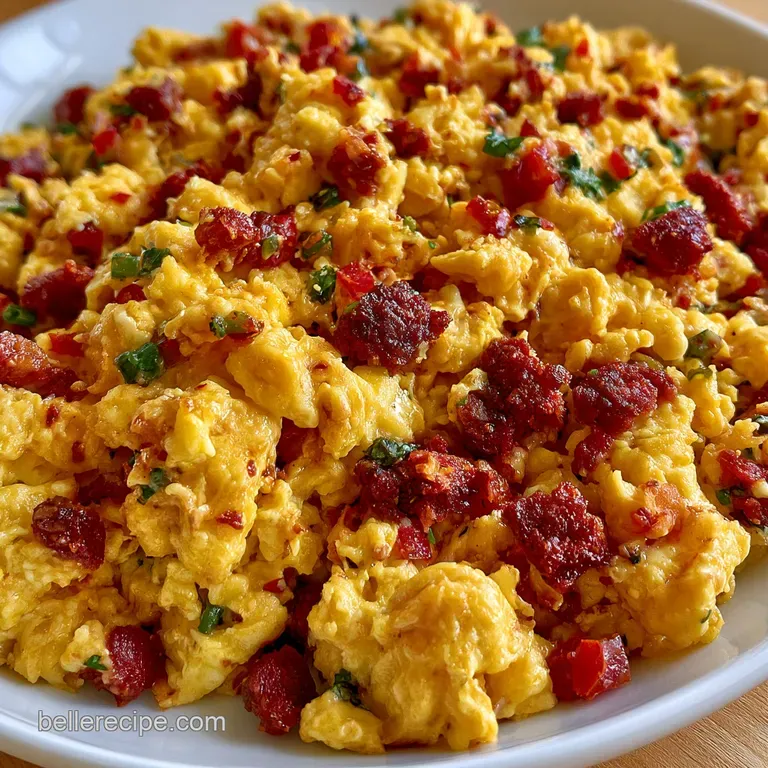
The most common issue I see with Huevos Con Chorizo is the "rubber effect." This happens when people leave the pan on the heat until the eggs look "done." By the time they hit the plate, they've overcooked into something bouncy.
Why Eggs Get Rubbery
This is almost always due to excessive heat or over stirring. High heat tightens the protein bonds too quickly, squeezing out the moisture. To avoid this, always drop the heat to medium before adding the eggs and pull them off while they still look slightly wet.
Dealing With Grease
Chorizo can be incredibly fatty. While that fat is where the flavor lives, too much of it makes the eggs slippery and oily. If you see a pool of oil after browning the meat, don't wash the pan, but do spoon out about 2 tablespoons of the excess grease before adding the eggs.
Blunted Spice Flavors
If your dish tastes flat, it's usually because the aromatics weren't sautéed long enough. The onion and pepper need to soften and meld with the chorizo fat to create a cohesive flavor profile.
| Problem | Root Cause | Solution |
|---|---|---|
| Eggs are watery | Undercooked or too many veg | Cook 1 min longer or reduce pepper volume |
| Meat is boiled/grey | Pan wasn't hot enough | Start with skillet on high; don't crowd the pan |
| Eggs are dry/brown | Heat was too high | Remove from heat while eggs are still glistening |
Common Mistakes Checklist
- ✓ Did you use raw Mexican chorizo instead of cured Spanish?
- ✓ Did you whisk the eggs until frothy to ensure lightness?
- ✓ Did you remove the pan while eggs were 90% set?
- ✓ Did you sauté vegetables in the rendered pork fat?
- ✓ Did you avoid over stirring the eggs into a mush?
Adjusting Portion Sizes
When you're cooking for a crowd or just yourself, you can't always just multiply everything linearly. Fats and spices behave differently as you scale up.
Scaling Down (1-2 servings): Use a smaller 8 inch skillet. Reduce the cooking time for the chorizo by about 20% as it will brown faster in a smaller batch. For the eggs, beat one egg in a separate small bowl, then use half of it if you need a very precise measurement.
Scaling Up (12+ servings): Work in batches. If you crowd a pan with 2 lbs of chorizo, the meat will steam in its own juices and turn grey instead of browning to that rich mahogany color. When scaling spices or salt, only increase them to 1.5x the original ratio at first, then taste.
You can always add more salt, but you can't take it out.
| Goal | Adjustment | Impact |
|---|---|---|
| More Hearty | Add 2 diced potatoes | Heavier meal, increases cook time by 10 mins |
| Lighter Feel | Increase bell pepper 2x | More volume, lower calorie density |
| Extra Spicy | Add 1 diced jalapeño | Increases heat level significantly |
Truths About Breakfast Cooking
There are a few things people tell you about eggs and meat that just aren't true in practice.
The Searing Myth: You'll hear that searing the chorizo "seals in the juices." It doesn't. Moisture loss happens regardless of the temperature. The reason we sear is for the flavor that deep, toasted taste that comes from the proteins browning.
The Cold Egg Myth: Some say you must use room temperature eggs for a better scramble. In reality, for a dish like this where the eggs are hitting a hot pan of fat, the temperature difference is negligible. Just make sure they're whisked well.
Storage and Zero Waste
If you have leftovers (which is rare, but happens), keep them in an airtight container in the fridge for up to 3 days. To reheat, avoid the microwave if possible, as it makes the eggs rubbery. Instead, put them in a small non stick pan over low heat with a tiny knob of butter.
To keep things zero waste, don't throw away the stems of your cilantro. Chop them very finely and sauté them with the onions; they actually have a more intense flavor than the leaves. If you have leftover bell pepper scraps, toss them in the freezer for your next homemade vegetable stock.
Serving Ideas and Pairs
This dish is rich and salty, so it needs something bright or acidic to balance the palate. I love serving it with sliced avocado and a squeeze of fresh lime juice. For a starch, warm corn tortillas are a must.
If you want to turn this into a full feast, serve it alongside my Huevos Rancheros recipe for a variety of textures. The saucy nature of the rancheros complements the drier, crumbled texture of the chorizo eggs.
The Traditional Platter Serve a large scoop of the eggs next to a pile of refried beans and a side of pickled red onions. The acidity of the onions cuts right through the richness of the pork fat.
The Breakfast Taco Style Spoon the mixture into charred corn tortillas. Top with crumbled cotija cheese, a dollop of Mexican crema, and a few slices of fresh radish for a crunch that shatters in your mouth.
High in Sodium
850 mg 850 mg of sodium per serving (37% 37% of daily value)
The American Heart Association recommends a daily sodium limit of 2,300mg, and ideally 1,500mg for most adults to reduce the risk of cardiovascular disease.
Tips to Reduce Sodium
-
Homemade Chorizo Seasoning-25%
Replace the processed Mexican chorizo with ground pork seasoned with smoked paprika, cumin, and garlic powder to eliminate hidden preservatives.
-
Eliminate Added Salt-20%
Remove the 1/2 tsp of salt entirely; the salt already present in the chorizo is usually sufficient for the entire dish.
-
Source Low-Sodium Chorizo-15%
Search for low-sodium chorizo brands or artisanal options that contain fewer curing salts.
-
Increase Vegetable Volume-10%
Add more white onion and bell pepper to the mix, which increases the serving size and dilutes the sodium concentration per portion.
-
Boost Fresh Aromatics
Increase the amount of fresh cilantro or add a squeeze of lime juice to enhance the flavor profile without adding any salt.
Recipe FAQs
Do chorizo and eggs pair well together?
Yes, they are a classic pairing. The salty, spiced pork from the chorizo complements the richness of the eggs perfectly.
What goes into the pan first, the eggs or the chorizo?
Sauté the chorizo first. Cook it for 5 7 minutes until mahogany colored and crisp before adding the vegetables and eggs.
How do I cook this dish using raw Mexican chorizo?
Heat a 12 inch cast iron skillet over medium high heat. Sauté the meat, then the vegetables, and finally fold in whisked eggs on medium heat.
Is it true that eggs should be cooked until completely firm before removing them from the heat?
No, this is a common misconception. Remove the pan when eggs are 90% set and glistening to let carry over heat finish the cooking process.
Can I use the cilantro stems instead of throwing them away?
Yes, chop them very finely. Sauté the stems with the onions to add a more intense flavor than the leaves alone.
How should I reheat leftovers without making the eggs rubbery?
Use a small non-stick pan over low heat. Adding a tiny knob of butter helps maintain texture, whereas the microwave often overcooks the eggs.
What is a good way to serve this savory breakfast?
Serve it immediately with fresh cilantro. For a balanced brunch spread, this salty dish pairs beautifully with sweet orange scones.
Huevos Con Chorizo