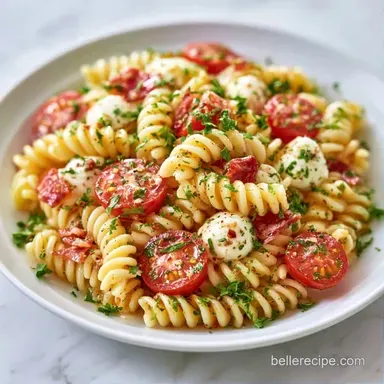
Zesty Olive Oil Pasta Salad with Salami
- Time: 20 min active + 10 min cook
- Flavor/Texture Hook: Zesty, salty, and crisp
- Perfect for: Summer potlucks or meal prep
- Olive Oil Pasta Salad
- The Truth About Layers
- Quick Recipe Stats
- The Full Grocery List
- Essential Kitchen Gear
- Step By Step Assembly
- Fixing Common Issues
- Troubleshooting Common Issues
- Customizing Your Bowl
- Adjusting Batch Sizes
- Pasta Truths
- Storage and Leftovers
- The Best Pairings
- High in Sodium
- Recipe FAQs
- 📝 Recipe Card
The scent of fresh lemon and minced garlic hitting a bowl of cold pasta brings me straight back to the coast of Italy. In the Mediterranean, an "insalata di pasta" isn't just a side dish. It's a cultural staple of summer, traditionally made with whatever was ripening in the garden or cured in the pantry.
It represents the ease of outdoor dining and the beauty of simple, high-quality fats.
I used to think these salads had to be heavy on the mayo to taste "creamy," but that's a mistake. The real magic happens when you use a high-quality extra virgin olive oil that carries the aromatics of the garlic and herbs.
This version stays light and fresh, meaning it won't leave you feeling sluggish in the July heat.
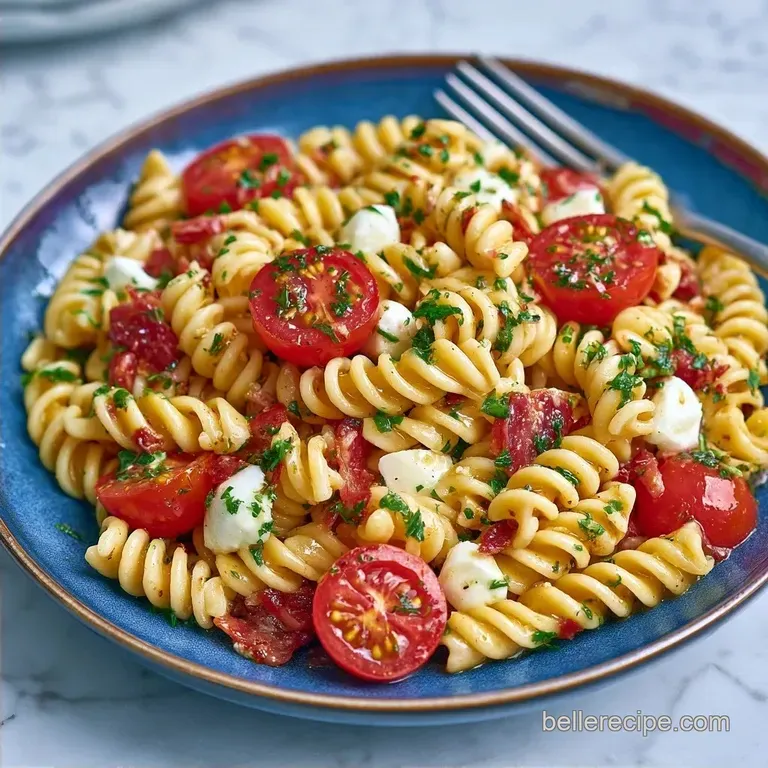
You can expect a dish where every bite is a different combination of textures. One forkful gives you the snap of a red pepper and the creaminess of a mozzarella pearl. The Olive Oil Pasta Salad creates a balance between the acidic lemon and the rich, salty Genoa salami that keeps you coming back for more.
Olive Oil Pasta Salad
The goal here is to build flavor in layers. We start with the pasta, which acts as a sponge for the dressing. Then we add the "heavy" salty components like olives and salami, and finally the fresh, watery elements like tomatoes.
If you mix them all in without a plan, the vegetables can bleed and make the salad look muddy.
By tossing the pasta in a tiny bit of oil immediately after rinsing, we create a barrier. This stops the noodles from clumping together in a giant mass. It ensures that when the dressing finally hits the bowl, it coats every single piece of rotini evenly rather than pooling at the bottom.
Right then, let's look at how this comes together. It's all about the contrast. You have the bite of the red wine vinegar fighting against the richness of the oil. When those two bind together, they create a zesty coating that makes the vegetables taste more like themselves.
The Logic Behind the Flavor
- Undercooking the Pasta: Stopping the boil one minute early prevents the pasta from turning into mush as it absorbs the dressing over time.
- Mustard as a Bridge: A small amount of Dijon mustard binds the oil and lemon juice, stopping them from separating on the plate.
- Cold Rinsing: Cold water stops the cooking process instantly, which keeps the pasta from overcooking while you chop your vegetables.
Fast vs Classic Methods
| Method | Time | Texture | Best For |
|---|---|---|---|
| store-bought Dressing | 15 min | Uniform, slightly sugary | Quick weekday lunch |
| Homemade Emulsion | 30 min | Rich, vibrant, zesty | Parties and potlucks |
The Truth About Layers
Most people just throw everything in a bowl and hope for the best. But if you want that authentic taste, you have to treat the dressing as a separate entity. The dressing needs time to sit for a few minutes so the garlic can infuse into the oil.
This creates a deeper, more aromatic profile than just stirring things together at the last second.
The salami and mozzarella also play a role in the layer strategy. Salami is a cured meat, meaning it has a strong, salty presence. By quartering and slicing it, we increase the surface area. This lets the dressing penetrate the meat, softening the edges while keeping the center firm.
Finally, the herbs. Adding fresh Italian parsley at the very end keeps the color vibrant. If you stir it in too early or cook it, the leaves wilt and turn a dull brown. A handful of fresh green herbs makes the whole bowl look like it came from a professional kitchen.
Quick Recipe Stats
Before we get into the gear, let's look at the numbers. This recipe makes a generous amount, enough to feed a crowd or provide lunches for half the week.
- Yield: 10 servings
- Prep time: 20 minutes
- Cook time: 10 minutes
- Total time: 30 minutes
- Calories: 485 kcal per serving
The Full Grocery List
Stick to the specific names here. Using a generic "vinegar" instead of red wine vinegar will change the acidity and might make the dish taste too sharp.
The Pasta Base 1 lb (450g) Rotini or Fusilli pasta Why this? Spirals hold the dressing in their grooves. 1 tbsp (15ml) extra virgin olive oil (for coating)
The Fresh Mix ins 8 oz (225g) mini mozzarella pearls, halved Why this? Small size ensures cheese in every bite. 8 oz (225g) Genoa salami, quartered and sliced 2 cups (300g) cherry tomatoes, halved 1 cup (150g) artichoke hearts, chopped 1/2 cup (70g) sliced black olives 1
Medium (150g) red bell pepper, diced 1/4 cup (15g) fresh Italian parsley, chopped
The Zesty Dressing 3/4 cup (180ml) extra virgin olive oil Why this? Provides a rich, fruity base. 1/4 cup (60ml) fresh lemon juice 2 tbsp (30ml) red wine vinegar 3 cloves (15g) garlic, minced 1 tsp (5g) dried oregano 1 tsp (5g) Dijon mustard 1 tsp (6g) kosher salt 1/2
Tsp (3g) black pepper
Smart Ingredient Swaps
| Original Ingredient | Substitute | Why It Works |
|---|---|---|
| Rotini Pasta | Farfalle (Bowtie) | Similar shape; holds sauce well |
| Genoa Salami | Pepperoni | Spicier, bolder flavor profile |
| Mozzarella Pearls | Feta Cheese | Saltier and tangier; classic Greek vibe |
| Red Wine Vinegar | Apple Cider Vinegar | Slightly sweeter; less pungent |
Essential Kitchen Gear
You don't need a fancy arsenal for this. A few basic tools will do the trick. I prefer a large mixing bowl, something stainless steel or glass, so the acid in the lemon juice doesn't react with the material.
For the dressing, a mason jar is my favorite. Shaking a jar is much faster than whisking by hand and it creates a more stable bind between the oil and vinegar. If you don't have a jar, a small bowl and a whisk work just fine.
Finally, a sharp chef's knife is a must. You're doing a lot of chopping here tomatoes, peppers, artichokes and a dull knife will just squash the cherry tomatoes instead of slicing them cleanly.
Step by step Assembly
Follow these steps exactly to get the texture right. The timing on the pasta is the most important part of the whole process.
- Bring a large pot of heavily salted water to a rolling boil. Add the pasta and cook for exactly one minute less than the package directions. Note: This keeps the pasta "al dente" so it doesn't overcook.
- Drain the pasta immediately and rinse under cold water until cool to the touch. Toss with 1 tbsp (15ml) of olive oil to prevent clumping. Note: Rinsing pasta for salads prevents it from sticking, a tip often discussed on Serious Eats.
- In a mason jar or small bowl, combine lemon juice, red wine vinegar, garlic, oregano, mustard, salt, and pepper.
- While whisking vigorously or shaking the jar, slowly stream in the 3/4 cup of olive oil until the mixture is thickened and silky.
- In a large mixing bowl, combine the cooled pasta, mozzarella pearls, salami, cherry tomatoes, artichoke hearts, black olives, and red bell pepper.
- Add the chopped fresh Italian parsley to the bowl.
- Pour the binding dressing over the salad.
- Toss thoroughly for about 2 minutes until every spiral of pasta looks glossy and coated.
Chef's Tip: If you have time, let the salad sit in the fridge for 30 minutes before serving. This allows the pasta to soak up the lemon and garlic flavors without becoming soggy.
Fixing Common Issues
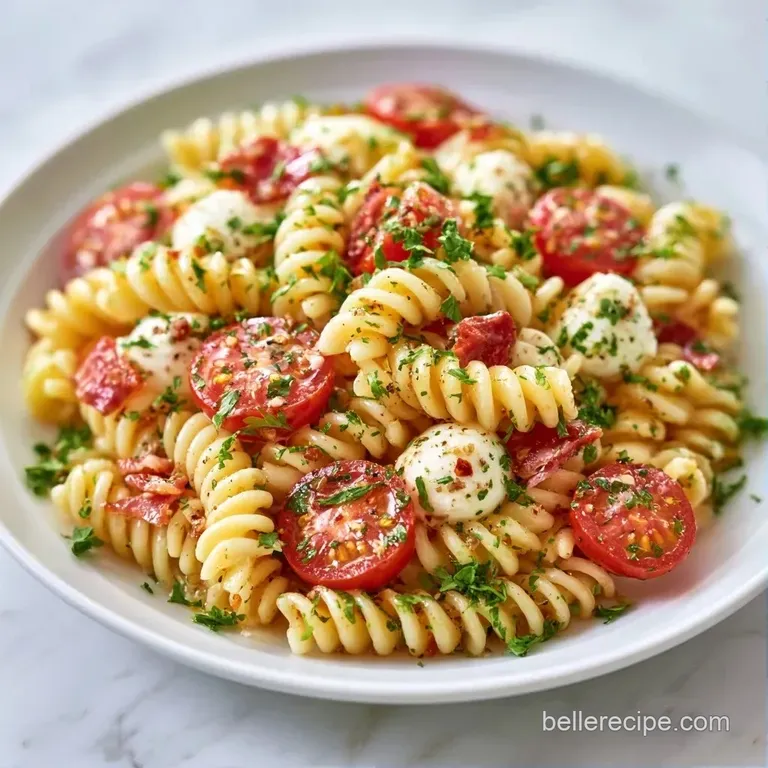
Even with a simple Olive Oil Pasta Salad, things can go sideways. Usually, it comes down to the ratio of liquid to starch.
Troubleshooting Common Issues
| Issue | Solution |
|---|---|
| Why Your Pasta Is Dry | If the salad looks matte or the noodles seem shriveled, the pasta has likely absorbed all the dressing. This happens often if the salad sits overnight. |
| Why Your Veggies Are Soggy | Sogginess usually happens when you add salt to the vegetables too early. Salt draws water out of tomatoes and peppers. |
| Why The Dressing Separated | If you see a layer of oil floating on top, your emulsion broke. This happens if the oil was poured in too quickly or if the mustard was skipped. |
Troubleshooting Guide
| Problem | Root Cause | Solution |
|---|---|---|
| Dry Noodles | Pasta absorbed dressing | Stir in 1 tbsp extra olive oil |
| Bland Flavor | Not enough salt/acid | Add a squeeze of fresh lemon |
| Clumping Pasta | Not rinsed or oiled | Toss with oil immediately after boiling |
Customizing Your Bowl
The beauty of this recipe is that it's a template. Once you have the base Olive Oil Pasta Salad down, you can shift the flavor profile to match what's in your fridge.
If you want something even fresher, try a Greek Salad recipe as inspiration. You can swap the salami for Kalamata olives and add chunks of cucumber and feta. The lemon olive oil base works perfectly for this transition.
For those who want more protein, you can add grilled chicken breast or chickpeas. If you're going vegan, swap the mozzarella for cubed avocado and the salami for sun dried tomatoes. Just be careful with the avocado, as it can break down if you toss the salad too vigorously.
Decision Shortcut
- Want more zing? Double the lemon juice and add a pinch of red pepper flakes.
- Want it heartier? Add 1/2 cup of chickpeas or diced grilled chicken.
- Want it crunchier? Add diced celery or raw carrots.
Adjusting Batch Sizes
Scaling this recipe is pretty straightforward, but you can't just multiply everything linearly, especially the seasonings.
Scaling Down (Half Batch) Use 1/2 lb of pasta and half of all other ingredients. Use a smaller pot for the water to save energy. Since there's less volume, you might find it takes 20% less time to toss the ingredients thoroughly.
Scaling Up (Double or Triple Batch) When doubling the recipe, don't double the salt and dried oregano. Start with 1.5x the amount, taste it, and then add more if needed.
Too much dried oregano can make the salad taste "dusty." Also, work in batches when mixing the vegetables to avoid crushing the cherry tomatoes.
Pasta Truths
There are a few things people say about pasta that just aren't true for this specific dish.
The Rinsing Myth Most chefs will tell you that rinsing pasta is a crime because it washes away the starch. That's true for a hot pasta dish where the starch helps the sauce stick. But for a cold salad, that starch is your enemy. It creates a sticky glue that turns your salad into one big clump.
Rinse it.
The "Expensive Oil" Myth You don't need a $50 bottle of boutique olive oil for this. However, don't use "light" olive oil. Light olive oil is refined and has no flavor. Use a standard "Extra Virgin" oil. It has the peppery, fruity notes that define the taste of this dish.
Storage and Leftovers
Store the Olive Oil Pasta Salad in an airtight container in the fridge. It stays fresh for 3 to 5 days. In fact, many people find it tastes better on day two because the flavors have had more time to mingle.
Do not freeze this salad. The mozzarella will become rubbery, and the fresh vegetables will lose their structure, turning into a watery mess once thawed.
To reduce waste, don't throw away the parsley stems. Chop them very finely and stir them into the dressing, or freeze them in an ice cube tray with olive oil to use for sautéing vegetables later. If you have leftover salami slices, they make a great addition to a morning omelet.
The Best Pairings
Since this salad is zesty and rich, it works best with proteins that are either charred or creamy. The acidity of the lemon cuts through heavy fats perfectly.
This pairs well with a heavier dish like Chicken Parmesan Penne if you're hosting a full Italian feast. The freshness of the salad balances the melted cheese and fried chicken of the main course.
For a lighter lunch, serve it alongside a piece of toasted sourdough rubbed with a raw garlic clove. The crunch of the bread and the softness of the pasta create a satisfying contrast. A chilled glass of Pinot Grigio or a sparkling water with a lime wedge completes the meal.
High in Sodium
810 mg 810 mg of sodium per serving (35% 35% of daily value)
The American Heart Association recommends a daily limit of 2,300 mg of sodium to maintain heart health and lower blood pressure.
Tips to Reduce Sodium
-
Swap the Salami-25%
Replace the Genoa salami with grilled chicken breast or omit it entirely to remove a major source of processed sodium.
-
Omit Added Salt-25%
Remove the kosher salt from the dressing; the olives, salami, and cheese already provide significant saltiness.
-
Rinse the Olives-20%
Rinse the black olives thoroughly under cold water to wash away surface brine, or reduce the quantity by half.
-
Prep Artichokes Differently-20%
Rinse the canned artichoke hearts well or substitute them with frozen, unsalted artichokes.
-
Choose Low-Sodium Cheese-15%
Swap the mozzarella pearls for a low-sodium mozzarella or fresh buffalo mozzarella, which often has less salt.
-
Enhance Natural Flavors
Increase the lemon juice or add fresh basil and red pepper flakes to create a bold flavor profile without adding sodium.
Recipe FAQs
Can I use olive oil for pasta salad?
Yes, it is the ideal base. Extra virgin olive oil provides a rich, fruity flavor and prevents the cooked noodles from sticking together.
How to make a flavorful pasta salad?
Cook pasta for one minute less than the package directions. This ensures the noodles stay al dente and better absorb the lemon juice and red wine vinegar dressing without becoming mushy.
How to make pasta salad?
Boil pasta, rinse in cold water, and toss with olive oil. Combine it with mozzarella pearls, salami, cherry tomatoes, artichoke hearts, black olives, red bell pepper, and parsley before tossing with a whisked vinaigrette.
Is it true that rinsing pasta makes it gummy?
No, this is a common misconception. For cold salads, rinsing pasta under cold water is essential to stop the cooking process and remove excess starch that causes clumping.
What are some good things to add to a cold pasta salad?
Use a mix of salty and fresh ingredients. Salami, mozzarella pearls, and black olives provide a savory contrast to fresh cherry tomatoes, diced red bell pepper, and parsley.
Why is my pasta salad dry after sitting overnight?
The pasta has absorbed the dressing. This is natural as the noodles soak up the olive oil and vinegar over time; simply stir in a small amount of extra dressing to refresh the texture.
How to prevent the dressing from separating?
Slowly stream in the olive oil while whisking vigorously. Using Dijon mustard as an emulsifier helps bond the oil and vinegar. If you enjoyed mastering the emulsion here, see how the same principle works in our creamy sauce.
Olive Oil Pasta Salad