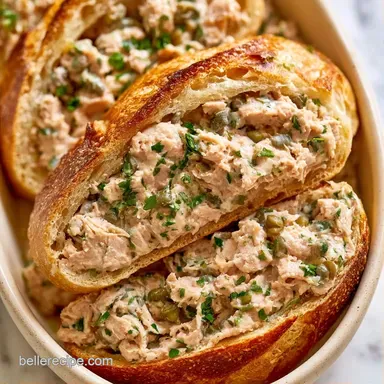
Pan Bagnat: Traditional French Pressed Sandwich
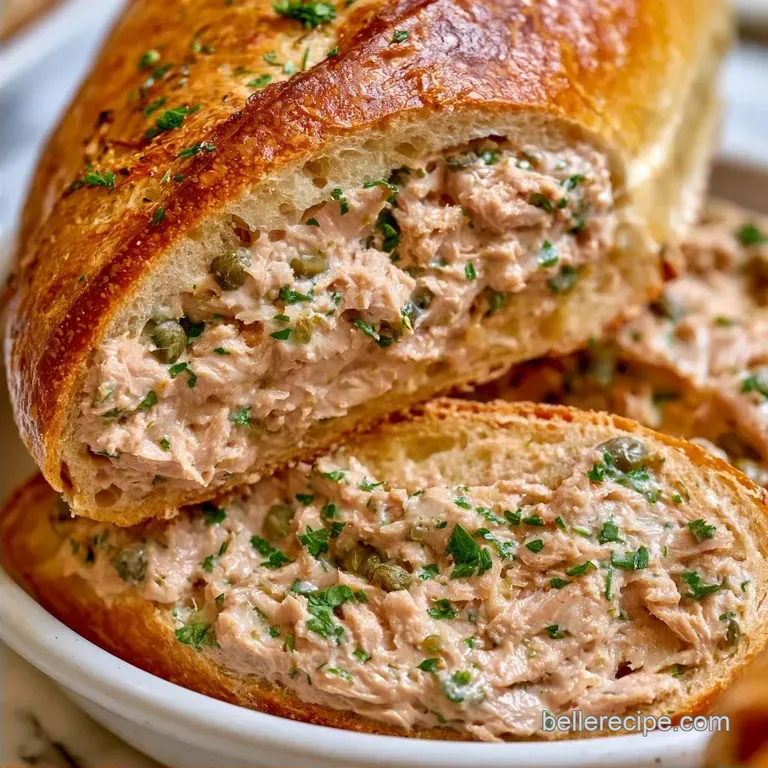
- Time: 20 min active + 2 hours pressing
- Flavor/Texture Hook: Zesty, olive rich, and crusty
- Perfect for: Outdoor picnics or meal prep
Walking through the markets of Nice, the air always smells like salt, garlic, and fresh basil. That's where you first encounter the tradition of the "soaked bread." Local vendors sell these heavy, pressed sandwiches that look like regular loaves but taste like a full salad captured in a crusty shell.
It's a piece of history. People in Nice created this as a portable version of the Niçoise salad for workers and travelers. Instead of a bowl and fork, they used a sourdough boule, stuffing it with tuna, olives, and eggs, then weighted it down.
You can expect a sandwich that doesn't get soggy in the bad way. Instead, the bread becomes part of the dressing. This Pan Bagnat version focuses on that aromatic balance of brine and acidity.
Classic Pan Bagnat Recipe
Avoid the common pitfall of using a soft loaf. You'll want a sourdough boule with a sturdy, thick crust that can handle the oil and pressure; if the crust is too thin, the whole sandwich will likely collapse into a soggy mess.
Don't be afraid to use plenty of olive oil. The bread needs to soak up that fat to achieve its characteristic texture. I once attempted a "light" version, but it tasted more like a dry tuna sandwich than an authentic Pan Bagnat.
The key to this recipe is the pressing. By applying weight, the flavors are pushed deep into the sourdough, making the Pan Bagnat cohesive and much easier to slice.
The Flavor Merge Process
- The Pressure Step: Weighting the sandwich forces the vinaigrette into the crumb, preventing the filling from sliding out.
- Bread Hollowing: Removing the center creates a pocket that holds the tuna and oil, so they don't leak across your picnic blanket.
- Acid Balance: Lemon in the tuna and vinegar in the dressing cut through the richness of the hard boiled eggs.
Shopping List Breakdown
Sourcing the Bread
Select a 1.5 lb sourdough boule with a crust that is crisp enough to "shatter." If you are buying from a bakery, a loaf that is a day old is preferable, as it will be slightly sturdier.
Choosing the Tuna
Tuna packed in water is the traditional choice for Pan Bagnat. Using oil-packed tuna can result in an overly greasy sandwich once the vinaigrette is added.
| Ingredient | What It Does | Best Swap |
|---|---|---|
| Sourdough Boule | Provides structure and tang | Ciabatta loaf (denser) |
| Niçoise Olives | Adds a salty, fruity brine | Kalamata olives (saltier) |
| Red Wine Vinegar | Cuts through fat with acidity | Lemon juice (brighter) |
| Baby Arugula | Adds peppery freshness | Spinach (milder) |
Gather the remaining components to assemble your Pan Bagnat.
- 1 large (approx. 1.5 lb / 680g) round sourdough boule Why this? A hearty crust supports the pressure of pressing.
- 2 cans (5 oz / 142g each) tuna in water, drained Why this? A lean foundation for the oil.
- 2 tbsp (30ml) extra virgin olive oil Why this? To bind the tuna mixture.
- 1 tbsp (15ml) fresh lemon juice Why this? Provides a citrusy lift.
- 1 tbsp (15g) capers, drained Why this? Briny bursts of flavor.
- 2 tbsp (30g) fresh parsley, finely chopped Why this? Fresh, herbaceous notes.
- 3 large (approx. 6 oz / 170g) vine ripened tomatoes, thinly sliced Why this? Juicy contrast.
- 1 medium (approx. 4 oz / 113g) red onion, paper thin slices Why this? A sharp, pungent bite.
- 4 hard boiled eggs, sliced into rounds Why this? Adds a rich, creamy texture.
- 1/2 cup (60g) Niçoise olives, pitted and halved Why this? Authentic taste of Nice.
- 2 cups (60g) baby arugula or mixed spring greens Why this? Peppery brightness.
- 1/3 cup (80ml) extra virgin olive oil Why this? The base for the vinaigrette.
- 2 tbsp (30ml) red wine vinegar Why this? Traditional French acidity.
- 1 clove (5g) garlic, minced Why this? Bold depth of flavor.
- 1/2 tsp (3g) sea salt Why this? Magnifies all other ingredients.
- 1/2 tsp (2g) cracked black pepper Why this? A hint of spice.
Necessary Kitchen Tools
While a professional kitchen isn't required, a serrated knife is essential. Using a straight blade risks crushing the boule before you even start the Pan Bagnat.
I also recommend a sturdy cutting board and several heavy cans of soup to act as a press. A dedicated Pan Bagnat press is a nice addition, but basic home supplies work just as well.
| Tool | Use | Pro Tip |
|---|---|---|
| Serrated Knife | Slicing the boule | Use a sawing motion rather than pressing down |
| Small Bowl | Mixing tuna | Choose glass to prevent oil absorption |
| Parchment Paper | Wrapping | Wrap snugly to maintain the shape |
| Heavy Cans | Pressing | Use 2-3 large cans for uniform weight |
The Assembly Process
Phase 1: Preparing the Vessel
- Slice the sourdough boule in half horizontally using a serrated knife.
- Carefully scoop out about 1 cup (100g) of the soft bread from the center of both halves to create a bowl for the fillings. Note: Save the crumbs for a stuffing later.
Phase 2: Mixing the Proteins and Dressings
- In a small bowl, flake the drained tuna and fold in 2 tbsp olive oil, lemon juice, capers, and parsley until cohesive.
- Whisk together red wine vinegar, garlic, salt, and pepper. Slowly stream in 1/3 cup olive oil while whisking until the dressing is thickened and silky.
Phase 3: Layering the Components
- Generously brush the interior of both bread halves with the prepared vinaigrette. until the bread looks glossy.
- Spread the tuna mixture evenly across the bottom half of the bread.
- Layer the sliced tomatoes, red onion, and Niçoise olives over the tuna.
- Place the hard boiled egg rounds on top of the vegetables.
- Pile the arugula on top and drizzle with the remaining vinaigrette.
Phase 4: Pressing for Flavor
- Press the top bread half firmly onto the greens.
- Wrap the entire Pan Bagnat tightly in parchment paper. Place a heavy weight, like a cutting board and canned goods, on top for 2 hours to press.
Chef Note: When you wrap the sandwich, pull the paper tight. This ensures the pressure is distributed evenly across the top of the Pan Bagnat, preventing it from leaning to one side.
The Flavor Merge Process
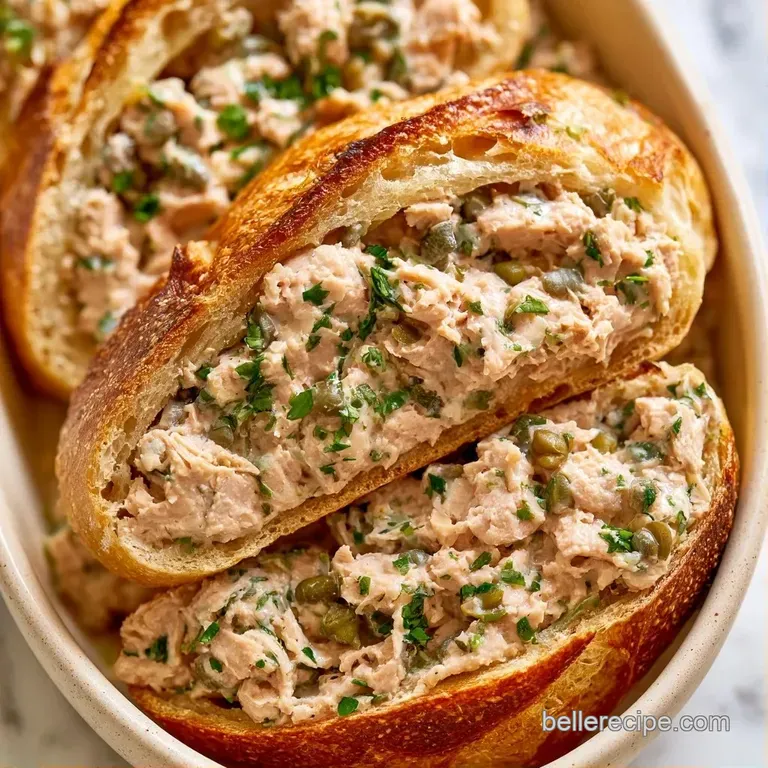
Since I already mentioned the merge logic, let's pivot to the texture. The acidity from the sourdough combines with the red wine vinegar to tenderize the crumb. This ensures the Pan Bagnat tastes more like a seasoned cake than a piece of raw bread.
For those considering different approaches, you might wonder if you should toast the bread. While some do, a traditional Pan Bagnat uses the "soaking" technique. Toasting creates a crust that blocks the oil from penetrating.
| Method | Result | Best For |
|---|---|---|
| Fresh Sourdough | Absorbs oil, soft interior | Authentic Pan Bagnat |
| Stovetop Toasted | Charred flavor, resists oil | Quick sandwiches |
| Oven Toasted | Consistent dry crust | Large group servings |
Troubleshooting Guide
Fixing Mushy Bread
If the bread feels too soft, it usually means the crust wasn't thick enough or you used too much vinaigrette. The Pan Bagnat should be moist, not wet. Use a sourdough with a dark, well baked crust next time.
Handling Bland Fillings
Blandness happens when the salt doesn't reach the center. Ensure you season the tuna separately and brush the bread well. A Pan Bagnat needs that sharp punch of vinegar to wake up the tuna.
Preventing Filling Slide
When you slice into the sandwich, the filling might slide. This happens if it wasn't pressed long enough. Ensure you leave it under weights for the full 2 hours.
| Problem | Root Cause | Solution |
|---|---|---|
| Soggy Bottom | Too much tomato juice | Seed the tomatoes before slicing |
| Bread Tearing | Too much pressure | Use a flat board to distribute weight |
| Bland Taste | Lack of acidity | Add a splash of lemon to the final drizzle |
Adjusting the Batch Size
For a smaller meal, use a 4 inch sourdough roll. Reduce the tuna to one can and cut the vinaigrette in half. The pressing time remains 2 hours, as the oil still needs time to penetrate the crust of the Pan Bagnat.
Scaling up for a party is easier. Use two 1.5 lb boules and work in batches. Increase the salt and pepper to 1.5x instead of doubling them, as the brine from the capers and olives can become overwhelming in large quantities.
If you're making four or more of these, don't press them all in one stack. They'll squish each other unevenly. Give each Pan Bagnat its own parchment wrap and its own weight.
Common Bread Myths
Some people think toasting the bread "seals" it from getting soggy. That's not true. Toasting creates a harder shell, but the interior still absorbs moisture. In a Pan Bagnat, we actually want the absorption.
Another myth is that you need a professional press to get the right texture. A few heavy cans of beans or a cast iron skillet do the exact same thing. The only thing that matters is the total weight and the time.
Keeping It Fresh
Keep your finished Pan Bagnat refrigerated in a sealed glass jar or wrapped tightly in foil. It will stay fresh for approximately 72 hours. In fact, the flavor profile improves after a day in the fridge as the ingredients blend together.
Avoid freezing this sandwich, as the tomatoes and arugula will become soggy once thawed. If you prefer to prep in advance, store the filling and bread separately and assemble your Pan Bagnat on the morning of your event.
To reduce waste, toast the bread crumbs you removed with olive oil and garlic. They serve as a wonderful salad topping or a handy binder for meatballs.
Flavor Variations to Try
If you want a different vibe, try swapping the tuna for chickpeas for a plant based version. It still works because the Niçoise olives and capers provide the salty depth needed for the Pan Bagnat.
For a punchier kick, you can add a layer of roasted red peppers. If you love bold flavors, a side of Chimichurri Sauce is a great dipping option for the crusty edges of the sandwich.
Another twist is adding anchovies. Just two or three fillets layered with the tuna will deepen the savory profile of the Pan Bagnat. Just be careful with the extra salt.
Decision Shortcut
- For a crunchier crust: skip brushing the outer edges of the bread.
- For a softer bite: wrap in a damp cloth before the parchment paper.
- For a lighter meal: use only one can of tuna and extra arugula.
Perfect Complements
Because the Pan Bagnat is quite hearty, it's best paired with a lighter side. A fresh green salad tossed in a simple lemon vinaigrette helps offset the richness of the oil and eggs.
For a more extensive brunch spread, complement it with other pan-seared options. A Boursin Chicken is an ideal choice, offering a warm, creamy foil to the zesty, chilled sandwich.
To stay traditional, serve it with a chilled glass of dry Provence Rosé. The wine's acidity slices through the olive oil, ensuring each bite tastes bright and crisp.
You now have everything needed to recreate this taste of Nice at home. Just keep in mind the two essentials: a heavy weight and a crusty sourdough boule. These are non-negotiable for an authentic Pan Bagnat.
Recipe FAQs
What does "pan bagnat" mean?
It translates to "soaked bread." The sourdough is brushed with vinaigrette and pressed, allowing the flavors to permeate the loaf.
How is it pronounced?
Pronounce it as "pahn bah-NYAH." The "t" at the end is silent, following traditional French phonetic rules.
Does it differ from a Salade Niçoise?
Yes, the format is the primary difference. While they share ingredients like tuna, olives, and eggs, one is a plated salad and the other is a pressed sourdough sandwich. It is a more filling option than classic soba noodles.
Which components make up this sandwich?
It consists of a sourdough boule filled with tuna, vine ripened tomatoes, red onion, Niçoise olives, hard boiled eggs, and arugula. Everything is bound together with a red wine vinegar and olive oil vinaigrette.
How do I press the bread?
Wrap the assembled sandwich tightly in parchment paper. Place a heavy weight, such as a cutting board and canned goods, on top for 2 hours to compress the layers.
Is it true you should eat it immediately?
False. The sandwich requires at least 2 hours of pressing to allow the vinaigrette to soak into the bread and the flavors to meld.