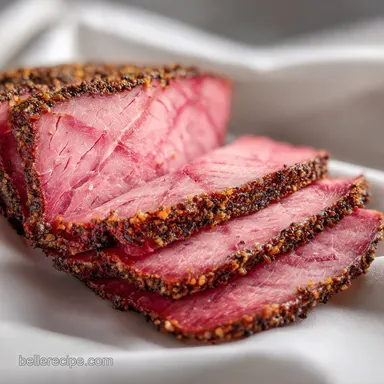
Pastrami Brine Recipe: Deli-Style Brisket at Home
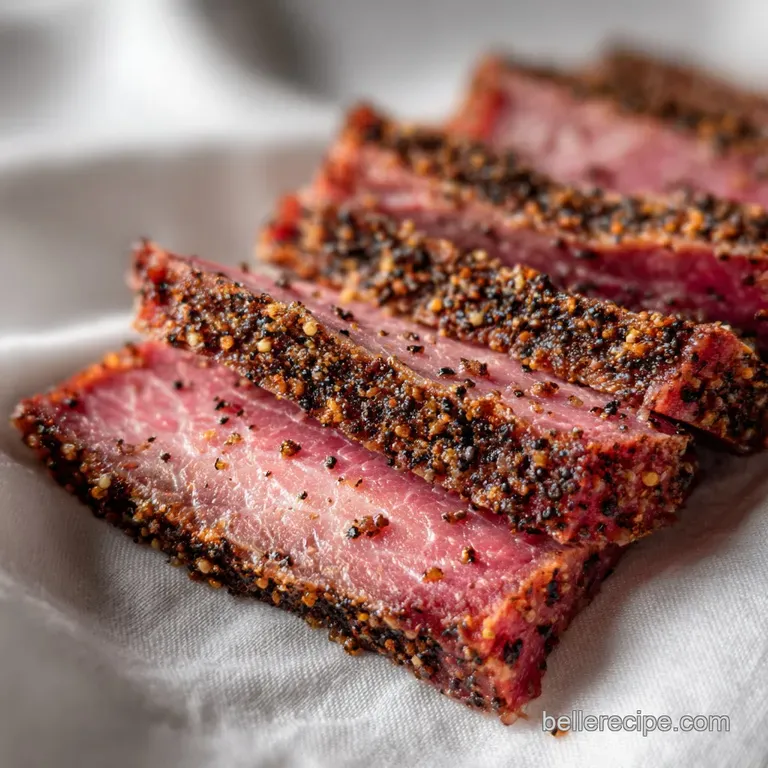
- Time:45 minutes active + 154 hours 45 mins curing/cooking = Total 154 hours 45 mins
- Flavor/Texture Hook: Peppery, shatter crisp bark with a velvety, tender center
- Perfect for: Weekend projects, hosting a brunch crowd, or homemade deli sandwiches
- Easy Pastrami Brine Recipe for Brisket
- Hidden Secrets of Curing Beef
- Essential Ingredients and Science
- The Building Blocks
- Tools for the Job
- Step by Step Curing Guide
- Solving Common Brining Issues
- Troubleshooting Common Issues
- Flexible Ingredient Swaps
- Pastrami Truths
- Storing and Warming Tips
- Serving Your Homemade Pastrami
- CRITICAL: Very High in Sodium
- Recipe FAQs
- 📝 Recipe Card
Easy Pastrami Brine Recipe for Brisket
Listen, there is nothing quite like the smell of a brisket hitting the smoke after a week of sitting in a cold bath. I remember the first time I tried this, I was convinced that the secret was just "more pepper." I loaded a piece of meat with spices, skipped the cure, and ended up with something that tasted like an expensive roast beef, not a New York deli slice.
It was a bit of a letdown, honestly. I realized then that the magic isn't in the rub, but in the wait.
The real hero of this pastrami brine recipe is the Prague Powder #1. Now, don't let the name intimidate you. It is essentially salt mixed with a tiny bit of sodium nitrite. Without it, your meat will be gray and bland.
With it, you get that vibrant, comforting pink color and a specific "cured" flavor that defines pastrami. It is the difference between a home cooked meal and a professional grade deli experience.
When you finally slice into this, you'll notice a striking contrast. The outside is a dark, mahogany crust that almost shatters when you bite into it, while the inside is tender, juicy, and rich. We are playing with the balance of salt, sugar, and smoke to turn a humble beef brisket into something truly special.
Right then, let's get into how we actually make this happen.
Hidden Secrets of Curing Beef
To understand why this works, you have to think about how salt moves. It is not just about making things salty; it is about changing the structure of the meat.
Osmosis Action: The salt in the brine pulls moisture out of the beef, then carries the flavors and nitrites back in. This ensures the seasoning reaches the center of the 5 lb brisket.
Nitrite Preservation: Prague Powder #1 prevents the growth of bad bacteria during the long cure. It also reacts with the meat's myoglobin to keep that pink color even after it is cooked.
Sugar Balance: The dark brown sugar isn't there for sweetness, but to mellow out the salt. It creates a rounded flavor profile so the meat doesn't taste like a salt lick.
Aromatic Infusion: Crushed coriander and peppercorns release oils into the liquid. These oils penetrate the muscle fibers, meaning the flavor is built into the meat, not just sitting on the surface.
If you've ever tried a Salmon Brine Smoking Recipe, you know that the brine is where the soul of the dish lives. The same logic applies here, though we are dealing with a much denser protein that requires a longer soak.
| Method | Time | Texture | Best For |
|---|---|---|---|
| Wood Smoker | 8 hours | Deep smoke, heavy bark | Authentic BBQ feel |
| Oven Bake | 8 hours | Cleaner beef flavor, soft bark | Indoor convenience |
| Steam Finish | 2 hours | Ultra tender, velvety | Traditional deli style |
Essential Ingredients and Science
Before we start mixing, let's look at what each component is actually doing. I've found that using distilled water is a small but important trick, as it prevents minerals in tap water from reacting with the curing salts.
| Ingredient | Science Role | Pro Secret |
|---|---|---|
| Prague Powder #1 | Curing agent | Use a digital scale; precision is non negotiable here |
| Dark Brown Sugar | Flavor offset | Use "dark" for a deeper, molasses like undertone |
| Kosher Salt | Moisture control | Avoid table salt; it's too dense and will over salt the meat |
| Coriander Seeds | Floral note | Toast them first to wake up the essential oils |
The Building Blocks
For this recipe, you will need a beef brisket. I prefer a "flat" cut for easier slicing, but a "point" cut gives you more fat and juiciness. Either works with this pastrami brine recipe.
Brine Ingredients:
- 5 lb beef brisket
- 1 gallon distilled waterWhy this? Prevents mineral interference with the cure
- 1 cup kosher saltWhy this? Coarse grains prevent over salting
- 1 cup dark brown sugarWhy this? Adds depth and balances the salt
- 2.5 tbsp Prague Powder #1Why this? Essential for the pink color and safety
- 2 tbsp black peppercorns, crushed
- 2 tbsp coriander seeds, crushed
- 4 cloves garlic, smashed
- 2 bay leaves
Mahogany Spice Rub:
- 1/2 cup coarse black pepper
- 1/4 cup coriander seeds, toasted and crushedWhy this? Provides the classic deli aroma
- 2 tbsp garlic powder
- 1 tbsp smoked paprika
- 1 tbsp brown sugar
Ingredient Swaps
If you can't find everything, don't panic. Most things can be swapped, but be careful with the salt.
| Original Ingredient | Substitute | Why It Works |
|---|---|---|
| Distilled Water | Filtered Water | Similar purity. Note: Avoid hard tap water |
| Dark Brown Sugar | Maple Sugar | Great depth. Note: Slightly sweeter, more woody |
| Smoked Paprika | Sweet Paprika | Adds color. Note: Loses that subtle smoky hint |
| Kosher Salt | Sea Salt (Coarse) | Same function. Note: Check saltiness; some are saltier |
Honestly, don't even bother with low sodium salt substitutes here. The brine needs the full strength of the salt to penetrate the brisket properly.
Tools for the Job
You don't need a professional kitchen, but you do need a few non reactive tools. This is important because the salt and nitrites can actually eat away at aluminum or uncoated steel, which can leave a metallic taste in your meat.
I use a large food grade plastic bucket or a heavy duty glass container for the curing process. A stainless steel pot is perfect for heating the brine. You'll also want a meat thermometer, because guessing the internal temperature of a brisket is a recipe for disaster.
If you have a mortar and pestle, use it for the coriander and peppercorns. Coarsely crushed seeds provide a much better texture than a fine powder.
Step by step Curing Guide
Let's crack on. This process is a marathon, not a sprint, so be patient.
- Combine distilled water, kosher salt, dark brown sugar, and Prague Powder #1 in a pot. Heat until fully dissolved, then stir in crushed peppercorns, coriander, and smashed garlic. Note: Don't boil it dry, just get the solids dissolved.
- Completely cool the brine in the fridge before adding meat. Wait until it's cold to the touch so you don't accidentally start cooking the outside of the beef.
- Place the trimmed brisket in a non reactive container and pour the brine over it, ensuring the meat is fully submerged. Note: Use a heavy plate to weigh it down if it floats.
- Refrigerate for 5 to 7 days, flipping the meat every 48 hours to ensure even curing. Check the seal on your container to prevent smells from leaking into your fridge.
- Remove the brisket from the brine and rinse under cold water. Soak it in a bowl of fresh water for 2 hours to remove excess surface salt. Note: This prevents the final product from being a salt bomb.
- Pat the meat completely dry with paper towels. Ensure it is bone dry or the rub won't stick.
- Coat the brisket generously with the mahogany spice rub, pressing it into the meat to ensure it adheres. Apply a thick layer for that classic crust.
- Smoke or bake at 225°F (107°C) until the internal temperature reaches 160°F (71°C). This usually takes about 8 hours.
- For a true deli finish, steam the meat for 1 hour wrapped in foil to make it velvety.
Solving Common Brining Issues
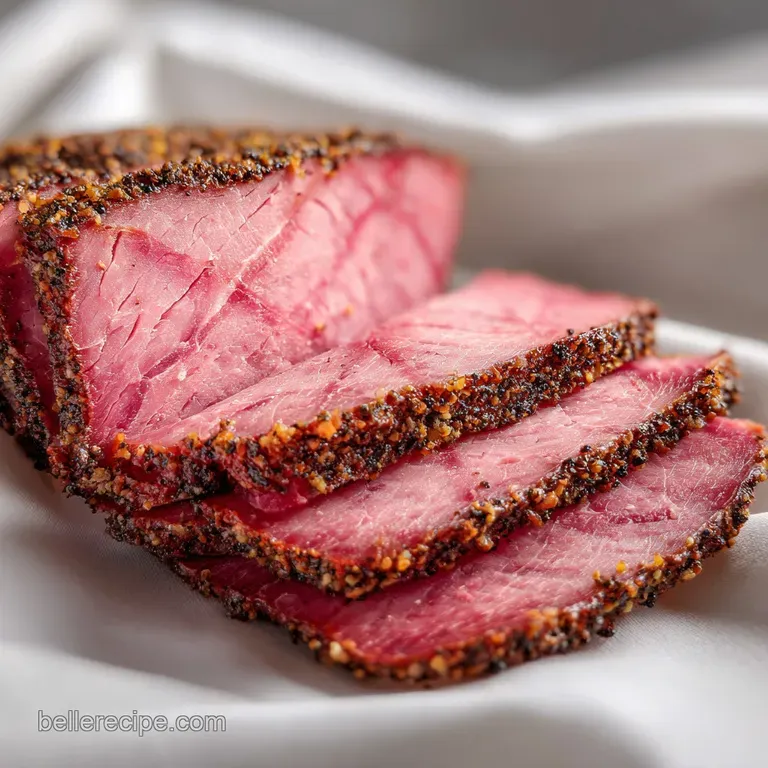
Most problems with this pastrami brine recipe happen during the soaking or rubbing phases. If something feels off, it's usually a fixable mistake.
Troubleshooting Common Issues
| Issue | Solution |
|---|---|
| Why Your Pastrami Is Too Salty | This usually happens if the meat wasn't soaked in fresh water after the brine. The surface salt is intense, and if you don't rinse it off, it overpowers the beef. |
| Why Your Bark Is Too Soft | A soft crust usually means the meat was too wet when you applied the rub, or you didn't use enough coarse pepper. The pepper creates the structure of the bark. |
| Why Your Meat Is Tough | If the brisket is chewy, it likely didn't reach the proper internal temperature or you skipped the steaming phase. Brisket needs time and heat to break down the collagen. |
Common Mistakes Checklist:
- ✓ Did you cool the brine completely before adding the meat?
- ✓ Did you flip the brisket every 48 hours?
- ✓ Did you soak the meat in fresh water for 2 hours?
- ✓ Did you pat the meat completely dry before rubbing?
- ✓ Did you use a non reactive container for the cure?
Flexible Ingredient Swaps
Depending on your taste, you can tweak this pastrami brine recipe to fit your vibe. Some people love a more aggressive spice profile, while others prefer it subtle.
For a Nitrite Free Option
If you want a pastrami brine recipe without curing salt, you can use a mixture of extra salt and a touch of celery powder (which contains natural nitrates). Note: The meat will be gray, not pink, and the flavor will be closer to corned beef.
For a Low Sugar Version
You can reduce the brown sugar by half. This will make the flavor more savory and "sharp," which some people prefer. Just be aware that the bark won't caramelize as deeply.
For a Smoker Free Version
If you don't have a smoker, just use your oven. To get that smoky flavor, add 1 tablespoon of liquid smoke to the brine or increase the smoked paprika in the rub.
Scaling the Brine
If you're feeding a crowd, you can easily double the recipe. But be careful: do not double the spices in the rub. Use about 1.5x the spices for 2x the meat, or you'll overwhelm the flavor. If you're doing a smaller piece, like 2 lbs, cut the brine in half but keep the soak time the same.
Pastrami Truths
There are a few things people believe about curing meat that just aren't true. Let's set the record straight.
One common myth is that you can "quick cure" pastrami in 24 hours. Trust me, you can't. The salt needs days to migrate to the center of a thick brisket. Any "quick" version is just seasoned beef, not true pastrami.
Another one is that the rub "seals in the juices." This is a total myth. The rub is for flavor and texture (the bark). The moisture is actually managed by the brine and the low and slow cooking temperature.
Storing and Warming Tips
Once your pastrami is done, you have a few options. Because of the curing process, it actually lasts longer in the fridge than a standard roast.
Storage: Store the sliced or whole brisket in an airtight container in the fridge for up to 7 days. If you've made a huge batch, it freezes beautifully. Wrap it tightly in plastic wrap and then foil to prevent freezer burn. It'll stay good for about 3 months.
Reheating: To keep it from drying out, don't just throw it in the microwave. Instead, place the slices in a steamer basket for 5-10 minutes. This re hydrates the fats and makes the meat velvety again.
Zero Waste: Don't throw away the leftover rub! If you have a bit left in the bowl, use it to season some roasted potatoes or carrots. The coriander and pepper combo is a fantastic match for root vegetables. Also, if you have leftover brisket, it makes an incredible hash for breakfast.
Serving Your Homemade Pastrami
The best way to enjoy the results of this pastrami brine recipe is to lean into the contrast. You have this rich, salty, smoky meat, so you need something bright to cut through it.
I love serving it on toasted rye bread with a thick layer of spicy brown mustard and a heap of sauerkraut. The acidity of the kraut and the tang of the mustard balance the richness of the beef perfectly. For a side dish, this pairs beautifully with some Homemade Baked Beans, which add a sweet and smoky complement to the meal.
If you're feeling fancy, try a Modern Pastrami Melt. Layer the slices with Swiss cheese and caramelized onions on sourdough, then grill it in butter until the bread is golden. It's comforting, sunny, and perfect for sharing with friends.
Just remember to slice the meat against the grain; if you slice with the grain, it'll be chewy no matter how long you cured it.
Right then, you're all set. Just remember: the waiting is the hardest part, but that's where the flavor lives. Happy curing!
CRITICAL: Very High in Sodium
1920 mg 1,920 mg of sodium per serving (83% 83% of daily value)
The American Heart Association recommends a daily sodium limit of 2,300 mg, with an ideal limit of 1,500 mg for most adults to reduce cardiovascular risk.
Sodium Reduction Strategies
-
Slash Brine Salt-30%
Significantly reduce the 1 cup of kosher salt in the brine; try cutting this amount by half to dramatically lower the sodium intake.
-
Precise Curing Measure-10%
Use a digital scale for the Prague Powder #1 to ensure you are using the exact minimum required for safety, as excess curing salt adds unnecessary sodium.
-
Verify Garlic Powder-5%
Double check that your garlic powder is pure and not 'garlic salt', which can sneak in significant amounts of extra sodium.
-
Amplify Natural Spices
Increase the black peppercorns, coriander seeds, and smoked paprika to create a more robust flavor profile that compensates for the reduction in salt.
Recipe FAQs
What is in a pastrami brine?
Distilled water, kosher salt, dark brown sugar, and Prague Powder #1. This base is infused with crushed peppercorns, coriander, smashed garlic, and bay leaves for a traditional flavor profile.
How to prepare the pastrami brine?
Combine water, salt, sugar, and Prague Powder in a pot. Heat until the solids are fully dissolved, stir in the spices, and cool the mixture completely in the fridge before adding the meat.
How long can pastrami stay in brine?
Between 5 to 7 days. Flip the brisket every 48 hours to ensure the curing agents penetrate the meat evenly on all sides.
How long should I brine pastrami for professional results?
Refrigerate the meat for 5 to 7 days. If you enjoyed the precision of brining a turkey, the same principle of osmotic salt penetration is used here to cure the beef.
Is it true that Prague Powder #1 is optional?
No, this is a common misconception. Prague Powder #1 is essential for achieving the characteristic pink color and ensuring the meat is safe from bacterial growth during the curing process.
How to remove excess salt from the brisket after brining?
Rinse the meat under cold water and soak it in a bowl of fresh water for 2 hours. This step is critical to remove surface salt that would otherwise make the pastrami taste overly salty.
Can I use tap water instead of distilled water?
Use distilled water for the most consistent results. It prevents minerals and chlorine found in tap water from reacting with the curing salts and altering the flavor.
Pastrami Brine Recipe