Yorkshire Pudding: the Kings Ransom for Perfect, Puffy Results

- The King's Ransom: Mastering the Gravity-Defying Yorkshire Pudding
- Precision Planning: Essential Ingredients for the Best Yorkshire Puddings
- From Bowl to Bake: Definitive Step-by-Step Instructions
- The Science of the Puff: Why This Yorkshire Pudding Rises So High
- Troubleshooting the Puff: Expert Tips and Fatal Mistakes to Avoid
- Keeping the Glory: Storage and Reheating Guidelines for Yorkshire Pudding
- Serving the Stars: Perfect Pairings and Presentation
- Recipe FAQs
- 📝 Recipe Card
The King's Ransom: Mastering the Gravity Defying Yorkshire Pudding
The Quest for Maximum Puff: Defining the Perfect Yorkshire
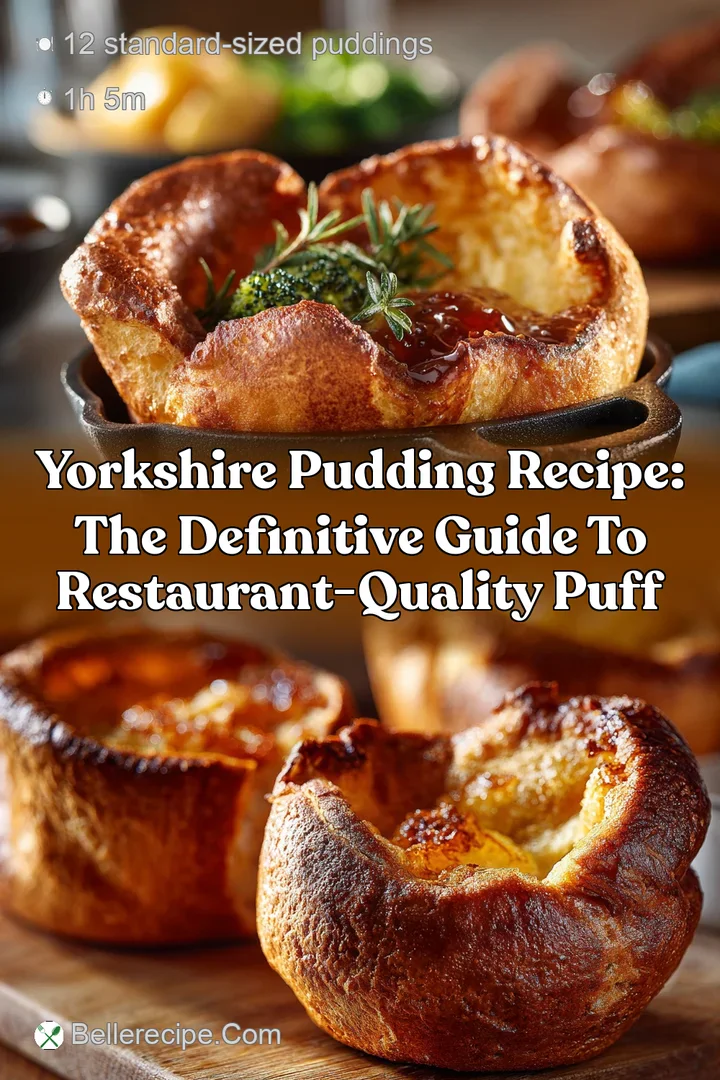
When that impossibly crisp, golden shell cracks and releases a cloud of hot, steamy air, you know you’ve absolutely nailed it. The perfect Yorkshire Pudding is honestly a masterpiece of simple chemistry and intense heat.
It must be light, dramatically puffed, and incredibly airy inside, ready to soak up every drop of rich, savoury sauce.
Heat, Batter, and Science: A Quick Overview
Seriously, the core ingredients are so basic: flour, eggs, and milk. That’s literally it! This recipe results in the cheapest, fastest side dish you can make for a crowd, provided you just respect the process.
Don't worry about unnecessary complexity; this whole thing takes maybe ten minutes of active mixing before the all-important resting period begins.
Why 'Sunday Roast' Needs This Classic Accompaniment
Yorkshires are far more than just filler; they are the true vehicle for flavour, designed specifically to capture pan juices and rich gravy. Forget those sad, dense, flat failures you might have tried making before.
I promise this guide gives you the definitive secrets to gravity defying Yorkshire pudding height and glorious perfection, every single time. Let's crack on and get this batter resting.
Precision Planning: Essential Ingredients for the Best Yorkshire Puddings
Why This Recipe Works
The real magic here is all about the dramatic temperature difference. We use a cold, rested batter poured directly into smoking hot fat . That massive thermal shock creates an explosive release of steam inside the batter.
This steam, trapped by the rapidly setting gluten structure, instantly forces the walls of the pudding upward and outward. It's truly simple physics, but the visual results are dramatic and delicious.
The Flour Factor: Plain vs. Self Raising (And Why It Matters)
Stick firmly to plain (all-purpose) flour, always. Self raising flour contains baking powder, which provides a chemical rise, but it results in a heavier, disappointingly cake like texture. We are aiming for steam lift only. We want crispy, fragile bubbles that hold their shape, not a dense, bready scone!
Achieving the Perfect Batter Consistency (The Double Cream Test)
Consistency is absolutely crucial for maximum Yorkshire Pudding height. Your finished batter should be smooth, pour easily, and look roughly the consistency of heavy or double cream. If it’s too thick, you get dense puddings; if it’s too thin, it won't have the structural integrity to hold the steam lift.
Always strain your batter —it guarantees that silky, lump free texture which promotes an even rise.
Ingredient Swaps: Dairy Milk vs. Water/Milk Combination
We use a combination of milk (for richness and colour) and a touch of cold water (which converts to steam faster than milk) for structural insurance. But sometimes you need to swap things out.
| Ingredient | My Recommendation | Viable Substitute |
|---|---|---|
| All-Purpose Flour | Sifted AP Flour | Good quality gluten-free Blend (Must contain Xanthan Gum) |
| Whole Milk | Room Temp Whole Milk | Oat Milk (Less rich) or All Water (Crispier, slightly less flavour) |
| Large Eggs | Room Temp Eggs | None (They are the structural glue!) |
The Crucial Role of Piping Hot Fat (Using Dripping vs. Oil)
This step is truly where the authentic flavour happens. Traditionally, you must use beef dripping (tallow) because it imparts an unparalleled, savory richness that oil simply can't touch. If you don't have dripping, use a neutral, high smoke point oil like sunflower or canola.
The fat must be visibly smoking hot. I once rushed this step and ended up with greasy, flat disks instead of puffy clouds a disaster that I will never repeat.
Chef’s Note: Never use butter or olive oil for Yorkshire Puddings. Their low smoke points mean they will burn before the tin is hot enough to cook the batter effectively, resulting in a horrible acrid taste.
From Bowl to Bake: Definitive step-by-step Instructions
Preparing the Batter: Avoiding Lumps and Ensuring Aeration
- Combine Dry: Sift your flour and salt together into a large bowl. This aeration is important for a light final product.
- Add Eggs: Whisk in the room temperature eggs until they are just incorporated with the flour mixture.
- Add Liquid: Gradually whisk in the room temperature milk and cold water until the batter is smooth and thin, like cream.
- Strain and Rest: Pass the entire batter mixture through a fine mesh sieve into a clean jug. This straining step is mandatory. Cover the jug and chill the batter in the fridge for a minimum of 30 minutes, but 60 minutes is ideal for the perfect Yorkshire pudding recipe easy preparation.
The Critical Pre-Heat: Getting the Fat Smoking Hot
- Preheat: Set your oven to a searing, blistering hot 450°F (230° C) . This temperature is non-negotiable.
- Add Fat: Place about half a tablespoon of beef dripping (or oil) into each cup of your 12 cup muffin tin (or Yorkshire pudding pan).
- Heat the Tin: Place the empty tin with the fat into the preheated oven for 10– 15 minutes. The fat must be shimmering, spitting, and visibly smoking hot when you pull it out.
Pouring and Timing: Achieving the Initial Set
- Pour Quickly: Carefully remove the smoking hot tin from the oven. Working fast and safely, immediately fill each cup halfway with the cold, rested batter. The batter must sizzle loudly upon contact with the hot fat.
- Bake Immediately: Immediately return the tin to the centre shelf of the hot oven. Speed is essential here to maintain the temperature.
The Golden Rule of Baking: Resisting the Urge to Peek
- Cook Undisturbed: Bake your Yorkshire puddings for 20– 25 minutes. DO NOT open the oven door during the first 15 minutes, period. The sudden drop in temperature will completely deflate all your beautiful puff.
- Serve: The puddings are ready when they are dramatically risen, deeply golden brown, and crispy on the edges. Remove them and serve immediately while piping hot.
The Science of the Puff: Why This Yorkshire Pudding Rises So High

Temperature Shock: The Key to Steam Expansion
The massive contrast between the cold batter and the scorching oven environment is the absolute secret weapon. As the water content in the cold batter instantly vaporizes into steam upon hitting the hot fat, that steam is rapidly pressurized.
This rapid expansion, combined with the quick setting of the batter structure, forces the walls of the pudding upward and outward into their iconic shape.
Resting the Batter: Gluten Relaxation Explained
Giving the batter a full rest in the fridge allows the gluten strands, which formed while you were whisking, to properly relax and hydrate fully. Relaxed gluten means the batter can stretch much further and faster without tearing when the steam explosion happens.
This process leads to a much lighter, crispier pudding, rather than a tough or rubbery one.
Troubleshooting the Puff: Expert Tips and Fatal Mistakes to Avoid
Help! Why Didn’t My Puddings Rise? (Common Errors)
Nine times out of ten, failure comes down to heat.
- The Temperature Lie: Your oven temperature was too low, or you cracked the door too early. Fix: Invest in a cheap oven thermometer to verify the heat, and trust the timer don't peek!
- Lukewarm Fat: The fat wasn't hot enough. If the batter didn't make a satisfying, aggressive sizzle when you poured it, it was a failure from the start. Fix: You must wait until the fat is visibly smoking hot before adding the batter.
- Warm Ingredients: You used ingredients straight from the cupboard. Fix: Use room temperature eggs and milk, but ensure the final batter is chilled before pouring into the heat.
The Best Tinware for Maximum Volume
While a standard 12 cup muffin tin works perfectly for individual portions (great if you’re making a Yorkshire pudding recipe for 6 or even a Yorkshire pudding recipe for 2), using heavy, deep metal tins is actually best.
Thin aluminium pans struggle to retain the necessary heat, which completely compromises the critical thermal shock needed for that maximum rise.
Keeping the Glory: Storage and Reheating Guidelines for Yorkshire Pudding
Freezing Yorkshire Puddings: Best Practices for Pre-Made Batches
Yorkshire puddings freeze like a dream, making them an incredible make-ahead option. Once they are fully cooled, transfer them to a sturdy freezer bag or airtight container. They keep beautifully for up to three months, ready for whenever the craving strikes!
Reheating Day-Old Puds: Restoring Optimal Crispness
Never, ever use the microwave to reheat these it turns them instantly soggy and sad. For day-old or frozen puddings, place them directly onto a baking sheet. Pop them into a hot oven (400°F / 200°C) for 5 to 8 minutes.
They will crisp up perfectly and taste nearly as fresh as the moment they came out the first time.
Serving the Stars: Perfect Pairings and Presentation
Serving Suggestions and Pudding Versatility
While they traditionally go with Sunday roast and lashings of rich gravy, these sturdy puddings can be a versatile base. You could fill the warm cavity with slow cooked caramelised onions or maybe a dash of horseradish cream for an incredible starter. If you enjoy the concept of creative pudding bases even the sweet kind you might get some inspiration from recipes like my The Ultimate NoBake Banana Pudding with Cream Cheese Swirl . Just remember: these specific, savoury Yorkies absolutely demand rich gravy!
Recipe FAQs
Why didn't my Yorkshire puddings rise properly?
The number one reason for a flat Yorkshire is insufficient heat. The fat must be smoking hot approaching its smoke point before the cold batter is added; this rapid temperature difference creates the massive burst of steam necessary for the dramatic lift.
Ensure your oven is fully preheated and that you have rested your batter adequately.
Can I prepare the Yorkshire Pudding batter ahead of time?
Yes, preparing the batter in advance is highly recommended, ideally allowing it to rest in the refrigerator for at least 30 minutes, or even up to 24 hours. Resting allows the starch molecules in the flour time to fully hydrate, which reduces gluten tension and results in a lighter, higher rising pudding.
Give the batter a quick whisk right before pouring.
Is beef dripping (tallow) essential, or can I use a standard oil?
Traditional beef dripping provides the unique, savory flavor profile and superior crispness that defines a classic Yorkshire pudding. While you can use a high smoke point vegetable oil, such as sunflower or canola, the results will not be quite as robust in flavor.
Never use butter, as its low smoke point will burn before the puddings are cooked.
Why did my puddings deflate immediately after removing them from the oven?
Immediate deflation usually means the pudding’s structure was not fully set, often due to underbaking or opening the oven door too soon. If the center is still moist, the trapped steam escapes too quickly upon removal.
Ensure you bake them until they are a deep golden brown and completely crisp before taking them out.
Can I make this recipe gluten-free or dairy-free?
This recipe adapts well to dietary restrictions; substitute the plain flour with a reliable 1:1 gluten-free blend that includes xanthan gum for structure. For a dairy-free version, swap the milk for a plant based alternative like soy milk or oat milk, which mimic the fat content and thickness of dairy well.
The extreme heat remains the crucial factor for rise regardless of the ingredients.
How should I store and reheat leftover Yorkshire puddings?
Leftover Yorkshire puddings should be stored in an airtight container at room temperature for up to two days, or frozen for longer preservation. To reheat them, place them on a baking tray in a hot oven (around 200°C / 400°F) for 5-8 minutes until they are piping hot and completely crisp again.
Avoid microwaving, as this makes them instantly chewy and soggy.
Can I use a muffin tin instead of a dedicated Yorkshire pudding tin?
Yes, a standard 12-hole muffin tin works perfectly well, though the puddings will be slightly smaller and taller than those made in specialized deeper tins. Crucially, fill the muffin holes only about one-third full with batter and ensure you add a teaspoon of hot fat to every single cavity before pouring in the mix.
Perfect Puffy Yorkshire Pudding Recipe

Ingredients:
Instructions:
Nutrition Facts:
| Calories | 437 kcal |
|---|---|
| Protein | 11.7 g |
| Fat | 30.5 g |
| Carbs | 28.0 g |
