Potsticker Soup Recipe: Simple & Silky Broth
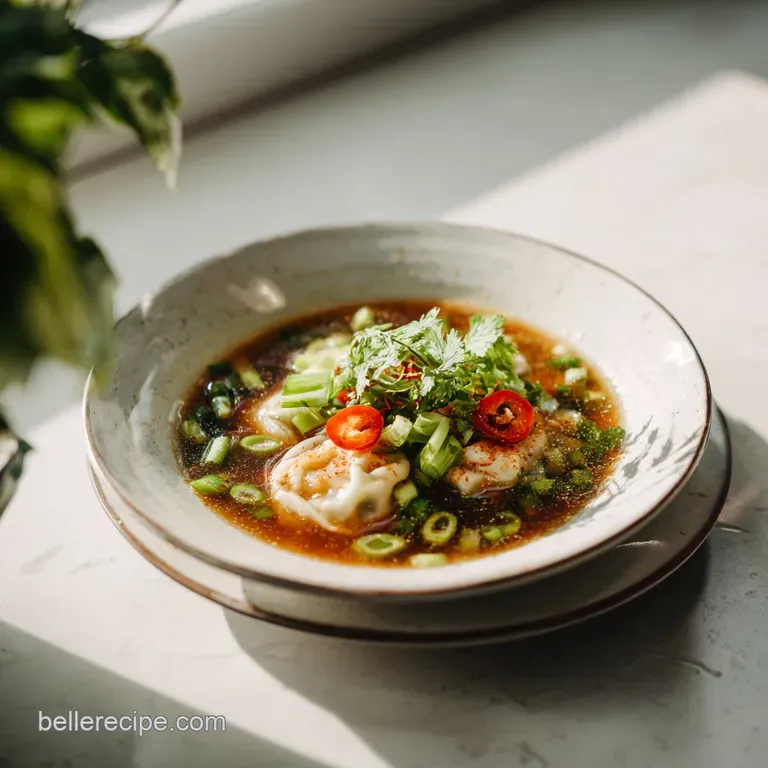
- Time: Active 10 minutes, Passive 15 minutes, Total 25 minutes
- Flavor/Texture Hook: Silky broth with velvety greens and tender, savory dumplings
- Perfect for: Stress free weeknight dinners or mindful solo lunches
- Creating a Simple and Comforting Potsticker Soup Recipe
- Why This Simple Dumpling Bowl Is Pure Comfort
- Component Analysis of Your Savory Broth
- Gathering Fresh Ingredients for Your Flavorful Broth Base
- Simple Tools Required for a Successful Soup Night
- Clear Steps for Making Your Favorite Potsticker Soup
- Simple Fixes for Common Potsticker Soup Mistakes
- Adjusting the Scale for Any Crowd
- The Physics of the Floating Dumpling
- Debunking Common Kitchen Myths
- Storing Your Leftovers and Reducing Kitchen Food Waste
- Elegant Finishing Touches for a Restaurant Quality Look
- Very High in Sodium
- Recipe FAQs
- 📝 Recipe Card
Creating a Simple and Comforting Potsticker Soup Recipe
The first time I made this, it was one of those "refrigerator graveyard" nights. You know the ones, where the wind is howling outside and the idea of a grocery run feels like a personal affront. I had a bag of frozen pork potstickers tucked behind a tub of ice cream and a few limp stalks of bok choy.
I threw them into a pot with some ginger that was starting to look a bit wrinkled, and the kitchen immediately filled with that sharp, spicy aroma that promises something restorative.
As the first sip of the broth hit my tongue, I realized I’d stumbled onto something special. The ginger provided a gentle heat that settled right in my chest, while the sesame oil added a nutty depth that made the whole thing feel far more expensive than it actually was.
It wasn't just a "hack" meal, it was a legitimate moment of calm in a chaotic week. Since then, this potsticker soup recipe has become my go to whenever anyone in the house feels a bit under the weather or just needs a little extra kindness in a bowl.
We are going for a balance of textures here. I want the dumplings to stay intact, with a slight chew to the wrapper, rather than turning into mushy clouds. By poaching them directly in the fortified broth, they soak up all that soy and garlic goodness.
It’s a mindful way to cook that honors the ingredients, even the frozen ones, and turns a simple pantry staple into a meal you’ll actually look forward to sharing with your favorite people.
Why This Simple Dumpling Bowl Is Pure Comfort
- Aromatic Fortification: Sautéing the garlic and ginger in oil before adding liquid releases fat soluble flavor compounds that water based simmering can't reach.
- Starch Emulsification: As the frozen potstickers poach, they release a tiny amount of surface starch into the broth, giving it a slightly weightier, silkier mouthfeel.
- Enzymatic Preservation: Adding the scallion greens at the very end preserves their bright, peppery bite and prevents the delicate vitamin C from breaking down in the heat.
- Acid Balance: The rice vinegar provides a necessary sharp note that cuts through the richness of the sesame oil and the savory fat of the potstickers.
| Method | Total Time | Texture | Best For |
|---|---|---|---|
| Stovetop | 25 minutes | Firm dumplings, crisp tender veggies | Maximum flavor control |
| Slow Cooker | 3 hours | Very soft, silky wrappers | Hands off meal prep |
| Instant Pot | 15 minutes | Uniformly tender and hot | Extreme time saving |
There is something so satisfying about the way a stovetop simmer allows you to watch the greens transform from vibrant jade to a soft, forest green. While the slow cooker is great for busy days, the stovetop method is my favorite because it keeps the bok choy from getting that overcooked, swampy texture that can ruin a good soup.
Component Analysis of Your Savory Broth
| Ingredient | Science Role | Pro Secret |
|---|---|---|
| Fresh Ginger | Provides gingerol for heat and aroma | Grate it while frozen to get a fine paste without the woody fibers |
| Toasted Sesame Oil | Acts as a flavor carrier and aromatic top note | Always add at the end to prevent the delicate oils from scorching |
| Low Sodium Broth | Provides the savory liquid base | Use a high-quality bone broth for extra collagen and a richer mouthfeel |
Gathering Fresh Ingredients for Your Flavorful Broth Base
To get this recipe just right, you’ll want to have everything prepped before the oil hits the pan. It moves fast once the sizzle starts.
- 1 tbsp Neutral Oil: I prefer avocado or grapeseed oil because they don't interfere with the ginger aroma. Why this? High smoke point prevents bitter scorched flavors.
- 3 cloves Garlic: Mince these finely so they melt into the broth.
- 2 tbsp Fresh Ginger: Grated is best for maximum surface area.
- 4 Scallions: Separate the white bottoms from the green tops.
- 6 cups Low Sodium Chicken Broth: This is our canvas.
- 2 tbsp Soy Sauce: Use Tamari if you need a gluten-free option.
- 1 tbsp Rice Vinegar: This provides the "zing" that wakes up the salt.
- 1 tsp Toasted Sesame Oil: A little goes a long way for that nutty finish.
- 1/2 tsp White Pepper: It has a more floral, earthy heat than black pepper.
- 1 lb Frozen Potstickers: Chicken or pork both work beautifully here.
- 2 cups Bok Choy: Chopped into bite sized ribbons.
- 1 cup Shredded Carrots: These add a much needed pop of sweetness and color.
If you find yourself out of chicken broth, don't panic. You can use a vegetable broth or even water with a bit of extra soy sauce and a dash of mushroom powder to keep that savory depth. For those who love a bit of crunch on the side, these Homemade Soup Crackers recipe add a lovely textural contrast to the soft dumplings.
| Original Ingredient | Substitute | Why It Works |
|---|---|---|
| Bok Choy | Spinach or Kale | Similar green leaf profile. Note: Spinach wilts much faster |
| Rice Vinegar | Lime Juice | Provides the necessary acidity with a citrus twist |
| Chicken Potstickers | Vegetable Gyoza | Keeps the dish vegetarian friendly while maintaining the shape |
Simple Tools Required for a Successful Soup Night
You don't need a kitchen full of gadgets for this potsticker soup recipe, but a few specific items make the process much smoother. A heavy bottomed pot, like a Dutch oven or a large stainless steel saucepan, is essential.
It holds heat evenly, which means your broth won't have hot spots that might overcook the dumplings on one side while the others stay cold.
I also highly recommend using a microplane for the ginger. It turns the root into a fine mist that distributes perfectly throughout the liquid. If you only have a knife, you'll need to mince it incredibly fine to avoid biting into a large, fibrous chunk.
Finally, a good ladle is your best friend here one with a wide bowl so you can scoop up the dumplings without piercing their delicate skins.
Clear Steps for Making Your Favorite Potsticker Soup
1. Build the Flavor Base
Heat the 1 tbsp neutral oil in your large pot over medium heat. Add the minced garlic, grated ginger, and the white parts of the scallions. Sauté for about 2 minutes until fragrant and the garlic is translucent but not browned.
2. Simmer the Fortified Broth
Pour in the 6 cups of chicken broth, 2 tbsp soy sauce, 1 tbsp rice vinegar, and 1/2 tsp white pepper. Bring the mixture to a gentle boil, then reduce the heat to a simmer for 5 minutes. Note: This allows the aromatics to fully infuse the liquid.
3. Poach the Potstickers and Veggies
Carefully drop the 1 lb frozen potstickers into the simmering broth. Let them cook for 5 minutes. Add the 1 cup shredded carrots and 2 cups chopped bok choy. Continue to simmer for another 3 to 4 minutes until the potstickers float and the bok choy is tender.
4. The Finishing Touches
Turn off the heat. Stir in the 1 tsp toasted sesame oil and the reserved scallion greens. Taste the broth if it needs more brightness, add an extra splash of vinegar. Serve immediately while the dumplings are plump and the greens are vibrant.
If you enjoy the process of building a soup from scratch like this, you might also find the technique for this Cheddar Broccoli Soup recipe interesting, as it uses a similar principle of layering flavors to achieve restaurant quality results at home.
Simple Fixes for Common Potsticker Soup Mistakes
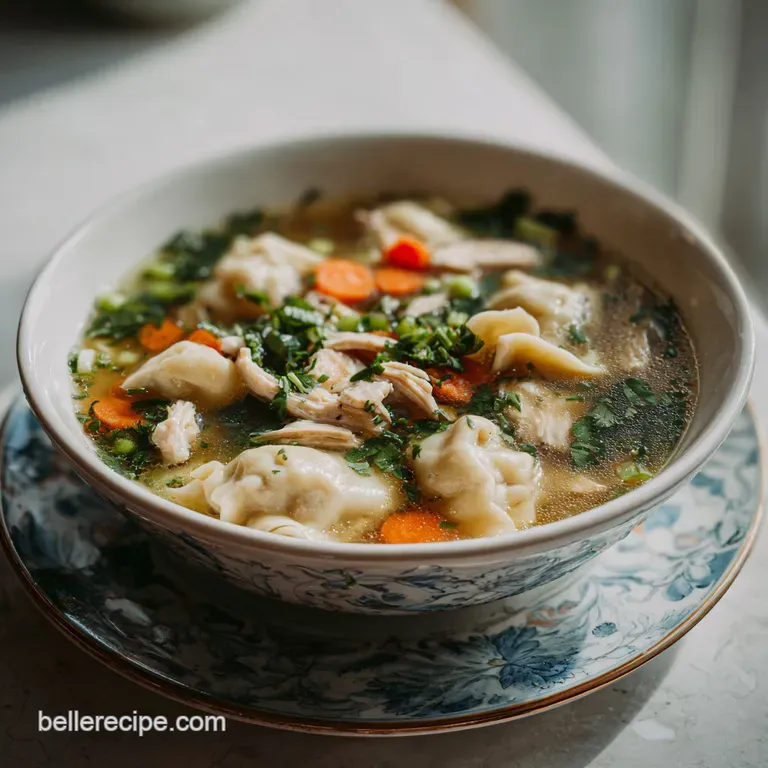
Why Your Dumplings Are Falling Apart
This usually happens because the broth was at a violent, rolling boil when the potstickers were added. The mechanical action of the bubbling water can tear the delicate dough. Another culprit is overcooking; once they float, they only need another minute or two.
Why the Broth Tastes Flat
If the soup feels like it's missing something, it's usually a lack of acidity or salt. Despite the soy sauce, different broths have varying salt levels. A tiny pinch of salt or an extra teaspoon of rice vinegar usually snaps everything into focus.
| Problem | Root Cause | Solution |
|---|---|---|
| Cloudy Broth | Starch release from over boiling | Keep the liquid at a gentle simmer, never a hard boil |
| Bitter Aftertaste | Scorched garlic or ginger | Sauté over medium low heat and add liquid as soon as they smell fragrant |
| Soggy Vegetables | Adding greens too early | Wait until the dumplings are almost finished before adding bok choy |
Common Mistakes Checklist
- ✓ Don't skip sautéing the aromatics; it's where the soul of the soup lives.
- ✓ Keep the potstickers frozen until the moment they go into the pot to prevent sticking.
- ✓ Use a wide pot so the dumplings have space to float without crowding.
- ✓ Taste your broth before adding the dumplings to ensure the base is seasoned well.
- ✓ Always add the sesame oil at the very end to keep its flavor fresh and bright.
Adjusting the Scale for Any Crowd
When scaling this recipe down for one or two people, it's remarkably simple. You can easily halve the ingredients. For the aromatics, I still use a full 2 cloves of garlic and a good thumb of ginger because they provide so much character. Use a smaller saucepan to ensure the dumplings are fully submerged in the broth.
If you are scaling up for a dinner party, you can double the recipe easily. However, be careful with the sesame oil and white pepper. I recommend starting with 1.5 times the amount and tasting as you go, as these flavors can become overwhelming when doubled strictly.
You may also need to work in batches when sautéing the aromatics to ensure they don't steam instead of sautéing.
The Physics of the Floating Dumpling
Buoyancy Shift: As the filling inside the potsticker heats up, the moisture turns to steam, expanding the wrapper and creating an internal air pocket that causes the dumpling to rise to the surface. This is your visual cue that the internal temperature has reached a safe and delicious point.
Debunking Common Kitchen Myths
Many people believe you must thaw frozen potstickers before adding them to soup to ensure they cook through. In reality, adding them frozen is better because it prevents the dough from becoming tacky and sticking to the bottom of the pot.
The boiling broth is more than hot enough to cook them from frozen in under eight minutes.
Another myth is that you need hours to make a "real" Asian inspired broth. While long simmered stocks are wonderful, "fortifying" a store-bought broth with fresh ginger, garlic, and scallions provides a surprisingly authentic and complex flavor profile in less than fifteen minutes.
It’s about working smarter with the ingredients you have.
Storing Your Leftovers and Reducing Kitchen Food Waste
This soup is best eaten fresh because the dumplings will continue to absorb liquid as they sit, eventually becoming quite soft. However, if you do have leftovers, store the broth and the dumplings separately if possible. If they are already mixed, store them in an airtight container in the fridge for up to 2 days.
- Fridge: 2 days (expect softer dumplings).
- Freezer: I don't recommend freezing the assembled soup, as the veggies and wrappers lose their integrity.
- Zero Waste Tip: Don't throw away those woody ginger ends or scallion scraps! Toss them into a freezer bag. When the bag is full, simmer the scraps with water to create a "scrap stock" that can be used as a base for your next Warm & Comforting recipe.
Elegant Finishing Touches for a Restaurant Quality Look
Presentation is the final step in mindful cooking. To make this look like it came from a high end bistro, use a wide, shallow bowl. Place the dumplings in the center first, then pour the broth and veggies around them. This keeps the dumplings visible and prevents them from getting buried under the bok choy.
A final drizzle of chili oil or a sprinkle of toasted sesame seeds adds a professional touch. If you have extra herbs like cilantro or Thai basil, a few torn leaves on top provide a burst of color and a fresh, herbaceous aroma that hits you before you even take the first bite.
It’s these small, simple gestures that turn a quick weeknight meal into a true experience of sharing and comfort.
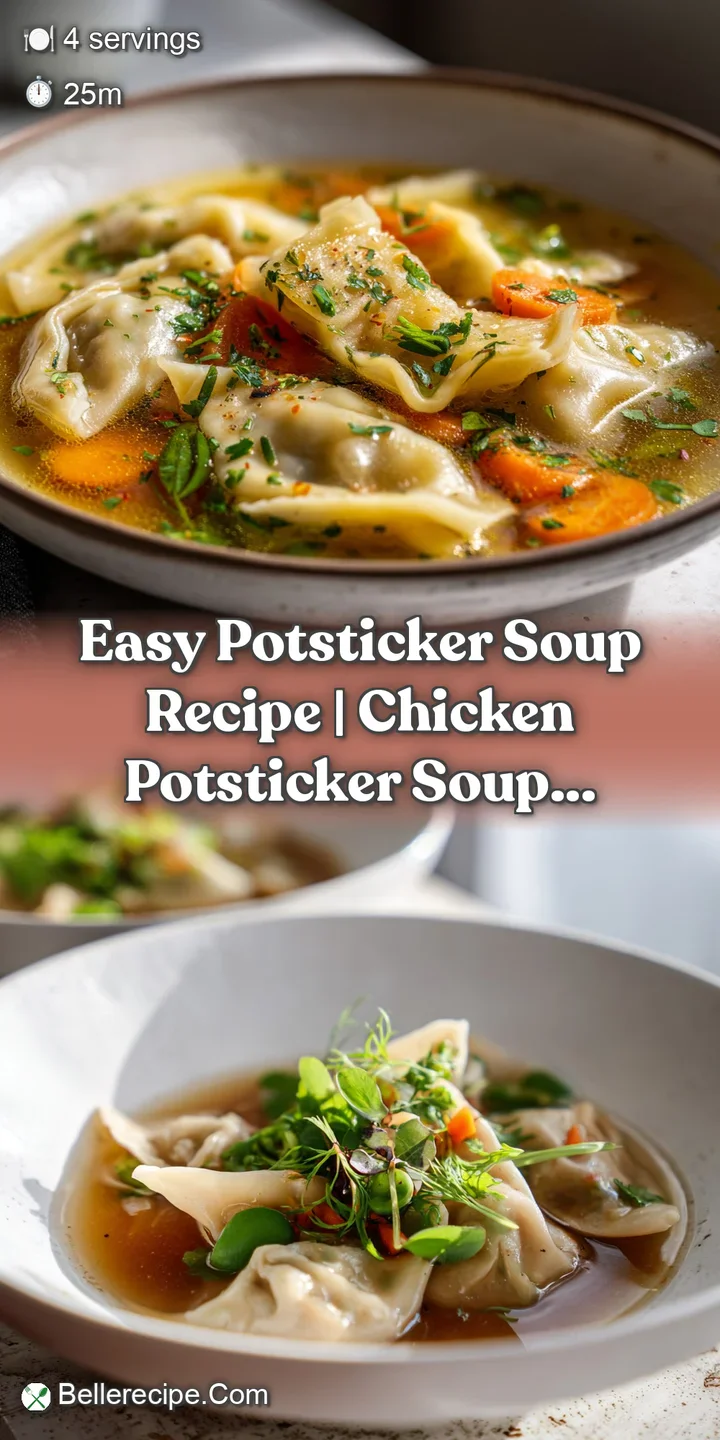
Very High in Sodium
1645 mg mg of sodium per serving (72% of daily value)
The American Heart Association recommends limiting sodium intake to about 2,300mg per day for adults. This recipe significantly exceeds that limit.
Tips to Reduce Sodium in Your Potsticker Soup
-
Broth Boost-30%
Use no-sodium chicken broth instead of low-sodium. This single swap can significantly reduce the overall sodium content.
-
Potsticker Pick-25%
Choose low-sodium or reduced sodium potstickers. Check the nutrition labels carefully, as sodium content can vary greatly between brands.
-
Soy Sauce Swap-20%
Replace regular soy sauce with low-sodium soy sauce or tamari. Alternatively, reduce the amount of soy sauce used in the recipe by half.
-
Spice It Up-10%
Enhance the flavor with sodium free seasonings. Increase the amount of ginger, garlic, white pepper, and sesame oil to compensate for flavor loss.
-
Herb Power
Experiment with fresh herbs like cilantro, parsley, or basil to add flavor without adding sodium. These additions won't reduce sodium, but they will enhance flavor, making the dish more satisfying.
Recipe FAQs
What's the difference between soup dumplings and potstickers?
Potstickers are pan-fried or steamed appetizers; soup dumplings are generally steamed packages containing hot, liquid broth inside. Potstickers have a crispy bottom and are served dry or with a dipping sauce, whereas soup dumplings are designed to release their savory liquid when bitten into, much like
a small, portable bowl of soup.
What is the secret to perfect soup dumplings in a simple broth?
Sautéing the aromatics (ginger, garlic) in oil before adding the broth unlocks deeper flavor compounds. This crucial first step creates an infused, fat-soluble flavor base that water alone cannot achieve, transforming a simple store-bought broth base.
What are common mistakes in dumpling soup?
Adding the greens too early and cooking at too high a temperature are the most common errors. Over boiling the liquid causes excessive starch release, making the broth cloudy, and the vigorous movement tears the delicate potsticker wrappers.
What kind of broth is best for dumpling soup?
A low-sodium chicken or pork bone broth provides the richest umami foundation. For a slightly richer mouthfeel, you can use a store-bought bone broth; if you enjoyed the technique of building flavor from scratch here, see how the same principles apply to creating depth in our Bun Rieu recipe.
How to prevent frozen potstickers from sticking to the bottom of the pot?
Add the frozen potstickers directly into the simmering broth, never add them to a cold pot. The initial shock of heat from the hot liquid immediately sets the wrapper surface, preventing the dough from fusing to the metal during the poaching process.
How to achieve a silky broth texture without using cornstarch?
Allow the potstickers to release a small amount of their natural starch during poaching. As the frozen wrappers cook, they deposit a tiny amount of starch into the liquid, which naturally emulsifies the broth, giving it a desirable, light coating without added thickeners.
Is it necessary to use fresh ginger and garlic?
No, but fresh aromatics are strongly recommended for optimal flavor depth. While jarred minced varieties are faster, fresh ginger and garlic release volatile oils more effectively when sautéed, creating a complex base that pasteurized versions cannot replicate.
Potsticker Soup Recipe 25 Min
Ingredients:
Instructions:
Nutrition Facts:
| Calories | 312 kcal |
|---|---|
| Protein | 18.9 g |
| Fat | 13.6 g |
| Carbs | 33.8 g |
| Fiber | 3.4 g |
| Sugar | 5.2 g |
| Sodium | 1645 mg |
