Crock Pot French Dip: Tender and Savory
- Time: Active 15 minutes, Passive 8 hours, Total 8 hours 15 minutes
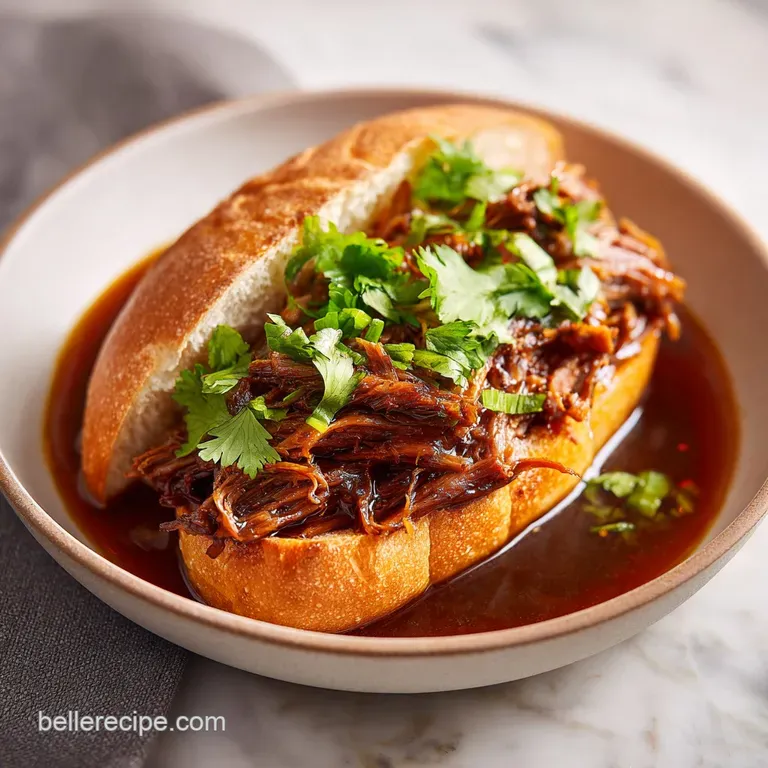
- Flavor/Texture Hook: Shatter crisp toasted rolls meeting velvety, fork tender beef and a savory, herb infused dipping broth
- Perfect for: Cozy Sunday family gatherings, effortless game day entertaining, or a mindful meal prep staple
- Why Most Recipes Fail the Ultimate Crock Pot French Dip Recipe
- Understanding the Slow Magic Behind This Tender Beef
- The Component Analysis of a Perfect Braising Liquid
- Sourcing the Finest Elements for Your French Dip Sandwich
- The Essential Tools for a Succulent Beef Dip
- A Step by Step Guide to Crafting the Best Au Jus
- Navigating Hurdles for a Silky Smooth Braising Experience
- Personalizing Your Slow Cooker Beef Dip for Every Occasion
- Debunking Beef Myths and Savory Leftover Management Tips
- Plating Your French Dip with Mindfulness and Joy
- CRITICAL: Very High in Sodium
- Recipe FAQs
- 📝 Recipe Card
Why Most Recipes Fail the Ultimate Crock Pot French Dip Recipe
The history of the French Dip is a bit of a Los Angeles legend, shrouded in the salty steam of early 20th-century lunch counters. Whether you side with Philippe The Original or Cole’s P.E. Borax, the story goes that a sandwich was accidentally dropped into a pan of roasting juices, and a culinary icon was born.
Growing up, this wasn't just a sandwich to us; it was a ritual. I remember the sunny warmth of my grandmother's kitchen, where the slow cooker sat humming on the tiled counter for 8 hours, filling every corner of the house with the scent of onions and toasted thyme.
It’s a dish that demands patience, but rewards you with a mindful, comforting experience that brings everyone together around the table.
Most modern versions of this crock pot french dip recipe fall flat because they skip the foundational steps that define a true "dip." You've probably had those versions the meat is gray and boiled looking, the broth tastes like a salt lick, and the bread turns into a soggy mess before it even hits the au jus.
We aren't just making a sandwich here; we are building a harmony of textures. The goal is a contrast between the crusty hoagie and the silky beef, balanced by a braising liquid that has enough body to cling to the meat rather than just running off.
We need to talk about the "dump and go" myth. While it’s tempting to just toss everything into the pot and walk away, that is exactly how you end up with mediocre results. This recipe honors the traditional French techniques searing, deglazing, and slow braising adapted for the modern home cook's schedule.
By taking an extra few minutes to brown the beef and scrape up those savory bits from the pan, we infuse the entire dish with a richness that defines the best slow cooker french dip recipe you've ever tasted.
Understanding the Slow Magic Behind This Tender Beef
There is a specific reason why we choose a tough cut like chuck roast for this dip recipe. It isn't just about the price point; it's about the physical transformation that happens over 8 hours of gentle heat.
- Collagen Conversion: The low and slow heat slowly breaks down the tough, white connective tissues (collagen) into gelatin, which gives the beef a silky mouthfeel and keeps it moist even after shredding.
- The Maillard Benefit: Searing the beef for 5-6 minutes per side creates hundreds of new flavor compounds that simply cannot be developed through steaming or boiling in a slow cooker.
- Osmotic Balance: By using a low sodium beef stock, we allow the liquid to reduce and concentrate without becoming an inedible salt bomb, keeping the beef juicy through proper seasoning.
- Alcohol Volatilization: Using dry sherry isn't just for flavor; the acidity helps cut through the heavy fats of the chuck roast, brightening the overall profile of the au jus.
| Roast Thickness | Internal Temp | Rest Time | Visual Cue |
|---|---|---|---|
| 2 Inches | 200°F - 205°F | 15 minutes | Shreds easily with two forks |
| 3 Inches | 200°F - 205°F | 20 minutes | Connective tissue appears translucent |
| 4 Inches | 200°F - 205°F | 25 minutes | Bone (if present) pulls out clean |
Choosing the right thickness for your roast ensures that the 8 hour window provides enough time for the heat to penetrate to the very center. If your roast is particularly thick, don't be afraid to cut it into two large chunks before searing to increase the surface area for that flavorful crust.
The Component Analysis of a Perfect Braising Liquid
The secret to a homemade slow cooker french dip lies entirely in the liquid. We aren't just making a soup; we are creating a concentrated essence of beef. This table breaks down why these specific choices matter for the final outcome.
| Ingredient | Science Role | Pro Secret |
|---|---|---|
| Beef Chuck Roast | High fat and collagen content | Pat it bone dry before searing to ensure a deep mahogany crust rather than gray steam. |
| Dry Sherry | Acidic deglazer | The sherry lifts the "fond" (browned bits) from the pan, carrying that roasted flavor into the slow cooker. |
| Fresh Thyme | Volatile aromatics | Keep the sprigs whole; the woody stems infuse the liquid with earthy notes without leaving grit in your au jus. |
| Yellow Onions | Natural sweetness | Slicing them thinly allows them to nearly melt into the broth, adding body and a subtle sugary counterpoint to the salt. |
While some might reach for a packet of onion soup mix, using fresh garlic and real onions provides a much more sophisticated and less processed flavor profile. It turns a simple crock pot french dip with au jus into something that feels like it came from a high end bistro.
Sourcing the Finest Elements for Your French Dip Sandwich
When you head to the market, look for a chuck roast that has beautiful white marbling running through it. This fat is your friend it’s what prevents the meat from tasting like sawdust after the long cook time.
- 3.75 lbs Beef Chuck Roast: Why this? The gold standard for braising; it has the perfect fat to muscle ratio for shredding.
- 2 tbsp Neutral Oil: Why this? High smoke point allows for a hard sear without the oil burning or tasting bitter.
- 1 tsp Kosher Salt: Why this? Larger grains make it easier to season the meat evenly without over salting.
- 1 tsp Cracked Black Pepper: Why this? Adds a necessary punch and heat to the rich, fatty beef.
- 3 cups Low Sodium Beef Stock: Why this? Controls the salt levels as the liquid reduces during the 8 hour cook.
- 0.5 cup Dry Sherry: Why this? Adds a nutty, acidic complexity that balances the heavy umami of the beef.
- 2 tbsp Worcestershire Sauce: Why this? Provides a fermented, savory backbone to the dipping sauce.
- 4 Garlic Cloves, smashed: Why this? Smashing releases the oils more effectively than mincing for long term simmering.
- 2 sprigs Fresh Thyme: Why this? Earthy notes that pair perfectly with red meat and onions.
- 1 Large Yellow Onion, thinly sliced: Why this? Adds natural sweetness and aromatics to the braising base.
- 8 Hoagie Rolls: Why this? Needs enough structure to hold the meat and withstand the dip.
- 16 slices Provolone Cheese: Why this? Melts beautifully and provides a mild, creamy finish.
- 2 tbsp Salted Butter, softened: Why this? Ensures the rolls toast to a golden, shatter crisp finish.
| Original Ingredient | Substitute | Why It Works |
|---|---|---|
| Dry Sherry | Dry Red Wine (Cabernet) | Similar acidity levels. Note: Will result in a darker, more robust au jus. |
| Provolone Cheese | Gruyère or Swiss | Excellent melting properties with a slightly nuttier, more intense flavor profile. |
| Beef Chuck Roast | Bottom Round or Brisket | High connective tissue. Note: Brisket may require an extra hour to fully tenderize. |
If you are looking for a slightly different flavor profile for another night, this slow cooking technique is quite similar to what you'd use in a Boursin Chicken recipe, where low heat helps maintain the integrity of the protein while building a luscious sauce.
The Essential Tools for a Succulent Beef Dip
The right equipment makes the difference between a stressful kitchen and a mindful cooking process. You don't need a professional kitchen, but a few specific items will help you achieve that restaurant quality finish.
6 Quart Slow Cooker
A standard 6 quart oval slow cooker is the ideal size for a 3.75 lbs roast. It provides enough surface area for the meat to be mostly submerged in the liquid, ensuring even cooking. If your pot is too large, the liquid may evaporate too quickly; if it's too small, you won't get that even heat circulation.
Heavy Bottomed Skillet
I highly recommend a cast iron or stainless steel skillet for the initial sear. These materials hold heat better than non stick pans, allowing you to get that dark brown crust in 5-6 minutes without the pan temperature dropping. This step is non negotiable for a deep, complex flavor.
Fine Mesh Strainer
To achieve a "clarified" au jus, you need a fine mesh strainer. This allows you to separate the onions, thyme stems, and garlic from the liquid, leaving you with a silky, smooth dipping sauce that isn't cluttered with bits of onion or herbs. It's the difference between a rustic stew and a refined french dip recipe.
A step-by-step Guide to Crafting the Best Au Jus
- Pat the 3.75 lbs beef chuck roast completely dry with paper towels. Note: Moisture on the surface of the meat creates steam, which prevents a proper brown crust from forming.
- Season all sides of the beef aggressively with 1 tsp kosher salt and 1 tsp cracked black pepper.
- Heat 2 tbsp neutral oil in your heavy bottomed skillet over medium high heat until it shimmers.
- Sear the beef for 5-6 minutes per side until a dark brown, mahogany crust forms. Transfer the meat to the slow cooker.
- Deglaze the skillet with 0.5 cup dry sherry, scraping the bottom with a wooden spoon to release the flavorful browned bits. Pour this liquid into the slow cooker.
- Add the 3 cups beef stock, 2 tbsp Worcestershire sauce, 4 smashed garlic cloves, thinly sliced onion, and 2 sprigs of fresh thyme.
- Cover and cook on Low for 8 hours until the beef is fork tender and shreds with zero resistance.
- Remove the beef to a cutting board and let it rest for 10 minutes. Strain the braising liquid through a fine mesh strainer into a bowl to create the au jus.
- Shred or slice the beef thinly against the grain. Split the 8 hoagie rolls and spread with 2 tbsp softened butter.
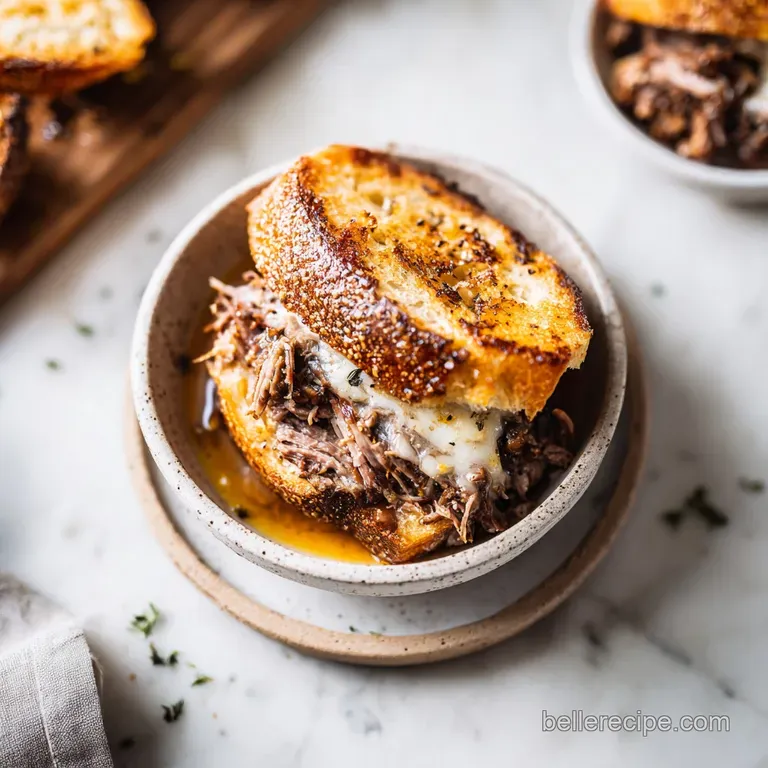
- Toast the rolls in a 400°F (200°C) oven until golden, then melt 16 slices of provolone on top under the broiler until bubbly and slightly browned. Assemble and serve with the hot au jus.
Navigating Hurdles for a Silky Smooth Braising Experience
Even with the best crock pot french dip recipe, things can sometimes go sideways. The most common issue home cooks face is the texture of the beef. If you find the meat is difficult to shred, it simply hasn't cooked long enough.
Connective tissue doesn't care about your hunger it breaks down on its own schedule.
Fixing Dry Beef Texture
If your beef is falling apart but feels "dry" in your mouth, it’s likely because the fat hasn't fully rendered or the meat was sliced with the grain rather than against it. Always slice against the grain to shorten the muscle fibers, making every bite feel more tender.
Plus,, dipping the shredded meat back into the au jus for 5 minutes before serving can help rehydrate the fibers.
Balancing Salty Au Jus
Because the stock reduces over 8 hours, the salt can become concentrated. If your au jus tastes too salty, don't panic. You can easily fix this by adding a splash of water or a little more unsalted stock.
A tiny pinch of sugar can also help neutralize the perception of saltiness without making the sauce sweet.
| Problem | Root Cause | Solution |
|---|---|---|
| Meat is tough/rubbery | Under cooked connective tissue | Cook for an additional 45-60 minutes on Low. |
| Greasy au jus | Too much rendered fat from roast | Use a fat separator or chill the liquid to skim the fat off. |
| Soggy bread | Rolls are too soft or un toasted | Use crusty hoagies and double toast with butter before assembly. |
Common Mistakes Checklist
- ✓ Never skip the searing step; it’s where 80% of your flavor depth comes from.
- ✓ Avoid opening the lid of the slow cooker; every time you do, you lose 15-20 minutes of heat.
- ✓ Don't use "High" heat if you have the time; "Low" for 8 hours yields much more tender results.
- ✓ Always strain your au jus; the bits of onion and thyme are great for flavor but distracting in a dip.
- ✓ Toast your rolls until they are truly golden; the butter acts as a moisture barrier against the jus.
If you enjoy the process of perfecting a classic sauce like this au jus, you might find the technique of emulsion in a Béarnaise Sauce recipe to be an interesting next challenge for your kitchen skills.
Personalizing Your Slow Cooker Beef Dip for Every Occasion
While the classic version is iconic, there are plenty of ways to make this crock pot french dip recipe your own. If you’re feeding a smaller crowd, you can easily scale the recipe down.
Scaling the Recipe
To scale DOWN (1/2 size), use a 1.8 lb roast and a smaller 3 quart slow cooker. Reduce the liquid by only 30% rather than half to ensure the meat stays submerged. Keep the cook time the same, as the thickness of the meat determines the timing more than the total weight.
To scale UP (2x), use two roasts but only increase the salt and spices to 1.5x. You may need a 7 or 8 quart slow cooker to prevent overcrowding.
Stovetop vs Oven Comparison
While the crock pot is our focus, understanding other methods helps you appreciate the slow cooker's convenience.
| Method | Cook Time | Texture | Best For |
|---|---|---|---|
| Slow Cooker | 8 hours (Low) | Uniformly tender | Effortless weeknight/Game day |
| Dutch Oven (Oven) | 3.5 hours (300°F) | Deeply caramelized | Weekend dinner |
| Stovetop Simmer | 3 hours (Low) | More concentrated liquid | When you need to monitor the pot |
Decision Shortcut
- If you want a richer flavor, replace half the beef stock with a dry red wine like Cabernet.
- If you want a spicier kick, add a tablespoon of prepared horseradish to your butter before toasting the rolls.
- If you want a cleaner finish, refrigerate the au jus for 2 hours and lift the solidified fat off the top before reheating and serving.
Debunking Beef Myths and Savory Leftover Management Tips
There are a lot of old wives' tales in the kitchen that can actually hinder your progress with an easy crockpot french dip recipe. Let's clear some of those up so you can cook with confidence.
Searing meat does not "seal in juices." This is one of the most persistent myths in cooking. Moisture loss happens regardless of the sear. The real reason we sear is to create the Maillard reaction a chemical reaction between amino acids and reducing sugars that gives browned food its distinctive flavor.
Without it, your crock pot french dip recipe will taste flat and one dimensional.
Another myth is that "High" heat on a slow cooker is just as good as "Low" heat if you're in a hurry. While it will cook the meat, the higher temperature can cause the muscle fibers to seize up and toughen before the collagen has a chance to melt.
For the most succulent results, 8 hours on Low is vastly superior to 4 hours on High.
Storage and Zero Waste
Store your leftover beef and au jus in separate airtight containers in the fridge for up to 4 days. Keeping them separate prevents the beef from becoming mushy. For longer storage, you can freeze the shredded beef in the au jus for up to 3 months the liquid actually protects the meat from freezer burn.
Zero Waste Tip: Don't throw away the onions and garlic you strained out! They are packed with beefy flavor. Spread them onto a piece of toasted sourdough the next morning with a fried egg, or stir them into a batch of mashed potatoes for an incredible side dish.
You can also save any leftover herb stems to throw into your next batch of homemade vegetable stock.
Plating Your French Dip with Mindfulness and Joy
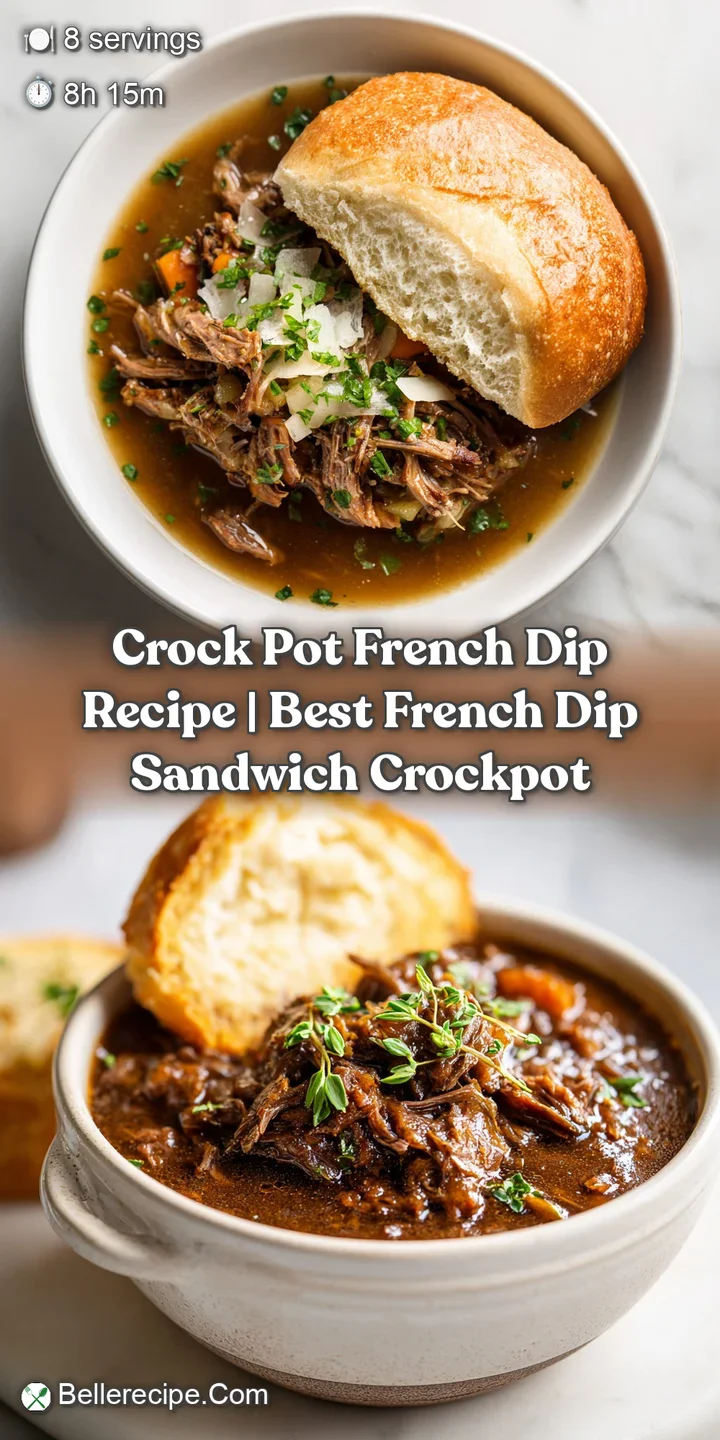
Serving a crock pot french dip recipe is all about the presentation and the shared experience. There is something incredibly communal about everyone having their own little ramekin of steaming, savory broth. It invites you to slow down and savor the contrast of the textures.
When you assemble the sandwiches, pile the beef high, but don't overstuff them to the point where the bread fails. You want a manageable sandwich that you can easily dip without losing half the filling into the bowl.
A side of crispy kettle chips or a bright, vinegary slaw provides the perfect crunch and acidity to cut through the richness of the beef and cheese.
If you find yourself craving another slow simmered comfort dish after this, I highly recommend trying a Cheesy Chicken Casserole for a completely different flavor profile that still hits those nostalgic, home cooked notes. Whether it's a rainy Tuesday or a sunny Sunday afternoon, this beef dip is more than just a meal it's an invitation to gather, share, and enjoy the simple magic of good food made with care.
CRITICAL: Very High in Sodium
1440 mg 1440 mg of sodium per serving (63% 63% of daily value)
The American Heart Association recommends no more than 2,300mg of sodium per day for most adults, and ideally no more than 1,500mg for those with high blood pressure.
Tips to Reduce Sodium
-
Choose Low-Sodium Stock-30%
Replace the 3 cups of regular beef stock with low-sodium beef stock. This is one of the biggest contributors to sodium.
-
Reduce Added Salt-25%
Significantly reduce the 1 tsp of kosher salt. You can start with 1/4 tsp or omit it entirely, as other ingredients provide saltiness.
-
Opt for Low-Sodium Worcestershire Sauce-20%
Swap the 2 tbsp of regular Worcestershire sauce for a low-sodium version. This common condiment can be surprisingly high in sodium.
-
Use Reduced Sodium Cheese-15%
If available, select reduced sodium provolone cheese for the hoagie rolls. This can make a noticeable difference.
-
Use Unsalted Butter-10%
For the softened butter on the hoagie rolls, use unsalted butter instead of salted butter to control sodium intake.
-
Boost Flavor with Herbs and Spices
Enhance the flavor of your roast by liberally using fresh herbs like the thyme and garlic, along with black pepper, and consider adding other no-sodium spices like paprika or onion powder.
Recipe FAQs
Is it better to cook the beef on High or Low heat?
Low heat is always better for the texture. Cooking on Low for 8 hours allows the connective tissue in the chuck roast to break down slowly, resulting in a much more tender and succulent final product compared to the 4-hour High setting.
How to ensure the beef has maximum flavor?
Sear the beef thoroughly before placing it in the slow cooker. Skipping the 5-6 minutes of browning per side means losing the Maillard reaction, which is responsible for the majority of the deep, savory profile in the finished au jus.
Why should I strain the braising liquid?
Straining creates a cleaner, more professional dipping experience. While the onion and thyme sprigs are essential for building flavor, their texture can be distracting when you are dunking your sandwich into the au jus.
How to prevent the hoagie rolls from getting soggy?
Toast the buttered rolls until they are deeply golden. The toasted butter layer acts as a necessary moisture barrier that keeps the bread sturdy even when submerged in the hot dipping liquid, similar to the technique used to create crisp bases in our homemade dinner rolls.
Is it true I can skip deglazing the skillet?
False, this is a common misconception. The browned bits or fond stuck to the bottom of the skillet are pure flavor, and using the dry sherry to scrape them up ensures that every bit of that richness ends up in your slow cooker.
How to store leftovers properly?
Store the beef and au jus in separate airtight containers in the refrigerator. Keeping them apart prevents the meat from soaking up too much liquid and becoming mushy, allowing you to keep them fresh for up to 4 days.
How to reuse the leftover onion and garlic bits?
Stir the strained solids into mashed potatoes or use them as a savory topping. These bits are packed with concentrated beef and herb flavor, making them an excellent ingredient for a second meal rather than waste.
Slow Cooker French Dip
Ingredients:
Instructions:
Nutrition Facts:
| Calories | 894 kcal |
|---|---|
| Protein | 56 g |
| Fat | 54 g |
| Carbs | 44 g |
| Fiber | 2 g |
| Sugar | 5 g |
| Sodium | 1440 mg |
