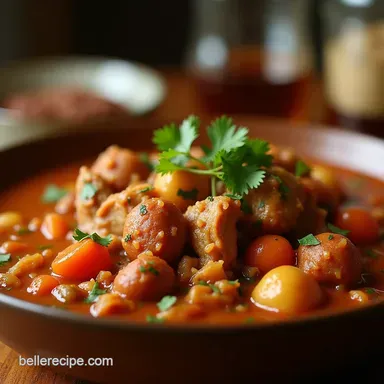
The Deep South Simmer Authentic Chicken and Andouille Sausage Gumbo
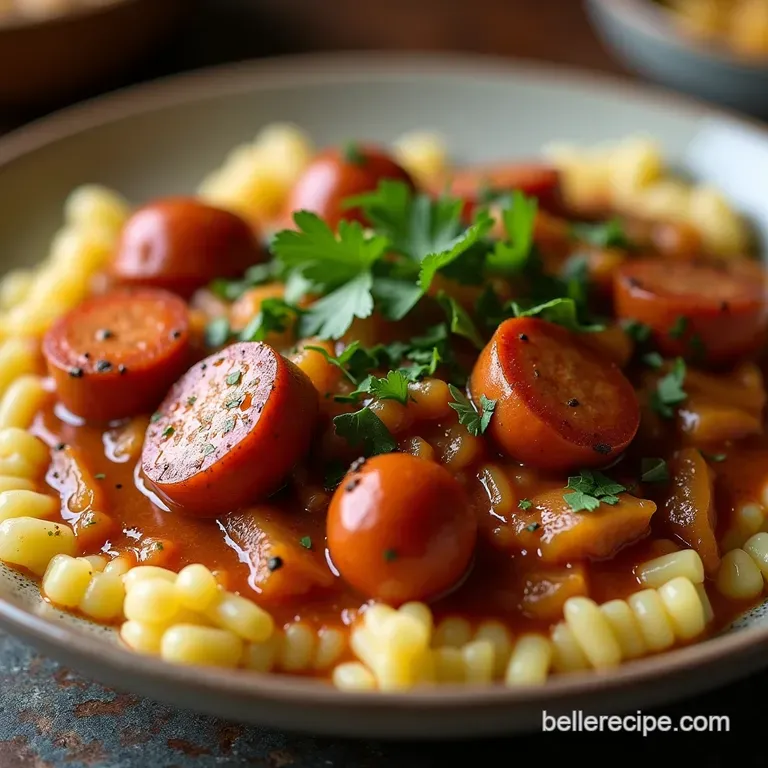
- Unlocking the Soul of Louisiana: Why This Cajun Gumbo Stands Apart
- Beyond the Boil: Setting Expectations for True Bayou Flavour
- Sourcing the Building Blocks for Championship Cajun Gumbo
- Essential Gear: What You Need Before the Simmer Starts
- Phase One: Achieving the Perfect Deep-Chocolate Roux
- The Heart of the Pot: Layering Flavours in Sequence
- Maximizing Your Leftovers: Storage Secrets for Next-Day Glory
- Recipe FAQs
- 📝 Recipe Card
Unlocking the Soul of Louisiana: Why This Cajun Gumbo Stands Apart
There are stews, and then there is Cajun Gumbo . This isn't just soup; it’s history simmered in a pot, a culinary tapestry woven from African, French, Spanish, and Native American influences right from the bayous of Louisiana.
When we talk about an authentic Cajun Gumbo , we are talking about depth, a profound, smoky, dark flavour profile achieved through painstaking technique.
This specific Cajun Gumbo recipe focuses squarely on that deep, earthy satisfaction, using chicken and smoky Andouille sausage as the centrepiece proteins for a robust meal that stands apart from its lighter, tomato-heavy Creole cousins.
Beyond the Boil: Setting Expectations for True Bayou Flavour
To truly appreciate this dish, you must understand its commitment to flavour building. The magic of this Cajun Gumbo with okra (though we focus on the roux base here, okra often features in variations) lies in the slow, deliberate process.
We are aiming for a broth so rich and flavourful that it coats the back of a spoon, a result entirely dependent on the initial steps. Getting this right means embracing the slow pace inherent in true Southern cooking.
A Culinary Marathon: Understanding the Patience Required for Depth
This recipe, designed for 6 to 8 hearty servings, requires a total commitment of just over three hours, but the majority of that time is passive simmering. The active labour comes upfront: 35 minutes of dedicated prep work followed by nearly an hour of focused stirring.
This dedication is non-negotiable if you want that signature deep mahogany colour in your base. This is truly a dish where the resulting flavour profile rewards patience tenfold.
Gumbo vs. Jambalaya: Defining the Dish You're About to Master
Before we dive into the pot, let’s clarify the distinction. While both Cajun Gumbo and Jambalaya are pillars of Louisiana cuisine, they are fundamentally different.
Jambalaya is a rice-based dish, similar to Spanish paella, where the rice cooks in the seasoned broth, absorbing all the flavour. Gumbo, conversely, is a thick, deeply flavoured stew, served over a bed of cooked, separate white rice.
Our focus here is delivering that distinct, ladle-able stew experience.
The Warm Welcome: Why This Recipe Thrives in Any Season
While often associated with chilly weather, the complexity of this Cajun Gumbo seasoning makes it welcome year-round. The smoky spice profile from the Andouille and cayenne offers a comforting warmth, but because it relies on a foundational roux rather than heavy cream or cheese, it remains satisfying without being overly dense, perfect for a crisp autumn evening or even as a flavourful centerpiece for a cooler summer supper.
Sourcing the Building Blocks for Championship Cajun Gumbo
The success of any great stew hinges on the quality of its components. For this Cajun Gumbo recipe chicken sausage variation, selecting premium ingredients is half the battle won. We are building a flavour skyscraper, and weak foundational ingredients will cause the whole structure to wobble.
Related Recipes Worth Trying
- Creamy Cajun Chicken Linguine Taste of the Bayou — Bring Louisiana home with my creamy cajun chicken linguine This easy weeknight pasta dinner is packed with flavor and ready in under an hour Get the recipe
- Louisiana Shrimp Étouffée Recipe: Easy Cajun Comfort! — Craving authentic Louisiana Shrimp Étouffée? This easy etouffee recipe is pure Cajun comfort! Rich, flavorful, and ready in under an hour. Get the recipe now!
- Spicy Cajun Gumbo Recipe: A Family Favourite from New Orleans — Try my Spicy Cajun Gumbo recipe, a delightful mix of smoky sausage, tender chicken, and fresh seafood! Perfect for cozy gatherings. Dive in!
Essential Gear: What You Need Before the Simmer Starts
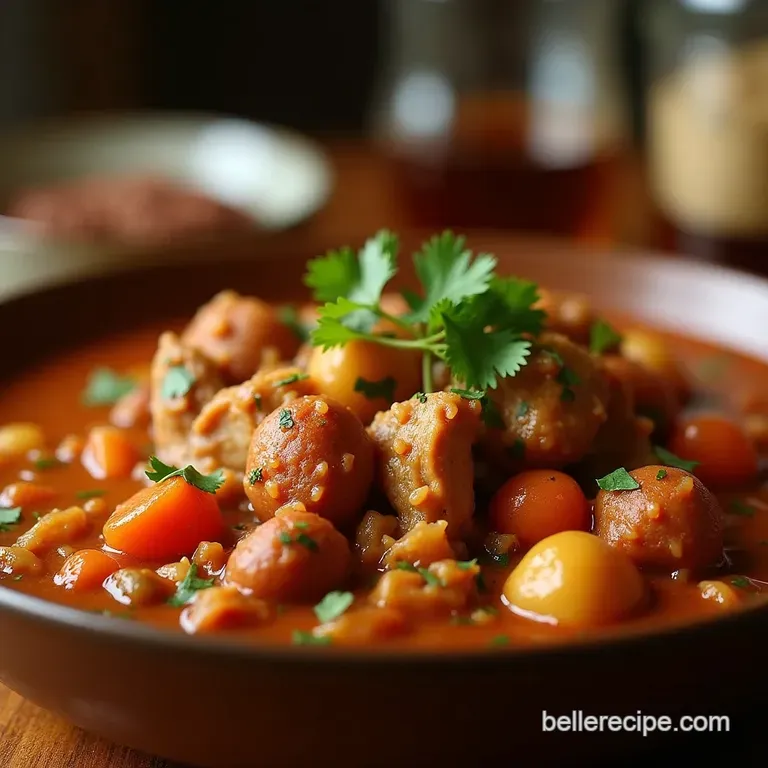
The most crucial piece of equipment is a heavy-bottomed Dutch oven or a very large, deep, sturdy pot. This is essential because the heat distribution must be incredibly even, especially during the critical roux-making stage.
A sturdy wooden spoon or heat-proof rubber spatula will be your best friend for stirring that thick roux without tearing up the bottom of your pot.
The Holy Trinity: Perfectly Prepping Onion, Celery, and Bell Pepper
In Louisiana cooking, the foundation of almost every savoury dish is the "Holy Trinity": equal parts onion, celery, and green bell pepper. For our base, you'll need 2 cups of finely diced yellow onion, 1 cup of diced celery, and 1 cup of diced green bell pepper.
The key here is the uniformity of the dice; we want them to cook down evenly during the simmer phase, melting into the stew rather than remaining as distinct, hard chunks.
Selecting Premium Meats: Chicken Cuts and Andouille Selection Guide
For the meat component, we bypass chicken breast entirely. Boneless, skinless chicken thighs, cut into 1-inch pieces, offer superior moisture retention throughout the long cooking process. The second star is the sausage: seek out authentic, pre-cooked Andouille sausage.
This links the flavour profile directly to the bayou through its characteristic smoke and spice. Slice it into quarter-inch coins so that each bite offers a burst of smoky fat.
Spice Cabinet Checklist: Ensuring Authentic Seasoning Ratios
While the dark roux provides the deep colour and nutty base, the spices provide the signature heat and earthiness. Ensure you have quality smoked paprika, dried thyme, and cayenne pepper on hand.
Salt and freshly ground black pepper are added to taste, but the cayenne provides the gentle, slow-building heat that defines the best Cajun Gumbo . Remember, we are aiming for warmth, not searing fire.
Phase One: Achieving the Perfect Deep-Chocolate Roux
If you take one thing away from this guide, let it be the respect owed to the roux. The Cajun Gumbo base is the roux. This mixture of equal parts oil and flour must be cooked slowly and constantly stirred for 45 to 60 minutes until it achieves a deep, dark chocolate colour, the colour of a worn penny or dark mahogany.
This process toasts the flour, eliminating the raw taste and developing the complex, nutty flavour that defines authentic Cajun Gumbo .
The Heart of the Pot: Layering Flavours in Sequence
Once that beautiful, dark roux is achieved, the layering of flavour begins immediately and rapidly. This is where precision is needed, as the temperature of the roux will cause the subsequent ingredients to cook very quickly.
Roux Mastery: Avoiding Burning While Seeking Darkness
During that long cooking period, stir diligently. If you stop stirring, even for 30 seconds, the flour at the bottom can scorch, turning the entire batch bitter. If you see any dark speckles that look burnt, you must start over. A burnt roux cannot be saved; it ruins the entire pot.
The desired result is a smooth, uniform liquid chocolate colour.
Introducing the Trinity: Sautéing Techniques for Maximum Sweetness
As soon as the roux reaches its peak colour, immediately dump in your measured Holy Trinity (onion, celery, bell pepper). The cooler vegetables hitting the hot roux will cause a fierce sizzle, this is good!
It stops the roux from cooking further and allows the vegetables to sweat out their moisture and begin to sweeten. Stir until they are translucent and soft, usually about five to seven minutes. Next, add the minced garlic and cook just until fragrant, about one minute, before it burns.
The Gumbo Goldilocks Zone: Achieving Ideal Consistency and Simmer Time
After adding the Trinity, it is time to introduce the stock. Pour in the cold chicken stock slowly , whisking vigorously as you go to smoothly incorporate the thickening agent. Once all the stock is added, bring the mixture up to a very gentle simmer, a bare burble on the surface.
Add your pre-browned chicken and sausage back into the pot along with the dried seasonings (thyme, paprika, bay leaf, cayenne). Allow this magnificent stew to simmer, partially covered, for a minimum of 1. 5 hours.
This long, slow marriage allows the meats to become incredibly tender and the broth to develop its legendary depth.
Final Flourish: Incorporating the Filé Powder Correctly
Filé powder, derived from dried sassafras leaves, is a traditional thickener and seasoning agent, especially cherished in the bayou region. However, it is delicate. Never boil filé powder. It will turn your stew gelatinous or stringy.
Instead, remove the entire pot from the heat source. Taste and adjust final salt and heat levels. Only then, if you desire extra thickness or earthiness, should you stir in the filé powder at the table, allowing each person to customize their bowl.
Maximizing Your Leftovers: Storage Secrets for Next-Day Glory
One of the best aspects of this hearty stew is that it tastes even better the next day. As the flavours continue to marry overnight in the refrigerator, the complexity deepens significantly.
Freezing Fundamentals: How to Preserve Gumbo Integrity
To freeze, cool the gumbo completely, preferably by placing the sealed container in an ice bath first. Portion it into freezer-safe, airtight containers, leaving about an inch of headspace for expansion. Gumbo freezes beautifully for up to three months.
Thaw overnight in the refrigerator and reheat slowly on the stovetop, adding a splash of stock or water if it seems too thick after thawing.
Serving Suggestions: The Definitive Accompaniments (Rice, Bread, and More)
The non-negotiable accompaniment for any Cajun Gumbo is long-grain white rice, served in a mound at the centre of the bowl, with the rich stew ladled around it.
Beyond the rice, serve with fiercely fresh, chopped green scallions scattered liberally over the top, and have a bottle of good hot sauce on hand for an extra kick. Crusty French bread is perfect for soaking up every last drop of that incredible sauce.
Troubleshooting Common Gumbo Issues (Too Thin or Too Thick)
If your gumbo is too thin after the 1.5-hour simmer, you can activate the remaining flour/fat emulsion by stirring in one tablespoon of cornstarch mixed with two tablespoons of cold water (a slurry), bringing it back to a bare simmer until thickened.
If it is too thick, simply whisk in more quality chicken stock or water until the desired consistency is reached.
Ingredient Swaps: Handling Dietary Needs Without Sacrificing Authenticity
While true Cajun flavour leans heavily on the flour-based roux, for those avoiding gluten, you can substitute the roux with a large quantity of sliced, cooked okra and a very liberal use of filé powder added off the heat at the end.
This changes the texture profile but preserves the earthy flavour notes. For a seafood variation, simply omit the chicken and Andouille and add fresh shrimp and oysters only during the last 15 minutes of simmering to prevent overcooking.
Recipe FAQs
What is the absolute key to making a successful Cajun Gumbo?
Without a doubt, the roux is the soul of the dish; you simply cannot rush it. You need to stir constantly over medium-low heat for 45 minutes to an hour until it reaches a deep, dark chocolate colour.
If you burn it, you’ll have to bin the whole lot and start again, so keep your eyes peeled, don't let it catch!
My roux keeps going lumpy when I add the stock. What's the trick to getting it smooth?
Ah, the dreaded lump, we’ve all been there! The secret is temperature contrast: you must add cold stock to your hot roux, a little bit at a time, whisking like mad between each addition. If you add warm stock to a hot roux, it can seize up and turn into flour cement.
Be patient, and it will smooth out beautifully.
I can't find Andouille sausage; what's a decent substitute for this Cajun Gumbo recipe?
If you can’t locate authentic smoky Andouille, a good quality, robustly smoked Kielbasa will do a decent job, though it might lack some of the characteristic spice. If you use a milder sausage, try boosting the flavour with an extra half teaspoon of smoked paprika when you add your seasonings.
Can I make this Gumbo ahead of time, and how should I store the leftovers?
Gumbo is famously better the next day, so absolutely make it ahead! Store it covered in the fridge for up to four days; the flavours will have deepened wonderfully. When reheating, bring it back to a very gentle simmer, don't boil it, and remember that the rice should always be cooked fresh and served separately to prevent it from getting mushy in the storage container.
What is Filé powder and why can't I boil it in the Gumbo?
Filé powder is ground sassafras leaves, traditional to Cajun cooking, used as both a thickener and flavour enhancer. You must stir it in after you take the gumbo off the heat because boiling it causes chemical changes that can make the whole pot stringy or slimy, and nobody wants a ropey stew, do they?
Is this recipe terribly spicy, or can I tone down the heat for a milder flavour?
This recipe offers a gentle, building heat, but if you’re sensitive to spice, hold back on the cayenne pepper when simmering and add it to individual servings instead. Remember that the spiciness will also depend on the sausage you choose, so start small and taste before you ladle!
The Deep South Simmer Authentic Chicken and Andouille Sausage Gumbo