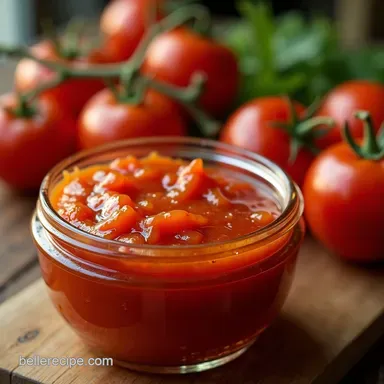
The Gardeners Delight Deeply Rich Savoury Tomato Jam
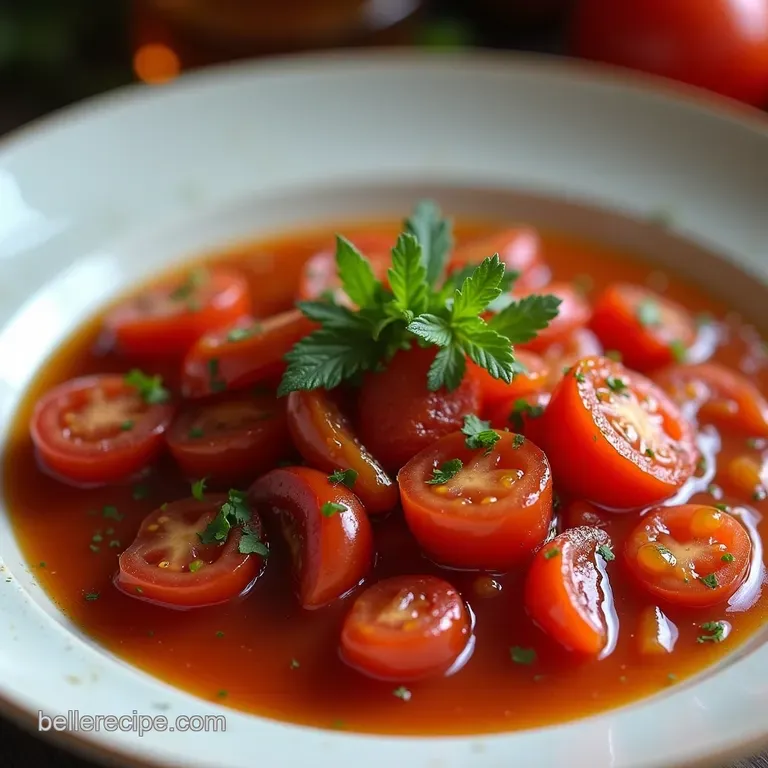
- Unlocking Umami: Why This Savoury Tomato Jam Redefines Preserves
- The Secret Sauce: More Than Just a Topping for Your Condiment Collection
- Assembling the Umami Arsenal: Essential Components for Deep Flavour
- Tools of the Trade: Equipment Needed for Small-Batch Jam Making
- The Slow Simmer Method: Transforming Raw Ingredients into Rich Tomato Jam
- Achieving the Perfect Set: Knowing When to Pull the Pot Off the Heat
- Beyond the Scone: Creative Ways to Utilize Your Homemade Condiment
- Preservation Perfection: Ensuring Longevity in Storage
- Recipe FAQs
- 📝 Recipe Card
Unlocking Umami: Why This Savoury Tomato Jam Redefines Preserves
There is a common misconception that jam must equate to overly sweet fruit preserves designed for toast and teatime. I’m here to shatter that perception with a recipe that delves deep into the complex, earthy heart of the tomato.
When you master How to Make Tomato Jam , you unlock a condiment with the richness of a slow-cooked chutney but with a wonderfully smooth, spreadable texture.
This isn't just a topping; it’s an umami bomb designed to elevate charcuterie boards, transform simple grilled cheese, and even serve as the secret weapon in your grilling arsenal.
This particular Tomato Jam Recipe balances the natural sweetness of summer fruit with a necessary tang and a whisper of heat, making it far more versatile than any strawberry or raspberry preserve you might have in your pantry.
The Secret Sauce: More Than Just a Topping for Your Condiment Collection
We are aiming for something truly special here: a deeply flavourful, slow-cooked relish that tastes like the very essence of a late summer harvest, bottled for year-round enjoyment.
This recipe yields approximately 4 standard jam jars, boasting a rich colour and a texture that is thick enough to hug a cracker but yielding enough to spread easily. The difficulty level leans toward Easy to Medium, primarily because the magic happens during the slow reduction, demanding patience rather than technical wizardry.
Expect about 25 minutes of active preparation, followed by a dedicated simmering time of roughly an hour and 15 minutes to an hour and 45 minutes, depending on the water content of your chosen tomatoes.
Ditching the Dessert Jars: Embracing the Savoury Side of Fruit
Many traditional preserves prioritize sugar above all else, using it as a preservative and texture agent. While we incorporate brown sugar for depth and binding, this application leans heavily into the inherent acidity and earthiness of the tomato.
It’s a perfect marriage that lends itself wonderfully to robust pairings. Forget standard ketchup; this rich, thick condiment is complex enough to serve alongside a sharp cheddar cheese for a proper Ploughman’s Lunch, or even served on Tomato Jam Scones —a surprising yet delicious twist on the classic cream tea.
The Provenance of Flavor: Selecting Tomatoes for Peak Intensity
The quality of your final product hinges entirely on your primary ingredient. For this Savory Tomato Jam , you want tomatoes that are ripe, offering maximum flavour, but still possess enough structural integrity to break down nicely without dissolving into complete mush too quickly.
Roma or sturdy Beefsteak varieties are my top recommendations, as they carry less water than heirloom varieties, meaning less reduction time for you. You’ll need about 2 lbs (or 900g) of these gems, roughly chopped, to begin building our flavour foundation.
A Ploughman’s Lunch Upgrade: Initial Thoughts on Pairing Potential
Before we even reach the stovetop, visualizing the end result helps guide our flavour choices. Imagine this jam draped over a perfectly grilled sausage or as the secret spread inside a gourmet sandwich. It brings that essential punch of umami we crave.
For those looking to make this a standout feature on a cheese board, consider how it will contrast with salty, sharp dairy. It truly transforms simple fare, making it an essential addition to any condiment collection.
Assembling the Umami Arsenal: Essential Components for Deep Flavour
Creating depth in a jam is all about layering aromatics against the fruit’s natural acidity. We aren't just throwing tomatoes and sugar together; we are building a complex profile.
The core ingredients for this "Proper Pint" jam include our 2 lbs of tomatoes, balanced by 1 cup of dark brown sugar (which adds molasses notes absent in white sugar), and 1/2 cup of apple cider vinegar.
Beyond the basics, we introduce the aromatics: one finely diced medium red onion, three minced cloves of garlic, and a tablespoon of freshly grated ginger. These elements are the backbone of the richness. Finally, seasoning is key: start with 1 teaspoon of flaky sea salt and 1/2 teaspoon of freshly ground black pepper.
If you like a gentle warmth, and I highly recommend it for this type of preserve, add 1/2 teaspoon of red pepper flakes. If you find your tomatoes are extremely watery and you want a guaranteed, quicker set, you may incorporate 1 tablespoon of pectin, though this recipe usually sets beautifully without it.
Tools of the Trade: Equipment Needed for Small-Batch Jam Making
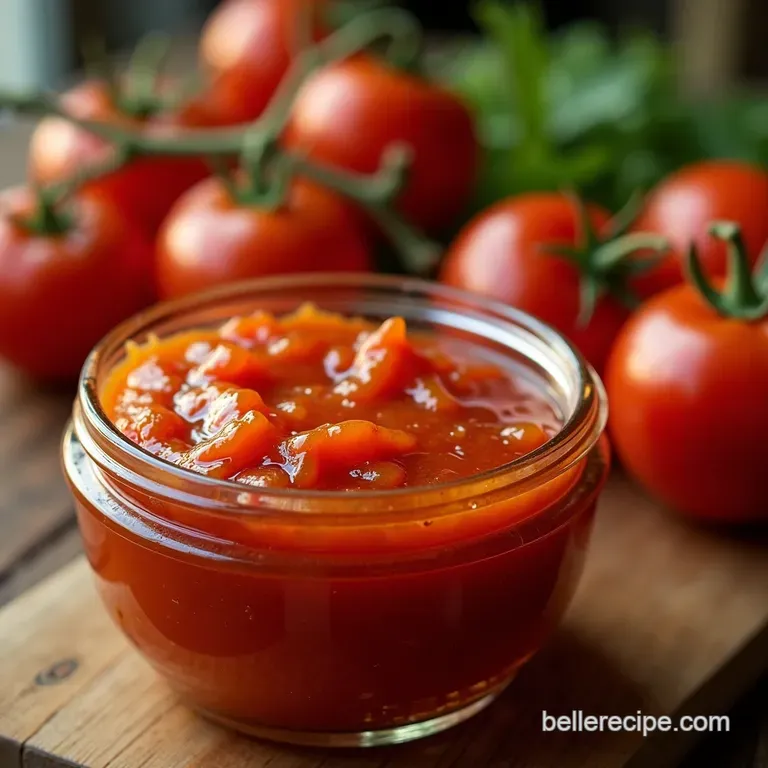
Success in jam making often comes down to using the right vessel. You absolutely must use a heavy-bottomed saucepan or a Dutch oven. This is non-negotiable because the high sugar concentration means that the bottom of a thin pan will scorch quickly, turning your beautiful jam bitter.
Beyond the cooking pot, you need a sharp chef’s knife, a sturdy wooden spoon for stirring (essential during the long simmer), and, if you plan on keeping this beyond a week or two in the fridge, sterilised jars and lids ready for sealing.
Mastering the Spice Blend: Achieving Balanced Sweetness and Heat
The integration of the ginger, garlic, and pepper flakes alongside the brown sugar is what pushes this recipe away from standard preserves and firmly into the realm of Savory Tomato Jam . The sweetness from the sugar needs to meet the earthiness of the onion and the sharp spice of the ginger.
When you add these ingredients early, they have time to mellow and infuse deeply into the tomato flesh as it cooks down. For a smoky twist, consider swapping the standard red pepper flakes for chipotle powder; this variation works wonderfully as a Tomato Jam for Burgers .
The Role of Acidity: Vinegar Selection for Preservation and Tang
The apple cider vinegar serves a dual purpose: it’s a crucial element for safe preservation (lowering the pH), and it brightens the deep, cooked flavour of the tomatoes, preventing the jam from tasting flat. We use 1/2 cup, which provides sufficient tanginess.
If you prefer a richer, darker jam, remember that substitution is possible: swap half of the cider vinegar for aged balsamic vinegar to introduce incredible depth and a beautiful mahogany colour.
Prepping Your Produce: Washing and Chopping for Optimal Texture
Preparation is straightforward: wash your tomatoes well. Since we are slow-cooking them down significantly, they don't need to be peeled or seeded; simply chop them roughly. Uniformity is less critical than in a quick salsa, but ensure your onions, garlic, and ginger are finely diced or minced so they fully integrate into the final texture without leaving large, tough chunks.
Related Recipes Worth Trying
- Nonnas Simple Homemade Tomato Sauce Best Recipe — Want the best homemade tomato sauce recipe This simple Italian tomato sauce just like Nonnas uses fresh tomatoes for incredible flavour Ready in an hour
- Easy Tomato Bruschetta Recipe Sunshine on a Slice — Need a quick easy tomato bruschetta recipe This ones a flavour bomb Ripe tomatoes basil garlic the perfect summer appetizer Get the recipe now
- Creamy Tomato Basil Cheese Tortellini Easy Weeknight Win — Need easy cheese tortellini recipes This creamy tomato basil tortellini is comfort food FAST Ready in 20 mins its a weeknight pasta dinner dream Get the recipe
The Slow Simmer Method: Transforming Raw Ingredients into Rich Tomato Jam
The cooking process is where the patience truly pays off. We begin by combining everything, tomatoes, sugar, vinegar, onions, ginger, garlic, salt, pepper, and optional pepper flakes, in that heavy-bottomed pot.
Initial Maceration: Building the Flavor Base with Sugar and Aromatics
The first 10 minutes involve heating the mixture over medium heat, stirring gently until the brown sugar is completely dissolved and the tomatoes begin to release their plentiful moisture. This initial sweat allows the aromatics to start softening and mingling their oils with the fruit juices.
The Gentle Reduction Phase: Monitoring Consistency Without Burning
Once simmering, reduce the heat to low-medium. This must be done uncovered, allowing the steam to escape and the water content to evaporate. Stir diligently every 10 to 15 minutes, scraping the bottom of the pot to ensure nothing sticks.
This phase is the longest, typically lasting 60 to 90 minutes. You are looking for a noticeable change in volume and a significant thickening, where the mixture coats the back of your stirring spoon heavily.
This concentration process is what turns simple ingredients into a glorious Tomato Jam .
Testing for Jelling Point: The Critical Cold Plate Technique
Knowing when to stop simmering is the difference between a perfect jam and a sugary soup. The reliable method here is the 'cold plate test.' Place a small saucer in your freezer before you start cooking.
Once you believe the jam is approaching readiness, drop a teaspoon of the hot mixture onto that chilled plate and pop it back into the freezer for just 30 seconds. If you push the jam with your finger and it wrinkles rather than flowing back smoothly, congratulations, you have reached the setting point!
If it remains runny, simply continue simmering for another 10 minutes and test again.
Achieving the Perfect Set: Knowing When to Pull the Pot Off the Heat
Timing this stage correctly ensures you achieve that desirable, thick, relish-like consistency without over-reducing to the point of hardening or burning. Remember, the jam will continue to firm up slightly as it cools, so err on the side of slightly looser rather than too firm when you take it off the heat.
Always taste at this point to adjust seasoning, a pinch more salt or a tiny splash of vinegar can often bring the entire flavour profile into sharp focus.
Beyond the Scone: Creative Ways to Utilize Your Homemade Condiment
While pairing this with sharp cheese on a scone, think Tomato Jam Scones —is divine, the utility of this condiment is boundless. It’s fantastic smeared on a toasted bagel with cream cheese and smoked salmon.
For grilling season, it makes an incredible sticky glaze brushed over chicken wings or pork chops in the final minutes of cooking, delivering a beautiful caramelisation. For an inspired appetizer, spread it thickly on crostini and top with crispy fried prosciutto and fresh basil.
Preservation Perfection: Ensuring Longevity in Storage
If you have made a large batch, preservation is key to enjoying your labour of love throughout the year. For long-term storage, you must ensure your jars and lids are sterilised by boiling them before filling. Ladle the hot jam into the jars, leaving exactly 1/4 inch of headspace at the top.
Wipe the rims thoroughly clean to ensure a proper seal, then process them in a boiling water bath for the standard 10 minutes. If you skip canning, the jam will keep well in the refrigerator for about three weeks.
Garlic Infusions and Herb Swaps: Delicious Recipe Variations
This base Tomato Jam Recipe welcomes experimentation. If you adore Mediterranean flavours, consider swapping the fresh ginger for dried oregano and adding fresh sprigs of thyme or rosemary during the last 30 minutes of simmering, removing the sprigs before jarring.
If you adore heat, making a Cherry Tomato Jam Recipe using the same method but with smaller, sweeter cherry tomatoes and doubling the chili flakes creates an incredible dipping sauce for fried halloumi.
Troubleshooting: Fixing Jams That Are Too Runny or Too Thick
If your jam fails the plate test and remains too runny after 2 hours of simmering, you have two options: first, stir in 1 tablespoon of commercial pectin as directed on its packaging and bring it to a rolling boil.
Second, if you prefer to avoid commercial pectin, simply continue simmering uncovered until you achieve the required reduction. Conversely, if the jam sets too firmly while cooling, you can often salvage it by warming the entire batch back up gently in a saucepan and stirring in a small amount of water or vinegar (about 2 tablespoons) until it loosens to your desired consistency.
Shelf Life Secrets: Canning vs. Refrigerator Storage Guidelines
When correctly canned using the hot water bath method described above, this Tomato Jam will remain shelf-stable in a cool, dark pantry for up to 12 months. Once opened, treat it like any other high-quality preserve and store it in the refrigerator.
Because of its acidity, the refrigerated shelf life is quite respectable, usually lasting 4 to 6 weeks if handled cleanly.
Recipe FAQs
Why is my Tomato Jam not setting properly, even after all that simmering?
Ah, the classic set issue! This is often down to the water content in your tomatoes or perhaps the sugar-to-acid balance. If you suspect your tomatoes were overly watery, try adding a tablespoon of pectin along with the sugar next time, or cook it down for another 15-20 minutes and re-test.
Remember to check the 'plate test' diligently!
Can I make this Tomato Jam without using vinegar, or is it essential?
The vinegar (apple cider in this case) is absolutely crucial, I'm afraid, it’s not just for tang. It provides the necessary acidity to balance the sugar and, most importantly, helps preserve the jam, especially if you plan on canning it for a proper shelf life.
You can substitute it with white wine vinegar, but don't leave it out!
How long will this savoury Tomato Jam last in the fridge if I don't process it for canning?
If you've potted it into clean jars and kept it in the fridge, it should be jolly good for about 3 to 4 weeks, provided you're using a clean spoon every time you dip in. Because it's cooked down and contains vinegar, it’s more stable than fresh produce, but it won't last indefinitely like a sealed, sterilised jar.
I want a spicier kick; what can I add to this Tomato Jam recipe to turn up the heat?
If you're a fan of a proper scorcher, try incorporating dried chilli flakes now, or swap them out entirely for something punchier. A finely minced Scotch Bonnet or Habanero, added right at the beginning with the onions, will infuse beautifully during the long simmer.
Just remember to wear gloves when chopping those fiery numbers!
What's the absolute best way to use up a big batch of this jam, beyond just cheese on toast?
Oh, you’ve got options galore! Think of it as a sweet/savoury chutney alternative. It’s brilliant as a glaze for baked ham or pork chops, brush it on near the end of cooking. Alternatively, swirl a dollop into a beef stew or shepherd's pie filling just before serving to add a deep, umami richness.
The Gardeners Delight Rich Savoury Tomato Jam Recipe