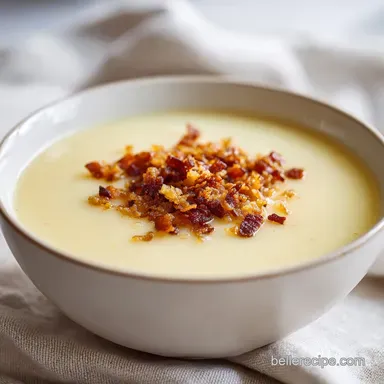
Outback Potato Soup: Creamy Copycat
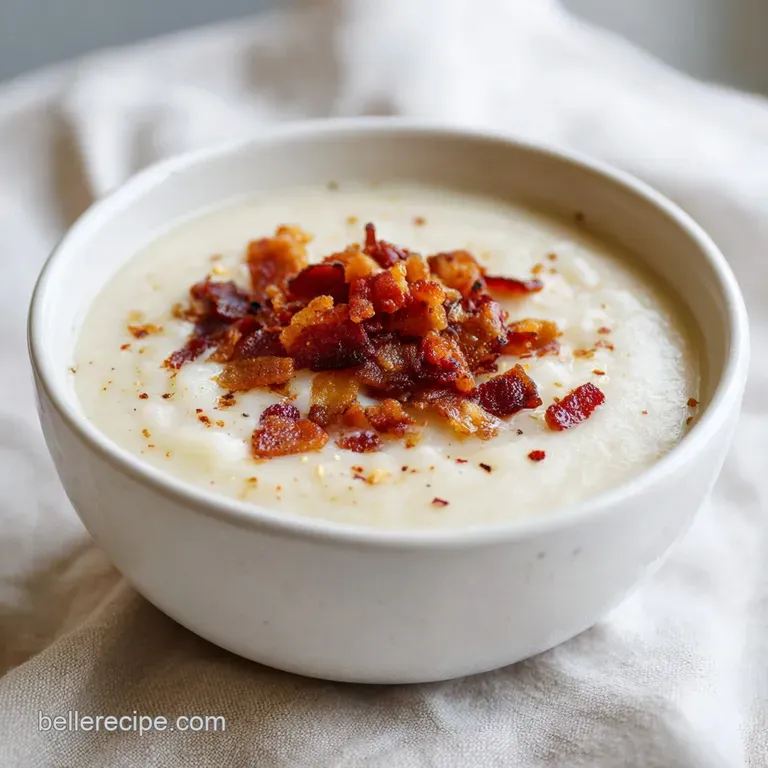
- Time:10 minutes prep + 30 minutes cook = Total 40 minutes
- Flavor/Texture Hook: Silky, glossy base with chunks of tender potato and salty bacon bits
- Perfect for: Rainy weeknights, game day comfort, or a cozy dinner for six
- Nailing the Creamy Outback Potato Soup Recipe
- The Quick Details
- The Secret to the Texture
- Component Analysis
- Selecting the Best Elements
- The Essential Kitchen Tools
- Cooking the Soup Step-by-Step
- Fixing Common Soup Mistakes
- Twisting the Classic Flavors
- Storage and Waste Tips
- The Best Side Pairings
- High in Sodium
- Recipe FAQs
- 📝 Recipe Card
Nailing the Creamy Outback Potato Soup Recipe
The sound of thick cut bacon hitting a hot Dutch oven is a specific kind of music, isn't it? That aggressive sizzle, the smell of salt and smoke filling the kitchen, and the way the fat renders into a golden liquid that's basically liquid gold for any soup base.
I remember the first time I tried to recreate this at home. I was craving that specific, heavy hitting comfort you only get at a steakhouse, but my first attempt was a disaster. It was basically potato water with some cheese floating in it.
I realized I was treating it like a vegetable soup when it's actually more like a savory custard. The secret isn't just in the ingredients, it's in how you manage the starch. Once I stopped rushing the roux and actually let the potatoes simmer until they were just on the edge of falling apart, everything clicked.
Now, it's the one dish my friends ask for whenever they come over on a cold Tuesday.
You can expect a bowl that feels like a warm hug. We're talking about a texture that's velvety but still has those satisfying potato chunks, topped with a sharp hit of cheddar and fresh chives to cut through the richness. It's a heavy dish, but that's exactly why it works. Trust me on this, don't skim on the bacon fat.
The Quick Details
Right then, let's get the logistics out of the way so you can start chopping. This recipe is designed to be straightforward, but the timing is key to getting that specific consistency. We've got a relatively short window of active work followed by a gentle simmer.
Since we're using Russet potatoes, the cooking time is predictable. If you use a different potato, you might find yourself waiting longer or ending up with a soup that's too chunky. Stick to the 40 minutes total time for the best results.
Because this is a rich, cream based soup, it's a great base for various toppings. Whether you keep it classic or go wild with extra jalapeños, the core structure remains the same.
| Method | Time | Texture | Best For |
|---|---|---|---|
| Stovetop | 40 min | Velvety & Glossy | Fresh dinner |
| Slow Cooker | 6-8 hrs | Very Soft/Pureed | Set and forget |
| Instant Pot | 30 min | Uniformly Tender | Maximum speed |
The Secret to the Texture
I've spent a lot of time wondering why some potato soups feel like glue while others feel like silk. It comes down to a few simple things that happen in the pot.
- The Roux Effect
- Combining butter and flour creates a stable base that prevents the milk from separating when the cheese hits.
- Starch Release
- Simmering Russets allows them to release just enough starch to thicken the liquid without making it gummy.
- Fat Emulsion
- Rendering the bacon first means we're cooking the onions in animal fat, which carries flavor better than oil.
- Temperature Control
- Adding room temperature milk prevents the roux from shocking and forming lumps.
Looking at the broader picture of ingredients, the nutritional value is approximate and varies based on ingredients. You can explore accurate, science backed data through the USDA FoodData Central database to see how different potato varieties impact the macros.
Component Analysis
Not every potato or cheese is created equal here. If you use a waxy potato, you'll have chunks floating in a thin liquid. If you use a mild cheese, the bacon will drown out the flavor.
| Ingredient | Science Role | Pro Secret |
|---|---|---|
| Russet Potatoes | Starch Provider | Cut into exact 1/2 inch cubes for even cooking |
| Sharp Cheddar | Flavor & Fat | Grate it yourself; pre shredded has cornstarch |
| All Purpose Flour | Stabilizer | Cook until nutty to remove the "raw" flour taste |
| Smoked Paprika | Aroma/Color | Just a pinch adds a "slow cooked" depth |
I honestly don't even bother with low-fat cheese for this. You need the fat for the emulsion to work, otherwise, the soup can look grainy or break. If you're worried about the richness, just add a squeeze of lemon at the end.
Selecting the Best Elements
Let's talk about what you actually need on your counter. I've listed the exact amounts from my tested version.
- 6 slices (60g) thick cut smoked bacon, diced Why this? Provides the smoky base and essential cooking fat
- 3 cups (680g) Russet potatoes, peeled and cubed into ½ inch pieces Why this? High starch content for a velvety texture
- ½ cup (60g) yellow onion, finely diced Why this? Adds a subtle sweetness to balance the salt
- 3 cloves (15g) garlic, minced Why this? Pungent depth that cuts through the cream
- 4 tbsp (56g) unsalted butter Why this? Creates a rich, smooth roux
- ¼ cup (30g) all purpose flour Why this? Thickens the soup and stabilizes the dairy
- 2 cups (480ml) whole milk, room temperature Why this? Prevents clumping in the roux
- 1 cup (240ml) chicken broth, low sodium Why this? Adds savory depth without over salting
- ½ tsp (3g) salt Why this? Basic flavor enhancer
- ¼ tsp (1g) black pepper Why this? Subtle heat
- ¼ tsp (1g) smoked paprika Why this? Mimics the grill flavor of the original
- 1 ½ cups (170g) sharp cheddar cheese, shredded Why this? Strong flavor that stands up to potatoes
- ¼ cup (15g) fresh chives, thinly sliced Why this? Bright, oniony finish
- ½ cup (60g) sour cream Why this? Adds a signature tang and glossy finish
| Original Ingredient | Substitute | Why It Works |
|---|---|---|
| Whole Milk (2 cups) | Heavy Cream (1 cup) + Water (1 cup) | Similar fat. Note: Richer but potentially too heavy |
| Sharp Cheddar | Gruyère or Fontina | Melts beautifully. Note: Nuttier, less "sharp" profile |
| Chicken Broth | Vegetable Broth | Same salinity. Note: Shifts flavor to be more garden forward |
| Russet Potatoes | Yukon Gold | Creamier texture. Note: Holds shape better, less "mashy" |
But what about the thickness? If you prefer something more like a chowder, you can increase the flour by a tablespoon. Just remember that the potatoes themselves will add thickness as they simmer.
The Essential Kitchen Tools
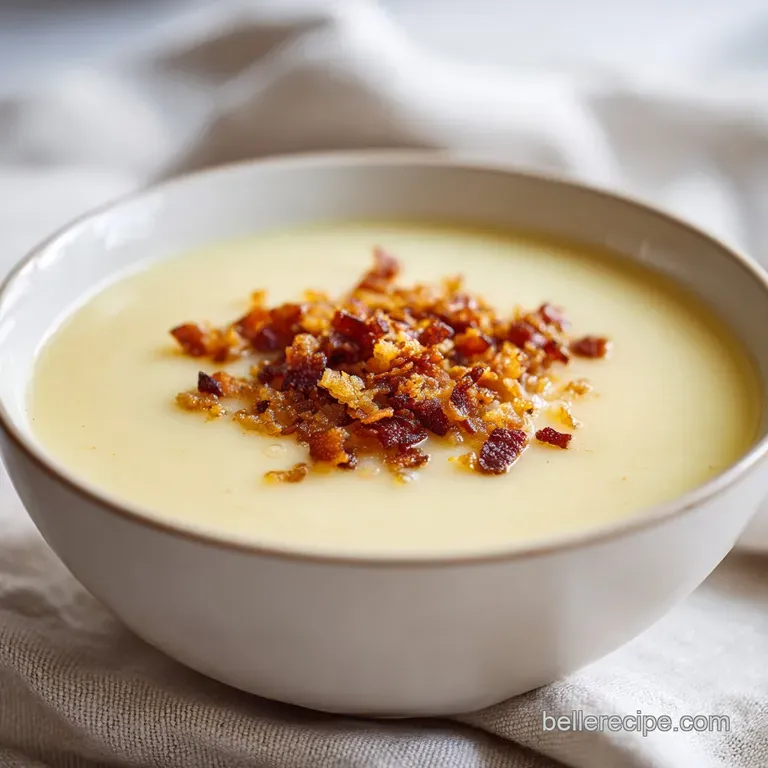
You don't need a fancy setup, but one specific pot makes a world of difference. I always use a Dutch oven because the heavy bottom prevents the milk from scorching.
- Large Dutch oven or heavy bottomed pot
- Whisk (essential for a lump free roux)
- Slotted spoon (for bacon removal)
- Potato masher or immersion blender
- Sharp chef's knife and cutting board
Chef's Note: If you don't have a Dutch oven, a stainless steel pot works, but keep your heat slightly lower. Milk is temperamental and loves to burn on the bottom of thin pots.
Cooking the Soup step-by-step
Let's crack on. The goal here is to build layers of flavor, starting with the fat and ending with the fresh herbs.
- Place the diced bacon in the Dutch oven over medium heat. Fry until the bacon is crisp and the fat has rendered. Note: Don't rush this; the rendered fat is your primary seasoning.
- Use a slotted spoon to remove the bacon bits, leaving the fat in the pot.
- Add the diced onions to the bacon fat and sauté until translucent (about 3-4 minutes). Stir in the minced garlic and cook for 30 seconds until fragrant.
- Stir in the butter until melted, then whisk in the flour. Cook this roux for 2 minutes, stirring constantly, until it smells slightly nutty. Note: This removes the raw flour taste.
- Slowly pour in the chicken broth and whole milk while whisking vigorously to ensure no flour clumps remain.
- Add the cubed potatoes, salt, pepper, and smoked paprika. Bring the mixture to a gentle simmer.
- Reduce heat to low, cover, and simmer for 15-20 minutes until potatoes are fork tender.
- For a chunky texture, use a potato masher to crush about 30% of the potatoes. For a smooth puree, use an immersion blender for 5-10 seconds. Note: Be careful not to over blend or it becomes like wallpaper paste.
- Stir in the sour cream and half of the shredded cheddar cheese until completely melted and glossy. Top with remaining cheese, bacon, and chives.
Precision Checkpoints:
- Bacon Render: Look for the bacon to be golden brown and the fat to be clear and bubbling.
- The Roux: The mixture should look like a pale paste and smell like toasted nuts after 2 minutes.
- Potato Doneness: A fork should slide into the potato with zero resistance.
Fixing Common Soup Mistakes
Even with a plan, things can go sideways. Most potato soup issues are related to temperature or starch management.
Fixing Thick Soup
If your soup looks more like mashed potatoes than soup, don't panic. It usually happens if the potatoes were extra starchy or the heat was too high, causing too much evaporation. Simply whisk in a splash of warm milk or chicken broth, a quarter cup at a time, until it reaches a pourable consistency.
Fixing Grainy Cheese
This usually happens when the cheese is added to boiling liquid. The proteins in the cheese tighten up and separate from the fat, leaving you with a gritty texture. The fix is to remove the pot from the heat entirely before stirring in the cheese and sour cream. The residual heat is plenty to melt the cheddar.
Fixing Bland Flavor
If the soup tastes "flat," it's likely lacking acidity or salt. Potatoes absorb a massive amount of seasoning. Stir in a teaspoon of lemon juice or a bit more salt. The acidity from the sour cream helps, but sometimes a little extra push is needed.
| Problem | Root Cause | Solution |
|---|---|---|
| Lumpy Base | Flour added too fast | Whisk in milk slowly in a steady stream |
| Oily Surface | Cheese overheated | Stir in cheese off heat |
| Potatoes Hard | Cut too large | Simmer for another 5 mins; check cube size |
Mistakes to Avoid:
- ✓ Pat bacon dry before frying to ensure a better sizzle
- ✓ Use room temperature milk to avoid roux clumps
- ✓ Don't over blend the potatoes or you'll lose the chunky contrast
- ✓ Grate your own cheese to avoid the waxy coating on pre shredded bags
- ✓ Keep the heat low after adding dairy to prevent curdling
Twisting the Classic Flavors
Once you've mastered the base, you can start playing around. I love this recipe because it's so adaptable. If you want to make it feel a bit more like a meal, you can easily add protein or veg.
For a more rustic feel, try adding diced carrots and celery during the onion sauté phase. It doesn't change the "Outback" vibe, but it adds a bit of color. If you're feeling bold, stir in some diced pickled jalapeños along with the cheddar for a "Tex Mex" twist.
If you prefer a different style of comfort, you might like my Cheddar Broccoli Soup recipe, which uses a similar roux based technique but with a fresher, green profile.
Adjustment Guidelines: - Cutting it in half: Use a smaller pot. Reduce the simmering time by about 20% since there's less mass to heat. Beat one egg if you're adding a binder (though not needed here), but for the milk/broth, just divide by two.
- Doubling the batch: Do NOT double the salt and smoked paprika start with 1.5x and taste. Liquids can be reduced by about 10% because less moisture evaporates in a larger pot. Work in batches if your pot is too small to avoid overcrowding.
Storage and Waste Tips
Potato soup is one of those things that actually tastes better the next day because the flavors have time to marry. However, it can thicken up significantly in the fridge.
Storage Guidelines: Keep the soup in an airtight container in the fridge for up to 4 days. When reheating, do it on the stovetop over medium low heat. You'll almost certainly need to add a splash of milk or water to loosen it back up to that velvety state.
Freezing Tips: I'm going to be honest freezing cream based soups is risky. The dairy often separates, leaving you with a grainy texture. If you must freeze it, do so before adding the sour cream and cheese.
Freeze for up to 3 months, then thaw in the fridge overnight and add the dairy during the final reheating phase.
Zero Waste Ideas:
- Potato Peels: Don't toss them! Toss the peels in oil and salt, then air fry or bake them for 10 minutes for a crunchy snack.
- Bacon Scraps: If you have leftover bacon bits, freeze them in a small bag for future salads.
- Onion Ends: Save your onion skins and garlic ends in a freezer bag to make a quick vegetable stock later.
The Best Side Pairings
Because this soup is so rich and salty, you need something to cut through that weight. A heavy bread is great, but something with a bit of acidity or crunch is better.
I highly recommend serving this with Homemade Soup Crackers, which provide a shatter crisp texture that contrasts perfectly with the silky soup. A simple arugula salad with a lemon vinaigrette also works wonders to cleanse the palate between spoonfuls.
If you're going for a full "steakhouse at home" experience, pair this with a grilled wedge salad or some honey glazed carrots. The sweetness of the carrots balances the smokiness of the bacon beautifully.
The Flavor Map:
- Richness: Bacon fat, butter, whole milk, cheddar
- Tang: Sour cream, chives
- Depth: Smoked paprika, garlic, chicken broth
- Contrast: Fresh chives, crispy bacon bits
High in Sodium
1020 mg 1020 mg of sodium per serving (44% 44% of daily value)
The American Heart Association recommends a daily limit of 2,300mg of sodium for most adults to maintain heart health.
Tips to Reduce Sodium
-
Swap the Broth-30%
Replace the low-sodium chicken broth with water or homemade unsalted stock to eliminate processed sodium.
-
Reduce Bacon-25%
Use half the amount of smoked bacon or substitute with a lower sodium turkey bacon alternative.
-
Omit Added Salt-25%
The bacon and cheese already provide significant salt; completely omit the ½ tsp of added salt.
-
Limit the Cheese-15%
Reduce the sharp cheddar by one-third or use a lower sodium variety like Swiss cheese.
-
Boost Aromatics
Increase the amount of fresh chives, black pepper, and smoked paprika to add depth without adding sodium.
Recipe FAQs
What does Outback put in their potato soup?
Bacon, Russet potatoes, sharp cheddar, and sour cream. The base is thickened with a roux of butter and flour combined with whole milk and chicken broth.
What is the secret ingredient in potato soup?
Smoked paprika. This ingredient adds the signature depth and subtle smoky color found in the restaurant version.
Is outback potato soup good?
Yes, it is highly regarded for its richness. The combination of sharp cheddar and smoky bacon creates a comforting, velvety flavor profile.
What are common mistakes making potato soup?
Over blending the potatoes. Using an immersion blender for too long can make the texture gluey; it is better to mash only about 30% of the potatoes.
How to adjust the soup's consistency?
Simmer the mixture for a few extra minutes. You can also mash more of the cubed potatoes to naturally thicken the base without adding more flour.
Is it true that potato soup can be frozen without losing quality?
No, this is a common misconception. The dairy components often separate during the freezing process, leaving the soup with a grainy texture upon reheating.
What should I serve with potato soup?
A crisp, acidic side dish. This pairs perfectly with a seaweed salad to balance the richness of the cheese and sour cream.
Outback Potato Soup Recipe