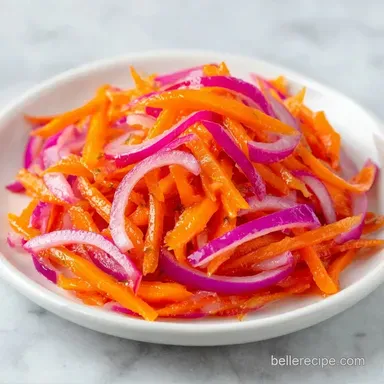
Pickled Carrots and Onions: Tangy and Crisp
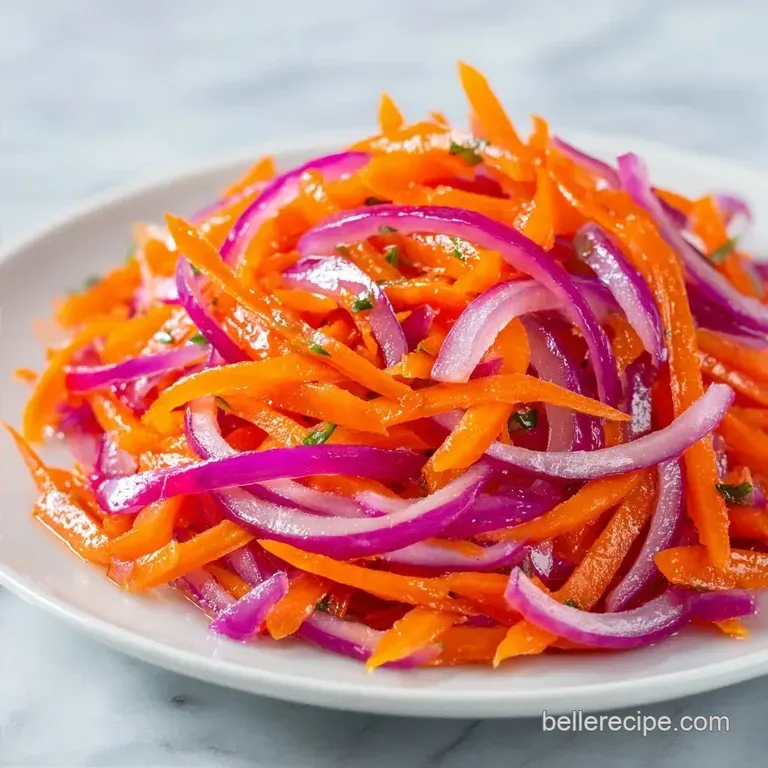
- Time: 10 min active + 1 hours 15 mins chilling
- Flavor/Texture Hook: Sharp, tangy, and a satisfying shatter crisp snap
- Perfect for: Banh mi, street tacos, or adding zip to a boring sandwich
The first thing you notice when you open the jar is that scent. It's a sharp, vinegary punch that immediately wakes up your sinuses, followed by the warm, earthy hum of coriander seeds. I remember the first time I made these for a group of friends.
I had spent way too much time worrying if the carrots were sliced thin enough, but the moment those bright orange strips hit the deep pink of the red onions, the jar looked like a piece of art.
There's something so comforting about the process. It's not a high stress bake or a temperamental sauce. You're just packing vegetables into a glass jar and pouring over a boiling liquid. It's a slow down kind of recipe.
You don't have to be a pro to get this right, but the result feels like something you'd buy from a high end deli.
This version of Pickled Carrots and Onions is designed to be fast. We aren't waiting weeks for fermentation here. We're using a hot brine method that forces the flavors into the vegetables quickly, so you can have them on your table in just over an hour.
Pickled Carrots and Onions
The magic happens in the contrast. You have the sweetness of the carrot, the slight bite of the red onion, and the acidity of the vinegar all fighting for attention. When you take a bite, the vegetables should almost shatter in your mouth. If they're limp, something went wrong. If they're too salty, the balance is off.
But when it's right, it's a bright, sunny addition to any meal.
I've found that the secret is in the cut. Using a julienne cut for the carrots isn't just for looks. It increases the surface area, allowing the brine to soak in faster while keeping the center of the carrot firm. The red onions, on the other hand, should be sliced into thin half moons.
This allows them to soften just enough to be palatable while still providing a structural contrast to the carrots.
The Secret to the Snap
I used to think the crunch came from the vegetables being fresh, but it's actually about how the brine interacts with the plant cells. When you use a specific ratio of salt and vinegar, you create an environment that prevents the vegetables from breaking down too quickly. If you've enjoyed my quick pickled radishes, you'll notice a similar snap here.
- Osmotic Pressure
- Salt draws water out of the vegetable cells, which prevents the vinegar from making them mushy.
- Acid Shock
- The vinegar lowers the pH rapidly, which locks in the color of the red onions and turns them a vivid pink.
- Heat Infusion
- Boiling the brine ensures the sugar and salt are fully dissolved, creating a consistent flavor throughout the jar.
- Cell Wall Stability
- The coriander seeds and peppercorns add a layer of aromatic oil that coats the vegetables, helping them retain their structure.
| Method | Time | Texture | Best For |
|---|---|---|---|
| Quick Heat | 1 hour | Very Snappy | Fresh salads, tacos |
| Traditional | 2 weeks | Softened | Sandwiches, charcuterie |
| Cold Soak | 24 hours | Mild Crunch | Delicate vegetable plates |
Component Analysis
Before we get into the "how," let's look at why these specific ingredients are in the jar. It's not just a random mix of pantry staples.
| Ingredient | Science Role | Pro Secret |
|---|---|---|
| White Vinegar | Acidifier | Use distilled for a clean, neutral tang |
| Kosher Salt | Osmotic Agent | Coarse grains dissolve more predictably |
| Coriander Seeds | Aromatic | Whole seeds provide a slower flavor release |
| Red Onion | Color/Flavor | High anthocyanin content creates the pink hue |
What You'll Need
Right then, let's get the supplies ready. Make sure your carrots are peeled well, as the skin can sometimes have a bitter, woody taste that lingers.
- 2 cups (250g) carrots, peeled and julienned Why this? Provides a sweet, firm base
- 1 cup (150g) red onion, thinly sliced Why this? Adds a sharp bite and vivid color
- 1 clove (5g) garlic, smashed Why this? Adds a subtle, savory depth
- 1 cup (240ml) white distilled vinegar Why this? Clean acidity without fruitiness
- 1 cup (240ml) water Why this? Balances the harshness of the vinegar
- 2 tbsp (25g) granulated sugar Why this? Counters the acid for a balanced taste
- 1 tbsp (18g) kosher salt Why this? Maintains the snap of the veg
- 1 tsp (2g) black peppercorns Why this? Adds a mild, woody heat
- 1 bay leaf Why this? Adds a herbal, floral note
- 1/2 tsp (1g) coriander seeds Why this? Gives that signature "pickled" aroma
Substitution Options
| Original Ingredient | Substitute | Why It Works |
|---|---|---|
| White Vinegar | Apple Cider Vinegar | Fruitier taste. Note: Brine will be darker |
| Granulated Sugar | Maple Syrup | Deep, earthy sweetness. Note: Changes color |
| Red Onion | Shallots | Milder, sweeter flavor. Note: No bright pink color |
Essential Kitchen Tools
You don't need a fancy lab for this. A few basic items will do the trick. I prefer using a wide mouth mason jar because it's easier to pack the vegetables tightly without bruising them.
- Glass Mason Jar (16oz or 32oz)
- Small Saucepan
- Julienne Peeler or Sharp Knife
- Measuring Cups and Spoons
How to Make It
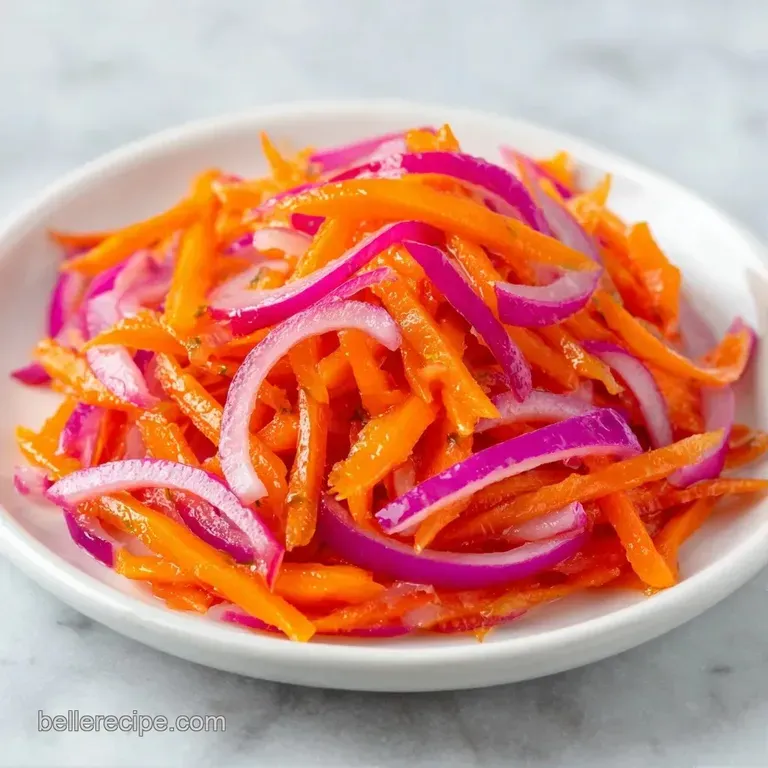
Now we get to the fun part. Follow these steps carefully, and your Pickled Carrots and Onions will be ready for the fridge in no time.
- Pack the julienned carrots and sliced red onions tightly into a glass mason jar. Note: Packing them tight prevents them from floating when you add the liquid.
- Tuck the smashed garlic clove into the center of the vegetables. Note: Smashed garlic releases more oils than minced garlic.
- Combine the vinegar, water, sugar, salt, peppercorns, bay leaf, and coriander seeds in a small saucepan.
- Bring the mixture to a rolling boil over medium high heat. Stir occasionally until the sugar and salt are completely dissolved.
- Carefully pour the boiling brine directly over the vegetables, covering them completely. Note: Ensure no vegetables are poking above the liquid line to prevent spoilage.
- Seal the lid immediately to trap the heat and aromatics inside the jar.
- Allow the jar to sit on the counter until the glass is cool to the touch.
- Transfer the jar to the refrigerator to chill for 1 to 2 hours before serving.
Chef's Note: If you're in a huge rush, you can put the jar in an ice bath for 20 minutes to speed up the cooling process, but don't skip the chill time entirely or the flavor won't set.
Troubleshooting Your Batch
Sometimes things don't go as planned. Maybe your vegetables are too soft or the color isn't quite right. Don't panic, it's usually a quick fix.
| Issue | Solution |
|---|---|
| Why are my vegetables soft | This usually happens if the brine was kept at a simmer for too long before pouring or if the vegetables were sliced too thin. |
| Why is the brine cloudy | Cloudiness often comes from using a vinegar with high impurities or from the sugar not being fully dissolved. |
| Why didn't the onions turn pink | If your onions stayed white or purple, the vinegar might not have been acidic enough. Always use a vinegar with at least 5% acidity to ensure the chemical reaction that creates the pink hue happens. |
Common Mistakes Checklist
- ✓ Did you use a glass jar? (Plastic can react with hot vinegar)
- ✓ Is the brine boiling? (Sugar must be fully dissolved)
- ✓ Are the veggies fully submerged? (Prevents mold)
- ✓ Did you let it chill for at least 1 hour? (Develops the flavor)
Dietary Tweaks and Swaps
Depending on who you're feeding, you might need to change a few things. These Pickled Carrots and Onions are naturally vegan and gluten-free, but you can push the flavors further.
For a Vietnamese style version Add a teaspoon of fish sauce to the brine for a salty, umami depth. This is exactly how they make the toppings for a traditional Banh Mi.
Adding a spicy kick Slice up a jalapeno or a bird's eye chili and pack it into the jar along with the carrots. The heat will infuse into the brine and give everything a slow burn.
Making it sugar-free You can replace the sugar with a pinch of stevia or monk fruit sweetener. Just be aware that the sugar doesn't just add sweetness; it also adds a certain "syrupy" body to the brine that sweeteners sometimes lack.
Adjusting the Acid If white vinegar is too harsh, try a 50/50 mix of white vinegar and rice vinegar. This creates a softer, more rounded flavor that's less aggressive on the palate.
Scaling Your Batch
Scaling your Pickled Carrots and Onions is pretty straightforward, but there are a few rules to keep in mind so you don't end up with a salt bomb.
Scaling Down (Half Batch) If you're only using one small jar, cut everything in half. Use a smaller saucepan so the brine doesn't evaporate too quickly while boiling, which would make the liquid too concentrated.
Scaling Up (Double or Triple Batch) When making large amounts, don't just triple the salt and spices. Increase the salt and coriander to about 2x or 2.5x instead of 3x. The flavor extraction is more efficient in larger volumes of liquid, and over salting is a common mistake in big batches.
Working in Batches If you don't have a massive pot, boil the brine in one go and pour it across multiple jars. Just make sure the brine is still boiling when it hits the last jar to ensure the heat lock is consistent across all containers.
Storage and Waste Tips
Keep your Pickled Carrots and Onions in an airtight glass jar in the refrigerator. They'll stay crunchy and bright for about 3 weeks. Do not freeze them; the freezing process destroys the cell walls of the vegetables, and they'll turn into mush the moment they thaw.
When you've finally eaten all the vegetables, don't throw away that leftover brine! It's essentially a seasoned vinegar. I love using a splash of it to dress a cold potato salad or as a base for a quick marinade for grilled chicken. You can even use it to quick pickle some cucumber slices for a burger.
If you have extra carrot peels from the prep, don't toss them. Throw them in a freezer bag with your other veggie scraps. Once the bag is full, simmer them with water to make a simple vegetable stock for your next soup.
Best Ways to Serve
Now for the best part. These aren't just a garnish; they're a flavor powerhouse. The sharpness cuts through fatty meats and adds a bright pop of color to a plate.
The Ultimate Taco Topper Pile these high on carne asada or al pastor tacos. The acidity cuts right through the richness of the meat, and the crunch replaces the need for a cabbage slaw.
The Banh Mi Build To make a real deal Banh Mi, start with a crusty baguette, smear on some mayo and a bit of homemade hoisin sauce, add grilled pork, and top with a generous handful of these pickled vegetables and fresh cilantro.
The Burger Upgrade Instead of standard pickles, put these on a smash burger with a slice of sharp cheddar. The red onion adds a sweetness that pairs perfectly with the char of the beef.
The Grain Bowl Addition Add a scoop to a bowl of quinoa, roasted chickpeas, and avocado. It provides the necessary acid to balance the earthiness of the grains and the creaminess of the avocado.
Trust me, once you start making your own Pickled Carrots and Onions, you'll never go back to the store-bought versions. They're fresher, brighter, and exactly how you want them. Let's crack on and get pickling!
Recipe FAQs
What vinegar is best for pickling carrots?
White distilled vinegar. It provides a clean, sharp acidity that allows the natural flavor of the vegetables to shine. If you loved the sweet tart balance here, see how we use a similar profile in our sweet pepper relish.
Do you need to boil carrots before pickling?
No, keep them raw. Pouring the boiling brine directly over the julienned carrots ensures they maintain their crunch.
How to pickle vegetables in 10 minutes?
Pack julienned vegetables into a jar and pour over boiling brine. This process takes 10 minutes of prep and 5 minutes of cooking, followed by chilling for 1 to 2 hours.
Why are my pickled vegetables soft?
The brine was likely simmered too long or the vegetables were sliced too thin. Both issues break down the cell walls, removing the desired snap.
Can you use leftover brine to make more pickles?
Yes, it is essentially a seasoned vinegar. You can use it to quick pickle cucumber slices for a burger or as a base for a savory marinade.
Is it true that you must pre-cook vegetables to make them safe for pickling?
No, this is a common misconception. The high acidity of the boiling brine is sufficient for these refrigerator style pickles.
How can someone make homemade vegetable pickles?
Boil a mixture of vinegar, water, sugar, and salt, then pour it over packed vegetables. Seal the lid immediately and refrigerate once the glass is cool to the touch.
Pickled Carrots And Onions