Homemade Sausage Gravy Recipe

- Time: Active 10 minutes, Passive 5 minutes, Total 15 minutes
- Flavor/Texture Hook: Silky, peppery, and incredibly savory
- Perfect for: Slow Sunday mornings or a quick, hearty weeknight breakfast for-dinner
- Why This Creamy Southern Classic Hits Different
- Timing and Yield for Perfect Morning Portions
- The Science Behind Silky Sausage Gravy
- Selecting the Best Elements for Rich Flavor
- The Best Tools for a Silky Smooth Sauce
- Step-by-Step Guide to Whisking Up Perfection
- Solving Common Sausage Gravy Texture Mishaps
- Creative Twists on the Traditional Breakfast Base
- Storing and Reheating for Future Morning Bliss
- The Best Ways to Pair This Savory Sauce
- Busting Kitchen Legends
- Recipe FAQs
- 📝 Recipe Card
Why This Creamy Southern Classic Hits Different
There is a specific sound that defines my Saturday mornings: the high pitched sizzle of crumbled pork hitting a hot cast iron pan. It's a sound that wakes up the house faster than any alarm clock ever could.
I remember the first time I tried making this for my family, I made the classic mistake of draining the fat because I thought it would be "healthier." What I ended up with was a dry, clumpy mess that tasted like nothing. I learned quickly that in the world of Southern cooking, that fat is where the soul lives.
When you get it right, the aroma of toasted flour and sage heavy sausage fills the kitchen, creating a sense of warmth that’s hard to find elsewhere. This isn't just a topping for biscuits; it's a hug in a bowl.
We've all had those pale, bland gravies at diners that taste like wallpaper paste, but this version is the complete opposite. It’s bold, it’s speckled with enough black pepper to make your tongue tingle, and it has a depth of flavor that only comes from taking your time with the browning process.
The secret I finally stumbled upon involves being patient with the "fond" those little brown bits stuck to the bottom of the skillet. If you rush the milk, you miss out on all that caramelized goodness. Now, I make sure the sausage is practically dark brown before I even look at the flour.
This recipe is my go to because it works every single time, provided you follow the golden rule: never walk away from the stove.
Timing and Yield for Perfect Morning Portions
Before we get the stove going, it helps to know exactly what to expect. This recipe is designed for a standard family breakfast, yielding enough to generously cover a dozen biscuits. If you're planning a larger gathering, perhaps a holiday brunch where you're also serving my Savory Sausage Dressing Recipe, you can easily double these numbers.
| Thickness | Visual Cue | Texture | Best For |
|---|---|---|---|
| Thin | Coats back of spoon lightly | Silky and pourable | Drizzling over hashbrowns |
| Medium | Leaves a path when finger is swiped | Velvety and rich | Traditional biscuits and gravy |
| Thick | Holds its shape for a second | Heavy and hearty | Toast or open faced sandwiches |
The medium thickness is usually the crowd favorite. It has enough body to stay on top of the biscuit without immediately soaking in and making everything soggy. If you find yourself needing a slower method for a busy morning, you might want to look into a Slow Cooker Sausages recipe to save some stovetop space.
The Science Behind Silky Sausage Gravy
Starch Gelatinization: When flour hits the hot fat, the starch granules swell and then burst upon adding milk, creating a thick network that traps liquid.
Maillard Reaction: The intense browning of the pork creates complex flavor molecules that dissolve into the milk, preventing a "floury" aftertaste.
Fat Emulsification: Whisking the milk slowly into the flour coated sausage ensures the fat stays suspended in the liquid rather than floating on top.
Selecting the Best Elements for Rich Flavor
Choosing your ingredients carefully is the difference between a mediocre breakfast and a legendary one. I always reach for a high-quality breakfast sausage with plenty of sage and red pepper.
If you use a lean turkey sausage, you'll likely need to add a tablespoon of butter to make up for the lack of rendered fat, or the flour won't have anything to cook in.
| Ingredient | Science Role | Pro Secret |
|---|---|---|
| Breakfast Sausage | Flavor & Fat Source | Use pork with 20% fat for the best roux. |
| All Purpose Flour | Binding Agent | Toast the flour for 60 seconds to remove the raw taste. |
| Whole Milk | Liquid Base | Use cold milk to prevent the roux from clumping instantly. |
The Lineup:
- 1 lb breakfast sausage: Look for "hot" or "sage" varieties. Why this? The fat provides the base for our roux and essential savory flavor.
- 1/3 cup all purpose flour: Standard white flour is best here. Why this? It has the right protein content to thicken without becoming gummy.
- 3 cups whole milk: Don't swap this for skim. Why this? The milk fat creates a velvety mouthfeel that low-fat versions lack.
- 1 tsp coarse ground black pepper: Freshly cracked is non negotiable. Why this? High heat needs a sharp bite to balance the richness.
- 1/2 tsp kosher salt: Adjust based on your sausage's saltiness. Why this? It enhances the underlying spices in the meat.
- 1/4 tsp crushed red pepper flakes: For a tiny bit of back end heat. Why this? It cuts through the creaminess of the whole milk.
The Best Tools for a Silky Smooth Sauce
You don't need a kitchen full of gadgets, but a heavy bottomed skillet is your best friend here. I prefer a 12 inch cast iron skillet because it holds heat beautifully and develops a crust on the meat that stainless steel sometimes struggles with.
You'll also want a sturdy whisk not the flimsy balloon kind, but something with a bit of backbone to move that heavy gravy around.
A wooden spoon is also helpful for the initial browning phase. It allows you to really scrape the bottom of the pan to get those flavorful brown bits incorporated. If you're doubling the recipe, make sure your pan has high enough sides to accommodate three cups of milk without splashing over the edge when you start whisking.
step-by-step Guide to Whisking Up Perfection
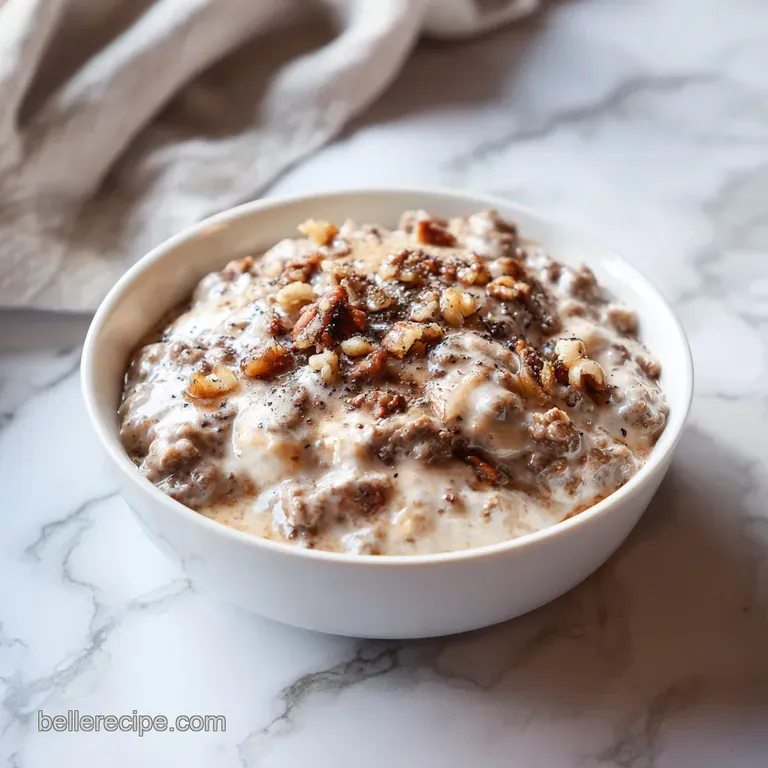
- Brown the meat. Place the 1 lb breakfast sausage in a large skillet over medium high heat. Cook until deeply browned and crumbled, about 5-7 minutes. Note: This creates the "fond" which is the base of your flavor.
- Leave the fat. Do not drain the skillet. Keep every drop of rendered fat in the pan with the meat. Note: You need about 3-4 tablespoons of fat; add butter if your sausage was too lean.
- Dust with flour. Sprinkle the 1/3 cup all purpose flour evenly over the cooked sausage. Stir constantly for 1 minute until the flour disappears and smells slightly nutty. Note: This "cooks out" the raw flour taste.
- Add liquid slowly. Pour in about half a cup of the 3 cups whole milk. Whisk vigorously until a thick paste forms. Note: Adding milk in stages prevents stubborn lumps.
- Incorporate remaining milk. Slowly pour in the rest of the milk while continuing to whisk. Scrape the bottom of the pan to release all the browned bits.
- Season the base. Add the 1 tsp black pepper, 1/2 tsp salt, and 1/4 tsp red pepper flakes. Stir to distribute the spices evenly through the liquid.
- Simmer and thicken. Reduce the heat to medium low. Cook for 3-5 minutes until the gravy bubbles and reaches your desired thickness. Note: The gravy will thicken further as it cools slightly.
- Final taste check. Dip a piece of biscuit or a spoon into the sauce. Adjust salt or pepper if the flavor feels flat.
- Serve immediately. Pour the hot gravy over split biscuits. Enjoy while the steam is rising.
Chef's Tip: If your gravy looks too thin, don't panic. Let it simmer for another two minutes. If it looks like a brick, whisk in milk one tablespoon at a time until it's silky again.
Solving Common Sausage Gravy Texture Mishaps
Even the best cooks run into a lumpy or bland batch of gravy now and then. The most common culprit is usually the temperature of the milk or rushing the roux. If you find your gravy has "broken" (where the fat separates from the milk), it usually means the heat was too high, causing the proteins in the milk to tighten up and push out the fat.
Why Your Gravy Is Lumpy
If you see white clumps of flour that won't disappear, it's usually because the flour wasn't fully incorporated into the fat before the milk was added. To fix this, you can try using an immersion blender for a few seconds, though this will break up the sausage crumbles too.
Next time, make sure the flour and fat form a smooth "sludge" before the liquid hits the pan.
| Problem | Root Cause | Solution |
|---|---|---|
| Lumpy Texture | Milk added too fast | Whisk in milk 1/4 cup at a time initially. |
| Bland Flavor | Not enough browning | Let the sausage get dark brown before adding flour. |
| Greasy Surface | Too much fat/not enough flour | Whisk in a teaspoon of flour mixed with cold milk. |
Common Mistakes Checklist: ✓ Never drain the sausage fat; it's the glue that holds the sauce together. ✓ Don't use skim milk; the lack of fat leads to a watery, grey looking gravy. ✓ Avoid over salting early; sausage brands vary wildly in sodium content.
✓ Keep the heat at medium low once the milk is in to prevent scorching. ✓ Use a whisk, not just a spoon, to ensure a truly velvety finish.
Creative Twists on the Traditional Breakfast Base
While the classic Southern version is hard to beat, there's plenty of room to play with the profile. If you're looking for something with a bit more of a kick, you can swap the breakfast sausage for spicy Italian sausage.
This changes the herb profile from sage to fennel, which is surprisingly delicious over sourdough toast.
For those who want to save time or try a different approach, checking out a Grandma's Sausage Gravy Recipe might give you that nostalgia hit you're looking for.
| Original Ingredient | Substitute | Why It Works |
|---|---|---|
| Whole Milk | Heavy Cream (diluted) | Mix 1 part cream with 1 part water for extra richness. |
| Breakfast Sausage | Mushrooms & Butter | Finely chopped mushrooms provide umami for vegetarians. |
| AP Flour | Cornstarch | Mix 2 tbsp with cold milk. Note: Result is shinier and less opaque. |
If you need to scale this down for just two people, use 1/2 lb of sausage and 1.5 cups of milk. The cooking time for the meat remains about the same, but the thickening process will happen much faster, so keep your eyes on the pan.
For a massive crowd, work in batches to brown the meat, then combine everything in a large pot to finish the milk and flour stage.
Storing and Reheating for Future Morning Bliss
Sausage gravy is one of those rare dishes that actually stores quite well, though it will thicken significantly in the fridge. You can keep it in an airtight container for up to 3 days. When you go to reheat it, you'll notice it looks like a solid block of gelatin that's just the fats and starches setting.
Reheating Tips: Place the leftovers in a small saucepan over low heat. Add a splash of milk (about 1-2 tablespoons per cup of gravy) and whisk constantly as it warms up. This "re emulsifies" the sauce and brings back that silky texture.
Avoid the microwave if possible, as it tends to heat unevenly and can cause the fat to separate.
Zero Waste Idea: If you have just a little bit of gravy left, don't toss it! Use it as a savory topping for a baked potato or stir it into a pot of grits. The stems from any herbs you might have added can be saved for a vegetable stock, and any extra sausage crumbles are a great addition to an omelet the next morning.
The Best Ways to Pair This Savory Sauce
The gold standard for serving this is, of course, over split, buttery biscuits. But don't stop there. This gravy is incredible over "sawmill" style fried potatoes or even as a decadent topping for a chicken fried steak.
If you're feeling adventurous, try it over a slice of thick cut, toasted brioche with a fried egg on top.
The "If You Want X, Do Y" List: If you want a smokier flavor, use half breakfast sausage and half crumbled bacon. If you want a thicker, rustic feel, don't crumble the sausage too finely; leave some large chunks.
If you want a brighter finish, stir in a teaspoon of fresh chopped parsley right before serving.
Busting Kitchen Legends
One common myth is that you must use room temperature milk to prevent lumps. In reality, cold milk is actually better because it allows the flour particles to separate and hydrate individually before they hit their "bursting" temperature.
If you pour hot milk into a hot roux, the starch on the outside of the flour clumps cooks instantly, sealing a ball of raw flour inside.
Another myth is that you can't freeze gravy. You actually can! The trick is to freeze it in a heavy duty freezer bag with all the air squeezed out. When you're ready to eat it, let it thaw in the fridge overnight.
It might look a bit grainy at first when you reheat it, but a vigorous whisking and a tiny splash of fresh milk will bring it back to life perfectly.
I hope this guide helps you conquer your next breakfast. There's something so satisfying about mastering a dish that relies on simple, humble ingredients. It reminds us that good food doesn't have to be complicated; it just has to be made with a little bit of patience and a whole lot of pepper.
Now, get that skillet hot and enjoy the best breakfast of your week!

Recipe FAQs
What is the 3 2 1 rule for gravy?
No, this isn't a standard culinary measurement. The ratio for sausage gravy is dependent on fat rendered; however, a good baseline is roughly 1 part flour to 2 parts fat, followed by 8 parts liquid (milk).
For best results, use the roux method: melt fat, whisk in flour, then slowly add milk until desired thickness is achieved.
How to make a nice sausage gravy?
Brown the sausage thoroughly until dark and crumbled, reserving all rendered fat. Whisk in the flour evenly over the hot fat and cook for one minute to toast it, creating a smooth roux.
Slowly whisk in cold milk until the mixture thickens to coat the back of a spoon, seasoning heavily with black pepper.
What is the ratio of flour to milk for sausage gravy?
A reliable starting point is 1/3 cup of flour for every 3 cups of whole milk. This ratio assumes you have 3-4 tablespoons of rendered sausage fat to combine with the flour to form your roux.
If your sausage was very lean, you may need to add a tablespoon of butter to ensure enough fat exists for the flour.
Can a diabetic have gravy?
Yes, in moderation, depending on the preparation. The primary concern is the high carbohydrate content from the flour thickener, which rapidly converts to sugar. To manage this, use less flour and consider thickening with a low-carb alternative like xanthan gum, or pair it with low-glycemic sides rather than white biscuits.
Is it true I must use whole milk for classic sausage gravy?
No, this is a common misconception, but whole milk is strongly recommended. Whole milk provides the necessary fat content (around 3.5%) to create a velvety, rich mouthfeel through proper emulsification. Using skim milk often results in a thinner, greyish gravy that breaks easily.
What is the secret to lump free sausage gravy?
Always use cold milk poured slowly into the hot, smooth roux. The initial addition should be just enough cold milk to form a very thick paste, whisked vigorously until completely smooth before adding the remaining liquid. If you mastered controlling the texture here, see how the same principle of careful initial incorporation works in our Classic Homemade Salisbury recipe.
Can I use turkey sausage instead of pork?
Yes, you can substitute turkey sausage, but you must add extra fat. Turkey sausage renders significantly less fat than pork, meaning you won't have enough grease to properly cook the flour for the roux. Plan to supplement the rendered drippings with 1 to 2 tablespoons of added butter or oil.
Sausage Gravy In 15 Minutes
Ingredients:
Instructions:
Nutrition Facts:
| Calories | 327 kcal |
|---|---|
| Protein | 12.9 g |
| Fat | 25.1 g |
| Carbs | 11.9 g |
| Fiber | 0.3 g |
| Sugar | 5.8 g |
| Sodium | 787 mg |
