The Bakers Dozen Perfect Nospread Rolled Sugar Cookies
- The Blueprint for Zero-Spread Rolled Sugar Cookies
- Why This Recipe Is the Only Cut-Out Formula You’ll Ever Need
- Essential Provisions for Your Cookie Operation
- Decoding the Perfect Ingredient Ratio and Necessary Tools
- Mastering the Sugar Cookie Dough Technique
- The Step-by-Step Path to Flawless Rolled Sugar Cookies
- Advanced Troubleshooting and Decoration Strategies
- Preserving Your Masterpiece: Storage and Shelf Life
- Recipe FAQs
- 📝 Recipe Card
The Blueprint for Zero Spread Rolled Sugar Cookies
Creating the ideal cut-out cookie often feels like chasing a mythical beast. We’ve all experienced the frustration: spending precious time rolling and shaping intricate designs, only to pull shapeless, amorphous discs from the oven.
This rolled sugar cookies recipe solves that fundamental problem. We are focusing on precision, temperature control, and technique to deliver truly reliable cut-outs.
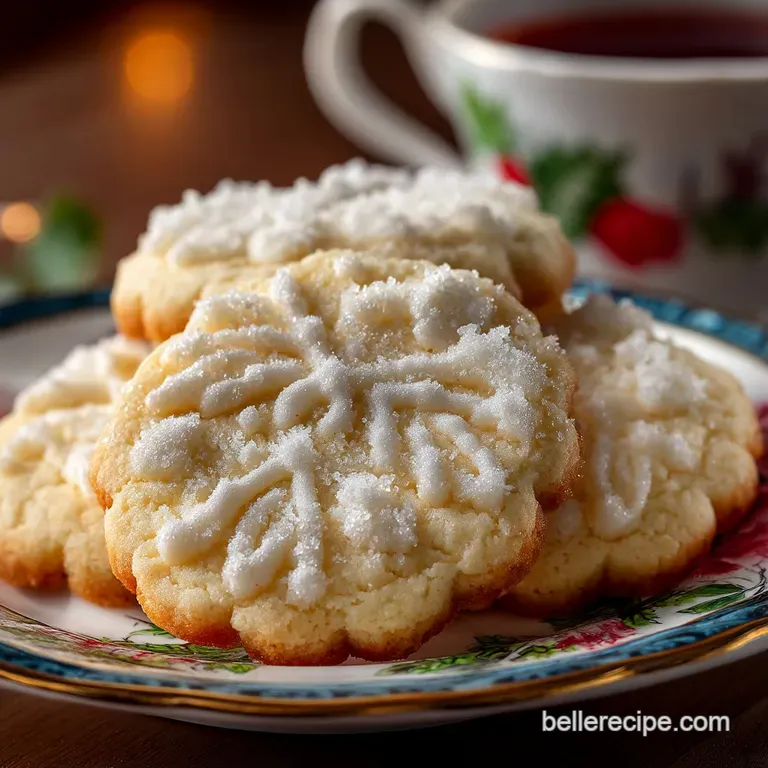
This formula guarantees stability, resulting in the Perfect No-Spread Rolled Sugar Cookies that hold the sharpest edges, making them the ultimate foundation for intricate decoration and seasonal baking.
Why This Recipe Is the Only Cut-Out Formula You’ll Ever Need
This isn't just another butter and sugar mix; it’s a meticulously balanced chemical system. Designed specifically for stability and tensile strength, the resulting cookies are sturdy enough to survive handling and decoration, yet still possess the delicate, buttery flavour we crave.
The success of this method means that whether you are baking delicate snowflakes or blocky gingerbread men, the final baked shape will perfectly match the cutter.
The Scientific Secret to Maintaining Sharp Cookie Edges
The key to achieving rolled sugar cookies that don't spread lies entirely in managing fat temperature and minimizing leavening. We use cold, cubed butter, which is crucial for structure. When the cold dough enters the hot oven, the solid fat needs time to melt.
Because our dough is chilled twice —once as a mixed disc, and again as cut shapes the butter hardens significantly, locking the flour matrix into place. By the time the butter finally melts, the dough's outer structure has set, preventing lateral spreading and preserving those crisp edges.
Defining the Perfect Rolled Sugar Cookie Texture
The ideal rolled sugar cookie should provide a satisfying, substantial bite without being dense or crispy. Our goal is a cookie that is perfectly set, offering a rich, buttery tenderness that practically dissolves in your mouth.
This texture is achieved by carefully controlling the amount of all-purpose flour (360g) and using only a minimal amount of baking powder (1 teaspoon). This deliberate low-leavening strategy ensures the cookie maintains its 1/4 inch thickness rather than puffing up and losing definition.
Dispelling Myths About Adding Cream Cheese or Cornstarch for Stability
Many popular modern recipes introduce additives like cream cheese for perceived tenderness or cornstarch for stability. While these ingredients can modify texture, the classic butter sugar-flour ratio, when managed correctly via temperature and mixing technique, provides far superior structural integrity and flavour.
We achieve peak stability through fat management and precise chilling, allowing the true flavour of the butter and extracts (vanilla and optional almond) to shine through without any distracting additions.
Essential Provisions for Your Cookie Operation
Before diving into the mixing process, having all ingredients pre-measured and tools organized is vital for success. Since temperature is paramount in this method, speed and efficiency minimize the chances of the butter warming up prematurely.
This approach ensures your rolled sugar cookies recipe easy mixing.
Decoding the Perfect Ingredient Ratio and Necessary Tools

The precise combination of 360g of all-purpose flour, 227g of cold butter, and 200g of granulated sugar provides the foundation for structure and flavour. Slight variations can lead to sticky dough or tough cookies, so using a kitchen scale for measuring the dry ingredients is highly recommended.
Temperature Matters: The Critical Role of Cold Butter and Eggs
For maximum stability, the 1 cup (227g) of unsalted butter must be cubed and used straight from the refrigerator. Starting with cold fat is the cornerstone of the zero spread technique. Conversely, the single large egg should be at room temperature.
A warmer egg emulsifies more smoothly with the creamed butter and sugar, resulting in a homogenous dough that is less likely to separate or require excess mixing.
Choosing the Right Flour Type and Leavening Agent
We rely solely on all-purpose flour, carefully spooned and leveled to meet the 360g metric requirement. Over measuring the flour results in dry, crumbly dough that cracks easily when rolled.
Our small addition of baking powder serves only to give a slight lift, preventing the cookie from being too dense, without compromising the shape. The addition of salt (1/2 teaspoon) is essential for balancing the sweetness and enhancing the rich, buttery profile.
The Unsung Heroes: Specialized Equipment for Precision Cutting and Baking
While a stand mixer is preferred for effortlessly creaming the cold butter and sugar, the most valuable tool for consistency is the rolling pin with adjustable thickness guides. Setting the guides to exactly 1/4 inch (6mm) ensures every single cookie bakes evenly within the prescribed 8 10 minute timeframe.
Plus,, utilizing parchment paper or silicone mats both for rolling and baking simplifies the process of transferring delicate shapes and prevents sticking.
Related Recipes Worth Trying
- Best Tender Blueberry Cookies Recipe with Fresh Lemon Zest — Forget dry cookies This easy blueberry cookies recipe yields wonderfully tender softbaked treats bursting with fresh fruit Perfect for afternoon tea
- Bright Cookies without Brown Sugar Crisp Vanilla Butter Cookies — Need cookies without brown sugar These bright flavour cookies bake up with a perfect crispy edge and tender centre An easy butter cookie recipe perfect for...
- Silky Smooth Powdered Sugar Icing Recipe — Want the perfect lumpfree powdered sugar icing This simple glaze recipe is a gamechanger for cookies cakes and more Get my secret for a flawlessly smooth finish
Mastering the Sugar Cookie Dough Technique
The process is divided into careful mixing, substantial chilling, and precise handling. Every stage is designed to limit gluten formation and maintain the cold temperature of the butter.
The step-by-step Path to Flawless Rolled Sugar Cookies
The Standard Creaming Method: Achieving a Perfect Start
Unlike methods that incorporate butter into the dry ingredients, we begin by creaming the cold, cubed butter with the granulated sugar for 3– 4 minutes until the mixture is light and fluffy. This aeration is key to a tender cookie.
Once the structure is built, the room temperature egg and extracts are incorporated on low speed. Finally, the dry ingredients are added in thirds. The absolute rule here is to mix only until the flour streaks have just disappeared. Overmixing is the fastest route to tough cookies.
The Critical 60-Minute Dough Chill Cycle
While many recipes promise rolled sugar cookies no chill , this approach is only feasible if you accept minor spreading. For our Rolled Sugar Cookies that achieve zero spread, chilling is mandatory.
The dough is divided into two 1 inch thick discs, wrapped tightly, and must rest in the refrigerator for a minimum of 1. 5 hours. This initial long chill allows the butter to solidify completely, making the dough manageable and resistant to sticking without requiring excessive additional flour.
Achieving Uniform Thickness: Rolling Without Warping
To roll the dough without incorporating extra flour which can lead to dry, tough cookies take one chilled disc and roll it immediately between two sheets of lightly floured parchment paper. Roll to the required 1/4 inch thickness.
Rolling between parchment ensures the dough stays cool and minimizes handling. If the dough softens significantly during this process, slide the rolled sheet back into the fridge for five minutes before cutting.
Precision Cutting and Transferring the Delicate Shapes
Using clean, sharp cookie cutters, cut your shapes as close together as possible to minimize scraps. Carefully transfer the cutouts onto a parchment lined baking sheet. This transfer step is followed by the most critical temperature requirement: the second chill.
The baking sheet, complete with cutouts, must be refrigerated for 15 minutes. This locks the shape, guaranteeing that when the cookie meets the 350°F (175°C) oven, it holds its form perfectly during the 8 10 minute bake time.
Advanced Troubleshooting and Decoration Strategies
Once baked and cooled for 5 minutes on the tray before moving to a wire rack, your cookies are ready for their artistic finish.
Preserving Your Masterpiece: Storage and Shelf Life
The Cure for Dough That Cracks or Crumbles During Rolling
If you pull your dough straight from a long chill and try to roll it instantly, it will likely crack and crumble because the butter is rock solid. The quick fix is patience: let the disc sit on the counter for 5– 10 minutes.
This allows the butter to warm just enough to become pliable without becoming sticky. If the dough seems overly dry even when pliable, knead in half a teaspoon of water or milk to restore the necessary moisture.
The Best Royal Icing Recipe for Decorated Rolled Sugar Cookies
These sturdy cookies are the perfect canvas for professional decorating. For intricate designs and smooth finishes, a meringue powder based royal icing is unmatched, drying hard and allowing for stacking and shipping.
If you prefer a simpler approach, these cookies are delightful dusted with simple sanding sugar, or decorated using rolled sugar cookies with sprinkles added before baking for a sparkling finish that’s locked into the cookie surface.
Scaling Up: Adjusting the Yield for Large Events
This recipe yields a substantial batch of 36 48 medium cookies. If you need to double or triple the yield for large events, always mix the ingredients in separate batches. Attempting to mix massive volumes can overwork a home stand mixer and, more importantly, can lead to uneven incorporation, resulting in pockets of poorly mixed dough.
Ensure you have ample chilling space, as rotating multiple trays of cutouts through the refrigerator is essential for maintaining the zero spread promise.
Freezing Unbaked Dough vs. Baked Cookies (Pros and Cons)
Both unbaked dough and baked cookies freeze well, offering excellent flexibility. Unbaked dough is the ideal choice: wrap the flattened discs tightly and freeze for up to three months. When ready to bake, thaw them overnight in the refrigerator, and proceed with rolling and cutting.
Baked, un-iced cookies are also great for make-ahead projects. Ensure they are completely cool, then stack them separated by parchment paper in an airtight container. Frozen baked cookies retain quality for about one month and should be thawed at room temperature before icing.
Recipe FAQs
Help! My Rolled Sugar Cookies lost their shape and turned into massive blobs! What went wrong?
Ah, the dreaded spread! This usually comes down to heat and technique. Firstly, make sure you followed the critical 'double chill' step, as chilling the cutouts hardens the butter and locks in the shape.
Secondly, avoid adding too much extra flour when rolling, as this can change the dough's moisture ratio, making them tougher. Finally, ensure your oven is accurately preheated to 350°F (175°C) an oven that is too cool can cause the cookies to melt before they set.
That chilling time is ages! Is there a speedy shortcut, or do I really need the double chill?
I know, waiting is the hardest part, but for proper, sharp cutouts, this is non-negotiable it's like waiting for the perfect queue; patience pays off. The first chill ensures the butter is solid for rolling, and the second chill (after cutting) is essential to prevent any spread when they hit the heat.
If you’re really short on time, you can flatten the dough into thin rectangles instead of discs before the first chill; this speeds up the cooling process slightly.
I want to get ahead of the baking rush. How far in advance can I make this dough?
You can certainly get a proper head start! The prepared dough (wrapped tightly in cling film) can live happily in your fridge for up to two days. If you're planning further ahead, you can freeze the dough for up to three months.
Just make sure to thaw it overnight in the fridge before rolling; otherwise, it will be too hard to manage without cracking.
I only have margarine or vegetable shortening, not butter. Will that ruin the cookies?
While the recipe calls for butter to give that rich, traditional flavour, you can substitute up to half of the butter with vegetable shortening or high fat margarine. Shortening actually provides incredible structure and helps prevent spreading, making it a reliable choice for complex cutouts.
However, be warned: swapping out all the butter will mean sacrificing some of that delicious, proper buttery taste!
Once they are iced and baked, how long will these biscuits keep fresh?
When stored in an airtight container at room temperature, un-iced cookies will stay fresh and delicious for about 7 10 days. If you’ve decorated them with Royal Icing, they tend to last slightly longer up to two weeks as the dry icing forms a protective layer.
Just ensure they are fully cooled before stacking or storing, or you'll risk dreaded condensation and sticky icing.
Perfect Nospread Rolled Sugar Cookies